Painless-Normal-Delivery-Tips

25+ Normal Delivery Tips [In 9th Month] (Painless Delivery Tips)

Normal delivery tips, also known as vaginal delivery, is the process by which a baby is born through the birth canal without the need for surgical intervention.

Normal delivery is significant for several reasons:

  • Benefits for the Mother:
    • Faster recovery time
    • Lower risk of infections and complications
    • More natural and empowering birth experience
    • Reduced risk of future health problems
  • Benefits for the Baby:
    • Healthier gut bacteria
    • Lower risk of respiratory problems
    • Increased chances of successful breastfeeding
    • More natural and gentle transition to the outside world

While some discomfort is inevitable during childbirth, several techniques can help make normal delivery less painful or even painless. Let’s start our guide!

Recommended Reading: 10 Symptoms Of Pregnancy After Sex In One Week

25+ Normal Delivery Tips [In 9th Month] | Painless Normal Delivery Tips

Normal-Delivery-Tips

Recommended Readings: Top 5 Best Prenatal Vitamins For Hair Skin And Nails

How to Prepare for Normal Delivery in the 9th Month

How to Prepare for Normal Delivery in the 9th Month

Prepare for normal delivery in the 9th month by staying physically active, practicing breathing techniques, attending prenatal classes, and creating a birth plan to ensure a smooth and empowering experience.

Normal-Delivery

As the due date approaches, it’s essential to prepare your body and mind for a smooth and empowering birth experience. Here’s a comprehensive guide to help you prepare for normal delivery in the 9th month:

Physical Preparation

  • Best Exercises for Normal Delivery:
    • Pelvic tilts: Strengthens pelvic muscles and improves flexibility
    • Kegel exercises: Tones the uterus and bladder muscles
    • Squats: Opens up the pelvis and helps the baby move down
    • Lunges: Strengthens legs and improves balance
    • Leg raises: Strengthens abdominal muscles
  • Walking and Squatting for Pelvic Opening:
    • Walking helps the baby move down and engages the pelvis
    • Squatting opens up the pelvis and helps the baby move down the birth canal
    • Aim for at least 30 minutes of walking and 10-15 squats per day
  • Prenatal Yoga and Breathing Techniques:
    • Prenatal yoga helps relax the body, improves flexibility, and reduces stress
    • Breathing techniques like deep breathing, slow breathing, and controlled breathing help relax the body and reduce pain

Mental Preparation

  • Overcoming Fear of Labor and Delivery Pain:
    • Educate yourself about the birth process and what to expect
    • Focus on positive affirmations and self-encouragement
    • Surround yourself with supportive people and a positive birth environment
  • Visualization and Meditation Techniques:
    • Visualize a smooth and empowering birth experience
    • Practice meditation and deep breathing to relax and focus the mind
    • Use guided meditation and visualization apps or videos to help you prepare

Additional Tips:

  • Stay hydrated and eat a balanced diet to maintain energy levels
  • Get plenty of rest and practice relaxation techniques
  • Have a birth plan in place and communicate with your healthcare provider
  • Consider hiring a doula or birth companion for emotional support

Tips to Increase Chances of Normal Delivery

Tips to Increase Chances of Normal Delivery

Maintain a healthy weight, stay active, practice pelvic floor exercises, and manage stress to increase chances of a normal delivery and reduce the risk of complications.

Chances-of-Normal-Delivery

To increase your chances of a normal delivery, follow these expert tips:

Recommended Readings: Top 10 Birth Control Pills In Pakistan [Names And Prices]

Stay Active

  • Regular walking can help:
    • Reduce the risk of complications
    • Shorten labor time
    • Increase chances of a normal delivery
  • Other exercises like:
    • Squats
    • Lunges
    • Pelvic tilts
    • Kegel exercises
    • Prenatal yoga
    • Swimming
  • Aim for at least 30 minutes of moderate exercise per day

Proper Diet for Normal Delivery

  • Foods to eat in the 9th month for a smoother delivery:
    • Dates
    • Leafy greens (spinach, kale)
    • Berries (blueberries, raspberries)
    • Nuts (almonds, walnuts)
    • Fatty fish (salmon, sardines)
    • Whole grains (brown rice, quinoa)
    • Avocados
    • Bananas
  • Avoid:
    • Processed foods
    • Sugary drinks
    • High-caffeine foods

Hydration

  • Importance of drinking water and other fluids for labor:
    • Helps uterine contractions
    • Prevents dehydration
    • Supports baby’s movement
  • Drink:
    • Water
    • Coconut water
    • Herbal teas (peppermint, chamomile)
    • Electrolyte-rich drinks (sports drinks)

Optimal Sleeping Positions

  • Positions that support baby’s descent into the pelvis:
    • Sleeping on your side with a pillow between your knees
    • Using a pregnancy support pillow
    • Elevating your hips with a wedge pillow
    • Avoid sleeping on your back

Additional Tips:

  • Maintain a healthy weight
  • Manage stress through relaxation techniques
  • Get regular prenatal check-ups
  • Have a birth plan in place
  • Consider hiring a doula or birth companion

Signs of Impending Labor in the 9th Month

As your due date approaches, your body will start to prepare for labor. Here are the signs to look out for:

Recommended Readings: How To Take Birth Control Pills? | Pills To Prevent Pregnancy

Symptoms of Normal Delivery Approaching

  • Changes in the body as delivery approaches:
    • Increased Braxton Hicks contractions
    • Back pain and cramping
    • Pelvic pressure and discomfort
    • Frequent urination
    • Loose stools or diarrhea
    • Nausea and vomiting
    • Fatigue and restlessness
  • 2 days before labor, you may feel:
    • Increased anxiety and excitement
    • Restlessness and insomnia
    • Increased cervical mucus
    • Mild contractions

Cervix Dilation and Effacement

  • Cervix dilation:
    • 0-3 cm: Early labor
    • 4-7 cm: Active labor
    • 8-10 cm: Transition phase
  • Cervix effacement:
    • 0-30%: Early labor
    • 40-70%: Active labor
    • 80-100%: Transition phase

How to Know If You Are Ready for Labor

  • Early signs of labor:
    • Loss of mucus plug
    • Water breaking (rupture of membranes)
    • Contractions that:
      • Increase in intensity
      • Last longer
      • Become more frequent
  • Other signs:
    • Bloody show
    • Increased pressure in the pelvis
    • Nausea and vomiting

What to Expect During Labor

  • Understanding contractions:
    • Duration: 30-70 seconds
    • Frequency: 5-20 minutes apart
    • Intensity: Mild to strong
  • Timing contractions:
    • Use a contraction timer app or a stopwatch
    • Record duration, frequency, and intensity
  • Stages of labor:
    • Early labor: 0-3 cm dilation
    • Active labor: 4-7 cm dilation
    • Transition phase: 8-10 cm dilation
    • Pushing phase: 10 cm dilation

How to Start Labor Naturally at Home

If you’re nearing your due date and want to try to induce labor naturally, here are some home remedies and techniques to consider:

Home Remedies to Induce Labor

  • Nipple Stimulation: Roll your nipples between your fingers or use a breast pump to stimulate contractions.
  • Acupressure: Apply pressure to points like the webbing between your thumb and index finger, or the base of your spine.
  • Castor Oil: Drink a small amount (1-2 ounces) to stimulate the bowels and potentially induce contractions.
  • Red Raspberry Leaf Tea: Drink 1-2 cups to tone the uterus and prepare it for labor.
  • Evening Primrose Oil: Take 1-2 capsules orally or apply topically to the cervix to ripen and dilate.

Foods That Can Help Open Cervix Naturally

  • Dates: Eat 6-8 dates per day to stimulate labor and cervical dilation.
  • Pineapple: Consume fresh pineapple or pineapple juice to stimulate contractions.
  • Spicy Foods: Eat spicy meals or snacks to stimulate digestion and potentially induce contractions.
  • Berries: Consume berries like blueberries, strawberries, or raspberries to tone the uterus and prepare it for labor.

Natural Methods to Stimulate Labor

  • Walking: Take a brisk walk to stimulate contractions and cervical dilation.
  • Sex: Have sex to stimulate contractions and potentially induce labor.
  • Bouncing on a Birth Ball: Gently bounce on a birth ball to stimulate contractions and cervical dilation.
  • Knee-Chest Stretch: Perform this stretch to help the baby move down and stimulate contractions.

Additional Tips

  • Always consult your healthcare provider before attempting to induce labor naturally.
  • Ensure you’re at least 39 weeks pregnant before trying to induce labor.
  • Monitor your body’s response to these remedies and stop if you experience discomfort or concerns.

Painless Normal Delivery Techniques

While some discomfort is inevitable during childbirth, there are techniques to minimize pain and make the experience more manageable. Here are some painless normal delivery techniques:

Breathing Techniques for Pain Management

Breathing Techniques for Pain Management

Practice deep breathing techniques, such as Lamaze, Bradley Method, or slow, controlled breathing, to help manage pain and reduce stress during labor and delivery.
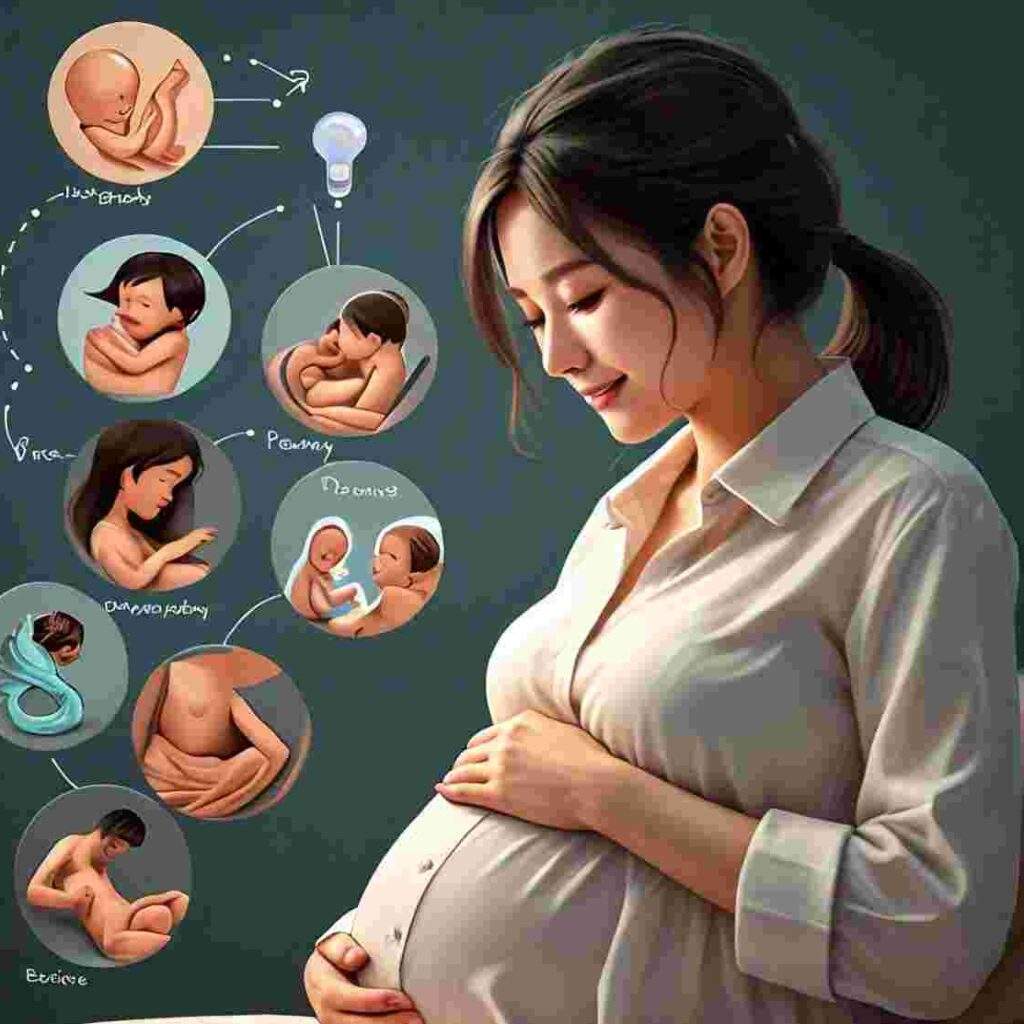
How-Pregnancy-Symptoms-Develop-After-Sex

  • Controlled Breathing: Slow, deep breaths can help relax the body and reduce pain.
  • Lamaze Breathing: Patterned breathing to distract from pain and promote relaxation.
  • Bradley Method: Deep breathing, relaxation, and visualization to manage pain.

Epidural and Other Pain Relief Options

  • Epidural: Injects pain relief medication into the epidural space around the spinal cord.
  • Benefits:
    • Effective pain relief
    • Reduces anxiety and stress
  • Risks:
    • Headache
    • Nausea and vomiting
    • Increased risk of interventions (e.g., cesarean section)
  • Other Options:
    • Nitrous oxide
    • Opioids (e.g., fentanyl)
    • Local anesthesia

Using Water for Labor

  • Water Birth: Giving birth in a birthing pool or tub.
  • Laboring in Water: Soaking in a birthing pool or tub during labor.
  • Benefits:
    • Reduces pain and discomfort
    • Promotes relaxation and reduces anxiety
    • Increases mobility and flexibility

Additional Tips

  • Discuss pain management options with your healthcare provider.
  • Create a birth plan outlining your preferences.
  • Consider hiring a doula or birth companion for support.
  • Practice breathing techniques and relaxation methods during pregnancy.

Pushing Techniques for a Faster Normal Delivery

To facilitate a faster and more efficient normal delivery, try these pushing techniques:

How to Push Effectively During Delivery

  1. Relaxed Body: Release tension in your shoulders, arms, and legs.
  2. Deep Breathing: Inhale deeply, hold, and exhale slowly.
  3. Pelvic Floor Relaxation: Release tension in your pelvic floor muscles.
  4. Pushing: Use your abdominal and pelvic muscles to push the baby down.
  5. Directed Pushing: Push in a specific direction, guided by your healthcare provider.

Pushing Strategies

  • Slow and Gentle Pushing: Reduce pressure on the perineum.
  • Fast and Firm Pushing: Use more force to help the baby move down.
  • Panting: Take quick breaths to avoid pushing too hard.

Positions That Help Speed Up Delivery

  • Squatting: Opens the pelvis and helps the baby move down.
  • All-Fours: Reduces pressure on the perineum and promotes pushing.
  • Side-Lying: Allows for more control and comfort during pushing.
  • Upright Position: Standing, kneeling, or sitting upright can help gravity assist delivery.

Additional Tips

  • Practice pushing techniques during pregnancy.
  • Communicate with your healthcare provider about your preferences.
  • Consider having a birth companion or doula for support.
  • Stay hydrated and energized during labor.

Diet and Nutrition Tips for 9th Month

To support a smooth and normal delivery, focus on a balanced diet rich in:

  • Omega-3 fatty acids: Found in fatty fish, nuts, and seeds.
  • Protein: Include lean meats, beans, and dairy products.
  • Complex carbohydrates: Whole grains, fruits, and vegetables.
  • Calcium: Dairy products, leafy greens, and fortified foods.
  • Iron: Red meat, spinach, and fortified cereals.

Foods That Help in Cervix Dilation

  • Dates: Rich in potassium, magnesium, and fiber.
  • Pineapple: Contains bromelain, which may help soften the cervix.
  • Berries: Rich in antioxidants and fiber.
  • Leafy Greens: Packed with magnesium and iron.

Hydration and Its Role in Delivery

  • Aim for 8-10 glasses of water per day.
  • Electrolyte-rich drinks Coconut water, sports drinks, or fruit juice.
  • Herbal teas: Peppermint, chamomile, or raspberry leaf tea.

Exercises to Facilitate Normal Delivery

  • Kegel exercises: Strengthen pelvic floor muscles.
  • Pelvic tilts: Relax and open the pelvis.
  • Squats: Strengthen legs and promote baby’s descent.
  • Walking: Regular movement and gravity can aid delivery.
  • Prenatal yoga: Poses like downward-facing dog, cat-cow, and child’s pose.

Prenatal Yoga Poses for Normal Delivery

  • Downward-facing dog: Stretches and opens the pelvis.
  • Cat-cow: Gentle spine movement and relaxation.
  • Child’s pose: Relaxation and pelvic opening.
  • Pigeon pose: Hip opener and pelvis relaxation.

Medical and Non-Medical Ways to Prepare the Body for Normal Delivery

To prepare your body for a smooth and natural delivery, consider the following medical and non-medical methods:

Perineal Massage

  • Start at 34 weeks: Massage the perineum to increase flexibility and reduce tearing.
  • Use lubricant: Apply oil or cream to reduce friction.
  • Massage technique: Gentle, downward strokes with your thumbs.
  • Frequency: 2-3 times a week, 5-10 minutes per session.

Pelvic Floor Exercises

  • Kegel exercises: Squeeze and release pelvic muscles.
  • Start early: Begin exercises during pregnancy to strengthen muscles.
  • Frequency: 3 sets of 10-15 repetitions, 3-4 times a day.

Acupressure and Reflexology

  • Apply pressure: Use fingers or thumbs to apply pressure to specific points.
  • Points for labor: LI4, BL67, and SP6.
  • Reflexology: Massage feet and hands to stimulate labor and relaxation.

Additional Tips

  1. Maintain a healthy weight: Reduce pressure on the pelvis and perineum.
  2. Stay hydrated: Drink plenty of water to keep tissues flexible.
  3. Practice relaxation techniques: Deep breathing, meditation, or yoga to reduce stress.
  4. Attend prenatal classes: Educate yourself on the birth process and preparation techniques.

Comparing Painless Delivery and Normal Delivery

Is Painless Delivery Safe?

  • Risks of painless delivery (epidural):
    • Headache
    • Nausea and vomiting
    • Increased risk of interventions (e.g., cesarean section)
    • Potential impact on breastfeeding
  • Benefits of painless delivery (epidural):
    • Effective pain relief
    • Reduced anxiety and stress
    • Ability to rest during labor
  • Risks of normal delivery:
    • Pain during labor and delivery
    • Potential for complications (e.g., tearing, hemorrhage)
  • Benefits of normal delivery:
    • Avoidance of medical interventions
    • Potential for a more empowering experience
    • Faster recovery

Cost of Painless Delivery

  • Epidural costs:
    • Hospital charges: $1,000-$2,000
    • Anesthesiologist fees: $500-$1,000
    • Total cost: $1,500-$3,000
  • Note: Costs may vary depending on location, insurance, and provider.

Additional Considerations

  • Discuss options with your healthcare provider: Weigh the risks and benefits of each approach.
  • Create a birth plan: Outline your preferences for pain management and delivery.
  • Consider a doula or birth companion: Support during labor and delivery.

FAQs | 25+ Normal Delivery Tips [In 9th Month] | Painless Normal Delivery Tips

Why Isn’t Delivery Pain Starting?

Delayed labor onset may be due to:

Fetal position
Cervix dilation
Hormonal changes
Premature rupture of membranes
Consult a doctor if:
Past your due date
Concerns about fetal movement or well-being

How Can I Make Labor Easier?

Tips for a smoother labor process:

Stay active and mobile
Practice breathing techniques (Lamaze, Bradley Method)
Use relaxation methods (massage, meditation, yoga)
Stay hydrated and energized
Have a support system (partner, doula, family)

What to Expect After Normal Delivery?

Post-delivery recovery tips:

Rest and prioritize self-care
Manage pain with medication or natural methods
Monitor vaginal discharge and swelling
Establish breastfeeding
Seek support for emotional changes (hormonal shifts, mood swings)

How long does labor typically last?

Average 12-24 hours for first-time mothers, 6-12 hours for subsequent births.

How do you know if you are in labor?

Signs of labor include:

Contractions: Regular, intense contractions
Cervical dilation: Cervix opening and effacement
Fetal descent: Baby moving down the birth canal

What exercises should I avoid in the 9th month?

Avoid:

1. High-impact exercises (e.g., running, jumping)
2. Contact sports
3. Bending or heavy lifting
4. Exercises that cause discomfort or pain

Final Thoughts

As you approach your due date, remember:

What to Remember for a Safe and Smooth Delivery

  • Stay informed and educated about the delivery process
  • Communicate openly with your healthcare provider
  • Have a support system in place
  • Trust your body’s ability to deliver naturally
  • Be flexible and prepared for unexpected situations

Consulting Your Doctor

  • Importance of medical advice and guidance throughout pregnancy
  • Discuss your birth plan and preferences with your healthcare provider
  • Ask questions and seek clarification on any concerns
  • Follow medical recommendations for a safe and healthy delivery

Trusting Your Body’s Ability to Deliver Naturally

  • Your body is capable of delivering a baby naturally
  • Trust in your body’s instincts and abilities
  • Stay positive and focused on a natural delivery experience
  • Remember, every delivery is unique, and medical interventions may be necessary in some cases.

………………………….
Disclaimer:
Commissions we earn from partner links on this page do not influence our content. Our editorial content is based on thorough research and insights from qualified medical professionals to ensure the highest standards of accuracy and reliability.

Information provided on Doseway is for educational purposes only. Your health and wellness are unique to you, and the products and services we review may not be suitable for your individual circumstances. We do not offer personal medical advice, diagnosis, or treatment plans. For specific advice, please consult with a healthcare professional. Doseway adheres to strict editorial integrity standards. To the best of our knowledge, all content is accurate as of the date posted, though offers and information may change. The opinions expressed are the author’s own and have not been influenced, approved, or endorsed by our partners.

……………………………..

Symptoms-Of-Pregnancy-After-Sex

10 Symptoms Of Pregnancy After Sex In One Week

Detecting pregnancy symptoms just one week after sex can be a thrilling yet uncertain experience. If you’re wondering whether you’ll feel pregnant after only seven days, you’re not alone.

In this article, we’ll explore the 10 symptoms of pregnancy that may appear within the first week after sex. Keep in mind that every woman’s experience is unique, and not everyone will exhibit all of these symptoms.

Recommended Reading: Top 5 Best Prenatal Vitamins For Hair Skin And Nails

Very Early Signs Of Pregnancy 1 Week Before Missed Period

Symptoms-Of-Pregnancy

How Pregnancy Symptoms Develop After Sex

How Pregnancy Symptoms Develop After Sex

After sex, pregnancy symptoms can develop rapidly, starting with mild cramping and spotting within 1-3 days, followed by breast tenderness, fatigue, and frequent urination around 7-10 days.

How-Pregnancy-Symptoms-Develop-After-Sex

Timeline of Pregnancy Development

After sex, the pregnancy journey begins, but noticeable symptoms may take time to develop. Here’s a general outline of what happens:

  • Day 1-5: Sperm meets egg, fertilization occurs, and the zygote begins to divide.
  • Day 6-10: Implantation occurs, and the embryo starts producing human chorionic gonadotropin (hCG).
  • Day 7-14: hCG levels rise, but symptoms may still be absent or subtle.

Can Pregnancy be Detected After One Week?

Symptoms of pregnancy after just one week can be challenging. While some women may experience early symptoms, others may not show any noticeable signs. The likelihood of symptoms of pregnancy at this stage depends on individual factors, such as:

  • Sensitivity to hormonal changes
  • Regularity of menstrual cycles
  • Awareness of bodily changes

How Many Days After Sex Can Pregnancy Be Confirmed?

Medical confirmation of pregnancy typically occurs later than the first week. Here are some general guidelines:

  • Home Pregnancy Tests (HPTs): 7-10 days post-ovulation (around 3-4 weeks after the start of the last menstrual period)
  • Blood Tests: 10-14 days post-ovulation (around 4-5 weeks after the start of the last menstrual period)
  • Ultrasound: 5-6 weeks after the start of the last menstrual period (when the embryo is visible)

Getting Pregnant After 1 Week of Unprotected Sex

Getting Pregnant After 1 Week of Unprotected Sex

After one week of unprotected sex, pregnancy symptoms may start to appear, including mild cramping, spotting, and breast tenderness, as the embryo implants in the uterus. However, it’s essential to note that pregnancy detection is typically most accurate after a missed period, around 4-5 weeks.

Getting-Pregnant-After-1-Week-of-Unprotected-Sex

Recommended Reading: Top 10 Birth Control Pills In Pakistan [Names And Prices]

What Happens After Unprotected Sex?

After unprotected sex, the following processes occur:

  • Ovulation: Release of an egg from the ovary (usually 14 days before the next period)
  • Fertilization: Sperm meets egg in the fallopian tube (can happen within 12-24 hours of ovulation)
  • Implantation: Fertilized egg (embryo) attaches to the uterine lining (6-10 days after fertilization)

What Are the Chances of Getting Pregnant?

The chances of getting pregnant depend on the fertility window, which is the time when ovulation occurs. Here’s how timing affects pregnancy chances:

  • Peak fertility: 1-2 days before ovulation and the day of ovulation (highest chances of getting pregnant)
  • Fertile window: 5-7 days leading up to ovulation and the day of ovulation (good chances of getting pregnant)
  • Low fertility: Outside of the fertile window (lower chances of getting pregnant)

If you had unprotected sex within the fertile window, the chances of getting pregnant are higher. However, even if you had sex outside of this window, pregnancy is still possible due to the lifespan of sperm (up to 5 days) and the variability of ovulation.

To estimate your chances, consider:

  • Day 1-5: Low chances (less than 10%)
  • Day 6-10: Moderate chances (10-20%)
  • Day 11-14: Higher chances (20-30%)
  • Day 15-17: Peak chances (30-40%)
  • Day 18-28: Lower chances (less than 10%)

Recommended Reading: How To Take Birth Control Pills? | Pills To Prevent Pregnancy

Top 10 Symptoms of Pregnancy After Sex in One Week

While symptoms may be subtle, here are 10 possible symptoms of pregnancy that may appear within the first week:

  • Light Spotting or Implantation Bleeding
    • Occurs 6-10 days after fertilization when the embryo implants in the uterine lining
    • It can be mistaken for an early period but is usually lighter and shorter
  • Mild Cramping
    • Similar to PMS cramps, but may indicate early pregnancy
    • Caused by implantation and hormonal changes
  • Breast Tenderness
    • Hormonal fluctuations cause breast swelling and soreness
    • Progesterone and estrogen levels increase, leading to breast tenderness
  • Fatigue
    • Increased progesterone levels cause drowsiness and tiredness
    • Body prepares for pregnancy by conserving energy
  • Nausea or Queasiness
    • Early signs of morning sickness, even in the first week
    • Hormonal changes affect digestion and cause nausea
  • Frequent Urination
    • Hormonal changes affect the bladder, leading to more frequent urination
    • Increased blood flow and fluid retention contribute to this symptom
  • Heightened Sense of Smell
    • Sensory changes in early pregnancy, possibly due to hormonal fluctuations
    • Women may notice stronger smells or sensitivities to certain odors
  • Mood Swings or Irritability
    • Hormonal fluctuations and emotional changes
    • Increased estrogen and progesterone levels affect mood and emotional stability
  • Light Headaches
    • Caused by hormone shifts and possible dehydration
    • Increased blood volume and fluid retention contribute to headaches
  • Increased Cervical Mucus
    • Changes in vaginal discharge, becoming thicker and more abundant
    • Hormonal changes prepare the body for pregnancy, causing increased cervical mucus

Understanding Early Pregnancy Symptoms vs. PMS

Differentiating PMS from Early Pregnancy

While PMS (Premenstrual Syndrome) and early pregnancy share similar symptoms, there are key distinctions:

Similarities:

  • Mood swings
  • Breast tenderness
  • Fatigue
  • Cramping
  • Bloating

Distinctions:

  • Duration: PMS symptoms typically last 1-2 weeks, while early symptoms of pregnancy can persist
  • Intensity: Early pregnancy symptoms tend to be more pronounced
  • Timing: PMS occurs before menstruation, while early symptoms of pregnancy occur after ovulation
  • Type of cramping: PMS cramps are usually more severe, while early pregnancy cramps are milder

What Color is Pregnancy Discharge?

During early symptoms of pregnancy, cervical mucus changes:

  • Color: Clear, white, or off-white
  • Texture: Thicker, creamier, and more abundant
  • Purpose: Prepares the body for pregnancy by creating a fertile environment

Is it Possible to Feel Pregnant Within the First Week?

Yes, some women experience physical and emotional sensations within the first week:

  • Physical sensations:
    • Mild cramping
    • Breast tenderness
    • Fatigue
    • Increased urination
  • Emotional sensations:
    • Mood swings
    • Heightened sense of smell
    • Increased emotional sensitivity

How Soon Can You Confirm Symptoms of Pregnancy After Sex?

Pregnancy Tests: When to Take Them

For accurate results:

  • After missed period: Take a home pregnancy test (HPT) 1-2 weeks after a missed period (around 4-5 weeks pregnant)
  • Earlier tests: Some HPTs claim to have symptoms of pregnancy earlier, around 6-8 days post-ovulation (around 2-3 weeks pregnant)

How to Detect Symptoms of Pregnancy Without a Test?

Look for physical signs and symptoms:

  • Self-check methods:
    • Feeling the stomach for tenderness or softening
    • Noting changes in cervical mucus
    • Observing breast tenderness or swelling
  • Other symptoms:
    • Fatigue
    • Nausea or queasiness
    • Frequent urination
    • Mood swings

How Many Days After Sex Will I Know If I’m Pregnant?

General timeframe:

  • Home pregnancy test: 7-14 days after sex (around 2-3 weeks pregnant)
  • Consulting a doctor: 4-6 weeks after sex (around 5-6 weeks pregnant)

Keep in mind that these timeframes may vary depending on individual factors, such as:

  • Sensitivity of pregnancy tests
  • Regularity of menstrual cycles
  • Awareness of bodily changes

Hidden Pregnancy Signs | Symptoms of Pregnancy

What are Hidden Pregnancy Signs?

Hidden symptoms of pregnancy refer to subtle or less obvious symptoms that may not be immediately noticeable in the early stages of pregnancy. These can include:

  • Mild dizziness or lightheadedness
  • Slight changes in taste or smell
  • Increased thirst and hunger
  • Mild constipation
  • Slight back pain or discomfort
  • Mood changes, such as anxiety or irritability

Can You Be Pregnant Without Knowing for a Few Weeks?

Yes, it’s possible to be pregnant for a few weeks without realizing it. Some women may experience:

  • Subtle or absent symptoms: Mild or no noticeable symptoms, making it difficult to detect symptoms of pregnancy
  • Irregular periods: Women with irregular menstrual cycles may not notice a missed period
  • Stress or fatigue: Attributing symptoms to stress or fatigue rather than pregnancy

Factors that contribute to delayed detection symptoms of pregnancy include:

  • Age: Women over 35 may experience more subtle symptoms
  • Previous pregnancy: Women who have been pregnant before may not notice symptoms as quickly
  • Health conditions: Certain medical conditions, like polycystic ovary syndrome (PCOS), can mask symptoms

Pregnancy Symptoms by Day (Post-Sex)

1-3 Days:

  • Mild cramping: Implantation cramping can start as early as 1-3 days after conception
  • Increased cervical mucus: Hormonal changes can cause an increase in cervical mucus
  • Slight spotting: Light bleeding or spotting can occur due to implantation

3-5 Days:

  • Cramping: Mild to moderate cramping can continue as the embryo implants
  • Spotting: Light bleeding or spotting can persist
  • Mild breast tenderness: Hormonal changes can cause breast tenderness

7 Days After Sex:

  • Increased fatigue: Hormonal changes can cause fatigue and tiredness
  • Mood swings: Emotional changes can start to occur
  • Frequent urination: Hormonal changes can cause more frequent urination
  • Mild nausea: Some women may start to experience mild nausea

What To Do If You Think You’re Pregnant

Steps to Confirm Pregnancy:

  • Home Pregnancy Tests (HPTs): Take a test 1-2 weeks after a missed period or as soon as 6-8 days post-ovulation
  • Blood Tests: Visit a doctor for a blood test, which can detect symptoms of pregnancy earlier than HPTs
  • Ultrasound: Schedule an ultrasound to confirm symptoms of pregnancy and determine gestational age

Next Steps After a Positive Result:

  • Prenatal Care: Schedule an appointment with a healthcare provider to begin prenatal care
  • Lifestyle Changes: Start making healthy lifestyle changes, such as:
    • Quitting smoking and drinking
    • Eating a balanced diet
    • Exercising regularly
    • Getting enough sleep

How to Avoid Pregnancy After Sex:

  • Emergency Contraception: Use emergency contraception like Plan B or Ella within 72-120 hours of unprotected sex
  • Condoms: Use condoms consistently and correctly
  • Hormonal Contraceptives: Consider using hormonal contraceptives like the pill, patch, or ring
  • Intrauterine Devices (IUDs): Consider getting an IUD inserted by a healthcare provider

FAQ | 10 Symptoms Of Pregnancy After Sex In One Week

Will I feel pregnant after 1 week?

Some women may experience subtle symptoms, but they can be easy to miss or attribute to other factors.

What are the 100% signs of pregnancy in the first week?

There are no 100% symptoms of pregnancy in the first week, as symptoms can vary and may not be present in every woman.

How fast can pregnancy symptoms start?

Symptoms can start as early as 6-12 days after fertilization, but may not be noticeable until later.

Can I check if I’m pregnant after 7 days?

Home pregnancy tests may not be accurate until after a missed period (around 4-5 weeks pregnant). Other detection methods include blood tests and ultrasounds.

What are 100% ways to prevent pregnancy?

Only abstinence is 100% effective. Other methods, like condoms and hormonal contraceptives, have a small failure rate.

How do I know when I conceived?

Conception typically occurs 1-2 weeks before a missed period. Keep track of your menstrual cycle and ovulation to estimate conception.

………………………….
Disclaimer:
Commissions we earn from partner links on this page do not influence our content. Our editorial content is based on thorough research and insights from qualified medical professionals to ensure the highest standards of accuracy and reliability.

Information provided on Doseway is for educational purposes only. Your health and wellness are unique to you, and the products and services we review may not be suitable for your individual circumstances. We do not offer personal medical advice, diagnosis, or treatment plans. For specific advice, please consult with a healthcare professional. Doseway adheres to strict editorial integrity standards. To the best of our knowledge, all content is accurate as of the date posted, though offers and information may change. The opinions expressed are the author’s own and have not been influenced, approved, or endorsed by our partners.

……………………………..

Birth-Control-Patch-Price-Side Effects-And-How-It-Works

Birth Control Patch Price 2025 [Uses, Effectiveness]

Birth Control Patch, also known as the contraceptive patch, is a revolutionary form of hormonal contraception that offers a convenient and effective way to prevent pregnancy.

This small, adhesive patch is applied to the skin once a week for three weeks, followed by a patch-free week, allowing for a regular menstrual cycle.

In this article, we will explore the following aspects of the birth control patch:

  • Uses: How the patch works, its benefits, and suitable candidates
  • Effectiveness: Success rates, common mistakes that reduce efficacy, and comparison with other contraceptive methods
  • Cost: Price ranges, insurance coverage, and affordable options

Recommended Readings:

Patch Birth Control Side Effects And How It Works

Birth-Control-Patch-Price-[Uses-Effectiveness]

What Is The Birth Control Patch?

The birth control patch offers a convenient alternative to daily pills or condoms, with a similar effectiveness rate.

birth_control_patch

Overview Of The birth control patch

The birth control patch, also known as the transdermal contraceptive patch, is a small, adhesive patch that releases hormones through the skin to prevent pregnancy. It’s a type of hormonal contraception that contains a combination of estrogen and progesterone, similar to birth control pills.

How The Birth Control Patch Works

The patch works by:

  • Releasing hormones: The patch releases a steady dose of estrogen and progesterone into the bloodstream through the skin.
  • Preventing ovulation: The hormones suppress the release of eggs from the ovaries, making it impossible for sperm to fertilize an egg.
  • Thickening cervical mucus: The hormones also thicken the mucus in the cervix, making it difficult for sperm to reach the egg.

Comparison With Other Contraceptive Methods

Contraceptive MethodHow it WorksEffectivenessConvenience
Birth Control PatchReleases hormones through the skin91% effectiveApply once a week for 3 weeks
Birth Control PillsIngests hormones orally91% effectiveTake daily
CondomsPhysical barrier82-98% effectiveUse during intercourse
Intrauterine Device (IUD)Releases hormones or creates a physical barrier99% effectiveInserted by healthcare provider
Table: Comparison With Other Contraceptive Methods

How to Use the Birth Control Patch: A Step-by-Step Guide

Additional Tips

  • If you experience skin irritation, consult your healthcare provider about alternative locations or methods
  • Use a new patch every week for three weeks, followed by a patch-free week
  • Don’t apply multiple patches at once or cut the patch into smaller pieces
how_to_use_the_birth_control_patch_a_step_by_step_guide

Step 1: Choose A Location

  • Select a clean, dry area on the body where the patch won’t be rubbed by clothing
  • Recommended locations:
    • Upper outer arm
    • Upper torso (front or back)
    • Buttocks
    • Abdomen

Step 2: Apply The Patch

  • Peel the patch off the backing and press firmly onto the skin
  • Hold for 10 seconds to ensure adhesion
  • Apply a new patch once a week for three weeks

Step 3: Check The Patch

  • Check the patch daily to ensure it’s still in place
  • If the patch is partially detached, press it back onto the skin
  • If the patch is completely detached, apply a new one

What To Do If The Patch Falls Off Or Is Applied Incorrectly
  • If the patch falls off for less than 24 hours, reapply it
  • If the patch falls off for more than 24 hours, apply a new one and use backup contraception for 2 days
  • If misapplied, remove and reapply a new patch

Switching From Other Contraceptive Methods To The Patch

  • From Birth Control Pills: Start the patch on the first day of your period or the day after finishing your pill pack
  • From Condoms or No Contraception: Start the patch on the first day of your period or the day you receive the patch prescription
  • From IUD or Implant: Consult your healthcare provider for guidance on switching to the patch

Effectiveness Of The Birth Control Patch

By understanding the patch’s effectiveness and potential factors that can reduce it, you can take steps to maximize its effectiveness and prevent unintended pregnancy.

imagine_effectiveness_of_the_birth_control_patch

Perfect Use VS. Typical Use

  • Perfect Use: When used exactly as directed, the patch is 99.7% effective in preventing pregnancy.
  • Typical Use: In real-world scenarios, the patch is about 91% effective, meaning 9 out of 100 women may still get pregnant.

Comparison With Other Contraceptive Methods

MethodPerfect UseTypical Use
Patch99.7%91%
Pills99.7%92%
Condoms98%82-90%
IUD (Hormonal)99.7-99.9%99.2-99.8%
IUD (Copper)99.2-99.8%98-99%
Table: Comparison With Other Contraceptive Methods

Factors That Can Reduce The Patch’s Effectiveness

  • Incorrect application
  • Delayed or missed applications
  • Using the patch for less than 3 weeks
  • Taking certain medications (e.g., antibiotics, antifungals)
  • High body mass index (BMI)
  • Using the patch during pregnancy or breastfeeding
  • Not using a backup method during the patch-free week

How Quickly Does The Patch Work?

The birth control patch typically becomes effective within:

  • 7 days of application for most women
  • 21 days for women with irregular periods or those switching from a different contraceptive method

Situations When The Patch Might Not Work Immediately

  • Starting the patch during the wrong time: If you start the patch during the middle of your cycle, it may not be effective right away.
  • Switching from a different contraceptive method: If you’re switching from a different method, like pills or an IUD, the patch may not be effective immediately.
  • Having irregular periods: If you have irregular periods, it may take longer for the patch to become effective.
  • Being overweight or obese: Women with a higher BMI may experience delayed effectiveness.
  • Taking certain medications: Certain medications, like antibiotics or antifungals, can affect the patch’s effectiveness.

Advantages And Disadvantages Of The Birth Control Patch

Remember: Consult your healthcare provider to discuss the advantages and disadvantages and determine if the birth control patch is right for you.

advantages_and_disadvantages_of_the_birth_control_patch

Advantages:

  • Convenience: Weekly application makes it easy to stay on track.
  • Non-invasive and reversible: No surgical procedure or permanent change.
  • Regular menstrual cycles: Helps regulate periods and potentially skip them.
  • Reduced menstrual cramps and PMS symptoms: Hormones in the patch can alleviate symptoms.
  • No daily pill reminder: Forgetfulness won’t compromise effectiveness.

Disadvantages:

  • Possible side effects:
    • Skin irritation (redness, itching, rash)
    • Weight gain
    • Breast tenderness
    • Mood changes
    • Nausea
  • Not suitable for everyone:
    • Women with certain health conditions (e.g., high blood pressure, diabetes)
    • Women over 35 who smoke
    • Women with a history of blood clots or stroke
  • Risks of patch falling off or incorrect application:
    • Reduced effectiveness
    • Increased risk of pregnancy
  • Other considerations:
    • May not be covered by all insurance plans
    • Requires a prescription and regular check-ups

Cost Of The Birth Control Patch

Overview Of Average Cost

  • The average cost of the birth control patch ranges from $20 to $50 per month
  • Annual cost: $240 to $600

Comparison with Other Contraceptive Methods

MethodAverage Monthly CostAverage Annual Cost
Birth Control Patch$20-$50$240-$600
Birth Control Pills$10-$30$120-$360
Condoms$2-$5$24-$60
IUD (Hormonal)$500-$1,000 (initial cost)$0-$100 (annual maintenance)
IUD (Copper)$500-$1,000 (initial cost)$0-$100 (annual maintenance)
Table: Comparison with Other Contraceptive Methods

Availability And Insurance Coverage

  • The birth control patch is available by prescription only
  • Insurance coverage varies:
    • Most private insurance plans cover the patch under the Affordable Care Act (ACA)
    • Medicaid coverage varies by state
    • Some employers’ insurance plans may not cover the patch due to moral or religious objections

Safety And Risks Of The Birth Control Patch

Safety Profile

  • The birth control patch is generally considered safe for most women
  • FDA-approved and rigorously tested
  • Effective in preventing pregnancy and regulating menstrual cycles

Potential Risks

  • Blood Clots: Increased risk of blood clots, especially for women over 35 who smoke
  • Stroke and Heart Attack: Increased risk of stroke and heart attack, especially for women with high blood pressure or diabetes
  • Breast Cancer: Potential increased risk of breast cancer, although evidence is still limited
  • Gallbladder Disease: Increased risk of gallbladder disease
  • Liver Disease: Potential increased risk of liver disease
  • Skin Irritation: Skin irritation, redness, or rash at the patch site
  • Hormonal Side Effects: Mood changes, breast tenderness, nausea, and weight gain

Who Should Avoid Using The Patch

  • Women over 35 who smoke
  • Women with high blood pressure or diabetes
  • Women with a history of blood clots or stroke
  • Women with liver disease or gallbladder disease
  • Women with breast cancer or suspected breast cancer
  • Women taking certain medications (e.g., antibiotics, antifungals)

Birth Control Patch And Fertility

Remember, the birth control patch is a reversible contraceptive method, and fertility returns to normal after stopping its use.

birth_control_patch_and_fertility

Impact On Long-Term Fertility

  • The birth control patch does not affect long-term fertility
  • Fertility returns to normal after stopping the patch
  • No delayed return to fertility compared to other contraceptive methods

Getting Pregnant After Stopping The Patch

  • You can get pregnant as soon as 1-2 weeks after stopping the patch
  • Average time to pregnancy: 1-3 months
  • 80-90% of women get pregnant within 12 months after stopping the patch

Factors Affecting Fertility

  • Age: fertility declines with age
  • Overall health: certain medical conditions can affect fertility
  • Lifestyle: smoking, weight, and stress can impact fertility

Frequently Asked Questions (FAQs) – Birth Control Patch

Can I use the patch if I’m breastfeeding?

No, the patch is not recommended for breastfeeding women, as it may affect milk production.

Can I smoke while using the patch?

No, smoking increases the risk of blood clots and stroke while using the patch, especially for women over 35.

Can I use the patch if I have high blood pressure?

Consult your healthcare provider, as high blood pressure may increase the risk of blood clots and stroke while using the patch.

How long does it take for the patch to start working?

The patch starts working within 7 days of application.

Can I get pregnant if my patch falls off?

Yes, if the patch falls off for more than 24 hours, you may not be protected from pregnancy.

Can I use the patch if I have a history of blood clots or stroke?

No, the patch is not recommended for women with a history of blood clots or stroke.

How often do I need to replace the patch?

Replace the patch every 7 days for 3 weeks, followed by a patch-free week.

Can I use the patch if I’m taking antibiotics?

Consult your healthcare provider, as some antibiotics may affect the patch’s effectiveness.

Can I use the patch if I have a history of breast cancer?

No, the patch is not recommended for women with a history of breast cancer.

Final Thoughts on the Suitability of the Birth Control Patch

The birth control patch is a convenient and effective contraceptive option for many women. However, weighing the benefits and risks and considering individual circumstances before using the patch is essential.

Suitable for:

  • Women who want a low-maintenance, easy-to-use contraceptive method
  • Women who have difficulty remembering to take daily pills
  • Women who want to regulate their menstrual cycles
  • Women who want a reversible contraceptive method

It may not be suitable for:

  • Women over 35 who smoke
  • Women with a history of blood clots, stroke, or heart attack
  • Women with liver disease, gallbladder disease, or breast cancer
  • Women taking certain medications
  • Women with certain medical conditions (e.g., high blood pressure, diabetes)

Ultimately:

  • Consult your healthcare provider to determine if the birth control patch is right for you
  • Discuss your medical history, lifestyle, and concerns to make an informed decision
  • Regular monitoring and check-ups can help minimize potential risks

………………………….
Disclaimer:
Commissions we earn from partner links on this page do not influence our content. Our editorial content is based on thorough research and insights from qualified medical professionals to ensure the highest standards of accuracy and reliability.

Information provided on Doseway is for educational purposes only. Your health and wellness are unique to you, and the products and services we review may not suit your circumstances. We do not offer personal medical advice, diagnosis, or treatment plans. For specific advice, please consult with a healthcare professional. Doseway adheres to strict editorial integrity standards. To the best of our knowledge, all content is accurate as of the date posted, though offers and information may change. The opinions expressed are the author’s own and have not been influenced, approved, or endorsed by our partners.

……………………………..

Best-Prenatal-Vitamins-For-Hair-Skin-And-Nails

Top 5 Best Prenatal Vitamins For Hair Skin And Nails

Prenatal Vitamins are specially formulated dietary supplements designed for pregnant and breastfeeding women, but their benefits extend beyond pregnancy. These vitamins provide essential nutrients that support overall health and wellness, particularly for hair, skin, and nails.

Prenatal vitamins maintain optimal health, even for women who are not pregnant or breastfeeding. They fill nutritional gaps in our diets, ensuring we receive vital vitamins and minerals. These supplements support:

  • Healthy cell growth and development
  • Strong immune function
  • Energy production
  • Bone health

The Beauty Benefits of Prenatal Vitamins include:

  • Promote healthy hair growth, strength, and shine
  • Enhance skin elasticity, texture, and tone
  • Strengthen nails, reducing brittleness and breakage

Having mentioned that, let’s start our guide!

Recommended Readings:

Best Prenatal Multivitamin For Skin And Hair

Top-5-Best-Prenatal-Vitamins-For-Hair-Skin-And-Nails

Understanding Prenatal Vitamins And Their Benefits

By understanding the purpose and benefits of prenatal vitamins, women can make informed choices to support their overall health and beauty needs.

understanding_prenatal_vitamins_and_their_benefits

What are Prenatal Vitamins?

Prenatal vitamins are dietary supplements specifically designed for pregnant and breastfeeding women, but also beneficial for women’s overall health. Their purpose is to fill nutritional gaps in the diet, ensuring the body receives essential vitamins and minerals.

Key Ingredients and Nutrients in Prenatal Vitamins
NutrientImportance
Folic AcidPrevents birth defects, supports cell growth
IronEssential for healthy red blood cells
CalciumCrucial for bone health
Vitamin DSupports bone health, immune function
Omega-3 Fatty AcidsPromotes fetal brain development
ZincSupports immune function, wound healing
BiotinEssential for hair, skin, and nail health
Vitamin CBoosts immune function, collagen production
Vitamin EAntioxidant properties, skin health
Table: Key Ingredients and Nutrients in Prenatal Vitamins

Why Prenatal Vitamins Are Important For Hair, Skin, And Nails?

Role of Essential Nutrients:

  • Hair: Biotin, Vitamin E, and Omega-3 Fatty Acids promote healthy hair growth, strength, and shine.
  • Skin: Vitamin C, Vitamin E, and Zinc support skin elasticity, texture, and tone.
  • Nails: Biotin, Vitamin E, and Zinc strengthen nails, reducing brittleness and breakage.

Benefits During Pregnancy and Beyond:

  • Supports fetal development during pregnancy
  • Promotes postpartum recovery and lactation
  • Enhances overall health and wellness beyond pregnancy
  • Encourages healthy hair, skin, and nail growth

Key Nutrients For Hair, Skin, And Nails

These key nutrients work together to support the health and beauty of your hair, skin, and nails. Ensure you’re getting enough of these essential vitamins and minerals through your diet or supplements.

key_nutrients_for_hair_skin_and_nails

Vitamins Essential For Hair, Skin, And Nails

  • Vitamin A
    • Role: Skin health, cell regeneration, and collagen production
    • Benefits: Promotes healthy skin, reduces the appearance of fine lines and wrinkles
  • Vitamin C
    • Importance: Collagen production, antioxidant properties
    • Benefits: Enhances skin elasticity, improves skin texture, and boosts hair growth
  • Vitamin D
    • Impact: Skin health, immune function, and hair growth
    • Benefits: Regulates skin cell growth, supports the immune system, and promotes healthy hair
  • Vitamin E
    • Antioxidant properties: Protects skin from damage, promotes skin health
    • Benefits: Reduces the appearance of fine lines and wrinkles, improves skin texture
  • B-Vitamins (including Biotin)
    • Contribution: Hair growth, nail strength, and energy production
    • Benefits: Promotes healthy hair growth, strengthens nails, and supports energy metabolism

Minerals And Other Supplements

  • Iron
    • Role: Prevents hair loss, supports healthy red blood cells
    • Benefits: Promotes healthy hair growth, reduces risk of anemia
  • Zinc
    • Importance: Skin health, wound repair, and hair growth
    • Benefits: Supports skin health, promotes wound healing, and enhances hair growth
  • Collagen
    • Benefits: Improves skin elasticity, strengthens nails, and supports joint health
    • Importance: Essential for healthy skin, hair, and nails

Top 5 Prenatal Vitamins For Hair, Skin, And Nails

Here are the top 5 prenatal vitamins for hair, skin, and nails:

  • Lunakai Biotin and Prenatal Bundle
    • Key Features: Biotin, Vitamin C, Vitamin E, Iron, and Folic Acid
    • Unique Selling Points: Supports hair, skin, and nail growth, and is a pregnancy multivitamin gummy ¹
    • Benefits: Promotes hair growth, strengthens nails, and improves skin health
    • Evidence: Reviews support its effectiveness for hair, skin, and nail growth
    • Side Effects: No common side effects reported
  • Nature’s Bounty Advanced Hair, Skin & Nails
    • Key Features: Argan-infused vitamin Supplement with Biotin
    • Unique Selling Points: Supports hair, skin, and nail health with argan oil and biotin ²
    • Benefits: Nourishes hair, skin, and nails for healthy growth and appearance
    • Evidence: Reviews support its effectiveness for hair, skin, and nail health
    • Side Effects: No common side effects reported
  • Olly Prenatal Vitamins
    • Key Features: Folic Acid, Iron, and Vitamin D3
    • Unique Selling Points: Supports baby’s health during pregnancy and promotes hair, skin, and nail health ³
    • Benefits: Supports fetal development, promotes hair growth, and improves skin health
    • Evidence: Reviews support its effectiveness for pregnancy and hair, skin, and nail health
    • Side Effects: No common side effects reported
  • Vitafusion Prenatal Vitamins
    • Key Features: Folic Acid, Iron, and Vitamin D3
    • Unique Selling Points: Supports baby’s health during pregnancy and promotes hair, skin, and nail health ³
    • Benefits: Supports fetal development, promotes hair growth, and improves skin health
    • Evidence: Reviews support its effectiveness for pregnancy and hair, skin, and nail health
    • Side Effects: No common side effects reported
  • One-A-Day Prenatal Vitamins
    • Key Features: Folic Acid, Iron, and Vitamin D3
    • Unique Selling Points: Supports baby’s health during pregnancy and promotes hair, skin, and nail health ³
    • Benefits: Supports fetal development, promotes hair growth, and improves skin health
    • Evidence: Reviews support its effectiveness for pregnancy and hair, skin, and nail health

Comparison Of Prenatal Vitamins VS. Hair, Skin, And Nails Vitamins

Important

  • Choose prenatal vitamins for general health and wellness, or specialized vitamins for specific hair, skin, or nail concerns.
  • Prenatal vitamins provide a broad range of essential nutrients for overall health and wellness.
comparison_of_prenatal_vitamins_vs_hair_skin_and_nails_vitamins

Effectiveness For Hair Growth

  • Prenatal Vitamins: These contain essential nutrients like biotin, vitamin E, and iron, promoting hair growth and strength.
  • Specialized Hair Growth Vitamins: These may contain higher concentrations of specific hair growth nutrients like keratin, saw palmetto, and horsetail.

Winner: Specialized Hair Growth Vitamins (for targeted hair growth support)

Impact On Skin Health

  • Prenatal Vitamins: Support skin health with vitamins C, E, and A, and minerals like zinc and iron.
  • Hair, Skin, and Nails Vitamins: These may contain additional skin-specific nutrients like collagen, hyaluronic acid, and antioxidants.

Winner: Hair, Skin, and Nails Vitamins (for comprehensive skin support)

Nail Strength

  • Prenatal Vitamins: Contain biotin, vitamin E, and iron, supporting nail health.
  • Hair, Skin, and Nails Vitamins: These may contain additional nail-specific nutrients like keratin, calcium, and vitamin C.

Winner: Hair, Skin, and Nails Vitamins (for targeted nail support)

Best Practices For Using Prenatal Vitamins

How To Choose The Right Prenatal Vitamin

  • Consider Your Individual Needs:
    • Age, health status, and dietary restrictions
    • Pregnancy stage (preconception, pregnancy, or postpartum)
    • Specific health concerns (e.g., anemia, morning sickness)
  • Look for Essential Nutrients:
    • Folic acid, iron, calcium, vitamin D, and omega-3 fatty acids
    • Check the label for USP (United States Pharmacopeia) or NSF International verification
  • Check the Expiration Date:
    • Ensure the product is fresh and effective

Dosage And Timing

  • Recommended Dosages:
    • Follow the recommended dosage on the label or as advised by your healthcare provider
    • Typical dosage: 1 tablet or capsule per day
  • Best Times to Take:
    • Take with food to minimize stomach upset
    • Consider taking it in the morning with breakfast

Consulting Healthcare Providers

  • Importance of Professional Advice:
    • Consult your healthcare provider before starting any new supplement
    • Discuss your individual needs, medical history, and medications
  • Benefits of Professional Guidance:
    • Ensures safe and effective use
    • Helps prevent interactions with medications or underlying health conditions

Natural Alternatives To Prenatal Vitamins For Hair, Skin, and Nails

Remember to consult with a healthcare professional before adding any new supplements to your routine. A balanced diet and healthy lifestyle can also support hair, skin, and nail health.

natural_alternatives_to_prenatal_vitamins_for_hair_skin_and_nails

Dietary Sources Of Essential Vitamins

  • Vitamin C:
    • Foods: Citrus fruits, berries, leafy greens
    • Benefits: Boosts collagen production, antioxidant properties
  • Vitamin E:
    • Foods: Nuts, seeds, vegetable oils
    • Benefits: Antioxidant properties, promotes skin health
  • Biotin:
    • Foods: Eggs, nuts, whole grains
    • Benefits: Supports hair growth, nail strength
  • Omega-3 Fatty Acids:
    • Foods: Fatty fish, flaxseeds, walnuts
    • Benefits: Nourishes skin, promotes healthy hair growth

Herbal Supplements

  • Biotin-rich Herbs:
    • Saw Palmetto, Horsetail, and Nettle
    • Benefits: Supports hair growth, nail strength
  • Antioxidant-rich Herbs:
    • Green Tea, Turmeric, and Ginger
    • Benefits: Promotes skin health, reduces inflammation
  • Collagen-boosting Herbs:
    • Vitamin C-rich herbs like Rosehip and Acerola Cherry
    • Benefits: Supports skin elasticity, collagen production

Additional Natural Alternatives

  • Fish Oil:
    • Rich in omega-3 fatty acids for skin and hair health
  • Coconut Oil:
    • Nourishes skin, hair, and nails with fatty acids
  • Apple Cider Vinegar:
    • Promotes digestive health, supports skin and hair

Non-Pregnant Women Take Prenatal Vitamins For Hair, Skin, And Nails

Benefits For Non-Pregnant Women

  • Hair Growth: Prenatal vitamins contain biotin, vitamin E, and other nutrients that promote hair growth.
  • Skin Health: Antioxidants and vitamins C and E support skin health and collagen production.
  • Nail Strength: Biotin and other nutrients can improve nail strength and growth.
  • Energy Boost: Prenatal vitamins contain iron and other nutrients that can help reduce fatigue.

Potential Risks

  • Unnecessary Supplementation: Taking high doses of certain vitamins can lead to toxicity.
  • Interactions with Medications: Prenatal vitamins can interact with medications, such as blood thinners.
  • Overload of Certain Nutrients: Excessive intake of vitamins like vitamin A can cause harm.

Consultation With Healthcare Providers

  • Personalized Advice: Consult a healthcare provider to determine if prenatal vitamins are suitable for your individual needs.
  • Health Status: Discuss your health status, medications, and potential interactions.
  • Alternative Options: Explore alternative supplements or dietary changes that may be more suitable.

Frequently Asked Questions (FAQs) – Prenatal Vitamins

Do Prenatal Vitamins Help with Hair, Skin, and Nails?

Yes, prenatal vitamins can help with hair, skin, and nails due to their high content of essential nutrients like biotin, vitamin E, and iron. However, individual results may vary, and it’s essential to maintain realistic expectations.

Can Prenatal Vitamins Be Taken with Other Supplements?

Yes, prenatal vitamins can be taken with other supplements, but it’s crucial to consult a healthcare provider to avoid excessive intake of certain nutrients. Combining with biotin or other supplements should be done under medical guidance.

Best Time to Take Hair, Skin, and Nail Vitamins?

The optimal time to take hair, skin, and nail vitamins is with food, preferably breakfast, to enhance absorption and minimize stomach upset.

Can I Take Prenatal Vitamins for Hair Growth Alone?

While prenatal vitamins can support hair growth, they might not be sufficient alone. Combining it with other supplements like biotin, vitamin C, or fish oil may be more effective for hair growth.

Are Prenatal Vitamins Safe for Long-Term Use?

Prenatal vitamins are generally safe for long-term use, but it’s crucial to follow the recommended dosage and consult a healthcare provider to avoid excessive intake of certain nutrients.

Can Prenatal Vitamins Cause Acne or Skin Issues?

While rare, prenatal vitamins can cause acne or skin issues in some individuals due to hormonal changes or sensitivity to certain ingredients. If you experience any issues, consult a healthcare provider.

Can I Take Prenatal Vitamins If I Have a Medical Condition?

If you have a medical condition, consult a healthcare provider before taking prenatal vitamins to ensure safety and efficacy. Certain conditions, like kidney disease or bleeding disorders, may require special consideration.

………………………….
Disclaimer:
Commissions we earn from partner links on this page do not influence our content. Our editorial content is based on thorough research and insights from qualified medical professionals to ensure the highest standards of accuracy and reliability.

Information provided on Doseway is for educational purposes only. Your health and wellness are unique to you, and the products and services we review may not be suitable for your circumstances. We do not offer personal medical advice, diagnosis, or treatment plans. For specific advice, please consult with a healthcare professional. Doseway adheres to strict editorial integrity standards. To the best of our knowledge, all content is accurate as of the date posted, though offers and information may change. The opinions expressed are the author’s own and have not been influenced, approved, or endorsed by our partners.

……………………………..

Top-10-Birth-Control-Pills-In-Pakistan-Names-And-Prices

Top 10 Birth Control Pills In Pakistan [Names And Prices]

Family planning is vital to reproductive health, among various birth control options, birth control pills stand out for their convenience, reliability, and widespread availability.

Types of Contraceptives Available:

  • Hormonal methods (pills, injections, patches)
  • Barrier methods (condoms, diaphragms)
  • Intrauterine devices (IUDs)
  • Sterilization
  • Natural family planning methods

Birth control pills are a widely used contraceptive method, offering:

  • High effectiveness in preventing pregnancy
  • Convenience and ease of use
  • Reversibility
  • Non-invasive procedure

Having mentioned all of this, let’s start our guide!

Recommended Readings: How To Take Birth Control Pills? | Pills To Prevent Pregnancy

Birth Control Pills Names And Prices In Pakistan

Top-10-Birth-Control-Pills-In-Pakistan

Understanding Birth Control Pills

It’s essential to consult a healthcare provider to determine the best birth control option for individual needs and medical history.

understanding_birth_control_pills

What Are Birth Control Pills?

Birth control pills, also known as oral contraceptives, are hormonal medications that prevent pregnancy by regulating ovulation, fertilization, and implantation. They contain synthetic versions of the natural hormones estrogen and progesterone, which work together to control the menstrual cycle.

How Do Birth Control Pills Work?

Birth control pills work by:

  • Suppressing ovulation: Preventing the release of an egg from the ovary.
  • Thickening cervical mucus: This makes it difficult for sperm to reach the egg.
  • Thinning the uterine lining: Reducing the chances of implantation.

Types Of Birth Control Pills

  • Combination Pills (Estrogen + Progestin):
    • Most common type
    • Regulate menstrual cycle and reduce symptoms like cramps and bloating
  • Progestin-only Pills (Mini-pills):
    • Suitable for breastfeeding women or those sensitive to estrogen
    • Thinner uterine lining and increased cervical mucus

Common Side Effects And Risks

  • Nausea and vomiting
  • Breast tenderness
  • Mood changes
  • Weight gain
  • Increased risk of blood clots and stroke (rare)

Safety Considerations

While birth control pills are generally safe, they may not be suitable for all women, particularly those with:

  • History of blood clots or stroke
  • High blood pressure
  • Liver or kidney disease
  • Breast cancer
  • Smoking (over 35 years old)

Factors To Consider When Choosing A Birth Control Pill

By considering these factors, women can make an informed decision about the best birth control pill for their individual needs and circumstances.

factors_to_consider_when_choosing_a_birth_control_pill

Effectiveness

  • Measured by the percentage of women who don’t get pregnant while using the pill correctly
  • Comparison:
    • Birth control pills: 91-99% effective
    • IUDs: 99% effective
    • Condoms: 82-98% effective
  • Factors affecting effectiveness: correct use, timing, and individual response

Safety And Side Effects

  • Common side effects:
    • Nausea
    • Breast tenderness
    • Mood changes
    • Weight gain
  • Long-term health considerations:
    • Blood clot risk
    • Breast cancer risk
    • Impact on Future Fertility

Affordability And Accessibility

  • Price range in Pakistan: PKR 500 – PKR 2,000 per month
  • Availability:
    • Pharmacies: widely available
    • Online: available through reputable sources
  • Insurance coverage: varies depending on the provider

User’s Medical History

  • Pre-existing conditions that affect choice:
    • High blood pressure
    • Diabetes
    • Liver or kidney disease
    • Breast cancer
  • Importance of consulting a healthcare provider:
    • Personalized recommendations
    • Medical history evaluation
    • Ongoing monitoring and support

Top 10 Birth Control Pills In Pakistan

Marvelon

  • Description: A combination pill with both estrogen and progesterone, manufactured by Organon ¹.
  • Effectiveness: 91-99% effective in preventing pregnancy.
  • Common Side Effects: Nausea, breast tenderness, mood changes, weight gain.
  • Price Range: PKR 1,500 – PKR 2,500.
  • Availability: Available at pharmacies and online platforms.

Yasmin

  • Description: A combination pill with both estrogen and progesterone, manufactured by Bayer.
  • Effectiveness: 91-99% effective in preventing pregnancy.
  • Common Side Effects: Headaches, breast tenderness, mood changes, weight gain.
  • Price Range: PKR 2,000 – PKR 3,000.
  • Availability: Available at pharmacies and online platforms.

Famila 28

  • Description: A combination pill with both estrogen and progesterone, manufactured by Merck.
  • Effectiveness: 91-99% effective in preventing pregnancy.
  • Common Side Effects: Nausea, breast tenderness, mood changes, weight gain.
  • Price Range: PKR 1,200 – PKR 2,000.
  • Availability: Available at pharmacies and online platforms.

Cerazette

  • Description: A progestin-only pill, manufactured by Organon.
  • Effectiveness: 91-99% effective in preventing pregnancy.
  • Common Side Effects: Spotting, breast tenderness, mood changes, weight gain.
  • Price Range: PKR 1,000 – PKR 1,800.
  • Availability: Available at pharmacies and online platforms.

Loette

  • Description: A combination pill with both estrogen and progesterone, manufactured by Wyeth.
  • Effectiveness: 91-99% effective in preventing pregnancy.
  • Common Side Effects: Nausea, breast tenderness, mood changes, weight gain.
  • Price Range: PKR 1,200 – PKR 2,200.
  • Availability: Available at pharmacies and online platforms.

Ovral L

  • Description: A combination pill with both estrogen and progesterone, manufactured by Wyeth.
  • Effectiveness: 91-99% effective in preventing pregnancy.
  • Common Side Effects: Nausea, breast tenderness, mood changes, weight gain.
  • Price Range: PKR 1,000 – PKR 1,800.

Noriday

  • Description: Progestin-only pill (Bayer)
  • Effectiveness: 91-99%
  • Common Side Effects: Spotting, breast tenderness, mood changes, weight gain
  • Price Range: PKR 800 – PKR 1,500
  • Availability: Pharmacies, online platforms

Microlut

  • Description: Progestin-only pill (Merck)
  • Effectiveness: 91-99%
  • Common Side Effects: Spotting, breast tenderness, mood changes, weight gain
  • Price Range: PKR 600 – PKR 1,200
  • Availability: Pharmacies, online platforms

Diane-35

  • Description: Combination pill with estrogen and progesterone (Bayer)
  • Effectiveness: 91-99%
  • Common Side Effects: Nausea, breast tenderness, mood changes, weight gain
  • Price Range: PKR 1,500 – PKR 2,500
  • Availability: Pharmacies, online platforms

Trust Pills

  • Description: Combination pill with estrogen and progesterone (Getz Pharma)
  • Effectiveness: 91-99%
  • Common Side Effects: Nausea, breast tenderness, mood changes, weight gain
  • Price Range: PKR 800 – PKR 1,500
  • Availability: Pharmacies, online platforms

Emergency Contraceptive Pills

Remember, ECPs are a backup option, and regular contraception is still essential for preventing unintended pregnancies.

emergency_contraceptive_pills

Overview

Emergency Contraceptive Pills (ECPs) are birth control pills taken after unprotected sex or contraceptive failure to prevent pregnancy. They are not a regular form of contraception but a backup option for emergencies.

When to Use
  • After unprotected sex
  • Condom breakage or slippage
  • Missed or late birth control pills
  • Sexual assault

  • Plan B (Levonorgestrel)
    • Price: PKR 1,500 – PKR 2,500
    • Availability: Pharmacies, online platforms
  • i-Pill (Levonorgestrel)
    • Price: PKR 1,000 – PKR 2,000
    • Availability: Pharmacies, online platforms
  • Postinor (Levonorgestrel)
    • Price: PKR 1,200 – PKR 2,200
    • Availability: Pharmacies, online platforms

Note: Prices and availability may vary depending on location and retailer.

Important:

  • ECPs are not abortion pills
  • They are most effective when taken within 72 hours of unprotected sex
  • They may not be effective for women with a BMI over 30
  • Consult a healthcare provider for guidance on using ECPs

Alternative Birth Control Methods In Pakistan

It’s essential to consult a healthcare provider to determine the best contraceptive method for individual needs and preferences.

It's essential to consult a healthcare provider to determine the best contraceptive method for individual needs and preferences.

Overview Of Other Contraceptive Methods

Besides birth control pills, there are several other effective contraceptive methods available in Pakistan:

  • Condoms:
    • Male and female condoms available
    • 82-98% effective in preventing pregnancy
    • Also protects against STIs
  • Intrauterine Devices (IUDs):
    • Hormonal and copper IUDs are available
    • 99% effective in preventing pregnancy
    • Long-term solution (up to 10 years)
  • Vaginal Rings:
    • A hormonal ring is inserted monthly
    • 91-99% effective in preventing pregnancy
    • Easy to use and reversible
  • Injectable Contraceptives:
    • Hormonal injections every 3 months
    • 94-99% effective in preventing pregnancy
    • Convenient and long-term solution

Effectiveness And Safety Comparison With Birth Control Pills

MethodEffectivenessSafety
Condoms82-98%High
IUDs99%High
Vaginal Rings91-99%High
Injectable Contraceptives94-99%High
Birth Control Pills91-99%High
Table: Effectiveness And Safety Comparison With Birth Control Pills

Preferred Contraceptive Methods Among Pakistani Women

According to a survey:

  • 45% prefer birth control pills
  • 25% prefer condoms
  • 15% prefer IUDs
  • 10% prefer injectable contraceptives
  • 5% prefer vaginal rings

Birth Control Pills And Cultural Considerations In Pakistan

Birth Control In Pakistani Society And Islamic Values

In Pakistan, birth control is a sensitive topic due to cultural and religious beliefs. Islamic values emphasize the importance of family and children, and some people may view birth control as conflicting with these values.

Addressing Common Misconceptions And Religious Concerns

  • Misconception: Birth control is forbidden in Islam.
    Reality: Islamic scholars have differing opinions, but many consider contraception permissible to prevent harm and promote family well-being.
  • Misconception: Birth control pills are abortifacients.
    Reality: Most birth control pills are contraceptive, not abortifacient.
  • Misconception: Birth control is only for married couples.
    Reality: Unmarried individuals may also use birth control for health reasons or to prevent unintended pregnancies.

Approaching Birth Control In Conservative Settings

  1. Respect cultural and religious values.
  2. Educate about Islamic perspectives on contraception.
  3. Emphasize health benefits and family planning.
  4. Involve male partners in family planning discussions.
  5. Provide confidential and non-judgmental counseling.

Buying Birth Control Pills In Pakistan

Remember to consult a healthcare provider before starting any birth control method. They can help you find the best option for your needs and budget.

buying_birth_control_pills_in_pakistan

Where To Buy Birth Control Pills

  • Pharmacies: Available at most pharmacies, including:
    • Fazal Din Pharmacy
    • Servaid Pharmacy
    • Shafi Pharmacy
  • Online Stores: Available online at:
    • (link unavailable)
    • (link unavailable)
    • (link unavailable)

Price Ranges For Birth Control Pills

  • Combination pills: PKR 500 – PKR 2,000 per month
  • Progestin-only pills: PKR 300 – PKR 1,500 per month
  • Emergency contraceptive pills: PKR 1,000 – PKR 2,500 per dose

Availability In Rural vs. Urban Areas

  • Urban areas: Widely available at pharmacies and online
  • Rural areas: Limited availability, may need to travel to nearby towns or cities

Tips For Finding Affordable Birth Control Options

  • Compare prices: Check prices at different pharmacies and online stores
  • Look for discounts: Some pharmacies offer discounts or promotions
  • Consider generic options: Generic birth control pills are often cheaper
  • Consult a healthcare provider: They may provide free or low-cost options
  • Check with local NGOs: Some NGOs provide free or low-cost birth control options

Frequently Asked Questions (FAQs) – Birth Control Pills

What is the most popular birth control pill brand in Pakistan?

Yasmin and Marvelon are among the most popular birth control pill brands in Pakistan.

What is the safest birth control pill?

All birth control pills are generally safe when used correctly. However, some pills like Yasmin and Loette have a lower risk of side effects.

What is the most common birth control method in Pakistan?

Birth control pills are the most common method, followed by condoms and injectable contraceptives.

What is the 72-hour pill in Pakistan, and when should it be used?

The 72-hour pill, also known as the morning-after pill, is an emergency contraceptive like Plan B or i-Pill. It should be used within 72 hours of unprotected sex.

Which pill stops periods?

Some birth control pills like Seasonale or Yaz can reduce or stop menstrual periods. However, this should be discussed with a healthcare provider.

Are birth control pills halal in Islam?

Islamic scholars have varying opinions, but many consider contraception permissible to prevent harm and promote family well-being.

How effective are birth control pills in preventing pregnancy?

Birth control pills are 91-99% effective in preventing pregnancy when used correctly.

Can I buy birth control pills online in Pakistan?

Yes, some online stores like (link unavailable) and (link unavailable) sell birth control pills in Pakistan.

Do I need a prescription to buy birth control pills in Pakistan?

Yes, a prescription from a healthcare provider is required to buy birth control pills in Pakistan.

Can I use birth control pills to regulate my periods?

Yes, birth control pills can help regulate menstrual cycles and reduce symptoms like cramps and bloating.

Can I get pregnant while taking birth control pills?

Yes, although rare, it’s possible to get pregnant while taking birth control pills if they’re not used correctly or consistently.

………………………….
Disclaimer:
Commissions we earn from partner links on this page do not influence our content. Our editorial content is based on thorough research and insights from qualified medical professionals to ensure the highest standards of accuracy and reliability.

Information provided on Doseway is for educational purposes only. Your health and wellness are unique to you, and the products and services we review may not be suitable for your circumstances. We do not offer personal medical advice, diagnosis, or treatment plans. For specific advice, please consult with a healthcare professional. Doseway adheres to strict editorial integrity standards. To the best of our knowledge, all content is accurate as of the date posted, though offers and information may change. The opinions expressed are the author’s own and have not been influenced, approved, or endorsed by our partners.

……………………………..

Pills-To-Prevent-Pregnancy

How To Take Birth Control Pills? (Pills To Prevent Pregnancy)

Birth control pills, also known as oral contraceptives, contain hormones that regulate ovulation, thickening cervical mucus, and altering the uterine lining to prevent sperm from fertilizing an egg.

There are two main types of birth control pills:

TypeDetails
Combined PillsContains both estrogen and progestin hormones, regulating ovulation and thickening cervical mucus.
Progestin-Only PillsContains only progestin hormone, thickening cervical mucus and altering the uterine lining.
Table: Pills-To-Prevent-Pregnancy

Having mentioned that, let’s start our guide!

When Is The Best Time To Take Birth Control Pills – Morning Or Night?

Birth-Control-Pills
Birth-Control-Pills

Working Of Birth Control Pills

Birth control pills work in three ways to prevent pregnancy:

  • Suppressing Ovulation: The hormones in the pill prevent the release of an egg from the ovary.
  • Thickening Cervical Mucus: The pill thickens the mucus in the cervix, making it difficult for sperm to reach the egg.
  • Altering the Uterine Lining: The pill changes the uterine lining, making it less suitable for implantation of a fertilized egg.

Correct usage of birth control pills is important for effective contraception. Taking the pill consistently and correctly ensures the highest level of protection against pregnancy. Incorrect usage can lead to reduced efficacy, increasing the risk of unplanned pregnancy.

How to Take Birth Control Pills Correctly for the First Time?

How to Take Birth Control Pills Correctly for the First Time?

The correct way to take birth control pills for the first time is to read and follow the instructions, taking the first pill on the designated start day and continuing daily for 21 days. It’s essential to take the pill at the same time every day and complete the full pack to ensure effectiveness.

How-to-Take-Birth-Control-Pills

Starting the pill correctly is essential for effective contraception. Here’s a step-by-step guide for new users:

When to Start Taking Birth Control Pills

You can start taking birth control pills in three ways:

  1. First Day of Period: Start taking the pill on the first day of your menstrual period. This method provides immediate protection against pregnancy.
  2. Quick Start: Begin taking the pill at any time, but use a backup contraceptive method (like condoms) for the first seven days.
  3. Sunday Start: Start taking the pill on the first Sunday after your period begins. This method aligns with the pill pack’s labeling.

Detailed Instructions for New Users

  1. Choose a quiet and private spot to take your pill, making it a habit.
  2. Take the pill at the same time every day, ideally with a meal or snack to reduce nausea.
  3. Follow the pill pack’s direction, moving from left to right or top to bottom.
  4. Take one pill daily, without skipping or doubling up.
  5. Complete the full pill pack, then start a new one.

Questions

  • Can I take the pill during my period?: Yes, you can start taking the pill during your period, but it’s essential to follow the instructions above.
  • What if I forget to take a pill?: Take the missed pill as soon as you remember, and continue with your regular schedule. If you miss two or more pills, use a backup contraceptive method for seven days.
  • Will I experience side effects?: Mild side effects like nausea, breast tenderness, or mood changes may occur. If severe or persistent, consult your healthcare provider.

Daily Routine for Taking Birth Control Pills

Establishing a consistent daily routine ensures effective contraception and minimizes side effects.

Daily Routine for Taking Birth Control Pills

Establish a daily routine by taking your birth control pill at the same time every day, such as with breakfast or before bed, to ensure consistency and effectiveness.

Daily-Routine-for-Taking-Birth-Control-Pills

Best Time to Take Birth Control Pills

You can take birth control pills at any time of day, but it’s essential to choose a time that works best for you and stick to it. Consider the following:

  • Morning: Taking the pill in the morning can help regulate your menstrual cycle and reduce mid-cycle bleeding.
  • Night: Taking the pill at night can reduce nausea and allow you to sleep through any potential side effects.

Importance of Taking the Pill at the Same Time Each Day

Taking the pill at the same time daily:

  1. Maintains hormone levels: Consistent hormone levels ensure effective contraception.
  2. Reduces side effects: Regular timing minimizes nausea, breast tenderness, and mood changes.
  3. Develop a habit: A consistent routine helps prevent missed pills.

Frequently Asked Questions

  • When is the best time to take birth control pills, morning or night?: Choose a time that works best for you and stick to it. Both morning and night are effective but consider your lifestyle and preferences.
  • Can I take the pill with food or on an empty stomach?: Take the pill with a meal or snack to reduce nausea, but it’s not necessary.
  • What if I have a varying schedule?: Choose a time that fits your most consistent daily routine, and try to maintain it even on weekends or days off.

How Long Does It Take for Birth Control Pills to Start Working?

You want to know how long it takes for birth control pills to start working. Here’s the information:

How Quickly Does Birth Control Become Effective?

Birth control pills become effective at different times, depending on when you start taking them:

  • First day of period: Effective immediately
  • Quick start: Effective after 7 days, use backup contraception during this time
  • Sunday start: Effective after 7 days, use backup contraception during this time

How Long Does It Take for Birth Control Pills to Prevent Pregnancy?

Birth control pills are effective in preventing pregnancy after 7 days of consecutive use. However, it’s essential to continue taking the pills correctly to maintain their effectiveness.

What to Do If You Miss a Pill?

If you miss a pill:

  1. Take the missed pill as soon as you remember
  2. Continue with your regular schedule
  3. Use backup contraception (like condoms) for 7 days

Can You Get Pregnant If You Miss One Birth Control Pill?

Yes, missing one pill increases the risk of pregnancy. However, the risk is still low if you take the missed pill as soon as possible and continue with your regular schedule.

Understanding “Perfect Use” and “Typical Use” of Birth Control

  • Perfect use: Correct and consistent use of birth control, resulting in a 99% effectiveness rate
  • Typical use: Real-life use, including mistakes and inconsistencies, resulting in a 91% effectiveness rate

Types of Pills to Prevent Pregnancy

There are two main types of birth control pills:

  • Combined Pills: Contains both estrogen and progestin hormones.
  • Progestin-Only Pills: Contains only progestin hormone.

List of Common Birth Control Pills (Brand Names and Prices)

List of Common Birth Control Pills


Here is a list of common birth control pills, including their brand names and approximate prices: Yaz ($80-$120), Ortho Tri-Cyclen ($60-$100), Mirena ($1,000-$1,500), Loestrin ($50-$90), and Microgynon ($40-$80).

Common-Birth-Control-Pills

Combined Pills

  • Yaz (drospirenone and ethinyl estradiol) – $20-$30 per pack
  • Yasmin (drospirenone and ethinyl estradiol) – $20-$30 per pack
  • Loestrin (norethindrone and ethinyl estradiol) – $15-$25 per pack
  • Ortho Tri-Cyclen (norethindrone and ethinyl estradiol) – $20-$30 per pack

Progestin-Only Pills

  1. Micronor (norethindrone) – $10-$20 per pack
  2. Nora-BE (norethindrone) – $10-$20 per pack

Comparison of Different Birth Control Options

MethodEffectivenessCostHormones
Combined Pills99%$15-$30Estrogen + Progestin
Progestin-Only Pills99%$10-$20Progestin-only
IUD99%$500-$1000Hormone-free or Progestin
Condoms82%$1-$5Hormone-free
Table: Comparison of Different Birth Control Options

Which Tablet is Best to Prevent Pregnancy?

The best tablet depends on your needs, medical history, and preferences. Consider the following factors:

  • Age: If you’re over 35, your healthcare provider may recommend a progestin-only pill.
  • Breastfeeding: Progestin-only pills are generally recommended for breastfeeding women.
  • Medical history: Certain medical conditions may affect your choice of pill.
  • Personal preferences: Consider your lifestyle, budget, and personal preferences.

Emergency Contraception

Emergency contraception (EC) is a safe and effective way to prevent pregnancy after unprotected intercourse or contraceptive failure.

Pills to Prevent Pregnancy

  1. Plan B One-Step (levonorgestrel): $40-$60
  2. Ella (ulipristal acetate): $50-$70
  3. Copper IUD: $500-$1000 (inserted by a healthcare provider)

How Emergency Contraception Works

EC works by:

  • Delaying ovulation: Preventing the release of an egg from the ovary.
  • Thickening cervical mucus: This makes it difficult for sperm to reach the egg.
  • Altering the uterine lining: Preventing a fertilized egg from implanting.

When to Take Emergency Contraception

Take EC as soon as possible after unprotected intercourse, ideally within:

  • 72 hours (3 days) for Plan B One-Step and Copper IUD.
  • 120 hours (5 days) for Ella.

Questions About

  • What can I drink to prevent pregnancy after unprotected sex?: No drink can prevent pregnancy. EC pills or the Copper IUD are the most effective methods.
  • Is taking one pill enough to prevent pregnancy?: Yes, taking one EC pill as directed is enough to prevent pregnancy. However, it’s essential to follow the instructions and take the pill as soon as possible after unprotected intercourse.

How to Know if Birth Control is Working

To ensure birth control is working:

  • Take the pill correctly: Follow the schedule and dosage instructions.
  • Check for side effects: Consult your healthcare provider if you experience severe side effects.
  • Monitor your periods: Birth control can affect menstrual cycles. If you miss a period, take a pregnancy test.
  • Use backup contraception: During the first week of starting a new pill or if you miss a pill.

How to be 100% sure you are not pregnant

To confirm you’re not pregnant:

  1. Take a pregnancy test: After missing a period or if you experience symptoms like nausea or breast tenderness.
  2. Wait for a negative result: If the test is negative, you’re likely not pregnant.
  3. Consult a healthcare provider: If you’re unsure or have concerns.

Can you get pregnant while on your period?

Yes, it’s possible to get pregnant during your period. Sperm can survive inside the female reproductive tract for up to 5 days, and ovulation can occur at any time.

What to do if sperm enters during sex

If sperm enters during sex:

  • Don’t panic: Sperm entering doesn’t necessarily mean pregnancy will occur.
  • Consider emergency contraception: If you’re not using regular contraception or if it failed.
  • Take a pregnancy test: After missing a period or if you experience symptoms.

Managing Side Effects of Birth Control Pills

While birth control pills are generally safe, they can cause side effects. Here’s what you need to know:

Common Side Effects

  • Nausea: Take the pill with food or at night to reduce nausea.
  • Headaches: Stay hydrated and consider over-the-counter pain relief.
  • Breast tenderness: Wear a supportive bra and apply warm compresses.
  • Mood changes: Engage in stress-reducing activities like exercise or meditation.
  • Weight gain: Monitor your diet and exercise regularly.

Long-term Side Effects

  • Blood clots: Rare, but more likely in smokers or those with a family history.
  • Hormonal changes: May affect mood, libido, or menstrual cycles.
  • Increased risk of certain cancers: Discuss your individual risk with your healthcare provider.

Tips to Reduce Side Effects

  • Take the pill at night: It may help reduce nausea and headaches.
  • Stay hydrated: Drink plenty of water to reduce breast tenderness and headaches.
  • Exercise regularly: Helps with weight management and mood regulation.
  • Eat a balanced diet: Supports overall health and reduces side effects.

Does the Pill Stop Your Period?

No, the pill doesn’t stop your period entirely, but it can:

  • Regulate your cycle: Make your periods more predictable and lighter.
  • Reduce menstrual cramps: Progestin in the pill can help alleviate cramps.

Best Time to Take the Pill

Take the pill at the same time every day, ideally:

  • At night: May reduce nausea and headaches.
  • With food: Helps with absorption and reduces nausea.

Safety and Precautions

Certain individuals should avoid or consult their healthcare provider before taking birth control pills:

  • Smokers over 35: Increased risk of heart disease and stroke.
  • History of blood clots: Increased risk of deep vein thrombosis.
  • High blood pressure: Monitor blood pressure regularly.
  • Breast cancer: Consult your healthcare provider.
  • Pregnant or breastfeeding: Not recommended.

What Are 100% Ways to Prevent Pregnancy?

No method is 100% effective, but:

  • Abstinence: Not having sexual intercourse.
  • Sterilization: Surgical procedures like vasectomy or tubal ligation.
  • Intrauterine Device (IUD): Over 99% effective.

Can Birth Control Pills Fail?

Yes, birth control pills can fail if:

  • Not taken correctly: Missing pills or taking them at the wrong time.
  • Interactions with other medications: Certain medications can reduce effectiveness.
  • Vomiting or diarrhea: Reduces absorption.
  • Weight changes: May affect efficacy.

Natural Methods to Prevent Pregnancy

If you’re looking for natural ways to prevent pregnancy, here are some effective methods:

Tracking Ovulation (Fertility Awareness Methods)

  1. Basal Body Temperature (BBT): Monitor your temperature to detect ovulation.
  2. Cervical Mucus Method: Observe changes in cervical mucus to detect fertility.
  3. Calendar Method: Track your menstrual cycle to predict ovulation.

Withdrawal Method (Coitus Interruptus)

  • Withdrawal before ejaculation: Pull out before ejaculation to prevent sperm from entering the vagina.

Natural Barriers

  • Condoms (male and female): Use condoms made from natural materials like latex or lambskin.
  • Diaphragm: A dome-shaped device inserted into the vagina to cover the cervix.

Lactational Amenorrhea Method (LAM)

  1. Exclusive breastfeeding: Breastfeed exclusively to delay ovulation.

Abstinence

  • Avoid sexual intercourse: Abstain from sex to prevent pregnancy.

How to Avoid Pregnancy Naturally

To increase the effectiveness of natural methods:

  • Combine methods: Use multiple methods, like tracking ovulation and withdrawal.
  • Monitor your body: Pay attention to physical changes, like cervical mucus and temperature.
  • Plan: Track your cycle and plan intercourse during infertile periods.
  • Communicate with your partner: Ensure you’re both on the same page.

FAQs | How To Take Birth Control Pills? | Pills To Prevent Pregnancy

Can you get pregnant if you miss a pill?

Yes, missing a pill increases the risk of pregnancy. Take the missed pill as soon as possible and continue with your regular schedule.

What happens if you stop taking birth control pills?

Stopping birth control pills can lead to:
Return of menstrual cycles
Increased risk of pregnancy
Potential changes in mood, libido, or menstrual cycles

How many days after your period can you get pregnant?

You can get pregnant as soon as 7-10 days after your period, as sperm can survive inside the female reproductive tract for up to 5 days.

Can I get pregnant on my period?

Yes, it’s possible to get pregnant during your period, as sperm can survive inside the female reproductive tract for up to 5 days.

Does the pill stop your period?

No, the pill doesn’t stop your period entirely, but it can:
Regulate your cycle
Make your periods lighter and more predictable

How to know if birth control pills are working?

Take the pill correctly
Monitor your periods
Check for side effects

Can I take birth control pills during my period?

Yes, you can start taking birth control pills during your period, but it’s essential to follow the instructions and consult your healthcare provider.

What should I do if I miss a pill?

Take the missed pill as soon as possible
Continue with your regular schedule
Use backup contraception (like condoms) for 7 days

Final Thought

To take birth control pills effectively:

  • Take the pill at the same time every day
  • Follow the prescribed instructions
  • Complete the full pill pack
  • Use backup contraception during the first week
  • Monitor your periods and side effects

Importance of Consistency

Consistency is key to ensuring the effectiveness of birth control pills. Missing pills or taking them at different times can reduce their effectiveness and increase the risk of pregnancy.

Final Tips

  • Consult your healthcare provider with any questions or concerns
  • Use a reminder to take your pill at the same time every day
  • Keep your pill pack in a visible and accessible location
  • Monitor your body for changes in periods, mood, or side effects
  • Stay committed to taking your pill consistently

………………………….
Disclaimer:
Commissions we earn from partner links on this page do not influence our content. Our editorial content is based on thorough research and insights from qualified medical professionals to ensure the highest standards of accuracy and reliability.

Information provided on Doseway is for educational purposes only. Your health and wellness are unique to you, and the products and services we review may not be suitable for your circumstances. We do not offer personal medical advice, diagnosis, or treatment plans. For specific advice, please consult with a healthcare professional. Doseway adheres to strict editorial integrity standards. To the best of our knowledge, all content is accurate as of the date posted, though offers and information may change. The opinions expressed are the author’s own and have not been influenced, approved, or endorsed by our partners.

……………………………..