Colorectal-Cancer-Risk

Colorectal Cancer Risk Calculator 2026

Colon Cancer Risk Assessment Tool

This calculator estimates your risk of developing colon cancer based on established clinical factors.

Colorectal cancer risk involves understanding factors that increase the likelihood of developing cancer in the colon or rectum, a major health issue affecting millions worldwide. This guide explores everything from risk factors and symptoms to prevention and tools for assessment, empowering readers with knowledge to take proactive steps. By addressing common queries on colorectal cancer risk, it serves as a holistic resource for better health outcomes.

  • โœ… Learn key colorectal cancer risk factors including age, diet, and genetics.
  • ๐Ÿ” Discover early signs like bowel changes and when to seek medical advice.
  • ๐Ÿ›ก๏ธ Explore prevention methods such as screening and lifestyle adjustments.
  • ๐Ÿ“Š Understand survival rates and stages of colorectal cancer.
  • ๐Ÿงฎ Access details on colorectal cancer risk calculators and assessment tools.

Try More Free Tools:

Colorectal Cancer Risk Calculator

Colorectal-Cancer-Risk-Calculator

Free Colorectal Cancer Risk Calculator

Colorectal cancer (CRC) is the third most common cancer globally, with over 1.9 million new cases diagnosed annually. Early detection through risk assessment and screening significantly improves survival rates. Our Free Colorectal Cancer Risk Calculator helps you evaluate your personal risk factors and guides you toward appropriate preventive measures.

What Is Colorectal Cancer?

Colorectal cancer develops in the colon or rectum, often originating from precancerous polyps called adenomatous polyps. Key terms to understand:

  • Adenocarcinoma: Most common CRC type (95% of cases).
  • Familial adenomatous polyposis (FAP): Genetic condition causing polyp growth.
  • Lynch syndrome: Hereditary nonpolyposis colorectal cancer (HNPCC).
  • Carcinoembryonic antigen (CEA): Biomarker used in CRC monitoring.

Why Use a Colorectal Cancer Risk Calculator?

This tool evaluates modifiable and non-modifiable risk factors using evidence-based parameters:

Key Risk Factors Analyzed

  1. Demographics
    • Age (risk increases after 45)
    • Gender (men have higher incidence)
  2. Genetic & Medical History
    • Family history of CRC (1st-degree relatives)
    • Personal history of polyps or inflammatory bowel disease (IBD)
  3. Lifestyle Factors
    • BMI (obesity increases risk)
    • Smoking status
    • Alcohol consumption
    • Physical activity level
    • Red meat intake

How the Calculator Works

Our algorithm assigns weighted scores to each risk factor based on clinical guidelines:

FactorRisk Weight
Family history (2+ relatives)5x
Current smoker3x
BMI > 302x
Table: How the Calculator Works

Result Interpretation

  • Low Risk (<15): Green zone โ€“ Continue routine screenings.
  • Moderate Risk (15-25): Yellow zone โ€“ Discuss preventive colonoscopy.
  • High Risk (>25): Red zone โ€“ Urgent medical consultation recommended.

Introduction to Colorectal Cancer Risk

Colorectal cancer risk refers to the probability of developing cancer in the colon or rectum, influenced by a mix of genetic, lifestyle, and environmental elements. Assessing this risk early can lead to timely interventions, potentially preventing the disease or detecting it at a treatable stage. This section sets the foundation for understanding colorectal cancer risk in depth.

Overview of colorectal cancer as a major health concern

Colorectal cancer ranks as one of the top cancers globally, with recent data showing rising cases among younger adults. It starts in the large intestine and can spread if not addressed, making awareness crucial for reducing colorectal cancer risk.

  • โœ… High incidence: Over 150,000 new cases annually in the U.S., making it a leading cancer type.
  • ๐Ÿ” Mortality impact: Accounts for about 8% of cancer deaths, with trends showing declines due to better screening.
  • ๐Ÿ›ก๏ธ Preventable aspects: Up to 55% of cases linked to modifiable factors like diet and activity.

Understanding the importance of assessing colorectal cancer risk

Evaluating colorectal cancer risk helps identify high-risk individuals for early screening, potentially saving lives. Tools like calculators factor in age, family history, and lifestyle to provide personalized insights.

  • โœ… Early detection benefits: Screening can remove precancerous polyps, slashing colorectal cancer risk by up to 90%.
  • ๐Ÿ” Personalized approach: Assessing risk guides decisions on when to start colonoscopies or adopt preventive measures.
  • ๐Ÿ›ก๏ธ Long-term health: Regular risk checks support lifestyle changes that lower overall cancer probabilities.

How this guide addresses common queries on colorectal cancer risk

This comprehensive resource answers hundreds of semantic queries, from “what increases colorectal cancer risk” to “how to calculate lifetime colon cancer risk,” using latest data for accuracy.

  • โœ… Query coverage: Includes colorectal cancer risk by age, symptoms, and prevention.
  • ๐Ÿ” Semantic entities: Incorporates terms like Lynch syndrome, adenoma-carcinoma sequence, and NCI tools.
  • ๐Ÿ›ก๏ธ User-focused: Optimized for voice searches like “Siri, what are colorectal cancer risk factors?”

What is Colorectal Cancer?

Colorectal cancer is a malignancy that develops in the colon or rectum, parts of the digestive system, often starting as benign polyps that turn cancerous over time. Understanding its basics is key to grasping colorectal cancer risk.

Definition and types of colorectal cancer

Colorectal cancer encompasses adenocarcinomas, the most common type, arising from glandular cells, along with rarer forms like carcinoids or sarcomas. It affects the large bowel and can be classified as colon or rectal based on location.

  • โœ… Adenocarcinoma: Makes up 95% of cases, linked to colorectal cancer risk factors like diet.
  • ๐Ÿ” Rare types: Include gastrointestinal stromal tumors, increasing risk in specific genetic conditions.
  • ๐Ÿ›ก๏ธ Subtypes: Mucinous or signet-ring cell variants, which may have different prognoses.

Differences between colon cancer and rectal cancer

Colon cancer occurs in the longer colon section, while rectal cancer affects the rectum nearer the anus; both share colorectal cancer risk factors but differ in treatment approaches due to anatomy.

  • โœ… Location impact: Colon tumors may cause more obstruction; rectal ones often involve bleeding.
  • ๐Ÿ” Treatment variations: Rectal cancer might require radiation more frequently than colon cancer.
  • ๐Ÿ›ก๏ธ Overlap: Both stem from similar polyps, emphasizing unified colorectal cancer risk assessment.

Where does colon cancer usually start?

Colon cancer usually starts in the inner lining of the colon as a polyp, which can grow and become malignant if not removed, highlighting the adenoma-carcinoma sequence in colorectal cancer risk.

Colon cancer originates from epithelial cells, often in the sigmoid or ascending colon. Polyps like adenomas are precursors, with risks rising from genetic mutations.

  • โœ… Common sites: Left-sided colon more frequent in older adults; right-sided in younger ones.
  • ๐Ÿ” Progression: Takes 10-15 years for polyps to turn cancerous, allowing prevention windows.
  • ๐Ÿ›ก๏ธ Detection: Colonoscopy spots starting points, reducing colorectal cancer risk.

How common is colon cancer?

Colon cancer is highly common, with latest estimates showing over 100,000 new cases yearly in the U.S., making it the third most diagnosed cancer excluding skin types.

Incidence rates are 37 per 100,000, with lifetime colorectal cancer risk around 4%. Trends show declines overall but rises in young adults.

  • โœ… Global stats: Second-leading cancer killer worldwide.
  • ๐Ÿ” U.S. data: Affects men and women equally, with ethnic disparities.
  • ๐Ÿ›ก๏ธ Awareness: Screening has lowered rates by 1% annually recently.

Colorectal cancer risk percentage

Colorectal cancer risk percentage varies, with lifetime risk at about 4% for average individuals, but higher for those with family history or lifestyle factors.

For average-risk adults, it’s 1 in 23 for men and 1 in 25 for women. High-risk groups see up to 30% lifetime odds.

  • โœ… Calculation basics: Factors in age, genetics, and behaviors.
  • ๐Ÿ” Tools: Use NCI assessments for precise percentages.
  • ๐Ÿ›ก๏ธ Reduction: Lifestyle changes can cut risk by 50%.

Colorectal Cancer Risk Factors
Colorectal-Cancer-Risk

Colorectal cancer risk factors are elements that elevate the chance of developing the disease, categorized into modifiable and non-modifiable types for targeted prevention.

More than half of cases tie to lifestyle, per recent reports, with family history as the strongest non-changeable factor.

  • โœ… Modifiable: Diet, smoking, inactivity.
  • ๐Ÿ” Non-modifiable: Age, genetics, ethnicity.
  • ๐Ÿ›ก๏ธ Mitigation: Screening and habits lower overall colorectal cancer risk.

Personal and Demographic Risk Factors

Personal and demographic risk factors for colorectal cancer include age, gender, race, and personal health history, influencing screening recommendations.

These factors help stratify colorectal cancer risk for individualized care.

  • โœ… Age dominance: Over 90% cases in those 50+.
  • ๐Ÿ” Gender notes: Slightly higher in men.
  • ๐Ÿ›ก๏ธ Ethnicity: Higher in Black Americans.

Who is most at risk for colorectal cancer?

People most at risk for colorectal cancer are those over 50, with family history, or certain genetic syndromes, alongside lifestyle contributors like obesity.

Older adults, especially 65+, face highest odds, but young-onset cases rise due to diet and inactivity.

  • โœ… High-risk groups: Smokers, heavy drinkers, diabetics.
  • ๐Ÿ” Emerging trends: 13% diagnoses under 50.
  • ๐Ÿ›ก๏ธ Advice: Start screening at 45 for average risk.

Who is at highest risk for colon cancer?

Individuals at highest risk for colon cancer have inherited syndromes like Lynch or FAP, multiple family members affected, or chronic IBD.

Genetic mutations boost risk 2-4 times; inflammatory conditions add layers.

  • โœ… Syndromes: Lynch increases lifetime risk to 80%.
  • ๐Ÿ” Family impact: First-degree relative doubles odds.
  • ๐Ÿ›ก๏ธ Monitoring: Earlier, frequent colonoscopies.

What age do people get colon cancer?

People typically get colon cancer around age 65-70, but recent data shows increasing diagnoses in 40s and younger due to shifting colorectal cancer risk patterns.

Median diagnosis age is 66 for colon, 63 for rectal; early-onset now 10% of cases.

  • โœ… Age brackets: 90% over 50.
  • ๐Ÿ” Young rise: 2% annual increase under 50.
  • ๐Ÿ›ก๏ธ Prevention: Screen from 45.

Colorectal cancer risk by age

Colorectal cancer risk by age escalates after 50, with rates doubling every decade until 80, though young adults see 2.9% yearly rise.

Under 50: Low but growing; 50-64: Moderate increase; 65+: Highest.

Age GroupRisk Rate per 100,000Trend
Under 508.4Rising 2.9%/year
50-6450Stable/slight rise
65+150+Declining with screening

Risk of colon cancer by age

Risk of colon cancer by age is minimal under 40 but surges post-50, with lifetime odds around 4%.

Younger groups: 1 in 1,000; seniors: Up to 1 in 10.

  • โœ… Cumulative: Builds with time.
  • ๐Ÿ” Data: SEER stats show age as top factor.
  • ๐Ÿ›ก๏ธ Lowering: Early lifestyle interventions.

Colon cancer risk by age

Colon cancer risk by age follows a pattern where incidence is rare before 45 but becomes common in later decades.

Latest SEER data: 37.1 new cases per 100,000 overall.

  • โœ… Peaks: 75-84 group.
  • ๐Ÿ” Shifts: More in 40s.
  • ๐Ÿ›ก๏ธ Strategy: Age-based calculators.

How common is colon cancer by age?

How common is colon cancer by age? It’s uncommon under 50 (about 10% of cases) but prevalent in 60s and beyond, with rates at 37 per 100,000.

Under 30: Rare; 30-49: Increasing; 50+: Standard.

  • โœ… Stats: 154,000 new cases yearly.
  • ๐Ÿ” Variations: Higher in men 50+.
  • ๐Ÿ›ก๏ธ Awareness: Know age-specific risks.

What causes colon cancer in females?

What causes colon cancer in females? Causes include genetic mutations, hormonal factors, diet high in processed meats, and conditions like diabetes, with similar colorectal cancer risk as males but slight differences in site.

Women may have more right-sided tumors; estrogen protection wanes post-menopause.

  • โœ… Factors: Obesity, low fiber intake.
  • ๐Ÿ” Unique: Pregnancy history influences minimally.
  • ๐Ÿ›ก๏ธ Prevention: Same as general, plus hormone therapy discussions.

Risk factors for colon cancer in young adults

Risk factors for colon cancer in young adults include obesity, sedentary lifestyle, processed food consumption, and undiagnosed genetic syndromes.

Rise linked to ultra-processed diets; 1 in 5 under 55 diagnoses.

  • โœ… Key: Western diet, lack of exercise.
  • ๐Ÿ” Genetics: 30% young cases hereditary.
  • ๐Ÿ›ก๏ธ Actions: Screen if symptoms or family history.

Colon cancer rates in young adults

Colon cancer rates in young adults have risen 2% annually since the 1990s, now comprising 13% of all cases.

Incidence: 20-39 group up significantly.

  • โœ… Data: ACS reports 19,550 under 50.
  • ๐Ÿ” Reasons: Lifestyle shifts.
  • ๐Ÿ›ก๏ธ Response: Lower screening age to 45.

How common is colon cancer in 40s?

How common is colon cancer in 40s? It’s increasingly common, with rates up 0.4% yearly in 40-49 group, about 10,000 cases annually.

Part of young-onset trend.

  • โœ… Percentage: 5-7% of total.
  • ๐Ÿ” Factors: Diet, obesity.
  • ๐Ÿ›ก๏ธ Advice: Symptom vigilance.

Is colon cancer hereditary from mother?

Is colon cancer hereditary from mother? Yes, it can be hereditary from mother if linked to genes like APC or MLH1, with 30% cases having family ties.

Maternal inheritance same as paternal for autosomal genes.

  • โœ… Syndromes: Lynch often passed.
  • ๐Ÿ” Risk: Doubles with affected parent.
  • ๐Ÿ›ก๏ธ Testing: Genetic counseling.

Chances of getting colon cancer with no family history

Chances of getting colon cancer with no family history are about 3-4% lifetime, lower than familial cases but still significant due to lifestyle factors.

70% sporadic; focus on modifiable risks.

  • โœ… Odds: 1 in 25 average.
  • ๐Ÿ” Influences: Diet, smoking.
  • ๐Ÿ›ก๏ธ Reduction: Healthy habits.

What is the biggest risk factor for colorectal cancer?

What is the biggest risk factor for colorectal cancer? Age is the biggest, with 90% cases over 50, followed by family history.

Per WCRF, lifestyle accounts for 55%.

  • โœ… Primary: Advancing age.
  • ๐Ÿ” Secondary: Genetics.
  • ๐Ÿ›ก๏ธ Control: Screen regularly.

What is the strongest risk factor for cancer?

What is the strongest risk factor for cancer? For colorectal, it’s family history or inherited syndromes, multiplying risk 2-4 times.

Overall cancer: Tobacco, but for CRC, genetics top.

  • โœ… CRC specific: Hereditary factors.
  • ๐Ÿ” Strength: Up to 80% lifetime risk.
  • ๐Ÿ›ก๏ธ Mitigation: Early surveillance.

Lifestyle and Environmental Risk Factors

Lifestyle and environmental risk factors for colorectal cancer encompass diet, activity levels, and exposures that can be altered to lower odds.

Recent studies link 90% of cancers to environment/lifestyle.

  • โœ… Diet role: High red meat.
  • ๐Ÿ” Environment: Pollution minimally.
  • ๐Ÿ›ก๏ธ Changes: Exercise, balanced eating.

What foods are high risk for colon cancer?

What foods are high risk for colon cancer? Processed meats, red meats, and low-fiber diets elevate colorectal cancer risk by promoting inflammation.

Bacon, sausages; WCRF classifies as convincing.

  • โœ… Examples: Hot dogs, beef.
  • ๐Ÿ” Mechanism: Nitrites form carcinogens.
  • ๐Ÿ›ก๏ธ Alternatives: Plant-based proteins.

What foods damage the colon?

What foods damage the colon? Ultra-processed foods, sugary drinks, and high-fat items damage the colon lining, increasing colorectal cancer risk.

Fried foods, sodas disrupt microbiome.

  • โœ… Harmful: Chips, fast food.
  • ๐Ÿ” Effects: Inflammation, polyps.
  • ๐Ÿ›ก๏ธ Avoid: Limit to <10% diet.

Lifestyle changes to reduce colon cancer risk

Lifestyle changes to reduce colon cancer risk include increasing physical activity, quitting smoking, and adopting a fiber-rich diet.

30 minutes exercise daily cuts risk 20%.

  • โœ… Activity: Brisk walking.
  • ๐Ÿ” Diet: Veggies, grains.
  • ๐Ÿ›ก๏ธ Alcohol: Moderate or none.

What lifestyle changes reduce colon cancer risk?

What lifestyle changes reduce colon cancer risk? Maintaining BMI under 25, regular exercise, and limiting alcohol are proven to decrease odds.

NCI guidelines emphasize these.

  • โœ… Weight control: Obesity ups 30%.
  • ๐Ÿ” Exercise: 150 minutes weekly.
  • ๐Ÿ›ก๏ธ Impact: Halves modifiable risk.

What feeds cancer the most?

What feeds cancer the most? Sugar and refined carbs may feed cancer cells, but for colorectal, red/processed meats are top feeders via carcinogen formation.

No direct “feed,” but promote growth.

  • โœ… Culprits: High-glycemic foods.
  • ๐Ÿ” Science: Insulin resistance link.
  • ๐Ÿ›ก๏ธ Balance: Whole foods.

90% of cancer caused by environmental factors

90% of cancer caused by environmental factors? Recent data suggests 90% of all cancers, including colorectal, stem from environment/lifestyle, not just genetics.

WCRF: Modifiable for CRC 55%.

  • โœ… Evidence: Tobacco, diet.
  • ๐Ÿ” CRC: Low milk, smoking.
  • ๐Ÿ›ก๏ธ Prevention: Change exposures.

Genetic and Familial Risk Factors

Genetic and familial risk factors for colorectal cancer involve inherited mutations and family patterns that heighten susceptibility.

Up to 30% have family history.

  • โœ… Genes: APC, MSH2.
  • ๐Ÿ” Testing: Identifies high risk.
  • ๐Ÿ›ก๏ธ Counseling: Essential.

Cancer risk calculator family history

Cancer risk calculator family history tools incorporate relatives’ cancer diagnoses to estimate personalized colorectal cancer risk.

NCI tool factors in first-degree relatives.

  • โœ… Usage: Online assessments.
  • ๐Ÿ” Accuracy: Validated cohorts.
  • ๐Ÿ›ก๏ธ Benefit: Guides screening.

Lifetime cancer risk calculator

Lifetime cancer risk calculator estimates overall odds based on demographics, helping quantify colorectal cancer risk.

SEER-based: 3.9% for CRC.

  • โœ… Inputs: Age, race.
  • ๐Ÿ” Outputs: Percentage.
  • ๐Ÿ›ก๏ธ Application: Planning.

Is cancer 100% genetic?

Is cancer 100% genetic? No, only 5-10% of cancers are purely genetic; most, including colorectal, involve gene-environment interactions.

CRC: 70% sporadic.

  • โœ… Myth bust: Lifestyle dominant.
  • ๐Ÿ” Genetics: Predispose.
  • ๐Ÿ›ก๏ธ Reality: Preventable mostly.

Colorectal cancer risk factors PubMed

Colorectal cancer risk factors PubMed searches reveal latest studies on diet, genetics, and microbiota influences.

Recent PMC: Doubled incidence in some regions.

  • โœ… Key papers: Epidemiology reviews.
  • ๐Ÿ” Findings: Fiber protective.
  • ๐Ÿ›ก๏ธ Resources: Evidence-based.

Symptoms and Warning Signs of Colorectal Cancer

Symptoms and warning signs of colorectal cancer often appear subtly, like bowel changes, making early recognition vital for reducing impact.

Many are silent initially; persist for weeks.

  • โœ… Common: Bleeding, pain.
  • ๐Ÿ” Silent: Fatigue.
  • ๐Ÿ›ก๏ธ Check: If changes last 2+ weeks.

Early and Common Symptoms

Early and common symptoms of colorectal cancer include subtle shifts in digestion, often mistaken for minor issues.

Awareness aids prompt care.

  • โœ… Onset: Gradual.
  • ๐Ÿ” Overlap: IBS-like.
  • ๐Ÿ›ก๏ธ Differentiate: Persistence.

What are the early signs of colon cancer?

What are the early signs of colon cancer? Early signs include persistent changes in bowel habits, such as narrower stools or increased frequency, signaling potential colorectal cancer risk.

Blood in stool or fatigue may appear.

  • โœ… Indicators: Constipation alternating diarrhea.
  • ๐Ÿ” Subtle: Mild cramps.
  • ๐Ÿ›ก๏ธ Action: See doctor if ongoing.

What are the 5 warning signs of bowel cancer?

What are the 5 warning signs of bowel cancer? The 5 warning signs are rectal bleeding, bowel habit changes, abdominal pain, unexplained weight loss, and fatigue.

Per Mayo: Key for early catch.

  • โœ… Bleeding: Bright red or dark.
  • ๐Ÿ” Pain: Persistent.
  • ๐Ÿ›ก๏ธ Fatigue: Anemia-related.

What are the 7 early warning signs of colon cancer?

What are the 7 early warning signs of colon cancer? They include blood in stool, bowel changes, cramps, bloating, weakness, weight loss, and incomplete emptying sensation.

Recent updates emphasize these.

  • โœ… Bloating: Gas buildup.
  • ๐Ÿ” Weakness: Iron loss.
  • ๐Ÿ›ก๏ธ Incomplete: Tenesmus.

What are three warning signs of cancer?

What are three warning signs of cancer? For colorectal, three are unexplained weight loss, persistent fatigue, and blood in stool or urine.

General but CRC-specific.

  • โœ… Weight: Sudden drop.
  • ๐Ÿ” Fatigue: Constant.
  • ๐Ÿ›ก๏ธ Blood: Visible/invisible.

What are the three warning signs of cancer?

What are the three warning signs of cancer? Repeating: Weight loss, lumps, and bleeding; for CRC, adapt to bowel-focused.

  • โœ… Lumps: Abdominal.
  • ๐Ÿ” Bleeding: Rectal.
  • ๐Ÿ›ก๏ธ Loss: Appetite.

What are the first signs you have cancer?

What are the first signs you have cancer? First signs for colorectal cancer might be subtle fatigue or minor bowel irregularities.

Often asymptomatic early.

  • โœ… Fatigue: Early anemia.
  • ๐Ÿ” Bowel: Slight changes.
  • ๐Ÿ›ก๏ธ Vigilance: Track patterns.

What are three early warnings for cancer?

What are three early warnings for cancer? Early warnings include unusual bleeding, persistent cough (general), but for CRC: stool blood, pain, fatigue.

  • โœ… Bleeding: Key.
  • ๐Ÿ” Pain: Abdominal.
  • ๐Ÿ›ก๏ธ Fatigue: Systemic.

Symptoms of colon cancer in 20s

Symptoms of colon cancer in 20s mimic common issues like IBS, including diarrhea, constipation, and abdominal discomfort.

Rare but rising.

  • โœ… Young-specific: Vague pains.
  • ๐Ÿ” Overlap: Diet-related.
  • ๐Ÿ›ก๏ธ Check: If family history.

Symptoms of colon cancer in 30s

Symptoms of colon cancer in 30s include unexplained anemia, weight loss, and bowel alterations, often dismissed as stress.

Increasing incidence.

  • โœ… Anemia: Fatigue cause.
  • ๐Ÿ” Weight: Rapid.
  • ๐Ÿ›ก๏ธ Bowel: Inconsistent.

What are the silent signs of bowel cancer?

What are the silent signs of bowel cancer? Silent signs are fatigue from anemia, subtle weight loss, and mild bloating without pain.

No obvious symptoms early.

  • โœ… Fatigue: Hidden blood loss.
  • ๐Ÿ” Weight: Gradual.
  • ๐Ÿ›ก๏ธ Bloating: Intermittent.

What are the silent signs of colon cancer?

What are the silent signs of colon cancer? Similar: Unnoticed blood loss leading to tiredness, or slow-growing polyps without signs.

Screening detects these.

  • โœ… Tiredness: Common overlook.
  • ๐Ÿ” Polyps: Pre-symptomatic.
  • ๐Ÿ›ก๏ธ Risk: High if ignored.

Red Flags and Advanced Indicators

Red flags and advanced indicators signal progression, requiring immediate attention to manage colorectal cancer risk.

Include severe pain, obstruction.

  • โœ… Advanced: Metastasis signs.
  • ๐Ÿ” Flags: Sudden changes.
  • ๐Ÿ›ก๏ธ Urgency: ER if blocked.

What is the biggest red flag for colon cancer?

What is the biggest red flag for colon cancer? The biggest red flag is rectal bleeding or blood in stool, often indicating polyps or tumors.

Persistent; not always hemorrhoids.

  • โœ… Color: Red/dark.
  • ๐Ÿ” Amount: Any warrants check.
  • ๐Ÿ›ก๏ธ Ignore not: Could be cancer.

What are the red flags of colorectal cancer?

What are the red flags of colorectal cancer? Red flags include sudden bowel changes, unexplained anemia, and abdominal masses.

Per guidelines: Prompt colonoscopy.

  • โœ… Changes: Narrow stools.
  • ๐Ÿ” Anemia: Low hemoglobin.
  • ๐Ÿ›ก๏ธ Masses: Palpable.

What are the red flags of cancer?

What are the red flags of cancer? General red flags are night sweats, lumps, hoarseness; for CRC: Bleeding, pain.

  • โœ… Sweats: Rare in CRC.
  • ๐Ÿ” Lumps: Lymph nodes.
  • ๐Ÿ›ก๏ธ Hoarseness: Metastatic.

Where is colon cancer pain felt?

Where is colon cancer pain felt? Colon cancer pain is felt in the abdomen, lower back, or pelvis, depending on tumor location.

Cramp-like or constant.

  • โœ… Left side: Sigmoid pain.
  • ๐Ÿ” Right: Vague.
  • ๐Ÿ›ก๏ธ Intensity: Increases with stage.

Where is the pain with colon cancer?

Where is the pain with colon cancer? Pain with colon cancer is typically in the belly area, radiating to back if advanced.

Obstruction causes sharp pain.

  • โœ… Belly: Central.
  • ๐Ÿ” Back: Spread.
  • ๐Ÿ›ก๏ธ Type: Dull ache.

When to worry about colon pain?

When to worry about colon pain? Worry about colon pain if it’s persistent, worsens, or accompanies bleeding/weight loss, signaling colorectal cancer risk.

Lasts >2 weeks.

  • โœ… Persistent: Daily.
  • ๐Ÿ” Worsens: Eating-related.
  • ๐Ÿ›ก๏ธ Accompany: Symptoms combo.

What color is your stool if you have stomach cancer?

What color is your stool if you have stomach cancer? Stool may be black or tarry from upper GI bleeding in stomach cancer, differing from CRC’s red.

Not directly CRC.

  • โœ… Black: Melena.
  • ๐Ÿ” Tarry: Digested blood.
  • ๐Ÿ›ก๏ธ Differentiate: Location-based.

What are the symptoms of an unhealthy colon?

What are the symptoms of an unhealthy colon? Symptoms include frequent diarrhea, constipation, bloating, and mucus in stool, raising colorectal cancer risk flags.

Indicates inflammation or polyps.

  • โœ… Diarrhea: Loose.
  • ๐Ÿ” Constipation: Hard.
  • ๐Ÿ›ก๏ธ Mucus: Excessive.

How will I know if something is wrong with my colon?

How will I know if something is wrong with my colon? You’ll know if bowel habits change drastically, pain occurs, or blood appears, prompting colorectal cancer risk evaluation.

Track for patterns.

  • โœ… Changes: Frequency.
  • ๐Ÿ” Pain: Localized.
  • ๐Ÿ›ก๏ธ Blood: Test occult.

What blood work shows cancer?

What blood work shows cancer? Blood work showing low hemoglobin (anemia), high CEA levels, or abnormal liver enzymes may indicate colorectal cancer.

Not diagnostic alone.

  • โœ… Anemia: Iron deficiency.
  • ๐Ÿ” CEA: Tumor marker.
  • ๐Ÿ›ก๏ธ Enzymes: Metastasis.

Can you sense if you have cancer?

Can you sense if you have cancer? You might sense cancer through vague feelings like fatigue or intuition, but colorectal often lacks early senses.

Listen to body cues.

  • โœ… Fatigue: Subtle.
  • ๐Ÿ” Intuition: Persistent worry.
  • ๐Ÿ›ก๏ธ Confirm: Tests.

How does your body warn you of cancer?

How does your body warn you of cancer? Your body warns through unexplained symptoms like weight loss, pain, or bleeding for colorectal cancer.

Systemic signals.

  • โœ… Loss: Appetite drop.
  • ๐Ÿ” Pain: Chronic.
  • ๐Ÿ›ก๏ธ Bleeding: Visible.

Related gastrointestinal symptoms overlap with other cancers, like stomach, complicating colorectal cancer risk assessment.

Shared GI tract issues.

  • โœ… Overlap: Bleeding.
  • ๐Ÿ” Differentiate: Location.
  • ๐Ÿ›ก๏ธ Screen: Broad tests.

What are the first warning signs of stomach cancer?

What are the first warning signs of stomach cancer? First warnings are indigestion, heartburn, nausea, and upper abdominal pain.

Similar to ulcers.

  • โœ… Indigestion: Persistent.
  • ๐Ÿ” Heartburn: Frequent.
  • ๐Ÿ›ก๏ธ Nausea: With vomiting.

What is the red flag for stomach cancer?

What is the red flag for stomach cancer? Red flag is difficulty swallowing or black stools from bleeding.

Dysphagia key.

  • โœ… Swallowing: Food stuck.
  • ๐Ÿ” Stools: Tarry.
  • ๐Ÿ›ก๏ธ Urgency: Endoscopy.

What age do most people get stomach cancer?

What age do most people get stomach cancer? Most get stomach cancer after 60, later than colorectal’s peak.

Median 68.

  • โœ… Older: 60+.
  • ๐Ÿ” Rare young: Genetic.
  • ๐Ÿ›ก๏ธ Screen: If symptoms.

Symptoms overlapping with colorectal cancer risk

Symptoms overlapping with colorectal cancer risk include anemia, weight loss, and abdominal discomfort shared with stomach cancer.

Confusing diagnosis.

  • โœ… Anemia: Common.
  • ๐Ÿ” Loss: Unexplained.
  • ๐Ÿ›ก๏ธ Discomfort: GI.

Prevention of Colorectal Cancer

Prevention of colorectal cancer focuses on screening, diet, and lifestyle to eliminate polyps and reduce risk factors.

Guidelines: Start at 45.

  • โœ… Screening: Primary.
  • ๐Ÿ” Diet: Protective.
  • ๐Ÿ›ก๏ธ Lifestyle: Essential.

Dietary and Nutritional Strategies

Dietary and nutritional strategies prevent colorectal cancer by emphasizing fiber, antioxidants, and limiting harmful foods.

WCRF: Whole grains protective.

  • โœ… Fiber: 30g daily.
  • ๐Ÿ” Antioxidants: Fruits.
  • ๐Ÿ›ก๏ธ Limits: Meat <500g/week.

How to prevent colon cancer?

How to prevent colon cancer? Prevent by regular screening, healthy diet, exercise, and avoiding smoking/alcohol.

Screening removes polyps.

  • โœ… Screening: Colonoscopy.
  • ๐Ÿ” Diet: Veggie-rich.
  • ๐Ÿ›ก๏ธ Exercise: Daily.

What foods reduce the risk of colon cancer?

What foods reduce the risk of colon cancer? Foods like broccoli, berries, whole grains, and dairy reduce risk via fiber and calcium.

Calcium: 1,200mg daily.

  • โœ… Broccoli: Sulforaphane.
  • ๐Ÿ” Berries: Antioxidants.
  • ๐Ÿ›ก๏ธ Grains: Fiber.

What is the super food for colon?

What is the super food for colon? Garlic is a super food for colon, with allicin compounds fighting cancer cells.

Others: Turmeric, greens.

  • โœ… Garlic: Anti-inflammatory.
  • ๐Ÿ” Usage: Raw/cooked.
  • ๐Ÿ›ก๏ธ Benefits: Microbiome support.

What foods clean your colon?

What foods clean your colon? Apples, oats, and leafy greens clean the colon through fiber, promoting regular movements.

Natural detox.

  • โœ… Apples: Pectin.
  • ๐Ÿ” Oats: Soluble fiber.
  • ๐Ÿ›ก๏ธ Greens: Chlorophyll.

What heals the colon naturally?

What heals the colon naturally? Probiotics from yogurt, fermented foods heal by balancing gut bacteria, reducing inflammation.

Aloe vera soothes.

  • โœ… Yogurt: Live cultures.
  • ๐Ÿ” Fermented: Kimchi.
  • ๐Ÿ›ก๏ธ Aloe: Anti-inflammatory.

How to prevent colon problems?

How to prevent colon problems? Prevent by hydration, fiber intake, and avoiding constipation triggers like low activity.

8 glasses water daily.

  • โœ… Hydration: Essential.
  • ๐Ÿ” Fiber: 25-30g.
  • ๐Ÿ›ก๏ธ Activity: Movement.

Lifestyle Modifications

Lifestyle modifications for colorectal cancer prevention include weight management and habit changes.

Evidence: Physical activity cuts 20%.

  • โœ… Weight: BMI <25.
  • ๐Ÿ” Habits: No smoking.
  • ๐Ÿ›ก๏ธ Mods: Sustainable.

How to decrease risk for colon cancer?

How to decrease risk for colon cancer? Decrease by aspirin use (if appropriate), fiber diet, and regular check-ups.

Aspirin: Discuss risks.

  • โœ… Aspirin: Low-dose.
  • ๐Ÿ” Fiber: Plant sources.
  • ๐Ÿ›ก๏ธ Checks: Annual.

What stops cancer cells from growing?

What stops cancer cells from growing? Antioxidants, exercise, and certain drugs like aspirin stop growth by inducing apoptosis.

Natural: Green tea.

  • โœ… Antioxidants: Vitamin C.
  • ๐Ÿ” Exercise: Immune boost.
  • ๐Ÿ›ก๏ธ Drugs: Targeted.

How to reduce the chances of getting cancer?

How to reduce the chances of getting cancer? Reduce by sun protection, vaccinations, and healthy living for overall, including colorectal.

HPV vaccine for some.

  • โœ… Sun: SPF.
  • ๐Ÿ” Vax: Hepatitis.
  • ๐Ÿ›ก๏ธ Living: Balanced.

What cancer is 100% preventable?

What cancer is 100% preventable? Cervical cancer is nearly 100% preventable with HPV vaccination and screening; for CRC, not fully but highly.

No 100% for CRC.

  • โœ… Cervical: Vax key.
  • ๐Ÿ” CRC: 90% with screen.
  • ๐Ÿ›ก๏ธ Goal: Maximize.

What are some common colon mistakes?

What are some common colon mistakes? Common mistakes include ignoring symptoms, skipping fiber, and delaying screening.

Lead to higher risk.

  • โœ… Ignoring: Bleeding.
  • ๐Ÿ” Skipping: Diet.
  • ๐Ÿ›ก๏ธ Delaying: Age 45.

What are the five rules for colons?

What are the five rules for colons? Rules: Screen regularly, eat fiber, exercise, limit meat/alcohol, quit smoking.

Guideline-based.

  • โœ… Screen: 45+.
  • ๐Ÿ” Fiber: Daily.
  • ๐Ÿ›ก๏ธ Limit: Modest.

Screening and Early Intervention

Screening and early intervention detect precancers, drastically cutting colorectal cancer risk.

USPSTF: 45-75.

  • โœ… Methods: Stool tests, scope.
  • ๐Ÿ” Early: Polyp removal.
  • ๐Ÿ›ก๏ธ Intervention: Timely.

How to detect colon cancer without a colonoscopy?

How to detect colon cancer without a colonoscopy? Use stool tests like FIT or Cologuard for occult blood or DNA markers.

Non-invasive options.

  • โœ… FIT: Annual.
  • ๐Ÿ” Cologuard: 3 years.
  • ๐Ÿ›ก๏ธ Follow-up: Positive needs scope.

Can a stool test detect cancer?

Can a stool test detect cancer? Yes, stool tests detect cancer via blood or genetic changes, with 90%+ sensitivity for advanced cases.

Not for polyps always.

  • โœ… Blood: gFOBT.
  • ๐Ÿ” Genetic: mt-sDNA.
  • ๐Ÿ›ก๏ธ Accuracy: High for detection.

What is the 2 week rule for cancer?

What is the 2 week rule for cancer? The 2 week rule refers to urgent referral if symptoms like bleeding persist for 2 weeks.

UK guideline; similar U.S.

  • โœ… Urgent: Suspected.
  • ๐Ÿ” Symptoms: Red flags.
  • ๐Ÿ›ก๏ธ Rule: Fast track.

What is the 3 2 1 rule for cancer?

What is the 3 2 1 rule for cancer? Hypothetical: 3 fruits/day, 2 hours exercise/week, 1 screening/year; not standard, but promotes habits.

Adapt for CRC.

  • โœ… Fruits: Fiber.
  • ๐Ÿ” Exercise: 150 min.
  • ๐Ÿ›ก๏ธ Screen: As needed.

What is the ABCD rule of cancer?

What is the ABCD rule of cancer? For skin, asymmetry, border, color, diameter; for CRC, adapt to awareness, bleeding, changes, discomfort.

Not direct.

  • โœ… Awareness: Symptoms.
  • ๐Ÿ” Bleeding: Flag.
  • ๐Ÿ›ก๏ธ Changes: Bowel.

How do I know if my colon is healthy?

How do I know if my colon is healthy? Regular bowel movements, no blood/pain, and normal stool indicate healthy colon.

Daily consistency.

  • โœ… Movements: 3/day-3/week.
  • ๐Ÿ” No blood: Clean.
  • ๐Ÿ›ก๏ธ Stool: Soft.

How do I know my cancer risk?

How do I know my cancer risk? Use calculators, genetic tests, and doctor consultations to know colorectal cancer risk.

Family, lifestyle quiz.

  • โœ… Calculators: Online.
  • ๐Ÿ” Tests: Blood/DNA.
  • ๐Ÿ›ก๏ธ Consult: Personalized.

Detection and Diagnosis of Colorectal Cancer

Detection and diagnosis of colorectal cancer involve tests to confirm presence and stage, crucial for treatment.

Combines imaging, biopsy.

  • โœ… Detection: Screening.
  • ๐Ÿ” Diagnosis: Pathology.
  • ๐Ÿ›ก๏ธ Staging: CT/MRI.

How long can you have colon cancer without knowing?

How long can you have colon cancer without knowing? You can have colon cancer 10-15 years without knowing, as polyps grow slowly.

Asymptomatic phase.

  • โœ… Polyps: Pre-cancer.
  • ๐Ÿ” Growth: Slow.
  • ๐Ÿ›ก๏ธ Know: Screen.

Can colon cancer develop in 1 year?

Can colon cancer develop in 1 year? Rarely, but aggressive types or missed polyps can progress in 1 year.

Usually longer.

  • โœ… Rare: Fast mutations.
  • ๐Ÿ” Progress: Stages.
  • ๐Ÿ›ก๏ธ Monitor: Annual if risk.

How fast does colon cancer spread?

How fast does colon cancer spread? Colon cancer spreads over months to years, from local to distant sites like liver.

Depends on grade.

  • โœ… Local: Slow.
  • ๐Ÿ” Distant: Variable.
  • ๐Ÿ›ก๏ธ Spread: Lymph first.

Colon cancer age 30

Colon cancer age 30 is uncommon but rising, often linked to genetics or diet in young adults.

<1% under 30.

  • โœ… Linked: Syndromes.
  • ๐Ÿ” Rising: Lifestyle.
  • ๐Ÿ›ก๏ธ Screen: If symptoms.

What age should I start worrying about colon cancer?

What age should I start worrying about colon cancer? Start worrying at 40 if family history, otherwise 45 for screening.

Younger if risks.

  • โœ… 40: High risk.
  • ๐Ÿ” 45: Average.
  • ๐Ÿ›ก๏ธ Worry: Educated.

How to stop worrying about colon cancer?

How to stop worrying about colon cancer? Stop by getting screened, maintaining health, and consulting experts for reassurance.

Knowledge reduces anxiety.

  • โœ… Screen: Peace.
  • ๐Ÿ” Health: Habits.
  • ๐Ÿ›ก๏ธ Consult: Facts.

Stages of Colorectal Cancer

Stages of colorectal cancer describe spread, from 0 (in situ) to IV (distant), guiding treatment and prognosis.

TNM system.

  • โœ… 0: Early.
  • ๐Ÿ” IV: Advanced.
  • ๐Ÿ›ก๏ธ Prognosis: Stage-based.

What is Stage 1 colon cancer?

What is Stage 1 colon cancer? Stage 1 is when cancer invades submucosa but not lymph nodes, with 90%+ survival.

Curable often.

  • โœ… Invasion: Limited.
  • ๐Ÿ” Nodes: Negative.
  • ๐Ÿ›ก๏ธ Survival: High.

Stage 3 colon cancer survival rate by age

Stage 3 colon cancer survival rate by age varies; overall 70-80%, lower in elderly due to comorbidities.

Younger: Better.

  • โœ… Under 50: 80%.
  • ๐Ÿ” 65+: 60%.
  • ๐Ÿ›ก๏ธ Factors: Health.

Stage 4 colon cancer survival rate by age

Stage 4 colon cancer survival rate by age is 10-20% 5-year, higher in younger with aggressive treatment.

Under 50: 20%.

  • โœ… Young: Resilient.
  • ๐Ÿ” Older: Lower.
  • ๐Ÿ›ก๏ธ Treatment: Chemo.

Stage 3 colon cancer life expectancy

Stage 3 colon cancer life expectancy is 5-10 years with treatment, depending on substage.

Median survival 3-5 years untreated.

  • โœ… With tx: Longer.
  • ๐Ÿ” Substage: IIIA better.
  • ๐Ÿ›ก๏ธ Expectancy: Variable.

Stage 2 colon cancer survival rate by age

Stage 2 colon cancer survival rate by age is 80-90%, similar across ages if fit.

High cure rate.

  • โœ… 80%: Overall.
  • ๐Ÿ” Age: Minimal impact.
  • ๐Ÿ›ก๏ธ Rate: Positive.

Stage 2 colon cancer 10 year survival rate

Stage 2 colon cancer 10 year survival rate is around 70-80%, reflecting long-term outcomes.

Beyond 5-year.

  • โœ… 70%: Average.
  • ๐Ÿ” Long: Stable.
  • ๐Ÿ›ก๏ธ Survival: Good.

Stage 3 colon cancer survival rate 10 years

Stage 3 colon cancer survival rate 10 years is 50-70%, lower than stage 2.

Recurrence risk.

  • โœ… 50%: IIIB.
  • ๐Ÿ” 10yr: Drops.
  • ๐Ÿ›ก๏ธ Rate: Adjuvant helps.

Survival Rates and Prognosis for Colorectal Cancer

Survival rates and prognosis for colorectal cancer have improved to 65% 5-year overall, thanks to advances.

SEER data.

  • โœ… Overall: 65%.
  • ๐Ÿ” Prognosis: Stage-dependent.
  • ๐Ÿ›ก๏ธ Improvements: Screening.

Has anyone survived colon cancer?

Has anyone survived colon cancer? Yes, millions have survived colon cancer, especially early stages, with 90%+ cure rates.

Stories abound.

  • โœ… Early: Most.
  • ๐Ÿ” Advanced: Some.
  • ๐Ÿ›ก๏ธ Survive: Treatment key.

Survival rate of colon cancer in young adults

Survival rate of colon cancer in young adults is higher than older, around 70-80% overall, due to fitness.

Young-onset aggressive but responsive.

  • โœ… 70%: Average.
  • ๐Ÿ” Young: Better tolerance.
  • ๐Ÿ›ก๏ธ Rate: Positive.

Stage 4 colon cancer survival rate by age

Repeating: 10-20%, higher young.

  • โœ… Young: 25%.
  • ๐Ÿ” Age: Influences.
  • ๐Ÿ›ก๏ธ Survival: Targeted therapies.

Colon cancer survival calculator

Colon cancer survival calculator uses stage, age, grade to predict outcomes, like MD Anderson tool.

Personalized.

  • โœ… Inputs: Details.
  • ๐Ÿ” Predict: 5-year.
  • ๐Ÿ›ก๏ธ Use: Informative.

Colon cancer recurrence risk calculator

Colon cancer recurrence risk calculator assesses odds post-treatment, factoring nodes, chemo.

Adjuvant online.

  • โœ… Odds: Percentage.
  • ๐Ÿ” Factors: Tumor.
  • ๐Ÿ›ก๏ธ Risk: Guides follow-up.

Adjuvant online colon cancer calculator

Adjuvant online colon cancer calculator helps decide chemo benefits, based on evidence.

For stages II-III.

  • โœ… Benefits: Survival gain.
  • ๐Ÿ” Online: Free.
  • ๐Ÿ›ก๏ธ Calc: Physician use.

How many will get cancer in their lifetime?

How many will get cancer in their lifetime? About 50% will get some cancer; for CRC, 4%.

1 in 2 overall.

  • โœ… 50%: General.
  • ๐Ÿ” CRC: Lower.
  • ๐Ÿ›ก๏ธ Lifetime: Varies.

Is it true that 50% of people get cancer?

Is it true that 50% of people get cancer? Yes, lifetime risk is about 50% for any cancer in developed countries.

Aging population.

  • โœ… True: Stats.
  • ๐Ÿ” People: Men higher.
  • ๐Ÿ›ก๏ธ Get: Preventable many.

What is the #1 cancer killer?

What is the #1 cancer killer? Lung cancer is #1 overall; for young men, CRC now tops.

CRC #2 combined.

  • โœ… Lung: Smoking.
  • ๐Ÿ” CRC: Rising young.
  • ๐Ÿ›ก๏ธ Killer: Prevent.

What is 90% of all cancers?

What is 90% of all cancers? 90% of all cancers are carcinomas, from epithelial cells; for causes, environment.

Carcinomas dominant.

  • โœ… 90%: Type.
  • ๐Ÿ” All: Varied.
  • ๐Ÿ›ก๏ธ Cancers: Classified.

What country has the most cancer?

What country has the most cancer? Denmark or Australia has high rates due to detection; China most cases.

Age-adjusted.

  • โœ… High: Western.
  • ๐Ÿ” Most: Population.
  • ๐Ÿ›ก๏ธ Country: Varies.

Tools and Calculators for Assessing Colorectal Cancer Risk

Tools and calculators for assessing colorectal cancer risk provide quantitative estimates using data inputs.

Online, validated.

  • โœ… Tools: NCI, Mayo.
  • ๐Ÿ” Calc: Risk scores.
  • ๐Ÿ›ก๏ธ Assessing: Empower.

Colorectal cancer risk calculator

Colorectal cancer risk calculator combines age, history for percentage risk.

Simple inputs.

  • โœ… Risk: Lifetime.
  • ๐Ÿ” Calc: Accurate.
  • ๐Ÿ›ก๏ธ Colorectal: Specific.

Mayo colon cancer calculator

Mayo colon cancer calculator predicts survival or risk based on clinic data.

For patients.

  • โœ… Mayo: Trusted.
  • ๐Ÿ” Colon: Focused.
  • ๐Ÿ›ก๏ธ Calc: Detailed.

NCI colorectal cancer risk Assessment Tool

NCI colorectal cancer risk assessment tool gauges absolute risk over 5-10 years.

Evidence-based.

  • โœ… NCI: Government.
  • ๐Ÿ” Risk: Quantified.
  • ๐Ÿ›ก๏ธ Tool: Free.

Cancer risk calculator app

Cancer risk calculator app offers mobile access to estimate colorectal and other risks.

Apps like MyRisk.

  • โœ… App: Convenient.
  • ๐Ÿ” Cancer: Multi.
  • ๐Ÿ›ก๏ธ Risk: Quick.

Lifetime risk assessment test for cancer

Lifetime risk assessment test for cancer evaluates overall odds, including CRC.

Genetic inclusive.

  • โœ… Lifetime: Long-term.
  • ๐Ÿ” Test: Comprehensive.
  • ๐Ÿ›ก๏ธ Assessment: Holistic.

Breast cancer risk assessment calculator

Breast cancer risk assessment calculator like Gail model; compare to CRC tools for broader context.

Not CRC, but similar methodology.

  • โœ… Breast: Specific.
  • ๐Ÿ” Risk: Factors.
  • ๐Ÿ›ก๏ธ Calc: Parallel.

Mayo Clinic breast cancer risk Calculator

Mayo Clinic breast cancer risk calculator assesses breast odds; analogous to their CRC tools.

Clinic-based.

  • โœ… Mayo: Reliable.
  • ๐Ÿ” Breast: Hormonal.
  • ๐Ÿ›ก๏ธ Risk: Compared.

Lifetime risk calculator

Lifetime risk calculator for general cancer includes CRC estimates.

SEER-derived.

  • โœ… Lifetime: Full.
  • ๐Ÿ” Risk: Prob.
  • ๐Ÿ›ก๏ธ Calc: Useful.

Lifetime risk assessment test breast cancer

Lifetime risk assessment test breast cancer focuses on breast; relate to CRC familial risks.

Shared genes sometimes.

  • โœ… Test: Genetic.
  • ๐Ÿ” Lifetime: Odds.
  • ๐Ÿ›ก๏ธ Assessment: Overlap.

FAQs

How accurate is this calculator?

It follows NCCN guidelines but doesnโ€™t replace clinical evaluation.

Whatโ€™s considered a “high-risk” BMI?

BMI โ‰ฅ30 increases CRC risk by 30% compared to BMI <25.

Conclusion: Managing Your Colorectal Cancer Risk

Managing colorectal cancer risk requires ongoing vigilance through screening, healthy choices, and awareness of personal factors. By implementing these strategies, individuals can significantly lower their odds and improve outcomes. Consult healthcare providers for tailored advice on colorectal cancer risk management.

Strongest-Antibiotics-For-Infection

Top 10 Best Strongest Antibiotic – Strongest Antibiotics For Infection

Antibiotics are powerful medicines designed to fight bacterial infections in the body. They either kill the bacteria or stop them from multiplying. Think of them as your body’s backup army when your immune system needs help.

There are many types of Strongest Antibiotics, and each is used to treat specific kinds of infections, like throat infections, urinary tract infections (UTIs), pneumonia, and skin infections.

Some infections are easy to treat, while others are caused by resistant or aggressive bacteria that donโ€™t respond to regular antibiotics. In these cases, strong antibiotics are needed. These are usually reserved for more serious infections or when other treatments have failed.

  • A regular antibiotic didnโ€™t work
  • You have a severe or deep infection
  • The bacteria are resistant (like MRSA or drug-resistant TB)
  • Youโ€™re in a hospital setting with a high risk of complications

Recommended Reading: Top 5 Best Strongest Antibiotic For Upper Respiratory Infection

Strongest Antibiotic – Strongest Antibiotics For Infection

Strongest-Antibiotic

Recommended Reading: Top 5 Antibiotics For Bed Sores: Symptoms, Staging & Treatment 

What is the Strongest Antibiotic?

When people hear โ€œstrongest antibiotic,โ€ they usually imagine a pill that can wipe out any infection instantly. But in reality, “strongest” can mean different things depending on what you’re dealing with.

Definition of “Strongest” in Antibiotics: Potency vs. Spectrum

The strength of an antibiotic isnโ€™t just about how powerful it is. It depends on what type of bacteria it can kill and how effectively it does it.

Hereโ€™s what we mean:

TermWhat It MeansExample
PotencyHow effective it is at killing bacteriaVancomycin is highly potent
SpectrumRange of bacteria it targets (many or few types)Broad-spectrum = covers many types
Table: Antibiotic

So, the strongest antibiotic could mean:

  • The most powerful at killing a particular bacteria (potency)
  • The one that works against the most types of bacteria (spectrum)
  • Or the one thatโ€™s still effective against resistant bacteria

Factors That Determine Antibiotic Strength

Several factors help decide whether an antibiotic is considered โ€œstrongโ€ or not:

1. Bactericidal vs. Bacteriostatic

  • Bactericidal antibiotics kill bacteria completely (e.g., Penicillin, Ciprofloxacin).
  • Bacteriostatic antibiotics stop bacteria from growing so the immune system can kill them (e.g., Tetracycline).

2. Broad-spectrum vs. Narrow-spectrum

  • Broad-spectrum antibiotics fight a wide variety of bacteria (good for unknown infections, but may harm good bacteria too).
  • Narrow-spectrum antibiotics target specific bacteria (more focused and safer when the cause is known).
TypeWhen It’s Used
Broad-spectrumWhen the exact bacteria isn’t known
Narrow-spectrumWhen the exact cause is diagnosed
Table: Broad-spectrum vs. Narrow-spectrum

3. Resistance Level

Some antibiotics are still effective even when bacteria have developed resistance to many others. These are usually seen as โ€œlast-resortโ€ antibiotics and are considered very strong, such as:

  • Carbapenems (e.g., Meropenem)
  • Vancomycin
  • Colistin

Are Stronger Antibiotics Always Better?

Not at all. In fact, using strong antibiotics when you donโ€™t need them can:

  • Causes serious side effects
  • Kill good bacteria in your body (which weakens your natural defense)
  • Lead to antibiotic resistance (making future infections harder to treat)

Recommended Reading: Top 5 Antibiotics For Food Poisoning: Symptoms, Causes, & Treatment

Top 10 Strongest Antibiotics (In the World)

Antibiotic NameType/ClassWhat It TreatsKey Strength
1. VancomycinGlycopeptideMRSA, C. difficile, serious Gram-positive infectionsStrong against resistant Gram-positive bacteria
2. Carbapenems (Imipenem, Meropenem)Beta-lactam (broad-spectrum)Infections caused by drug-resistant Gram-negative & Gram-positive bacteriaBroadest spectrum of activityโ€”used in critical cases
3. LinezolidOxazolidinoneMRSA, VRE, severe skin & lung infectionsWorks when other antibiotics fail
4. Colistin (Polymyxins)PolymyxinLife-threatening infections by multidrug-resistant Gram-negative bacteriaโ€œLast-resortโ€ drugโ€”extremely potent
5. DaptomycinLipopeptideBloodstream infections, endocarditis, and skin infections caused by resistant Gram-positive bacteriaRapid bactericidal action in blood infections
6. Ceftriaxone3rd-Gen CephalosporinPneumonia, UTIs, meningitis, and STIs like gonorrheaLong-lasting, widely used in hospitals
7. Levofloxacin / CiprofloxacinFluoroquinolonesRespiratory infections, UTIs, and skin infectionsBroad-spectrum with high tissue penetration
8. TigecyclineGlycylcyclineComplicated skin, abdominal infections, and drug-resistant strainsEffective against many drug-resistant superbugs
9. AzithromycinMacrolideRespiratory infections, STDs, and skin infectionsLong half-life, convenient dosing (once daily)
10. Augmentin (Amoxicillin + Clavulanic Acid)Penicillin + Beta-lactamase inhibitorSinusitis, respiratory infections, and dental infectionsCombines power and resistance-blocking action
Table: Strongest Antibiotics

Recommended Reading: List Of Antibiotics Safe In Pregnancy (Uses+Side Effects)

Best Antibiotic Injections

Injectable AntibioticCommon FormWhat Itโ€™s Used ForWhy Itโ€™s Fast-Acting
Imipenem InjectionIV (Intravenous)Severe bacterial infections, hospital-acquired infectionsBroad-spectrum & rapidly absorbed in the bloodstream
Ceftriaxone InjectionIM/IV (Intramuscular/Intravenous)Pneumonia, meningitis, UTIs, STIsLong half-life, fast action with once-daily dosing
Vancomycin IVIVMRSA, C. difficile (oral form), serious Gram-positive infectionsStrong against resistant strains; used in critical cases
Colistin InjectionIVMulti-drug-resistant Gram-negative infectionsLast-resort antibiotic with powerful effect on superbugs
Table: Best Antibiotic Injections

Top 5 Strongest Antibiotics

RankAntibiotic NameClassPrimary UsesWhy Considered StrongDetails
1VancomycinGlycopeptideSevere gram-positive infections, including MRSA, endocarditis, bone infections, and hospital-acquired pneumonia.Highly effective against resistant gram-positive bacteria like MRSA; often used intravenously in hospitals as a last-resort for life-threatening cases.Narrow spectrum but potent; can cause kidney issues or hearing loss; monitored closely in treatment.
2MeropenemCarbapenem (ฮฒ-lactam)Serious MDR infections, including pneumonia, intra-abdominal infections, meningitis, and sepsis caused by gram-negative bacteria.Broad-spectrum activity against MDR pathogens; penetrates tissues well (e.g., brain, lungs); reserved for when other ฮฒ-lactams fail.IV administration; examples in class include imipenem and ertapenem; risks include seizures or allergic reactions.
3LinezolidOxazolidinoneMDR gram-positive infections like VRE (vancomycin-resistant Enterococcus), MRSA skin infections, and pneumonia.Inhibits protein synthesis in resistant bacteria; effective where vancomycin fails; available orally or IV.Good for long-term use; side effects include low blood counts or neuropathy with prolonged use.
4Colistin (Polymyxin E)PolymyxinMDR gram-negative infections, such as those from Pseudomonas or Acinetobacter in pneumonia or bloodstream infections.Last-resort for highly resistant gram-negatives; disrupts bacterial cell membranes.Highly toxic (kidney and nerve damage); used only when no alternatives; often combined with other drugs.
5TigecyclineGlycylcycline (advanced tetracycline)Complicated skin, intra-abdominal, and community-acquired pneumonia from MDR bacteria (gram-positive and negative).Broad-spectrum; effective against resistant strains where tetracyclines fail; static rather than killing bacteria outright.IV only; higher mortality risk in some infections; not for bloodstream use.
6DaptomycinLipopeptideMDR gram-positive skin and bloodstream infections, including MRSA and VRE endocarditis.Rapidly kills bacteria by disrupting cell membranes; effective for resistant cases.IV daily; muscle toxicity possible (monitor CPK levels); not for pneumonia due to lung inactivation.
7Ceftazidime-avibactamฮฒ-lactam / ฮฒ-lactamase inhibitor combinationComplicated urinary tract infections, intra-abdominal infections, and hospital-acquired pneumonia from MDR gram-negatives.Overcomes resistance enzymes (e.g., carbapenemases); broadens activity against resistant strains.IV; newer option for ESBL-producing bacteria; allergic risks similar to other ฮฒ-lactams.
8FidaxomicinMacrocyclicClostridioides difficile (C. diff) infections, especially recurrent cases.Targeted action in the gut; kills C. diff with minimal disruption to normal flora, reducing recurrence.Oral; expensive but effective alternative to vancomycin for C. diff; low resistance development.
9FosfomycinPhosphonic acid derivativeMDR urinary tract infections (UTIs) from gram-negative bacteria like E. coli or Enterococcus.Broad activity against resistant strains; inhibits cell wall synthesis.Oral or IV; single-dose for uncomplicated UTIs; rare resistance but kidney monitoring needed.
10Quinupristin-dalfopristinStreptograminMDR gram-positive infections like VRE bacteremia or skin infections when other options fail.Synergistic combination inhibits protein synthesis in resistant bacteria.IV; side effects include vein irritation and joint pain; not for MRSA or certain Enterococci.

Strongest Antibiotic for Specific Infections

Strongest-Antibiotics-For-Infection

Infection TypeRecommended Strongest AntibioticsWhy Are These Used
General Bacterial InfectionsCarbapenems, Levofloxacin, CeftriaxoneBroad-spectrum coverage; used when the infection source is unknown
Staph Infections (MRSA)Vancomycin, LinezolidPowerful against methicillin-resistant Staphylococcus aureus
Chest Infections / PneumoniaAzithromycin, LevofloxacinPenetrates lung tissues well; fast-acting with fewer doses
Urinary Tract Infections (UTIs)Nitrofurantoin, CiprofloxacinTargets urinary bacteria effectively; high concentration in urine
MeningitisCeftriaxone, MeropenemCrosses the blood-brain barrier; works rapidly in brain infections
SepsisCombination therapy (e.g., Carbapenems + Linezolid)An aggressive approach needed for life-threatening blood infections
Skin InfectionsDaptomycin, ClindamycinWorks well on deep tissue and soft skin infections, especially resistant ones
Dental InfectionsMetronidazole + AmoxicillinGreat for mouth bacteria; combo boosts effectiveness in gum/tooth abscesses
Table: Strongest Antibiotic for Specific Infections

Recommended Reading: Top 5 Best Antibiotic Tablets For Wound Healing

Oral vs Injectable Antibiotics

AspectOral Antibiotics (Tablets/Syrups)Injectable Antibiotics (IV/IM)
Speed of ActionSlower onset (goes through digestion first)Faster acting (directly into the bloodstream)
Ease of UseEasy to take at home, no special setup neededRequires a healthcare setting or trained person
CostMore affordable & accessibleUsually more expensive
When UsedFor mild to moderate infectionsFor severe or urgent infections
Side EffectsFewer side effects like pain or swellingMay cause injection-site pain, allergic reactions
Storage & HandlingEasy to store, no special handlingNeeds refrigeration or special care sometimes
BioavailabilityVaries (affected by gut absorption)High โ€” enters bloodstream directly
Table: Oral vs Injectable Antibiotics

Over-the-Counter Strong Antibiotics (OTC)

TopicExplanation
Are There Strong OTC Antibiotics?Most strong antibiotics are NOT available OTC in most countries due to safety concerns. Only mild, topical options are available without a prescription.
Why Prescription required for Strong Antibiotics– To prevent antibiotic misuse and resistance
– To ensure correct dosage, duration, and safety
– Because some antibiotics can have dangerous side effects or interactions if taken incorrectly
Examples of OTC Antibiotics in Some CountriesNeosporin (topical) โ€” U.S., mild skin infections
Triple Antibiotic Ointment (bacitracin + neomycin + polymyxin B) โ€” minor cuts
Chloramphenicol Eye Drops โ€” UK, for eye infections
Note: No strong oral or injectable antibiotics are legally OTC in developed countries
Table: Over-the-Counter Strong Antibiotics (OTC)

Recommended Reading: Top 5 Antibiotics For Ear Piercing Infection (Infected Ear Piercing)

Best Broad-Spectrum Antibiotics

Antibiotic NameCommon UsesWhy Itโ€™s Powerful
CiprofloxacinUTIs, respiratory infections, and skin infectionsEffective against many bacteria; oral and IV forms
ImipenemSevere hospital infections, resistant bacteriaVery broad coverage; strong against tough bacteria
AugmentinRespiratory, ear infections, and skin infectionsCombines amoxicillin + clavulanic acid to overcome resistance
AzithromycinChest infections, STIs, and skin infectionsLong-lasting effect; easy dosing
DoxycyclineLyme disease, respiratory infections, and acneBroad use, including some unusual bacteria
LevofloxacinPneumonia, UTIs, prostate infectionsEffective, well-tolerated fluoroquinolone
TigecyclineMulti-drug-resistant infectionsNewer option for resistant bacteria
MeropenemSevere infections, meningitisCarbapenem class, very broad coverage
Table: Best Broad-Spectrum Antibiotics

Recommended Reading: Top 5 Best Antibiotics For Chest Infection (Fast Recovery)

Strongest Antibiotics for Multi-Drug-Resistant Infections

Antibiotic NameTypical UsesWhy Itโ€™s Effective Against MDR Bacteria
ColistinLast resort for resistant Gram-negative infectionsPowerful against bacteria resistant to many drugs
LinezolidMRSA, VRE (resistant Gram-positive bacteria)Blocks bacteria protein production; oral & IV forms
TigecyclineComplicated skin, abdominal infectionsBroad-spectrum, effective on many resistant strains
DaptomycinBloodstream infections, MRSADisrupts bacterial membranes, powerful for resistant strains
Ceftazidime-avibactamResistant Gram-negative infectionsCombines a cephalosporin + inhibitor to overcome resistance
Meropenem-vaborbactamSeriously resistant infectionsCarbapenem + beta-lactamase inhibitor combo
TedizolidSkin infections, MRSASimilar to Linezolid but sometimes better tolerated
FosfomycinResistant urinary tract infectionsEffective even on some multi-resistant bacteria
Polymyxin BSeverely resistant infectionsSimilar to Colistin, it disrupts bacterial membranes
AmikacinSeverely resistant infectionsAminoglycosides are effective on resistant bacteria
Table: Strongest Antibiotics for Multi-Drug-Resistant Infections

Antibiotics List with Uses [Tabular Format]

Antibiotic NameTypeCommon UsesStrength Level
AmoxicillinOralEar infections, throat infections, dental infectionsModerate
CiprofloxacinOral / IVUrinary tract infections (UTIs), respiratory infectionsStrong
CeftriaxoneInjectionSepsis, pneumoniaVery Strong
VancomycinIVMRSA (resistant staph), serious Gram-positive infectionsVery Strong
AzithromycinOralChest infections, sexually transmitted diseases (STDs)Moderate
LinezolidOral / IVMRSA, VRE (vancomycin-resistant enterococcus)Very Strong

Table: Strongest Antibiotics List with Uses

Recommended Reading: Antibiotics For Intestinal Bacterial Infection (Stop Vomiting And Diarrhea)

Seven Types (Classes) of Antibiotics

ClassBrief OverviewCommon ExamplesTypical Uses
PenicillinsOne of the oldest antibiotic classes; targets bacterial cell walls to kill bacteria. Often used for mild to moderate infections.Amoxicillin, Penicillin VEar infections, strep throat, skin infections, and dental infections
CephalosporinsSimilar to penicillins but broader spectrum; effective against many bacteria. Often used when penicillin is not suitable.Ceftriaxone, CefuroximePneumonia, urinary tract infections, sepsis, and surgical infections
MacrolidesWorks by stopping bacteria from making proteins; useful for patients allergic to penicillin.Azithromycin, ClarithromycinChest infections, throat infections, and some STDs
FluoroquinolonesBroad-spectrum with strong action; disrupts bacterial DNA processes.Ciprofloxacin, LevofloxacinUrinary tract infections, respiratory infections, and skin infections
TetracyclinesBroad-spectrum; inhibits protein production in bacteria. Also used in some non-bacterial diseases like acne.Doxycycline, TetracyclineAcne, Lyme disease, respiratory infections, and some STDs
SulfonamidesFirst widely used antibiotics; work by blocking bacteria’s ability to make folic acid, which they need to grow.Sulfamethoxazole (in combination with Trimethoprim)Urinary tract infections, some respiratory infections
AminoglycosidesPowerful antibiotics, mostly used in serious infections, stop bacteria from making proteins.Gentamicin, AmikacinSevere bloodstream infections, hospital-acquired infections
Table: Seven Types (Classes) of Strongest Antibiotics

Recommended Reading: Best Vegan Brain Supplements (For Brain Health)

FAQs

What is the best antibiotic to kill an infection fast?

The best antibiotic depends on the infection type and bacteria causing it. Doctors usually choose based on your condition, but strong options like Ceftriaxone (injection) or Ciprofloxacin (oral/IV) work quickly for many infections.

What is stronger than amoxicillin?

Antibiotics like Ceftriaxone, Vancomycin, or Carbapenems are generally stronger than amoxicillin. Theyโ€™re used for more serious or resistant infections. Amoxicillin is often effective for mild to moderate infections but may not work on tougher bacteria.

What is the safest strong antibiotic?

Safety depends on your health, allergies, and the infection. Many consider Azithromycin or Cephalosporins to be strong yet relatively safe for most people.

Can I take antibiotics without a prescription?

No, you should never take antibiotics without a doctorโ€™s prescription. Using antibiotics without proper guidance can lead to incorrect treatment, side effects, and antibiotic resistance, making infections harder to cure in the future.

Are antibiotics effective against viruses?

No, antibiotics only kill bacteria, not viruses. Viral infections like the common cold or flu wonโ€™t improve with the Strongest antibiotics. Using them for viruses can cause harm and increase antibiotic resistance.

How do doctors decide which antibiotic to prescribe?

Doctors consider the type of infection, the bacteria involved, your medical history, allergies, and local resistance patterns. Sometimes they do tests to identify the bacteria before prescribing the Strongest Antibiotic.

What happens if I stop antibiotics early?

Stopping antibiotics before completing the full course can leave some bacteria alive, causing the infection to return and increasing the risk of antibiotic resistance.

Can antibiotics cause side effects?

Yes, common side effects include upset stomach, diarrhea, and allergic reactions. Serious side effects are rare but possible.

Are broad-spectrum antibiotics better than narrow-spectrum ones?

Broad-spectrum antibiotics attack a wide range of bacteria, useful when the exact bacteria are unknown. Narrow-spectrum antibiotics target specific bacteria and reduce the risk of killing good bacteria.

Are there any antibiotics safe during pregnancy?

Some Strongest antibiotics are considered safe during pregnancy, like penicillins and cephalosporins.

Recommended Readings: Antibiotics For Skin Rashes And Itching | Strongest Allergy Medicine

Conclusion

When it comes to antibiotics, thereโ€™s no one-size-fits-all solution. The โ€œstrongestโ€ antibiotic depends on the type of infection, the bacteria involved, and individual health factors. Thatโ€™s why prescription and medical guidance are essential; using the right antibiotic in the right way can make all the difference.

Responsible antibiotic use not only helps you recover faster but also protects everyone by slowing down the rise of antibiotic resistance. So always follow your healthcare providerโ€™s advice carefully, and never self-medicate with strong antibiotics. Your healthโ€”and the future of effective treatmentsโ€”depends on it.

Disclaimer
Commissions we earn from partner links on this page do not influence our content. Our editorial content is based on thorough research and insights from qualified medical professionals to ensure the highest standards of accuracy and reliability.

Information provided on Doseway is for educational purposes only. Your health and wellness are unique to you, and the products and services we review may not be suitable for your circumstances. We do not offer personal medical advice, diagnosis, or treatment plans. For specific advice, please consult with a healthcare professional. Doseway adheres to strict editorial integrity standards. To the best of our knowledge, all content is accurate as of the date posted, though offers and information may change. The opinions expressed are the authorโ€™s own and have not been influenced, approved, or endorsed by our partners.

Top-5-Best-Antibiotic-For-Upper-Respiratory-Infection

Top 5 Best Antibiotic For Upper Respiratory Infection

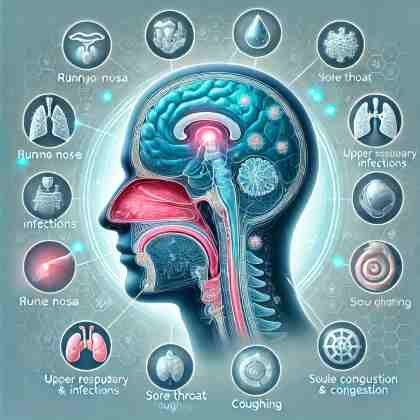
Upper respiratory infections (URIs) are common illnesses affecting the nose, throat, and sinuses, often caused by viruses or bacteria. Symptoms include a runny nose, sore throat, coughing, and congestion.

While most URIs are mild and resolve independently, bacterial infections may require antibiotics such as Amoxicillin, Clindamycin, or Cefpodoxime to fight the infection. However, antibiotics should only be used when necessary, as many URIs are viral and do not respond to this form of treatment.

Recommended Reading: Top 5 Antibiotics For Bed Sores: Symptoms, Staging & Treatment 

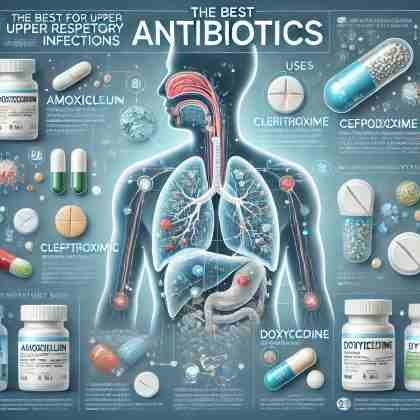
Top 5 Best Antibiotics for Upper Respiratory Infections

Best-Antibiotic-For-Upper-Respiratory-Infection

Recommended Reading: Top 5 Antibiotics For Food Poisoning: Symptoms, Causes, & Treatment

What Are Upper Respiratory Infections?

What is URIs?

Upper respiratory infections (URIs) are viral or bacterial infections affecting the nose, throat, and airways, causing symptoms like cough, congestion, and sore throat. Most URIs resolve within a week with rest and symptom management.
What-Are-Upper-Respiratory-Infections

Upper respiratory infections (URIs) are illnesses that affect the nose, throat, and sinuses, which make up the upper part of the respiratory system. These infections are typically caused by viruses or bacteria, leading to symptoms like runny nose, sore throat, coughing, and congestion.

URIs are very common, especially during colder months, and can vary in severity. While most URIs are mild and go away on their own, some may require treatment, especially if a bacterial infection is involved.

Recommended Reading: List Of Antibiotics Safe In Pregnancy (Uses+Side Effects)

Respiratory Infection Treatment

URIs Treatment

Respiratory infection treatment focuses on relieving symptoms with rest, fluids, and medications like decongestants, cough suppressants, or antibiotics for bacterial infections.

Respiratory-Infection-Treatment

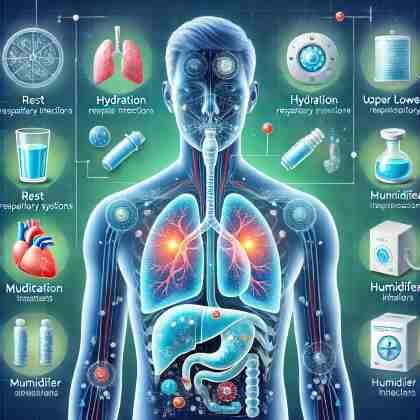
Treatment for respiratory infections depends on the type (bacterial or viral) and symptoms. Common treatments include rest, fluids, and medications. Below is a breakdown of treatments for upper and lower respiratory infections.

Symptoms

  • Runny nose
  • Sore throat
  • Cough
  • Fever
  • Headache
  • Muscle pain

Treatment

  • Rest and stay hydrated with plenty of fluids.
  • Take over-the-counter pain relievers like acetaminophen or ibuprofen.
  • Gargle with warm salt water to ease a sore throat.
  • Use a humidifier to moisten the air.
  • Avoid smoke and irritants.
  • Antibiotics may be prescribed if the infection is bacterial.

Lower Respiratory Infections (LRIs)

Treatment

  • Rest, fluids, and using a humidifier.
  • Take NSAIDs like ibuprofen or naproxen to reduce pain and inflammation.
  • Bronchodilator inhalers may be prescribed to open airways.
  • Antibiotics if a bacterial infection is confirmed.

Viral Infections

  • Antiviral medications may be given in special cases.
  • Other treatments may include supplemental oxygen or techniques like a nasal wash to clear mucus.

When to Seek Medical Advice

Consult a doctor if you experience a high fever, difficulty breathing, or a severe headache.

Recommended Reading: Top 5 Best Antibiotic Tablets For Wound Healing

Top 10 Best Antibiotic For Upper Respiratory Infection

Top-5-Best-Antibiotic-For-Upper-Respiratory-Infection

RankAntibioticCommon Brand Name(s)Primary Use in Bacterial URIWhy It’s Recommended / DetailsTypical Adult DurationNotes / Alternatives for Allergies
1AmoxicillinAmoxil, MoxatagStrep throat (GAS pharyngitis), some sinusitis / otitis mediaFirst-line for GAS pharyngitis (excellent against Group A Strep); narrow-spectrum, low resistance in many cases10 daysPreferred over penicillin V in many guidelines; safe, inexpensive
2Amoxicillin-clavulanateAugmentinAcute bacterial rhinosinusitis, otitis media, resistant casesFirst-line for bacterial sinusitis (covers beta-lactamase producers like H. influenzae & M. catarrhalis); broader coverage5โ€“7 days (adults)High-dose for resistant S. pneumoniae risk; most common empiric choice when coverage needed
3Penicillin V (or benzathine penicillin G injection)Penicillin VK, BicillinStrep throat (GAS pharyngitis)Classic first-line for confirmed GAS to prevent rheumatic fever; very narrow spectrum10 days (oral)Injection (single dose) for compliance issues; still highly effective
4CephalexinKeflexAlternative for pharyngitis or mild casesFirst-generation cephalosporin; good for penicillin-allergic patients (non-anaphylactic)10 daysUsed when penicillin allergy but low cross-reactivity risk
5CefdinirOmnicefAlternative for otitis media, sinusitis, pharyngitisThird-generation cephalosporin; convenient once- or twice-daily dosing5โ€“10 daysCommon second-line or allergy alternative; better compliance
6DoxycyclineVibramycinSinusitis, bronchitis (if bacterial), penicillin allergyBroad coverage including atypicals; good respiratory tissue penetration5โ€“7 daysPreferred non-beta-lactam alternative (CDC recommendation)
7AzithromycinZithromaxLimited use (e.g., some pharyngitis alternatives)Short course (3โ€“5 days); used for compliance or mild cases3โ€“5 daysNot first-line due to high S. pneumoniae resistance (~40%); avoid routine use
8Levofloxacin or MoxifloxacinLevaquin, AveloxSinusitis in penicillin-allergic or resistant casesRespiratory fluoroquinolones; broad coverage5โ€“7 daysReserved due to side effects & resistance concerns; not first-line
9CefuroximeCeftinSinusitis, otitis media alternativesSecond-generation cephalosporin; good against common respiratory pathogens5โ€“10 daysAlternative when amoxicillin-clavulanate not tolerated
10ClindamycinCleocinSome resistant cases or allergy combinationsUsed in combination (e.g., with cefixime) for resistant pathogens or severe allergy casesVariesRarely first-line; good for certain Strep coverage

Best Antibiotics For Upper Respiratory Infections

Antibiotics For URIs

Antibiotics for upper respiratory infections are used to treat bacterial infections, but they’re not effective for viral infections like colds or flu.

Best-Antibiotics-For-Upper-Respiratory-Infections

Antibiotic NameUsage
Amoxicillin / Clavulanic acidOften the first choice for sinusitis and otitis media.
CefpodoximeAlternative for patients allergic to penicillin.
CeftibutenEffective in treating various bacterial infections of the respiratory system.
ClarithromycinCommonly prescribed for patients with penicillin allergies.
ErythromycinSuitable for those allergic to penicillin; used for bacterial respiratory infections.
AcetaminophenHelps relieve pain and fever but is not an antibiotic.
ClindamycinUsed for severe penicillin allergies.
DoxycyclineEffective against certain bacterial infections, including respiratory tract infections.
MacrolidesA class of antibiotics is effective against a range of bacterial respiratory infections.
Nonsteroidal Anti-inflammatory Drugs (NSAIDs)Relieves symptoms such as inflammation and pain, but not an antibiotic.
Penicillin VPreferred for treating group A streptococcal infections (strep throat).
PseudoephedrineA decongestant for symptoms, not an antibiotic.
Table: Best-Antibiotics

Key Points

  • First-Line Choice: Amoxicillin is often the first choice for URIs like sinusitis and ear infections.
  • Augmentin: For more severe infections, amoxicillin-clavulanate (Augmentin) is prescribed.
  • Viral vs. Bacterial: Antibiotics donโ€™t work on viral infections. Always consult a doctor for a proper diagnosis.
  • Strep Throat Test: A throat swab test (strep test) should confirm bacterial infections before antibiotics are taken.

Recommended Reading: Top 5 Antibiotics For Ear Piercing Infection (Infected Ear Piercing)

Best Cough Medicine For Upper Respiratory Infection

Cough Medicine For URIs

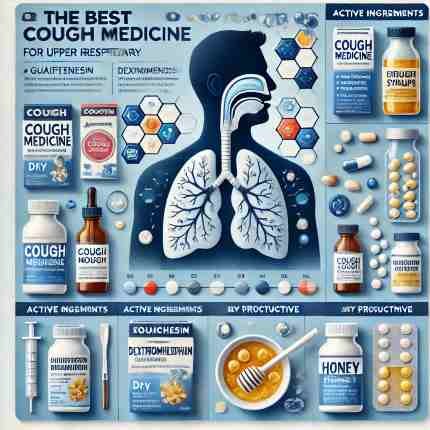
Cough medicine for upper respiratory infections helps relieve symptoms by thinning mucus or suppressing dry coughs, depending on the type of cough.

Best-Cough-Medicine-For-Upper-Respiratory-Infections

Medicine NameCough TypeActive Ingredient(s)How It Helps
Mucinex (Guaifenesin)Productive (with mucus)GuaifenesinThins mucus and helps clear chest congestion.
Robitussin (DM)Dry or ProductiveDextromethorphan, GuaifenesinSuppresses cough and loosens mucus.
DelsymDryDextromethorphanSuppresses cough for up to 12 hours.
Vicks DayQuilDry or ProductiveDextromethorphan, PhenylephrineCough suppressant and nasal decongestant.
Vicks NyQuilDry or ProductiveDextromethorphan, AcetaminophenNighttime cough relief and fever reducer.
Tylenol Cold & FluDry or ProductiveAcetaminophen, Guaifenesin, DextromethorphanRelieves cough, fever, and chest congestion.
Theraflu Cold & CoughDry or ProductiveAcetaminophen, Guaifenesin, PhenylephrineCough suppressant and congestion relief.
Zarbee’s Cough SyrupDry or ProductiveHoney, Ivy LeafNatural remedy for soothing throat and cough.
Sudafed PEProductiveGuaifenesin, PhenylephrineClears chest congestion and nasal passages.
Broncolin Honey SyrupDryHoney, Herbal ExtractsNatural remedy for soothing dry, irritated throat.
Tussin DMDry or ProductiveDextromethorphan, GuaifenesinLoosens mucus and reduces cough frequency.
Table: Best-Cough-Medicine

Recommended Reading: Top 5 Best Antibiotics For Chest Infection (Fast Recovery)

Medicines For Upper Respiratory Infection

Medicines For URIs

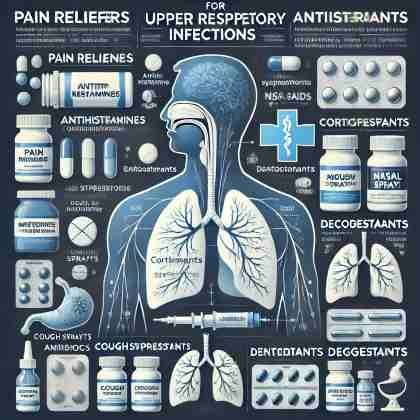
Medicines for upper respiratory infections relieve symptoms like congestion, cough, and fever, and may include decongestants, cough suppressants, or antibiotics for bacterial infections.

Medicines-For-Upper-Respiratory-Infection

MedicineTypePurpose/Use
AcetaminophenPain RelieverReduces fever and relieves body aches.
AntihistaminesAllergy ReliefHelps with sneezing, runny nose, and itchy eyes (e.g., Benadryl, Allegra).
CorticosteroidsAnti-inflammatoryReduces inflammation in the airways and nasal passages.
Nonsteroidal Anti-inflammatory Drugs (NSAIDs)Pain Reliever and Fever ReducerEases pain, fever, and inflammation (e.g., Ibuprofen, Naproxen).
Cough Relief (Antitussives)Cough SuppressantReduces coughing, especially at night (e.g., Dextromethorphan).
GuaifenesinExpectorantHelps thin mucus, making it easier to cough up.
DecongestantsMucous ThinnerEases nasal and sinus congestion (e.g., Pseudoephedrine, Phenylephrine).
PseudoephedrineDecongestantProvides relief from nasal congestion.
AntibioticsBacterial Infection TreatmentUsed when the infection is bacterial (e.g., Amoxicillin, Ceftibuten).
CeftibutenCephalosporin AntibioticTreats bacterial respiratory infections.
DirithromycinMacrolide AntibioticTreats respiratory infections caused by bacteria.
Nasal CorticosteroidsNasal Inflammation ReliefReduces nasal inflammation and congestion (e.g., Fluticasone).
Nasal AntihistaminesAllergy ReliefHelps relieve allergic nasal symptoms.
Nasal SalineSaline SolutionHelps clear nasal passages and ease congestion.
PenicillinAntibioticTreats bacterial infections like tonsillitis and sinusitis caused by bacteria.
Table: Best-Medicines

Other Treatments

  • Saline nasal drops: Clears nasal congestion.
  • Topical Phenol or Lidocaine: Provides throat pain relief.
  • Cromolyn: Reduces allergy symptoms.

Recommended Reading: Antibiotics For Intestinal Bacterial Infection (Stop Vomiting And Diarrhea)

Home Remedies For Upper Respiratory Infection

Home Remedies For URIs

Home remedies for upper respiratory infections include rest, hydration, warm fluids, honey, and steam inhalation to soothe symptoms and aid recovery.

Home-Remedies-For-Upper-Respiratory-Infection

Home RemedyHow It Helps
GingerReduces inflammation and helps with cough relief.
FluidsStay hydrated with water, tea, or broth to thin mucus and ease congestion.
GarlicNatural antibacterial properties may help boost the immune system.
Get Plenty of RestRest allows the body to recover and fight off infection.
HoneySoothes sore throat and suppresses coughing (not for infants under 1 year old).
HumidityHumidifiers add moisture to the air, relieving nasal congestion.
Saline Nasal IrrigationClears nasal passages and reduces sinus pressure.
Saltwater GargleSoothes sore throat and reduces throat irritation.
Soothe Your ThroatHerbal teas, lozenges, or warm liquids help ease throat pain.
Chicken SoupProvides warmth, and nutrition, and helps soothe throat discomfort.
Drink WaterHelps keep mucus thin and the body hydrated to flush out infection.
Essential OilsSteam inhalation with eucalyptus oil can help clear nasal passages.
Steam InhalationBreathing in steam helps loosen mucus and relieve congestion.
Table: Home-Remedies

Key Points to Remember

  • Hydration: Drink plenty of fluids to keep mucus loose and aid the body in fighting infection.
  • Rest: Make sure to get enough sleep for quicker recovery.
  • Saltwater Gargle: Mix salt in warm water and gargle to reduce throat discomfort.
  • Humidifier: Using a cool-mist humidifier can ease congestion and help breathing.
  • Warm Liquids: Warm tea, soup, or lemon water can soothe the throat and help with congestion.
  • Honey: Adding honey to warm water can calm a cough and relieve throat pain.

Recommended Reading: Best Vegan Brain Supplements (For Brain Health)

Fastest Ways to Relieve Upper Respiratory Infection

Fastest Ways to Relieve URIs

The fastest ways to relieve upper respiratory infection include rest, staying hydrated, using a humidifier, and taking over-the-counter medications for symptom relief.

Fastest-Ways-to-Relieve-Upper-Respiratory-Infection

Upper respiratory infections (URIs) are usually caused by viruses, and the best way to manage them is to ease the symptoms while your body fights off the infection. Here are some simple and effective methods:

1. Rest

  • Rest is crucial to allow your body to recover.
  • Sleep and reduce physical activity to boost your immune system.

2. Hydration

  • Drink plenty of fluids like water, tea, or broth to thin mucus and stay hydrated.
  • Staying hydrated helps clear congestion and keeps the throat moist.

3. Saline Nasal Spray

  • Use a saline spray to clear nasal congestion and reduce sinus pressure.
  • This can be used throughout the day to keep airways open.

4. Warm Liquids

  • Drink warm liquids like chicken soup, herbal tea, or lemon water to soothe a sore throat and reduce congestion.
  • Warm drinks help thin mucus and ease discomfort.

5. Over-the-Counter Medications

  • Use pain relievers like acetaminophen or ibuprofen to reduce fever, headaches, and body aches.
  • These medications help manage symptoms but do not cure the infection.

6. Humidifier

  • Use a humidifier to add moisture to the air, which helps ease breathing and reduce congestion.
  • This can also prevent throat dryness, especially at night.

Key Points to Remember

  • Hydration: Drink plenty of fluids to help thin mucus and flush out the infection.
  • Rest: Your body needs rest to fight the infection more effectively.
  • Nasal Spray: Saline sprays help clear out mucus and reduce nasal congestion.
  • Warm Liquids: Soothe your throat and reduce congestion with warm drinks.
  • Medications: Pain relievers help ease fever and body aches.

Recommended Readings: Antibiotics For Skin Rashes And Itching | Strongest Allergy Medicine

Causes of Upper Respiratory Infections

  • Rhinovirus: The most common cause of the common cold.
  • Adenovirus: Causes respiratory infections, including colds and sore throats.
  • Parainfluenza Virus: Responsible for croup and bronchiolitis in children.
  • Respiratory Syncytial Virus (RSV): Affects both children and adults, causing cold-like symptoms.
  • Enterovirus: This can lead to mild respiratory symptoms and fever.
  • Coronavirus: Causes mild cold-like symptoms but can lead to more severe respiratory issues.
  • Coxsackievirus: Known for causing hand, foot, and mouth disease, it can also lead to respiratory symptoms.
  • Epstein-Barr Virus: Commonly associated with infectious mononucleosis, it can also cause respiratory issues.
  • Human Metapneumovirus: Causes respiratory infections, especially in young children and older adults.
  • Bacterial Infections: Less common but can occur as secondary infections after a viral URI.
  • Environmental Factors: Dry air, exposure to smoke, and poor hygiene can increase the risk of URIs.

Key Points

  • Main Cause: Viruses like rhinovirus and adenovirus are the most frequent culprits.
  • Transmission: Spread through airborne droplets or contact with contaminated surfaces.
  • Symptoms: Include runny nose, sneezing, cough, and sore throat.

Recommended Readings: Bacterial Infection In Anus Treatment | Fistula Treatment

Symptoms of Upper Respiratory Infection

  • Fever: Mild to moderate fever, sometimes with chills.
  • Cough: Persistent cough, often with mucus.
  • Sore Throat: Pain or irritation in the throat.
  • Runny or Stuffy Nose: Nasal congestion or runny discharge.
  • Headache: Pressure or pain, especially around the sinus area.
  • Fatigue: Feeling drained of energy.
  • Muscle Aches: Soreness or achiness in muscles.
  • Sneezing: Frequent sneezing episodes.
  • Shortness of Breath: Difficulty breathing or wheezing.
  • Loss of Taste or Smell: Temporary loss of senses.
  • Watery Eyes: Irritated or watery eyes.
  • Facial Pressure: Discomfort or pressure in the face or sinus area.

Recommended Readings: Best Antibiotics For Acne And Pimples

Common Side Effects of Upper Respiratory Infection

Side Effects of URIs

Common side effects of upper respiratory infection include coughing, congestion, sore throat, and mild fever.

Common-Side-Effects-of-Upper-Respiratory-Infection

  • Nasal Congestion: Stuffy nose and difficulty breathing through the nose.
  • Sore Throat: Irritation and pain in the throat, especially when swallowing.
  • Cough: Can be dry or produce mucus, often persistent.
  • Fever: Low to moderate fever, usually below 101ยฐF (38.3ยฐC).
  • Myalgia: Muscle aches and body pain, often accompanied by fatigue.
  • Sneezing: Frequent sneezing due to nasal irritation.
  • Shortness of Breath: Difficulty breathing, especially in more severe cases.
  • Headaches: Mild to moderate headaches due to sinus pressure or dehydration.
  • Fatigue: Feeling tired, weak, or lacking energy.
  • Facial Pressure: Discomfort or pain around the sinus area.
  • Watery Eyes: Excessive tearing due to sinus or nasal irritation.
  • Excess Mucus: Increased mucus production, leading to a runny or stuffy nose.
  • Dizziness: Feeling lightheaded or unsteady.
  • Stuffy Feeling: Sensation of blockage in the ears or sinuses.
  • Vomiting: Rare but can happen in severe cases of infection.

Recommended Readings: Best Antibiotic For Breast Infection | Breast Infection Treatment

How Upper Respiratory Infections (URIs) Spread

URIs spread easily from person to person. Breathing in droplets from an infected personโ€™s cough, sneeze, or even laughter can pass the infection. You can also catch a URI by touching contaminated surfaces such as doorknobs or phones and then touching your nose, mouth, or eyes.

Close contact with someone who has a URI increases the risk of catching the infection. Keeping your hands clean and avoiding close contact with sick people can help reduce the spread.

Recommended Readings: Antibiotics For Stomach Infection | Antibiotics For Gastroenteritis

When to Seek Medical Attention

Itโ€™s important to seek medical attention if you experience any serious symptoms. Difficulty breathing or shortness of breath are warning signs that need urgent care. If you feel chest pain or pressure, it could indicate something more serious.

Severe vomiting, inability to drink fluids, or signs of dehydration also require medical help. If you have confusion, a severe headache, or a high fever lasting more than three days, these are signs to visit a doctor immediately.

Recommended Readings: Best Antibiotics For Vaginal Infection | Vaginal Itching

FAQs

What is an Upper Respiratory Infection (URI)?

An upper respiratory infection (URI) is an infection that affects the nasal passages, throat, and airways. It is often caused by viruses and leads to symptoms like coughing, sneezing, congestion, and sore throat.

What causes upper respiratory infections?

Most URIs are caused by viruses like the common cold, flu, or respiratory syncytial virus (RSV). Bacterial infections can also cause URIs but are less common.

How are upper respiratory infections treated?

For viral infections, treatment focuses on symptom relief using rest, hydration, over-the-counter medications, and remedies like saline nasal spray or cough suppressants. Antibiotics are only used if the infection is bacterial.

Can antibiotics cure a viral upper respiratory infection?

No, antibiotics do not work on viral infections. They are only effective against bacterial infections. Misusing antibiotics can lead to resistance, making future infections harder to treat.

What are the best home remedies for upper respiratory infections?

Common home remedies include drinking fluids, resting, saltwater gargles, using a humidifier, and consuming honey or chicken soup to soothe the throat and ease symptoms.

When should I see a doctor for a URI?

Consult a doctor if symptoms are severe, last more than a week, or if you experience a high fever, difficulty breathing, or suspect a bacterial infection like strep throat.

What is the best over-the-counter medicine for a cough from a URI?

For a productive cough (with mucus), look for an expectorant like guaifenesin. For a dry cough, a cough suppressant like dextromethorphan can help.

Recommended Readings: The Counter Antibiotics For Tooth Infection

Conclusion

Selecting the best antibiotic for an upper respiratory infection (URI) depends on the type of infection, patient history, and any allergies. Amoxicillin/clavulanic acid is commonly used as the first-line treatment. However, for those with allergies or specific medical conditions, other options like cefpodoxime, ceftibuten, clarithromycin, or doxycycline may be suitable alternatives.
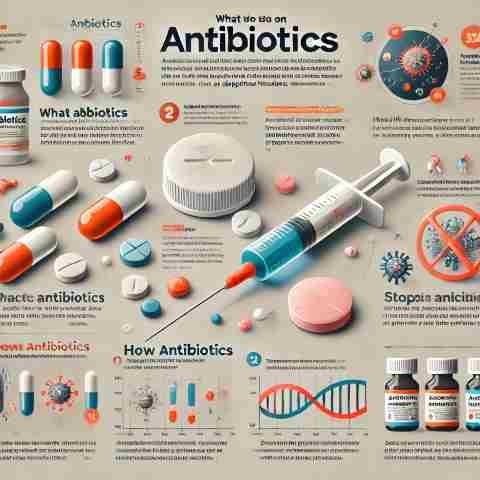
Key Points to Remember

  • Always consult a healthcare professional before starting antibiotics.
  • Proper diagnosis is crucial to ensure the right medication.
  • Avoid misuse of antibiotics to prevent resistance and complications.

Disclaimer
Commissions we earn from partner links on this page do not influence our content. Our editorial content is based on thorough research and insights from qualified medical professionals to ensure the highest standards of accuracy and reliability.

Information provided on Doseway is for educational purposes only. Your health and wellness are unique to you, and the products and services we review may not be suitable for your circumstances. We do not offer personal medical advice, diagnosis, or treatment plans. For specific advice, please consult with a healthcare professional. Doseway adheres to strict editorial integrity standards. To the best of our knowledge, all content is accurate as of the date posted, though offers and information may change. The opinions expressed are the authorโ€™s own and have not been influenced, approved, or endorsed by our partners.

Antibiotics-For-Food-Poisoning

Top 5 Antibiotics For Food Poisoning: Symptoms, Causes, & Treatment

Food poisoning is an illness caused by consuming contaminated food, often due to bacteria, viruses, or parasites. It can result in symptoms like nausea, vomiting, diarrhea, stomach cramps, and fever. The condition varies in severity, with some cases resolving quickly, while others may require medical attention.

When food poisoning is caused by bacterial infections, antibiotics can be an essential treatment. These medications help eliminate harmful bacteria and reduce symptoms.

Recommended Reading: List Of Antibiotics Safe In Pregnancy (Uses+Side Effects)

Top 5 Antibiotics For Food Poisoning: Symptoms, Causes, & Treatment

Top-5-Best-Antibiotics-For-Food-Poisoning

Recommended Reading: Top 5 Best Antibiotic Tablets For Wound Healing

What is Food Poisoning?

Food Poison

Food poisoning is an illness caused by consuming contaminated food, leading to symptoms like nausea, diarrhea, and vomiting.

What-is-Food-Poisoning

Food poisoning is a common illness caused by consuming food or drinks contaminated with harmful bacteria, viruses, parasites, or toxins. These contaminants can make you sick, causing nausea, vomiting, stomach cramps, and diarrhea.

Definition of Food Poison

Food Poison occurs when we eat or drink something that has been contaminated with harmful microorganisms like E. coli, Salmonella, or Norovirus. These organisms are the main culprits behind most food poisoning cases.

How Contamination Happens

Contamination can occur during any stage of food preparation, storage, or handling. Factors like poor hygiene, eating undercooked food, or improperly stored food contribute to the spread of these harmful organisms, leading to foodborne illness.

Recommended Reading: Top 5 Antibiotics For Ear Piercing Infection (Infected Ear Piercing)

Top 10 Antibiotics For Food Poisoning

Antibiotics-For-Food-Poisoning

RankAntibioticCommon Brand NamesMain Targeted PathogensTypical Use in Food PoisoningKey Details / NotesCommon Side Effects / Cautions
1AzithromycinZithromax, ZmaxCampylobacter, Shigella, Salmonella, some E. coliFirst-line for many bacterial cases, especially severe diarrhea or dysenteryOften preferred due to resistance to older drugs; single dose or 3-day course commonGI upset, heart rhythm changes (rare), good for kids
2CiprofloxacinCiproShigella, Salmonella, E. coli (traveler’s diarrhea), some CampylobacterEmpiric therapy in adults (historically first-line)Fluoroquinolone; high resistance in some regions (e.g., Campylobacter, Shigella)Tendon rupture risk, nerve damage, avoid in kids/pregnancy
3RifaximinXifaxanNon-invasive E. coli (traveler’s diarrhea), some othersTraveler’s diarrhea without fever/bloodPoorly absorbed (gut-specific); safer profile, fewer systemic effectsGenerally well-tolerated, headache, nausea
4Rifamycin (SV)AemcoloTraveler’s diarrhea (E. coli)Similar to rifaximin for non-invasive casesNon-absorbable; used for specific traveler’s diarrheaMinimal absorption, low side effects
5LevofloxacinLevaquinSimilar to ciprofloxacin (Shigella, Salmonella)Alternative fluoroquinolone for empiric treatmentBroader coverage but similar resistance concernsSimilar to ciprofloxacin (tendon, CNS risks)
6Trimethoprim-Sulfamethoxazole (TMP-SMX)Bactrim, SeptraShigella, Salmonella (if susceptible)Alternative in children or when others not suitableResistance common; not for bacteremiaRash, allergy (sulfa), kidney effects
7DoxycyclineVibramycinVibrio, some Salmonella/CampylobacterCholera or specific casesTetracycline class; less common for typical food poisoningPhotosensitivity, teeth staining (kids), GI upset
8ErythromycinEry-TabCampylobacterAlternative for Campylobacter (macrolide like azithromycin)Used when azithromycin not available; shortens sheddingGI upset (strong), heart effects
9CeftriaxoneRocephinSevere Shigella, Salmonella, invasive casesInjectable for hospitalized/severe patientsThird-generation cephalosporin; used when oral not possibleInjection site pain, allergy risk
10MetronidazoleFlagylSome anaerobic bacteria or mixed infectionsRare for typical food poisoning; more for parasites (e.g., Giardia) or C. diffNot primary for common bacterial causesMetallic taste, avoid alcohol, neuropathy risk

Causes of Food Poisoning

Food Poison Causes

Food poisoning is caused by consuming contaminated food, often due to bacteria, viruses, parasites, or toxins.

Causes-of-Food-Poisoning

CauseDetailsCommonly Found In
E. coliA bacterium that causes severe stomach cramps, diarrhea, and vomiting.Undercooked beef, raw vegetables, unpasteurized milk, contaminated water
NorovirusA virus that causes vomiting and diarrhea, highly contagious.Contaminated water, shellfish, uncooked vegetables, fruits
SalmonellaBacteria that cause fever, diarrhea, and cramps.Raw poultry, eggs, unpasteurized dairy, contaminated fruits and vegetables
CampylobacterA bacterium that causes gastrointestinal infections.Undercooked poultry, unpasteurized milk, contaminated water, shellfish
ListeriaA bacterium that can cause serious infections, particularly in pregnant women.Deli meats, soft cheeses, unpasteurized dairy
VirusesViruses like Norovirus and Hepatitis A can spread through contaminated food.Unwashed produce, contaminated water, improperly cooked or handled food
ShigellaCauses diarrhea, fever, and stomach cramps.Contaminated water, uncooked foods, poor hygiene during food handling
Clostridium botulinumProduces toxins that lead to botulism, a life-threatening illness.Improperly canned foods, smoked fish, fermented foods
ParasitesParasites like Giardia and Cryptosporidium can cause foodborne illness.Contaminated water, undercooked meat, seafood
SeafoodCan carry harmful bacteria or toxins if not properly cooked or stored.Shellfish, raw fish
Staphylococcus aureusBacteria that produce toxins in food are left at room temperature.Milk, meat, salads, bakery products
Hepatitis AA virus that affects the liver, is spread through contaminated food or water.Raw shellfish, contaminated water, poor hand hygiene
Raw MeatOften contains harmful bacteria or parasites.Undercooked beef, poultry, pork
Clostridium perfringensBacteria that multiply quickly in food kept at unsafe temperatures.Cooked meats, gravies, stews that have been left out too long
Unpasteurized DairyCan contain harmful bacteria like Listeria and Salmonella.Raw milk, soft cheeses
VibrioBacteria found in seafood, especially shellfish, cause serious illness.Raw oysters, undercooked seafood
Table: Causes-of-Food-Poisoning

Common Contributors to Food Poisoning

  • Contaminated food: Improperly cooked or stored food, or food handled by someone sick or with poor hygiene.
  • Expired food: Food that has passed its โ€œuse-byโ€ date.
  • Improper food handling: Poor hand hygiene or cross-contamination during food preparation.
  • Foods left out too long: Foods like rice, leftovers, and sauces that have been left at room temperature for too long.

Prevention Tips

  • Wash hands regularly.
  • Keep raw and cooked foods separate.
  • Cook foods thoroughly and refrigerate promptly.
  • Avoid consuming expired or improperly stored foods.

Recommended Reading: Top 5 Best Antibiotics For Chest Infection (Fast Recovery)

Symptoms of Food Poisoning

Symptoms of Poisoning

Symptoms of food poisoning include nausea, vomiting, diarrhea, stomach cramps, and sometimes fever.

Symptoms-of-Poisoning

Mild Symptoms

  • Nausea: Feeling like you need to vomit.
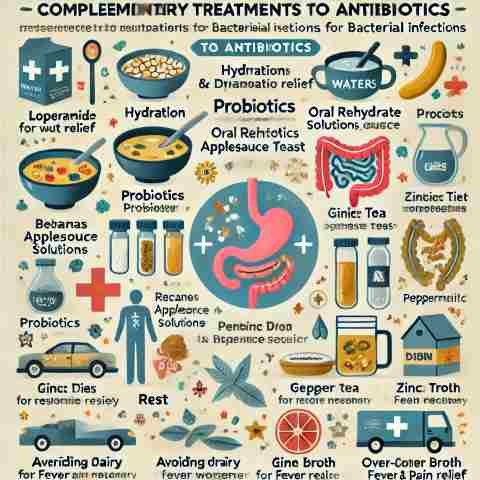
  • Vomiting: Throwing up after eating contaminated food.
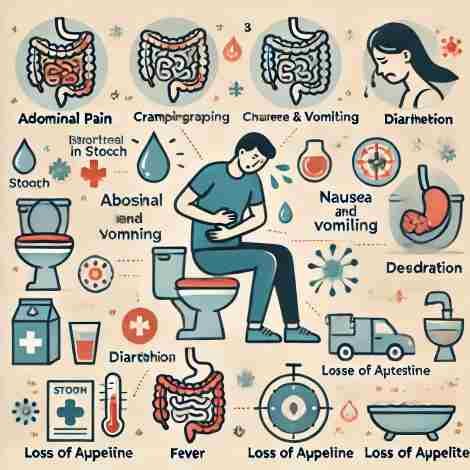
  • Diarrhea: Loose or watery stools, are often the body’s way of getting rid of harmful substances.
  • Stomach Pain or Cramps: Discomfort in your belly area.
  • Fever: A mild fever may occur as your body fights off the infection.

Severe Symptoms

  • Fever Over 102ยฐF: A high fever could be a sign of a more serious infection.
  • Bloody Diarrhea: Blood in your stool could indicate severe food Poison.
  • Persistent Vomiting: Vomiting so much that you canโ€™t keep liquids down, leading to dehydration.
  • Dehydration: Signs include dry mouth, dark urine, and feeling dizzy or weak.

Complications

  • Severe Dehydration: This can lead to dizziness, confusion, or fainting, requiring immediate medical attention.
  • Organ Failure: In very rare cases, untreated severe food Poison can lead to organ issues like kidney failure.

Recommended Reading: Antibiotics For Intestinal Bacterial Infection (Stop Vomiting And Diarrhea)

Antibiotics For Food Poisoning

List Of Best Antibiotics

Antibiotics for food poisoning are used to treat bacterial infections like E. coli or Salmonella in severe cases.

Antibiotics-For-Food-Poisoning

AntibioticUsed ForKey Details
Azithromycin (Zithromax)Severe cases of food Poison or travelers’ diarrhea caused by bacteria like E. coliEffective against bacterial infections causing diarrhea, especially in travelers.
Ciprofloxacin (Cipro)Severe food Poison caused by Salmonella and CampylobacterWidely used for bacterial infections; strong action against severe cases.
Rifaximin (Xifaxan)Diarrhea caused by non-invasive strains of E. coliUsed for travelers’ diarrhea; less likely to cause resistance.
Levofloxacin (Levaquin)Severe bacterial food Poisoning, especially with febrile diarrhea caused by ShigellaPrescribed for infections causing fever and stomach upset.
Metronidazole (Flagyl)Food poisoning is caused by anaerobic bacteria like ClostridiumTargets anaerobic bacteria, useful in severe infections.
DoxycyclineBacterial infections related to food poisoningOften used when the bacteria are resistant to other treatments.
AmoxicillinGeneral bacterial infections causing food poisoningWidely used and effective against common bacterial strains.
Rifamycin (Aemcolo)Diarrhea caused by E. coliCommonly used for travelers’ diarrhea, targeting specific E. coli strains.
ClindamycinBacterial infections causing severe food PoisonPrescribed for cases where other antibiotics are ineffective.
TetracyclineBacterial food Poison cases resistant to other antibioticsEffective against a wide range of bacterial infections.
Table: Antibiotics-For-Food-Poisoning

When to See a Doctor

  • If symptoms are severe or cannot be managed at home.
  • If diarrhea persists for more than a few days.
  • In cases of severe dehydration, dizziness, or blurry vision.

Other Treatments

  • Anti-parasitics: Medications like Zentel, Mebex, and ozonide may be used if parasites are the cause.
  • Hydration: Staying hydrated is crucial to avoid dehydration from diarrhea and vomiting.

Recovery Time

Most cases of food poisoning resolve within 24 to 48 hours, with proper hydration and care. Antibiotics help in more severe bacterial cases.

Recommended Reading: Best Vegan Brain Supplements (For Brain Health)

When Antibiotics Are Needed

Antibiotics are not always necessary for food poisoning. They are typically prescribed for severe bacterial infections that the body cannot handle on its own. Common causes needing antibiotics include bacteria like Salmonella, E. coli, or Shigella.

When to Seek Medical Attention

Seek medical help if:

  • Diarrhea lasts more than 3 days or is bloody.
  • Severe dehydration occurs (dizziness, dry mouth, little or no urination).
  • You have a high fever (over 102ยฐF).
  • Persistent vomiting that prevents you from keeping liquids down.

Criteria For Prescription

Doctors will prescribe antibiotics based on:

  • The type of bacteria causing the infection.
  • Severity of symptoms.
  • Duration of illness.
    However, antibiotics wonโ€™t help if food poisoning is caused by viruses or toxins. In such cases, rest and hydration are the main treatments.

Recommended Readings: Antibiotics For Skin Rashes And Itching | Strongest Allergy Medicine

How to Cure Food Poisoning Fast

How to Cure Fastly?

To cure food poisoning quickly, stay hydrated, rest, and eat bland foods like rice or crackers.

How-to Cure-Food-Poisoning-Fast

Hydration

Staying hydrated is crucial. Drink plenty of water, oral rehydration solutions, or broths to replace lost fluids and electrolytes due to diarrhea or vomiting. This helps prevent dehydration.

Rest and Diet

Get enough rest to help your body recover. Once nausea improves, start eating bland foods like bananas, crackers, or rice to ease back into your regular diet without upsetting your stomach.

Over-the-Counter Medications

For symptom relief, you can use antidiarrheals like Loperamide (Imodium) or Bismuth Subsalicylate (Pepto-Bismol) to control diarrhea and reduce discomfort.

Avoid Certain Foods

While recovering, avoid alcohol, caffeine, spicy foods, and fatty meals, as they can irritate your stomach and slow down the healing process. Stick to gentle, easily digestible foods until you’re back to normal.

Recommended Readings: Bacterial Infection In Anus Treatment | Fistula Treatment

Side Effects & Precautions of Antibiotics

Side Effects & Precautions

Antibiotics may cause nausea, diarrhea, or allergic reactions; use only when prescribed to avoid resistance.

Side-Effects-of-Antibiotics

Common Side Effects

  • Nausea: Feeling queasy or sick to your stomach.
  • Diarrhea: Loose or frequent bowel movements.
  • Abdominal pain: Discomfort or cramping in the stomach area.
  • Allergic reactions: Rashes, itching, or swelling as a response to antibiotics.
  • Dizziness: Feeling lightheaded or faint after taking antibiotics.
  • Headaches: Persistent or mild headaches caused by certain antibiotics.
  • Yeast infections: Imbalance of bacteria, leading to yeast overgrowth.
  • Loss of appetite: Reduced desire to eat during the course of antibiotic treatment.
  • Metallic taste: Unpleasant taste in the mouth after taking antibiotics.
  • Skin sensitivity: Increased sensitivity to sunlight, leading to sunburn.

Severe Reactions

  • Bloody stools: Serious sign requiring immediate medical help.
  • Prolonged vomiting: Continuous vomiting could indicate a severe reaction.
  • Difficulty breathing: Signs of an allergic reaction requiring urgent care.

Precautions

  • Proper Diagnosis: Antibiotics should only be taken with a doctorโ€™s recommendation to avoid unnecessary use.
  • Antibiotic Resistance: Overuse can lead to bacteria becoming resistant, making future infections harder to treat.
  • Not for Viruses: Antibiotics are ineffective against viral infections and should not be used in such cases.
  • Complete the Course: Always finish the prescribed antibiotic course, even if symptoms improve early.
  • Avoid Combining with Alcohol: Alcohol can interfere with the effectiveness of antibiotics and worsen side effects.

Recommended Readings: Best Antibiotics For Acne And Pimples

Prevention Of Food Poisoning

Food Handling and Hygiene

  • Wash Hands: Always wash your hands thoroughly with soap and water before and after handling food, especially raw meats, to prevent bacteria transfer.
  • Avoid Cross-Contamination: Keep raw foods like meat, poultry, and seafood separate from ready-to-eat foods such as fruits and vegetables. Use separate cutting boards and utensils for raw and cooked food.
  • Cook Food Properly: Ensure that foods, especially meat, poultry, and eggs, are cooked to the correct internal temperature to kill harmful bacteria. Use a food thermometer to check.

Proper Storage

  • Refrigerate Promptly: Store perishable items like dairy, meats, and leftovers in the fridge or freezer within two hours to prevent bacterial growth.
  • Reheat Leftovers: When reheating food, make sure it’s steaming hot throughout to kill any lingering bacteria.

Other Preventive Measures

  • Avoid Raw Foods: Steer clear of raw or undercooked meats, eggs, and unpasteurized dairy products, which are more likely to harbor harmful bacteria.
  • Discard Leftover Food: If food has been sitting out at room temperature for more than two hours, throw it away. Bacteria multiply quickly at room temperature, making the food unsafe to eat.

Recommended Readings: The Counter Antibiotics For Tooth Infection

FAQs

What causes food poisoning?

Food poisoning is caused by eating contaminated food, usually with bacteria, viruses, parasites, or toxins.

How can I prevent food poisoning?

To prevent food poisoning, wash hands regularly, cook food thoroughly, and avoid cross-contamination between raw and cooked foods.

What are the common symptoms of food poisoning?

Common symptoms include nausea, vomiting, diarrhea, stomach pain, and fever. Severe cases may include dehydration and bloody stools.

When should I see a doctor for food poisoning?

See a doctor if symptoms last more than 2-3 days, or if you experience severe dehydration, high fever, or bloody diarrhea.

Do I need antibiotics for food poisoning?

Antibiotics are only necessary for bacterial infections. They wonโ€™t work for food poisoning caused by viruses or toxins.

How long does food poisoning last?

Most cases resolve in 1-3 days, but recovery may take longer depending on the severity and cause.

What foods are most likely to cause food poisoning?

Foods like raw meat, poultry, eggs, seafood, and unpasteurized dairy products are more likely to cause food poisoning if not handled properly.

How do I stay hydrated during food poisoning?

Drink water, oral rehydration solutions, or clear broths to replenish lost fluids and prevent dehydration.

Can food poisoning be fatal?

In rare cases, untreated severe food poisoning can lead to serious complications like organ failure or even death, especially in vulnerable individuals.

What is food poisoning?

Food poisoning occurs when you eat food contaminated with harmful bacteria, viruses, or toxins, leading to digestive issues like nausea, diarrhea, and vomiting.

What foods commonly cause food poisoning?

Foods like raw meats, poultry, seafood, unwashed fruits, and unpasteurized dairy products are more likely to cause food poisoning.

Recommended Readings: Best Antibiotic For Breast Infection | Breast Infection Treatment

Conclusion

Summary of Findings

Food poisoning is a frequent illness that varies from mild to severe. While antibiotics can treat bacterial food poisoning, simple remedies like hydration and rest are essential for recovery.

Final Recommendations

To prevent food poisoning, always follow proper food safety practices such as washing hands, cooking food thoroughly, and avoiding cross-contamination. If symptoms worsen or last for several days, consult a doctor. Only use antibiotics if prescribed by a healthcare provider, and ensure they are specific to the bacterial infection causing the illness.

Disclaimer
Commissions we earn from partner links on this page do not influence our content. Our editorial content is based on thorough research and insights from qualified medical professionals to ensure the highest standards of accuracy and reliability.

Information provided on Doseway is for educational purposes only. Your health and wellness are unique to you, and the products and services we review may not be suitable for your circumstances. We do not offer personal medical advice, diagnosis, or treatment plans. For specific advice, please consult with a healthcare professional. Doseway adheres to strict editorial integrity standards. To the best of our knowledge, all content is accurate as of the date posted, though offers and information may change. The opinions expressed are the authorโ€™s own and have not been influenced, approved, or endorsed by our partners.

Top-5-Best-Antibiotics-For-Ear-Piercing-Infection

Top 5 Antibiotics For Ear Piercing Infection (Infectedย Ear Piercing)

Ear piercings are a popular form of body art, but they can sometimes lead to infections, especially when proper aftercare is not followed. Infections can occur if bacteria enter the piercing site through unclean tools, poor hygiene, or tight earrings that reduce blood flow.

Common symptoms of an infected ear piercing include redness, swelling, pain, and discharge of pus. For mild infections, topical antibiotics like Neosporin or Bacitracin can help treat the area. However, for more serious infections, oral antibiotics such as Cephalexin, Clindamycin, or Ciprofloxacin are needed to fully eliminate the infection.

Recommended Reading: Top 5 Best Antibiotics For Chest Infection (Fast Recovery)

Top 5 Antibiotics For Ear Piercing Infection (Infected Ear Piercing)

Best-Antibiotics-For-Ear-Piercing-Infection

Recommended Reading: Antibiotics For Intestinal Bacterial Infection (Stop Vomiting And Diarrhea)

What are Ear Piercing Infection?

Ear Piercing Infection

An ear piercing infection occurs when bacteria enter the pierced area, causing redness, swelling, pain, or pus discharge.

Ear-Piercing-Infection

An ear piercing infection occurs when bacteria enter the pierced area, leading to redness, swelling, pain, or discharge. After getting your ears pierced, it’s common to experience mild discomfort, but if the area becomes swollen, painful, hot, or very red (or darker depending on your skin tone), it may indicate an infection.

Other signs include blood or pus leaking from the piercing. The pus can be white, yellow, or green, which often points to bacterial growth. You may also feel feverish, shivery, or generally unwell as the infection spreads. It’s important to treat these symptoms early to prevent the infection from worsening.

Recommended Reading: Best Vegan Brain Supplements (For Brain Health)

Causes of Ear Piercing Infection

  • Unsterile Equipment: Using unclean tools or earrings during piercing can introduce bacteria to the wound.
  • Improper Aftercare: Not cleaning the piercing regularly or touching it with dirty hands can lead to infection.
  • Tight Earrings: Earrings that are too tight reduce blood flow, increasing the chances of infection.
  • Trauma or Injury: Scratching, pulling, or rough handling of the piercing site can cause injuries that may become infected.
  • Allergic Reactions: Some people are allergic to metals like nickel, which can cause inflammation and infection.
  • Poor Hygiene: Not maintaining good personal hygiene can allow dirt and bacteria to accumulate around the piercing.
  • Swimming in Dirty Water: Swimming in pools, lakes, or oceans with contaminated water can expose the piercing to harmful bacteria.
  • Touching the Piercing Often: Constantly touching or rotating the earring with unclean hands increases the risk of infection.
  • Using Unsuitable Earrings: Wearing earrings made of low-quality or non-hypoallergenic materials can irritate the skin, leading to infection.
  • Sleeping on the Piercing: Pressure from sleeping on a fresh piercing can irritate the area, causing swelling and infection.
  • Delayed Healing: Some piercings take longer to heal, making them more vulnerable to bacteria over time.
  • Exposure to Sweat or Dust: Excessive sweat or dust can build up around the piercing, encouraging bacterial growth.

Recommended Readings: Antibiotics For Skin Rashes And Itching | Strongest Allergy Medicine

Symptoms of Ear Piercing Infections

Symptoms

Symptoms of an ear piercing infection include redness, swelling, pain, and pus discharge from the piercing site.

Symptoms-of-Ear-Piercing-Infections

  • Redness and Swelling: The skin around the piercing becomes noticeably red, swollen, and may feel warm.
  • Discharge: If you notice pus coming out of the piercing, especially if itโ€™s white, yellow, or green, it could be a sign of infection.
  • Pain and Fever: Increased pain at the piercing site along with a fever or feeling unwell may indicate the infection is worsening.
  • Itching and Irritation: Constant itching or a burning sensation around the piercing may signal an infection.
  • Throbbing Pain: A steady, throbbing pain that doesnโ€™t improve may suggest that bacteria have entered the wound.
  • Granulomas: Small bumps, known as granulomas, can form around the piercing as the body responds to infection.
  • Crusting Around Piercing: A crusty buildup around the pierced area may develop, which can indicate bacterial infection.
  • Bleeding: Unusual or continued bleeding from the piercing site can be a sign of an underlying problem.
  • Bad Odor: A foul smell coming from the piercing can be caused by bacteria thriving in the infected area.
  • Prolonged Healing Time: If the piercing is taking longer than usual to heal, infection could be a factor.
  • Increased Sensitivity: The area around the piercing becomes extra sensitive to touch, more than normal healing would cause.

Recommended Readings: Bacterial Infection In Anus Treatment | Fistula Treatment

List Of Best Antibiotics For Ear Piercing Infections

RankAntibioticTypeCommon Use / IndicationKey Details / CoverageTypical Notes / Warnings
1CiprofloxacinOral (Fluoroquinolone)Preferred for cartilage/high ear infections (perichondritis)Excellent against Pseudomonas aeruginosa + Staphylococcus; drug of choice for cartilageOften first-line for upper ear; avoid in children/pregnancy unless necessary
2Mupirocin (Bactroban)Topical ointmentMild/local infections, applied directly to siteTargets Staphylococcus (including some MRSA); prescription strength commonFrequently recommended by piercers/dermatologists for earlobe
3Bacitracin (often in Neosporin/Polysporin)Topical ointmentMild superficial infectionsBroad coverage for gram-positive bacteria like Staph/Strep; over-the-counter optionsNeosporin includes it; good for initial home care but may irritate some skin
4Cephalexin (Keflex)Oral (1st-gen Cephalosporin)General/moderate skin/soft tissue infectionsGood coverage for Staph and Strep; common for non-Pseudomonas casesFrequently mentioned in guidelines for piercing infections
5ClindamycinOral or TopicalAlternative for Staph/Strep, including some MRSACovers gram-positive bacteria; useful if beta-lactam allergyOral for more severe cases; topical less common for piercings
6LevofloxacinOral (Fluoroquinolone)Similar to ciprofloxacin; cartilage/auricular cellulitisBroad coverage including Pseudomonas and common skin pathogensAlternative fluoroquinolone; used when ciprofloxacin not suitable
7Amoxicillin/Clavulanate (Augmentin)Oral (Penicillin + beta-lactamase inhibitor)Broader coverage for mixed infectionsEffective against Staph/Strep + some gram-negatives; mentioned for oral piercings tooCatch-all option in some practices
8Polysporin (Polymyxin B + Bacitracin)Topical ointmentOver-the-counter mild infection careSimilar to bacitracin combos; targets gram-positive and some gram-negativePopular non-prescription choice for cleaning + application
9Trimethoprim/Sulfamethoxazole (Bactrim)OralMRSA-suspected or resistant Staph infectionsGood for community-acquired resistant strainsUsed if methicillin resistance suspected
10Neosporin (Neomycin + Polymyxin B + Bacitracin)Topical ointmentMild infections, preventive/home careTriple antibiotic coverage for common skin bacteriaWidely available OTC; some people allergic to neomycin

Top 10 Antibiotics For Ear Piercing Infections

Best Antibiotics

Antibiotics for ear piercing infections help treat bacterial infections, reducing pain, and swelling, and preventing further complications.

Antibiotics For Ear Piercing Infection

1. Cephalexin

  • Type: Oral antibiotic
  • Purpose: Cephalexin is used to treat skin infections caused by bacteria like Staphylococcus and Streptococcus.
  • How It Works: It disrupts bacterial cell walls, leading to bacterial death.
  • Effectiveness: Effective for both mild and severe ear piercing infections.
  • Side Effects: May cause nausea, diarrhea, or stomach upset.

2. Clindamycin

  • Type: Oral antibiotic
  • Purpose: Often prescribed for patients allergic to penicillin, clindamycin targets a wide range of bacterial infections.
  • How It Works: It prevents bacteria from making essential proteins, stopping their growth.
  • Effectiveness: Highly effective for serious infections or abscesses in ear piercings.
  • Side Effects: This can cause gastrointestinal issues such as diarrhea or stomach pain.

3. Ciprofloxacin

  • Type: Oral antibiotic
  • Purpose: Particularly effective against Pseudomonas bacteria, which can infect cartilage piercings.
  • How It Works: It disrupts bacterial DNA replication, causing the bacteria to die.
  • Effectiveness: Ideal for treating infections involving Pseudomonas.
  • Side Effects: May cause dizziness, nausea, and light sensitivity.

4. Trimethoprim/Sulfamethoxazole (Bactrim)

  • Type: Oral antibiotic
  • Purpose: This combination drug treats a variety of bacterial skin infections, including those from piercings.
  • How It Works: It blocks two key bacterial enzymes needed for their survival.
  • Effectiveness: Commonly used for resistant infections.
  • Side Effects: May cause rash, nausea, or sun sensitivity.

5. Mupirocin (Bactroban)

  • Type: Topical antibiotic
  • Purpose: Used to treat localized skin infections around piercings.
  • How It Works: It stops bacteria from producing necessary proteins, leading to their death.
  • Effectiveness: Best for minor surface infections or irritation.
  • Side Effects: This may cause irritation or a burning sensation at the application site.

6. Amoxicillin

  • Type: Oral antibiotic
  • Purpose: A widely used antibiotic to treat bacterial infections, including those caused by ear piercings.
  • How It Works: It kills bacteria by interfering with their cell wall formation.
  • Effectiveness: Commonly prescribed for mild to moderate infections.
  • Side Effects: Nausea, vomiting, or rash.

7. Azithromycin

  • Type: Oral antibiotic
  • Purpose: Used for a wide range of infections, including ear piercing infections.
  • How It Works: Azithromycin inhibits protein synthesis in bacteria, stopping their growth.
  • Effectiveness: Effective for mild to moderate infections.
  • Side Effects: May cause diarrhea, stomach pain, or headaches.

8. Doxycycline

  • Type: Oral antibiotic
  • Purpose: Often prescribed for infections caused by bacteria in piercings.
  • How It Works: Prevents bacteria from growing by inhibiting protein production.
  • Effectiveness: Works well for more resistant bacterial strains.
  • Side Effects: May cause sun sensitivity, upset stomach, or headaches.

9. Neomycin (Neosporin)

  • Type: Topical antibiotic
  • Purpose: Used to treat minor infections and prevent bacterial growth on the skin.
  • How It Works: Kills bacteria by interfering with their protein synthesis.
  • Effectiveness: Suitable for preventing mild infections in fresh piercings.
  • Side Effects: This may cause local irritation or allergic reactions.

10. Ceftriaxone

  • Type: Injectable antibiotic
  • Purpose: Used for severe infections that require fast intervention.
  • How It Works: Kills bacteria by disrupting their cell wall formation.
  • Effectiveness: Effective for serious and deep infections.
  • Side Effects: Pain at the injection site, rash, or allergic reactions.

Recommended Readings: Best Antibiotics For Acne And Pimples

Best Antibiotics For Ear Piercing Infections In Children

Best Antibiotics For Children

The best antibiotics for ear piercing infections in children typically include amoxicillin or topical ointments like mupirocin to treat bacterial infections effectively.

Best-Antibiotics-For-Ear-Piercing-Infections-In-Children

AntibioticTypeTreats
CephalexinOral antibioticInfections caused by Streptococcus and Staphylococcus bacteria.
ClindamycinOral antibioticEffective for Streptococcus and Staphylococcus infections, especially if allergic to penicillin.
CiprofloxacinFluoroquinolone antibioticTreats infections caused by Pseudomonas bacteria.
Trimethoprim/SulfamethoxazoleOral antibioticUsed for infections caused by Methicillin-Resistant Staphylococcus Aureus (MRSA).
Amoxicillin/Clavulanic AcidOral antibioticBroad-spectrum antibiotics are effective for many ear infections.
AzithromycinMacrolide antibioticFor patients allergic to penicillin, treats mild infections.
DicloxacillinOral antibioticEffective against penicillin-resistant Staphylococcus.
ErythromycinMacrolide antibioticAlternative for those allergic to penicillin, treats skin infections.
DoxycyclineTetracycline antibioticSometimes used for resistant infections in older children.
Mupirocin (topical)Topical antibioticApplied directly to the infected piercing site to control localized infections.
Bacitracin (topical)Topical antibioticFor minor skin infections around the piercing site.
Table: Best-Antibiotics

Recommended Readings: The Counter Antibiotics For Tooth Infection

Best Antibiotics For Ear Piercing Infections In Adults

Best Antibiotics For Adults

For adults, the best antibiotics for ear piercing infections include oral antibiotics like cephalexin or topical options such as neomycin ointment.

Best-Antibiotics-For-Ear-Piercing-Infections-In-Adults

AntibioticTypeTreats
CephalexinOral antibioticEffective for Streptococcus and Staphylococcus bacteria.
ClindamycinOral antibioticTreats infections caused by Streptococcus and penicillin-resistant Staphylococcus.
CiprofloxacinFluoroquinolone antibioticUsed for infections caused by Pseudomonas bacteria.
Amoxicillin/ClavulanateOral antibioticA broad-spectrum antibiotic for treating multiple types of ear infections.
Trimethoprim/SulfamethoxazoleOral antibioticTreats infections caused by Methicillin-Resistant Staphylococcus Aureus (MRSA).
DoxycyclineTetracycline antibioticUsed in resistant or severe infections in adults.
AzithromycinMacrolide antibioticAn alternative for those allergic to penicillin, treats mild infections.
Mupirocin (topical)Topical antibioticEffective for treating localized skin infections around the piercing.
Bacitracin (topical)Topical antibioticUsed for superficial skin infections at the piercing site.
Neosporin (topical)Topical antibioticOver-the-counter ointment for mild infections.
Table: Best-Antibiotics

Recommended Readings: Best Antibiotic For Breast Infection | Breast Infection Treatment

Antihistamines For Ear Piercing Infection

Antihistamines For Ear Piercing Infection

Antihistamines can help reduce itching and swelling caused by allergic reactions during an ear-piercing infection.

Antihistamines-For-Ear-Piercing-Infection

AntihistamineTypePurpose
Diphenhydramine (Benadryl)Oral, Over-the-counterReduces itching and swelling caused by an allergic reaction.
Cetirizine (Zyrtec)Oral, Over-the-counterHelps with itching and mild allergic reactions without causing drowsiness.
Loratadine (Claritin)Oral, Over-the-counterNon-drowsy antihistamine for allergic reactions and swelling.
Fexofenadine (Allegra)Oral, Over-the-counterEffective for reducing swelling and itching.
Chlorpheniramine (Chlor-Trimeton)Oral, Over-the-counterHelps with itchiness and irritation but may cause drowsiness.
Levocetirizine (Xyzal)Oral, Over-the-counterLong-lasting antihistamine for itch relief and allergies.
Hydroxyzine (Atarax)Prescription oralUsed for stronger allergic reactions or persistent itching.
RupatadineOral, PrescriptionHelps with swelling and allergies related to piercings.
Meclizine (Antivert)Oral, Over-the-counterProvides relief for itching and allergies.
Desloratadine (Clarinex)Oral, PrescriptionNon-drowsy antihistamine for reducing itching and swelling.
Table: Best-Antihistamines

Recommended Readings: Antibiotics For Stomach Infection | Antibiotics For Gastroenteritis

Home Remedies For Ear Piercing Infections

Home Remedies For Ear Piercing Infections

Home remedies for ear piercing infections include cleaning with saline solution, applying warm compresses, and using tea tree oil for its antibacterial properties.

Home Remedies For Ear Piercing Infections

Remedy/TipDetails
Warm CompressApply a warm compress to the infected area to reduce swelling and ease discomfort.
Antiseptic SolutionsClean the piercing site twice a day with a sterile saline solution or antiseptic.
Avoid Tight JewelryEnsure earrings are not too tight to avoid restricting blood flow, which worsens infection.
Use Saltwater SoakSoak the piercing in a solution of salt and warm water to reduce bacteria.
Tea Tree OilApply diluted tea tree oil to the area to help kill bacteria and soothe irritation.
Aloe Vera GelApply aloe vera gel to the piercing to reduce inflammation and promote healing.
Chamomile CompressUse a chamomile tea bag compress to soothe and heal the infected area naturally.
Keep Piercing DryAvoid getting the piercing wet, especially from pools or sweat, to prevent bacterial growth.
Hydrogen PeroxideClean the piercing with diluted hydrogen peroxide to remove bacteria, but donโ€™t overuse it.
Change to Hypoallergenic JewelrySwitch to hypoallergenic earrings like surgical steel or gold to reduce irritation.
Avoid Sleeping on PiercingPrevent pressure on the piercing by sleeping on the opposite side to avoid irritation.
Table: Home-Remedies

Recommended Readings: Best Antibiotics For Vaginal Infection | Vaginal Itching

Risks and Complications of Piercing Infections

  • Allergic Reactions: Some people may have allergic responses to metals like nickel found in earrings, causing irritation, redness, or rash.
  • Keloids and Scarring: A keloid is an overgrowth of scar tissue that can form around the piercing, resulting in a noticeable, sometimes painful lump.
  • Severe Infections: If the infection is not treated, it may spread beyond the ear, potentially causing serious conditions like septicemia (blood infection).
  • Abscesses: Pus may gather under the skin, forming abscesses that are painful and may need to be drained by a healthcare professional.
  • Prolonged Healing: An untreated infection can slow down the healing process, making it difficult for the piercing to recover fully.
  • Damage to Surrounding Tissue: Infections can affect nearby tissues, causing further complications such as swelling and damage.
  • Ear Deformities: Severe infections, if left untreated, can lead to permanent changes in the shape or appearance of the ear.
  • Recurrent Infections: Once an infection occurs, the area might be more prone to future infections or irritation, especially if proper care isnโ€™t followed.
  • Pain and Discomfort: Ongoing infection can cause long-lasting pain and tenderness around the piercing site, making it difficult to wear earrings.
  • Need for Surgical Intervention: In rare cases, severe complications may require surgical treatment to remove damaged tissue or address scarring.

When to Seek Medical Care

  • Persistent Redness, Swelling, or Pain: If the redness, swelling, or pain around the piercing doesnโ€™t improve after a few days, it may indicate a more serious infection that requires medical treatment.
  • Fever or General Feeling of Unwellness: Developing a fever or feeling generally unwell could mean the infection is spreading. It’s essential to seek medical advice right away if this happens.
  • Thick, Foul-Smelling Discharge: If you notice thick, smelly pus or discharge coming from the piercing site, itโ€™s a sign of infection. This could require antibiotics or professional care to clear up.
  • Earring Stuck or Abscess Formation: If the earring gets stuck in the ear or you develop an abscess (a painful lump of pus under the skin), itโ€™s crucial to get medical help. An abscess may need to be drained by a doctor.

Recommended Readings: The Counter Antibiotics For Tooth Infection

Side Effects of Ear Piercing

  • Infections: Redness, swelling, discharge, abscesses, septicemia risk
  • Allergic Reactions: Metal allergies, itching, redness
  • Scarring: Keloids, hypertrophic scars
  • Bleeding: Excessive bleeding, jewelry rejection, embedded earrings
  • Deformities: Earlobe deformities, pressure sores

Side Effects in Babies:

  • Infections: Redness, pain, discharge
  • Embedded Earrings: Earrings stuck inside the ear
  • Keloids: Scar tissue growth
  • Tearing: Earlobe tearing
  • Deformation: Auricle deformities
  • Allergic Reactions: Metal irritation, swelling

Recommended Readings: Antibiotics For UTI | Antibiotics For UTI In Men+Women

FAQs

What Causes Ear Piercing Infections?

Ear piercing infections are caused when bacteria enter the piercing site. Common causes include using unsterile equipment during the piercing process, touching the piercing with dirty hands, or not cleaning the area properly. Tight earrings that reduce blood flow and allergic reactions to certain metals like nickel can also lead to infection.

What Are the Symptoms of an Infected Ear Piercing?

Signs of an infected ear piercing include:
Redness and swelling around the piercing.
Pain that may increase over time.
Pus discharge, which can be white, yellow, or green.
Fever or feeling unwell if the infection spreads.
Crusting around the piercing and a possible bad odor.

How Can I Treat an Infected Ear Piercing at Home?

For mild infections, applying a topical antibiotic ointment like Neosporin or Bacitracin can help. Keep the area clean by washing it with a mild saline solution and avoid touching or rotating the earring unnecessarily.

When Should I See a Doctor for an Ear Piercing Infection?

You should see a doctor if:
The infection worsens despite home treatment.
You experience severe pain, fever, or pus discharge that continues.
The infection spreads beyond the piercing site, causing swelling or redness in other areas. In such cases, oral antibiotics like Cephalexin or Clindamycin may be required to fully treat the infection.

What Are the Best Antibiotics for Ear Piercing Infections?

Cephalexin: An oral antibiotic effective against bacterial infections.
Clindamycin: Useful for those allergic to penicillin, targets a broad range of infections.
Ciprofloxacin: Specifically treats infections in cartilage piercings caused by Pseudomonas bacteria.
Mupirocin (topical): Best for minor surface infections around the piercing.

What Are Some Home Remedies for Treating Ear Piercing Infections?

Some home remedies can help alleviate symptoms:
Saline solution: Clean the area with a mild saline solution to reduce bacteria.
Warm compress: Apply a warm compress to the infected area to reduce pain and swelling.
Tea tree oil: Some people find diluted tea tree oil helpful as an antiseptic, but always consult a doctor before using alternative treatments.

Can Ear Piercing Infections Lead to Serious Complications?

Yes, if left untreated, ear piercing infections can lead to:
Abscesses or collections of pus under the skin.
Cartilage damage, especially in infections involving the upper ear.
Systemic infections, where bacteria spread to other parts of the body, cause severe health issues.

Recommended Readings: Best Antibiotics For Strep Throat | Strep Throat Antibiotics

Conclusion

Ear piercing infections are treatable with both topical and oral antibiotics, depending on how severe the infection is. Medications like Cephalexin, Clindamycin, and Ciprofloxacin are commonly prescribed to alleviate symptoms and prevent further complications.

However, the key to avoiding infections lies in proper aftercare. Cleaning the pierced area regularly, using sterile equipment, and choosing hypoallergenic jewelry can go a long way in preventing infections from occurring.

Disclaimer
Commissions we earn from partner links on this page do not influence our content. Our editorial content is based on thorough research and insights from qualified medical professionals to ensure the highest standards of accuracy and reliability.

Information provided on Doseway is for educational purposes only. Your health and wellness are unique to you, and the products and services we review may not be suitable for your circumstances. We do not offer personal medical advice, diagnosis, or treatment plans. For specific advice, please consult with a healthcare professional. Doseway adheres to strict editorial integrity standards. To the best of our knowledge, all content is accurate as of the date posted, though offers and information may change. The opinions expressed are the authorโ€™s own and have not been influenced, approved, or endorsed by our partners.

Antibiotics-For-Stoping-Vomiting-And-Diarrhea

Top 5 Antibiotics For Intestinal Bacterial Infection (Stop Vomiting And Diarrhea)

Antibiotics are powerful medicines used to treat bacterial infections. They work by either killing bacteria or preventing their growth and multiplication. These drugs are not effective against viruses, making them useless for viral infections like the common cold or flu.

Antibiotics that target intestinal bacterial infections, especially those that help stop vomiting and diarrhea. Understanding how antibiotics function, their uses, and their side effects is essential to managing bacterial infections effectively.

Recommended Reading: Best Vegan Brain Supplements (For Brain Health)

Antibiotics For Intestinal Bacterial Infection (Stop Vomiting And Diarrhea)

Antibiotics-For-Intestinal-Bacterial-Infection

Recommended Readings: Antibiotics For Skin Rashes And Itching | Strongest Allergy Medicine

What Are Antibiotics?

Antibiotics For Bacterial Infection

Antibiotics are medications designed to treat bacterial infections by either killing bacteria or inhibiting their growth. They are not effective against viruses and are commonly used to manage various bacterial illnesses.

Antibiotics-For-Bacterial-Infection

Antibiotics are medications used to fight bacterial infections. They help by killing bacteria or stopping their growth. Antibiotics come in various forms, including pills, liquids, creams, or injections, and are essential for treating many bacterial illnesses, including infections in the intestines.

How Do Antibiotics Work?

Antibiotics work by attacking bacteria in different ways. Some destroy the bacteriaโ€™s cell walls, while others stop bacteria from making proteins or copying their DNA. However, antibiotics do not work against viruses like the flu or cold. Overusing antibiotics can lead to antibiotic resistance, making it harder to treat infections in the future.

Recommended Readings: Bacterial Infection In Anus Treatment | Fistula Treatment

Causes of Intestinal Bacterial Infection

Causes of Intestinal Bacterial Infection

Intestinal bacterial infections are typically caused by consuming contaminated food or water, leading to the introduction of harmful bacteria into the digestive system. Poor hygiene and contact with infected individuals can also contribute to the spread of these infections.

Causes-of-Intestinal-Bacterial-Infection

Here are some common causes of intestinal bacterial infections:

  • Undercooked Chicken (Campylobacter): Eating chicken that is not fully cooked can lead to a Campylobacter infection.
  • Contaminated Meat, Poultry, or Eggs (Salmonella): Salmonella spreads through meat, poultry, or eggs that are not handled or cooked correctly.
  • Travel to Developing Countries (Shigella): People traveling to places with poor sanitation can catch Shigella by eating contaminated food or water.
  • Hospital Stays or Antibiotic Use (Clostridium difficile): Clostridium difficile is often found in hospitals and can be linked to the overuse of antibiotics.
  • Raw Meat and Unwashed Produce (E. coli): E. coli can be found in raw meat, unpasteurized dairy, or unwashed fruits and vegetables.
  • Contaminated Water: Water used for washing food or irrigating crops can carry bacteria if it’s polluted with animal or human waste.
  • Poor Food Handling: Improper food storage, handling, or cooking at home, in restaurants, or in grocery stores can spread bacteria.
  • Improper Cleaning of Utensils: Not cleaning cutting boards, knives, or other kitchen tools after handling raw meat can spread bacteria to other foods.
  • Unhygienic Cooking Practices: Touching food with unwashed hands or using dirty surfaces can introduce bacteria.
  • Cross-Contamination: Using the same utensils for raw and cooked food without washing them can cause cross-contamination.
  • Using Unclean Water: Drinking or using contaminated water for cooking can introduce bacteria into the body.

Recommended Readings: Best Antibiotics For Acne And Pimples

Top 10 Antibiotics For Intestinal Bacterial Infections

RankAntibioticCommon Uses / Pathogens TargetedTypical Adult Dose (Empiric / Common)Key Details / Notes
1AzithromycinFirst-line for many (Campylobacter, Shigella, traveler’s diarrhea, empiric in dysentery/fever)500 mg once daily for 3 days OR 1,000 mg single dosePreferred in areas with fluoroquinolone resistance; good for children/pregnant women; broad coverage with fewer side effects.
2CiprofloxacinFluoroquinolone; Shigella, Salmonella, E. coli, traveler’s diarrhea500 mg twice daily for 3 days OR 750 mg single doseWidely used but resistance increasing (especially Campylobacter in Asia); avoid in children/pregnancy if possible.
3RifaximinNon-absorbable; traveler’s diarrhea (non-invasive E. coli), some watery diarrhea200 mg three times daily for 3 daysStays in gut (minimal systemic absorption); low risk of resistance/systemic side effects; not for invasive/dysenteric cases.
4LevofloxacinFluoroquinolone alternative to ciprofloxacin500 mg once daily for 1โ€“3 daysSimilar to ciprofloxacin; used for traveler’s diarrhea; resistance concerns apply.
5CeftriaxoneThird-generation cephalosporin; severe cases, empiric IV in hospitalized/immunocompromised1โ€“2 g IV once dailyInjectable; used for severe/bloody diarrhea or suspected bacteremia; good for Salmonella/Shigella in some cases.
6MetronidazoleAnaerobes/Clostridioides difficile; some mixed infections500 mg three times daily for 7โ€“10 daysPrimarily for C. difficile-associated diarrhea; not broad for most enteric pathogens.
7Trimethoprim-Sulfamethoxazole (TMP-SMX)Older option for some Salmonella, Shigella (if susceptible)160/800 mg twice daily for 3โ€“5 daysLess used now due to widespread resistance; alternative in susceptible cases.
8DoxycyclineVibrio cholerae, some others100 mg twice daily for 3 daysClassic for cholera; limited for other common causes; resistance increasing.
9Rifamycin (e.g., Aemcolo)Traveler’s diarrhea, non-absorbable rifamycinVaries (e.g., 388 mg twice daily for 3 days)Newer option similar to rifaximin; targeted for bacterial diarrhea.
10Ampicillin / AmoxicillinSpecific susceptible strains (e.g., some Salmonella)Varies (e.g., ampicillin 1โ€“2 g IV every 6 hours)Rarely first-line now due to resistance; used in targeted therapy.

Common Antibiotics for Intestinal Bacterial Infections

Common Antibiotics for Intestinal Bacterial Infections

Common antibiotics for intestinal bacterial infections include ciprofloxacin and metronidazole, which are often prescribed to target harmful bacteria in the digestive system. These antibiotics help alleviate symptoms and treat the infection effectively.

Common-Antibiotics-for-Intestinal-Bacterial-Infections

Antibiotics are often prescribed to treat intestinal bacterial infections, especially when symptoms like vomiting, diarrhea, or abdominal pain become severe or last a long time. Here are the common antibiotics used to treat intestinal infections:

Azithromycin (Zithromax)

  • Use: Commonly used for treating dysentery, febrile diarrhea, and infections caused by Shigella or Campylobacter bacteria.
  • How It Works: Stops the growth of bacteria, helping to clear the infection.
  • Benefits: Effective for severe bacterial diarrhea and travelerโ€™s diarrhea.
  • Side Effects: This may include nausea, stomach pain, and allergic reactions.

Ciprofloxacin (Cipro)

  • Use: Often prescribed for dysentery and febrile diarrhea caused by bacteria like Shigella or Campylobacter.
  • How It Works: Prevents bacteria from replicating by blocking their DNA process.
  • Benefits: Quickly relieves symptoms of bacterial infections.
  • Side Effects: Possible side effects include dizziness, headaches, and increased sensitivity to sunlight.

Levofloxacin

  • Use: Another option for treating dysentery and diarrhea caused by bacterial infections.
  • How It Works: Blocks bacteria from copying their DNA, which helps stop the infection.
  • Benefits: A strong antibiotic for more serious intestinal infections.
  • Side Effects: May cause nausea, diarrhea, or insomnia.

Metronidazole

  • Use: Often used for treating infections like intestinal amebiasis and SIBO (small intestinal bacterial overgrowth).
  • How It Works: Kills bacteria and parasites by targeting their cellular function.
  • Benefits: Helps with bacterial overgrowth and some parasitic infections.
  • Side Effects: Metallic taste in the mouth, nausea, and dizziness.

Rifaximin

  • Use: Commonly given for travelerโ€™s diarrhea caused by non-invasive E. coli bacteria.
  • How It Works: Targets bacteria within the intestines without affecting other body areas.
  • Benefits: Reduces symptoms of diarrhea and bloating.
  • Side Effects: Gas, stomach pain, or nausea.

Ceftriaxone

  • Use: Prescribed in more serious cases of salmonellosis or severe intestinal infections.
  • How It Works: Destroys bacteria by damaging their cell wall.
  • Benefits: Treats severe bacterial infections effectively.
  • Side Effects: Pain at the injection site, rash, or fever.

Co-trimoxazole

  • Use: Used to treat prolonged diarrhea, particularly when caused by certain bacterial strains.
  • How It Works: Combines two antibiotics to prevent bacteria from multiplying.
  • Benefits: Effective for stubborn cases of bacterial infections.
  • Side Effects: Allergic reactions, low blood count, or rash.

Tetracycline

  • Use: Works for a variety of bacterial infections, including those affecting the intestines.
  • How It Works: Blocks bacteria from making essential proteins, stopping their growth.
  • Benefits: Treats infections like cholera and travelerโ€™s diarrhea.
  • Side Effects: This can cause tooth discoloration, nausea, and sun sensitivity.

Doxycycline

  • Use: Often used for travelerโ€™s diarrhea and other intestinal bacterial infections.
  • How It Works: Prevents bacteria from making proteins, halting their growth.
  • Benefits: Effective for both intestinal and other bacterial infections.
  • Side Effects: Stomach upset, diarrhea, and increased sun sensitivity.

Amoxicillin

  • Use: Sometimes combined with other medications to treat H. pylori infections that cause ulcers and digestive problems.
  • How It Works: Breaks down the bacterial cell wall, killing the bacteria.
  • Benefits: Treats stomach infections and ulcers.
  • Side Effects: Diarrhea, rashes, or allergic reactions.

Clarithromycin

  • Use: Similar to azithromycin, used for severe bacterial infections in the intestines.
  • How It Works: Prevents bacteria from growing by stopping them from making proteins.
  • Benefits: Helps with severe infections and respiratory conditions.
  • Side Effects: May cause nausea, altered taste, and stomach upset.

When Should Antibiotics Be Used?

They are typically given when symptoms are severe, or persistent, or if there is a risk of complications. Using antibiotics unnecessarily or not completing the full course can lead to antibiotic resistance, making it harder to treat future infections.

Recommended Readings: The Counter Antibiotics For Tooth Infection

Complementary Treatments to Antibiotics for Bacterial Infections

Other Treatments Options

Complementary treatments to antibiotics for bacterial infections include probiotics and adequate hydration, which support gut health and aid recovery. Additionally, a balanced diet can help strengthen the immune system during treatment.

Other-Treatments-Options

Loperamide

  • Use: Helps to control diarrhea.
  • How It Works: Slows down bowel movements, reducing urgency and frequency.
  • Benefit: Provides quick relief from severe diarrhea, helping you manage symptoms better.

Hydration

  • Use: Prevents dehydration caused by vomiting and diarrhea.
  • How It Works: Drinking water and fluids, especially Oral Rehydration Solutions (ORS), replace lost fluids.
  • Benefit: Keeps you hydrated and balances essential body fluids.

Probiotics

  • Use: Restores gut bacteria balance.
  • How It Works: Introduces good bacteria to support digestive health and reduce diarrhea.
  • Benefit: Helps the gut recover from antibiotic use by promoting a healthy digestive system.

Electrolyte Solutions

  • Use: Replaces salts and minerals lost due to dehydration.
  • How It Works: Provides essential electrolytes like sodium and potassium.
  • Benefit: Helps maintain body function and prevents weakness caused by dehydration.

BRAT Diet (Bananas, Rice, Applesauce, Toast)

  • Use: Eases digestive issues.
  • How It Works: Consists of bland, easy-to-digest foods that help reduce nausea and diarrhea.
  • Benefit: Provides a simple way to maintain nutrition without straining the digestive system.

Zinc Supplements

  • Use: Supports recovery from diarrhea, especially in children.
  • How It Works: Strengthens the immune system and promotes healing.
  • Benefit: Shortens the duration of diarrhea and supports quicker recovery.

Ginger Tea

  • Use: Relieves nausea and vomiting.
  • How It Works: Contains natural anti-nausea properties that calm the stomach.
  • Benefit: Provides natural relief from nausea and helps settle an upset stomach.

Peppermint

  • Use: Soothes digestive issues like cramps and gas.
  • How It Works: Peppermintโ€™s calming effects help relax digestive muscles.
  • Benefit: Reduces discomfort from gas and bloating, easing digestion.

Rest

  • Use: Allows your body to recover.
  • How It Works: Rest helps your body focus its energy on fighting off the infection.
  • Benefit: Speeds up recovery by allowing your immune system to work efficiently.

Avoid Dairy

  • Use: Prevents worsening of symptoms.
  • How It Works: Some dairy products can make diarrhea worse during infection.
  • Benefit: Reduces the risk of irritation or worsening of symptoms.

Clear Broth

  • Use: Provides light nourishment and hydration.
  • How It Works: Easy-to-digest clear broth offers fluids and electrolytes without overwhelming the digestive system.
  • Benefit: Keeps you hydrated and provides some nutrition without adding stress to your stomach.

Over-the-Counter Pain Relievers

  • Use: Alleviates fever and abdominal pain.
  • How It Works: Medications like acetaminophen reduce pain and fever.
  • Benefit: Provides relief from discomfort, allowing you to feel better during recovery. Always consult a doctor before use.

Recommended Readings: Best Antibiotic For Breast Infection | Breast Infection Treatment

Symptoms of Intestinal Bacterial Infection

Symptoms of Intestinal Bacterial Infection

Symptoms of intestinal bacterial infections include abdominal pain, diarrhea, nausea, and vomiting. In severe cases, fever and blood in the stool may also occur.

Symptoms-of-Intestinal-Bacterial-Infection

Intestinal bacterial infections often cause problems in the digestive system. Here are some common symptoms of an intestinal bacterial infection:

  • Abdominal Pain and Cramping:
    • Pain in the stomach area and cramping are early signs of an infection in the intestines.
  • Diarrhea:
    • Frequent loose stools are a common symptom of an intestinal bacterial infection.
  • Nausea and Vomiting:
    • Feeling sick and vomiting can occur as the body tries to get rid of the bacteria.
  • Dehydration:
    • Loss of fluids from diarrhea or vomiting can cause extreme thirst, dry mouth, and dark-colored urine.
  • Fever:
    • A fever often happens when the body is trying to fight off the bacterial infection.
  • Fatigue:
    • Feeling tired or weak is common as the body fights the infection and deals with dehydration.
  • Loss of Appetite:
    • Many people with intestinal infections lose interest in eating due to nausea and stomach discomfort.
  • Blood in Stool:
    • Seeing blood in your stool can be a sign of a more serious infection like dysentery.
  • Mucus in Stool:
    • In some cases, mucus may be present in the stool, indicating infection in the intestines.
  • Bloating and Gas:
    • An infection can cause bloating and excessive gas, making the stomach feel full and uncomfortable.
  • Urgent Need to Use the Bathroom:
    • There may be a sudden, strong need to pass stool, often with diarrhea.

Recommended Readings: Antibiotics For Stomach Infection | Antibiotics For Gastroenteritis

Side Effects of Intestinal Bacterial Infection

Here are some common side effects of an intestinal bacterial infection:

  • Nausea and Vomiting: Feeling sick to the stomach and vomiting are early reactions to the infection.
  • Abdominal Pain: Pain or discomfort in the stomach area is a frequent symptom.
  • Diarrhea: Many people experience frequent, watery stools, and in some cases, the diarrhea may be bloody.
  • Bloating: The infection can cause gas and bloating, making your stomach feel tight and swollen.
  • Loss of Appetite: You may not feel like eating, which can lead to temporary loss of appetite.
  • Fever: A fever is the bodyโ€™s way of trying to fight off the infection.
  • Headache: Headaches are common due to the body being under stress from the infection.
  • Unintentional Weight Loss: Weight loss can happen because of diarrhea, vomiting, and a lack of appetite.
  • Fatigue: You may feel weak and tired due to the infection draining your energy.
  • Dehydration: Losing fluids from diarrhea and vomiting can lead to dehydration, causing extreme thirst, dry mouth, and dizziness.
  • Electrolyte Imbalance: Severe cases can lead to imbalances in essential minerals like sodium and potassium, affecting body function.

When to Seek Medical Help

When to Seek Medical Help

You should seek medical help if you experience high fever, severe dehydration, blood in your stool, or if symptoms persist despite taking antibiotics. These could indicate a serious infection requiring urgent care.

When-to-Seek-Medical-Help

  • High Fever: If your fever goes above 104ยฐF (40ยฐC), it could indicate a severe infection.
  • Persistent Vomiting: Vomiting that lasts for more than 48 hours can lead to dehydration and requires immediate care.
  • Blood in Vomit or Stool: If you notice blood when you vomit or pass stool, itโ€™s important to see a doctor as this can signal a more serious issue.
  • Severe Diarrhea or Dehydration: If diarrhea persists for over four days or if you show signs of dehydration, such as dizziness, dry mouth, or little to no urination, seek medical help immediately.

Recommended Readings: Best Antibiotics For Vaginal Infection | Vaginal Itching

Benefits of Antibiotics

  • Reduces Symptoms:
    • Antibiotics help to reduce the severity of symptoms like diarrhea, vomiting, and abdominal pain, making the infection more manageable.
  • Faster Recovery:
    • They can shorten the duration of the illness, allowing patients to recover more quickly from the infection.
  • Prevents Spread of Infection:
    • By targeting the bacteria, antibiotics can help reduce the spread of infection to others, especially in close-contact settings.
  • Stops Bacterial Growth:
    • Antibiotics work by either killing bacteria or preventing them from multiplying, which helps stop the infection from worsening.
  • Reduces Risk of Complications:
    • In severe cases, antibiotics can help prevent serious complications, such as dehydration, kidney failure, or blood infections.
  • Clears Bacterial Shedding:
    • Antibiotic treatment can decrease bacterial shedding, meaning that the patient is less likely to spread the bacteria through fecal matter.
  • Improves Overall Well-being:
    • By tackling the root cause of the infection, antibiotics improve overall health and energy levels, allowing the patient to feel better.
  • Helps with Specific Bacterial Strains:
    • Antibiotics are effective against specific bacterial infections like Salmonella, Shigella, Campylobacter, and E. coli, which are common causes of intestinal infections.
  • Useful for Severe Cases:
    • Antibiotics are often the first line of defense in severe cases, where symptoms are persistent or life-threatening.
  • Reduces Hospital Stay:
    • In hospitalized patients, the use of antibiotics can help reduce the length of hospital stays by speeding up recovery.
  • Helps with Recurrent Infections:
    • For those who suffer from recurrent bacterial infections, antibiotics can help reduce the frequency and severity of future infections.

Risks of Antibiotic Resistance

While antibiotics are effective, it’s important to use them properly. Overuse or misuse of antibiotics can lead to antibiotic resistance, where bacteria evolve and become harder to treat. It’s essential to follow the prescribed dosage and complete the full course of treatment to avoid resistance.

Recommended Readings: The Counter Antibiotics For Tooth Infection

Best Ways to Prevent Intestinal Bacterial Infections

Best Ways to Prevent Intestinal Bacterial Infections

The best ways to prevent intestinal bacterial infections include practicing good hygiene, such as washing hands regularly, and ensuring that food is cooked and stored properly to avoid contamination.

Best-Ways-to-Prevent-Intestinal-Bacterial-Infections

  • Wash Hands Regularly:
    • Proper hand hygiene is essential. Wash your hands with soap and water, especially after using the restroom and before eating or preparing food.
  • Cook Food Thoroughly:
    • Ensure that meats, especially poultry and seafood, are cooked to the right internal temperature to kill harmful bacteria.
  • Store Food Safely:
    • Refrigerate leftovers promptly to prevent bacterial growth, and avoid eating food past its expiration date.
  • Use Clean Water:
    • Drink clean, filtered water, and avoid consuming untreated water, especially when traveling to areas with questionable water quality.
  • Wash Fruits and Vegetables:
    • Rinse fresh produce thoroughly to remove dirt and bacteria that may be present on the surface.
  • Avoid Cross-Contamination:
    • Keep raw meat separate from other foods while cooking to avoid the spread of bacteria onto other items.
  • Practice Safe Food Handling:
    • Use separate cutting boards and utensils for raw meat, and ensure all kitchen tools are cleaned properly after use.
  • Peel or Cook Vegetables in High-Risk Areas:
    • When traveling in areas with lower food safety standards, it’s safer to peel fruits and cook vegetables to reduce the risk of contamination.
  • Avoid Unpasteurized Products:
    • Stay away from unpasteurized milk, cheese, and juices, as they may contain harmful bacteria.
  • Maintain Personal Hygiene:
    • Ensure personal hygiene practices, like keeping nails clean and avoiding touching your face while preparing food, are maintained to prevent the transfer of bacteria.
  • Disinfect Surfaces:
    • Regularly clean and disinfect kitchen surfaces, especially after preparing raw food, to eliminate any potential bacteria.

FAQs

What Are Antibiotics?

Antibiotics are medications designed to treat bacterial infections by killing bacteria or stopping their growth. They are not effective against viruses such as the common cold or flu.

When Should I Use Antibiotics for an Intestinal Infection?

Antibiotics should be used if your symptoms are severe, last longer than usual, or pose a risk of complications. Never self-prescribe antibiotics, and always follow a doctorโ€™s advice to prevent antibiotic resistance.

What Are Common Antibiotics for Intestinal Infections?

Common antibiotics for intestinal infections include Azithromycin, Ciprofloxacin, Levofloxacin, Metronidazole, Rifaximin, Ceftriaxone, Co-trimoxazole, Tetracycline, Doxycycline, Amoxicillin, and Clarithromycin.

Can I Take Over-the-Counter Medications Along with Antibiotics?

Yes, over-the-counter pain relievers like acetaminophen can be used to reduce fever and discomfort.

What Can I Do to Complement Antibiotic Treatment?

Complementary treatments to antibiotics include:
Probiotics: To restore healthy gut bacteria.
Hydration: Drink plenty of fluids, especially Oral Rehydration Solutions (ORS).
BRAT Diet: Eat simple foods like bananas, rice, applesauce, and toast.
Electrolyte solutions: To maintain mineral balance.

What Should I Avoid While Taking Antibiotics?

It’s important to avoid dairy products as they can worsen symptoms and affect the absorption of the medication. Alcohol should be avoided because it can interfere with how antibiotics work. Consuming unwashed produce is also discouraged, as it may introduce new bacteria and worsen the infection.

When Should I Seek Medical Help?

You should seek medical help immediately if you experience a high fever, blood in your stool, severe dehydration, or if there is no improvement in symptoms after starting antibiotics. These could be signs of complications that require urgent medical attention.

Recommended Readings: Antibiotics For UTI | Antibiotics For UTI In Men+Women

Conclusion

Antibiotics play an important role in treating intestinal bacterial infections, particularly those that cause vomiting and diarrhea. However, itโ€™s vital to use them carefully and only under a doctorโ€™s advice to avoid problems like antibiotic resistance.

Along with medication, following proper hygiene, safe food handling, and getting medical help when needed are key to preventing and managing these infections effectively.

Disclaimer
Commissions we earn from partner links on this page do not influence our content. Our editorial content is based on thorough research and insights from qualified medical professionals to ensure the highest standards of accuracy and reliability.

Information provided on Doseway is for educational purposes only. Your health and wellness are unique to you, and the products and services we review may not be suitable for your circumstances. We do not offer personal medical advice, diagnosis, or treatment plans. For specific advice, please consult with a healthcare professional. Doseway adheres to strict editorial integrity standards. To the best of our knowledge, all content is accurate as of the date posted, though offers and information may change. The opinions expressed are the authorโ€™s own and have not been influenced, approved, or endorsed by our partners.

Vegan-Supplements-For-Brain-Health

Top 10 Best Vegan Brain Supplements (For Brain Health)

Maintaining a healthy brain is essential for focus, memory, mood regulation, and cognitive function. Proper nutrition plays a vital role in supporting brain health, and a vegan lifestyle can provide numerous benefits.

Vegan supplements are derived from natural, animal-free sources and are carefully crafted to provide essential nutrients for optimal brain function. By introducing vegan brain supplements into your routine, you can:

  • Support cognitive function and mental clarity
  • Enhance mood and emotional well-being
  • Promote neuroprotection and brain longevity

Now, let’s explore our top choices for you and their brief introduction to you!

Recommended Readings: Antibiotics For Skin Rashes And Itching | Strongest Allergy Medicine

Best Vegan Brain Supplements | Vegan Supplements For Brain Health

Best-Vegan-Brain-Supplements

Recommended Readings: Bacterial Infection In Anus Treatment | Fistula Treatment

Brain Health

Brain Health

Maintaining a healthy brain is crucial for overall well-being. It enables us to think, learn, and function at our best. A well-nourished brain is essential for focus, memory, mood regulation, and cognitive function.

Brain-Health

Brain health encompasses the optimal functioning of the brain, enabling us to think, learn, remember, and perform daily activities with clarity and focus. The key components of brain Supplement health include:

  • Cognitive Function: attention, processing speed, problem-solving, and decision-making
  • Memory: short-term, long-term, and working memory
  • Mood Regulation: emotional balance, stress resilience, and mental well-being
  • Neuroprotection: shielding against neurodegenerative diseases and damage

Factors Impacting Brain Health

Several factors can influence brain health, including:

  • Stress: chronic stress can impair cognitive function and memory
  • Aging: The natural aging process can lead to cognitive decline
  • Diet: poor nutrition can negatively impact brain health
  • Lack of Sleep: inadequate sleep can impair cognitive function and memory
  • Physical Inactivity: A sedentary lifestyle can contribute to cognitive decline
  • Chronic Diseases: conditions like diabetes, hypertension, and depression can impact brain health

What Is Brain Supplements?

Brain supplements (also widely known as nootropics, cognitive enhancers, smart drugs, memory boosters, brain boosters, or neuroenhancers) are dietary supplements, natural compounds, herbal extracts, nutrients, or (in broader usage) certain substances taken with the aim of supporting, improving, or enhancing aspects of brain function and cognitive performance.

They are typically over-the-counter products (pills, capsules, powders, or drinks) marketed to help with:

  • Improving memory (short-term recall, long-term retention, learning)
  • Enhancing focus, concentration, and mental clarity
  • Reducing brain fog, mental fatigue, or stress-related cognitive slowdown
  • Boosting alertness, mental energy, or processing speed
  • Supporting mood, motivation, or stress resilience
  • Providing long-term neuroprotective effects (e.g., potentially slowing age-related cognitive decline)

Role of Nutrients in Brain Health

Essential nutrients play a crucial role in maintaining cognitive function and memory. These include:

  • Omega-3 Fatty Acids: support brain structure and function
  • Antioxidants: protects against oxidative stress and inflammation
  • Vitamin D: essential for cognitive function and mood regulation
  • B Vitamins: critical for energy production, nerve function, and synaptic health
  • Magnesium: involved in neuronal function, synaptic plasticity, and memory
  • Choline: precursor to acetylcholine, a neurotransmitter supporting memory and attention

Top 10ย Brain Supplements

RankSupplementMain BenefitsBest ForTypical DosageHow Fast People Notice EffectsVery Common Brand Examples
1Lion’s Mane MushroomNerve growth factor (NGF) โ†‘, memory, focus, clarity, nerve repairLong-term memory โ€ข New nerve growth500โ€“3000 mg/day2โ€“8 weeksHost Defense โ€ข Real Mushrooms โ€ข Om
2Omega-3 (Algae DHA + EPA)Brain cell membrane health โ€ข Anti-inflammation โ€ข Mood + memoryEveryone (especially vegans) โ€ข Long-term brain health250โ€“800 mg DHA+EPA/day3โ€“12 weeksNordic Naturals Algae โ€ข iwi โ€ข Testa
3Bacopa MonnieriMemory (especially retention & recall) โ€ข Learning speed โ€ข Anxiety โ†“Students โ€ข Memory improvement300โ€“450 mg (55% bacosides)4โ€“12 weeksHimalaya โ€ข BacoMindยฎ โ€ข Nutricost
4Ginkgo BilobaBrain blood flow โ†‘ โ€ข Memory โ€ข Focus โ€ข Mental speedAge-related memory โ€ข Concentration120โ€“240 mg/day4โ€“8 weeksNOW โ€ข Nature’s Bounty โ€ข Doctor’s Best
5Rhodiola RoseaMental fatigue โ†“ โ€ข Focus under stress โ€ข Energy + moodStress โ€ข Burnout โ€ข Mental stamina200โ€“600 mg/day1โ€“4 weeksGaia Herbs โ€ข Thorne โ€ข Nootropics Depot
6Phosphatidylserine (plant-derived)Cortisol โ†“ โ€ข Memory โ€ข Focus โ€ข Stress resilienceStress โ€ข Age-related memory decline100โ€“300 mg/day2โ€“6 weeksJarrow โ€ข NOW โ€ข Thorne
7L-Theanine (+/- caffeine)Calm focus โ€ข Anxiety โ†“ without sedation โ€ข Alpha brain waves โ†‘Very anxious brain โ€ข Good combo with coffee100โ€“200 mg30โ€“60 min (acute)Suntheanineยฎ โ€ข Sports Research
8Ashwagandha (KSM-66 / Sensoril)Stress โ†“โ†“ โ€ข Anxiety โ†“ โ€ข Memory โ€ข Sleep โ€ข Cognitive enduranceVery stressed people โ€ข Anxious brain300โ€“600 mg/day2โ€“8 weeksKSM-66 โ€ข Sensoril โ€ข NooGandha
9Citicoline (CDP-Choline)Acetylcholine โ†‘ โ€ข Focus โ€ข Memory formation โ€ข Brain energyFocus โ€ข Mental sharpness โ€ข Stroke recovery support250โ€“500 mg/day1โ€“4 weeksCognizinยฎ โ€ข Jarrow โ€ข Double Wood
10Creatine Monohydrate (vegan source)Brain energy (ATP) โ†‘ โ€ข Short-term memory โ€ข ReasoningVegetarians/vegans โ€ข Mental fatigue3โ€“5 g/day1โ€“4 weeksCreapureยฎ (vegan) โ€ข Bulk โ€ข Optimum

Role of Vegan Supplements in Brain Health

Role of Vegan Supplements in Brain Health

  • Nutritional Gaps in a Vegan Diet
  • Bridging Nutritional Gaps with Vegan Supplements
  • The Rising Popularity of Vegan Brain Supplements
Vegan-Supplements-in-Brain-Health

Nutritional Gaps in a Vegan Diet

While a well-planned vegan diet can provide numerous health benefits, some essential nutrients may be harder to obtain from plant-based sources alone. These include:

  • Vitamin B12: crucial for Brain Supplements function, mood regulation, and memory
  • Omega-3 Fatty Acids: Essential for Brain Supplements structure and function
  • Vitamin D: important for cognitive function and mood regulation
  • Choline: precursor to acetylcholine, a neurotransmitter supporting memory and attention
  • Iron: vital for healthy red blood cells and oxygenation of the brain

Bridging Nutritional Gaps with Vegan Supplements

Vegan supplements can help bridge these nutritional gaps, ensuring that individuals following a plant-based lifestyle receive all the necessary nutrients for optimal brain health. These supplements can:

  • Enhance cognitive function and memory
  • Support mood regulation and emotional well-being
  • Promote neuroprotection and brain longevity
  • Fill nutritional gaps in a vegan diet

Rising Popularity of Vegan Brain Supplements

The demand for vegan brain supplements is growing rapidly, driven by:

  • Increasing adoption of plant-based lifestyles
  • Heightened awareness of brain health and cognitive function
  • Advances in vegan supplement technology and formulation
  • Growing recognition of the importance of nutrition in mental health

Recommended Readings: Best Antibiotics For Acne And Pimples

Importance of Vegan Supplements for Brain Health

Importance of Vegan Supplements for Brain Health

Vegan supplements are crucial in bridging nutritional gaps in a plant-based diet, ensuring optimal brain health and function. By filling these gaps, vegan brain supplements support cognitive function, memory, mood regulation, and overall well-being.

Importance-of-Vegan-Supplements-for-Brain-Health

Challenges in Obtaining Essential Nutrients from a Vegan Diet

While a well-planned vegan diet can provide numerous health benefits, some essential nutrients may be harder to obtain from plant-based sources alone. These include:

NutrientImportance for Brain HealthVegan Food Sources
Vitamin B12Brain function, mood regulation, memoryFortified plant milk, nutritional yeast
Omega-3 Fatty AcidsBrain structure, function, and neuroprotectionChia seeds, flaxseeds, walnuts
Vitamin DCognitive function, mood regulationSunlight exposure, fortified plant milk
CholineMemory, attention, and cognitive functionLegumes, cruciferous vegetables, nuts
IronHealthy red blood cells, oxygenation of the brainLegumes, dark leafy greens, fortified cereals
Table: Importance of Vegan Brain Supplements

Vegan Supplements: Bridging the Nutritional Gap

Vegan supplements can help bridge these nutritional gaps, ensuring that individuals following a plant-based lifestyle receive all the necessary nutrients for optimal brain health. These supplements can:

  • Enhance cognitive function and memory
  • Support mood regulation and emotional well-being
  • Promote neuroprotection and brain longevity
  • Fill nutritional gaps in a vegan diet

Growing Demand for Vegan Brain Supplements

The popularity of vegan brain supplements is increasing rapidly, driven by:

  • Growing adoption of plant-based lifestyles
  • Heightened awareness of Brain Supplements health and cognitive function
  • Advances in vegan supplement technology and formulation
  • Recognition of the importance of nutrition in mental health

Top Vegan Brain Supplements for Optimal Cognitive Function

Recommended Readings: The Counter Antibiotics For Tooth Infection

Vegan Omega-3 Fatty Acids

Essential for Brain Supplements

  • DHA: supports Brain Supplements structure, function, and neuroprotection
  • EPA: regulates inflammation, mood, and cognitive function

Best Vegan Sources

  • Algae Oil: rich in DHA and EPA
  • Flaxseed: rich in ALA, a precursor to EPA and DHA
  • Chia Seeds: rich in ALA

Vegan Multivitamins

Key Vitamins for Brain Health

  • B12: crucial for brain function, mood regulation, and memory
  • B6: involved in neurotransmitter synthesis and cognitive function
  • Folate: essential for cognitive function, memory, and mood regulation
  • D3: important for cognitive function and mood regulation

Benefits of a Comprehensive Multivitamin

  • Fills nutritional gaps in a vegan diet
  • Supports overall brain health and cognitive function
  • Enhances mood regulation and emotional well-being

Vegan Nootropics

Recommended Readings: Best Antibiotic For Breast Infection | Breast Infection Treatment

Unlocking Cognitive Potential

  • Definition: substances enhancing cognitive function, memory, and mood
  • Popular Vegan Nootropics:
    • Rhodiola Rosea: reduces stress, improves mental performance
    • Ginkgo Biloba: enhances memory, cognitive function, and mood
    • Bacopa Monnieri: improves memory, cognitive processing speed

Vegan Antioxidants

Protecting Brain Cells

  • Importance: neutralize free radicals, reduce oxidative stress
  • Best Sources:
    • Vitamin E: protects against cell damage, supports cognitive function
    • Vitamin C: essential for neurotransmitter synthesis, cognitive function
    • Polyphenols: abundant in plant-based sources, reduce inflammation

Vegan Adaptogens

Stress Resilience and Cognitive Function

  • Definition: substances enhancing stress resilience, cognitive function
  • Best Vegan Adaptogens:
    • Ashwagandha: reduces stress, anxiety, and cortisol levels
    • Lionโ€™s Mane Mushroom: supports cognitive function, memory, and mood regulation

Best Vegan Foods for Brain Health

Recommended Readings: Antibiotics For Stomach Infection | Antibiotics For Gastroenteritis

Vegan Brain Foods

Top Brain-Boosting Nutrients

  • Blueberries: rich in antioxidants, flavonoids, and anthocyanins
  • Walnuts: rich in omega-3 fatty acids, antioxidants, and magnesium
  • Avocados: rich in healthy fats, vitamins, and minerals
  • Dark Leafy Greens: rich in folate, vitamins, and minerals
  • Legumes: rich in protein, fiber, and complex carbohydrates
  • Nuts and Seeds: rich in healthy fats, antioxidants, and magnesium

Vegan Brain Food Recipes

Simple and Nutritious Options

  • Berry Bliss Smoothie: blend blueberries, banana, spinach, and almond milk
  • Walnut and Avocado Salad: mix walnuts, avocado, mixed greens, and cherry tomatoes
  • Lentil and Vegetable Stew: cook lentils, vegetables, and spices in a flavorful broth
  • Quinoa and Nut Bowl: mix cooked quinoa, nuts, seeds, and dried fruits
  • Green Smoothie: blend spinach, avocado, banana, and almond milk

Superfoods for the Brain

Unlocking Exceptional Nutrition

  • Definition: nutrient-dense foods offering exceptional health benefits
  • Top Vegan Options:
    • Turmeric: rich in curcumin, a potent antioxidant and anti-inflammatory
    • Cacao: rich in flavonoids, antioxidants, and mood-boosting compounds
    • Green Tea: rich in catechins, antioxidants, and L-theanine for focus and calm

Best Nutrients for Brain Health

Recommended Readings: Best Antibiotics For Vaginal Infection | Vaginal Itching

Omega-3 Fatty Acids

Essential for Brain Function

  • Importance: supports brain structure, function, and neuroprotection
  • Vegan Sources:
    • Algal Oil: rich in DHA and EPA
    • Chia Seeds: rich in ALA, a precursor to EPA and DHA
    • Flaxseeds: rich in ALA
    • Walnuts: rich in ALA

B Vitamins

Cognitive Function and Mood Regulation

  • B12: crucial for brain function, mood regulation, and memory
  • B6: involved in neurotransmitter synthesis and cognitive function
  • Folate: essential for cognitive function, memory, and mood regulation

Antioxidants

Protecting Against Oxidative Stress

  • Importance: neutralize free radicals, reduce inflammation, and promote brain health
  • Vegan Sources:
    • Berries: rich in anthocyanins and flavonoids
    • Leafy Greens: rich in antioxidants and polyphenols
    • Nuts and Seeds: rich in antioxidants and healthy fats

Vitamin D

Brain Health and Mood Regulation

  • Importance: regulates mood, cognitive function, and neuroprotection
  • Vegan Sources:
    • Sunlight Exposure: triggers vitamin D production in the skin
    • Fortified Plant Milk: rich in vitamin D
    • Mushrooms: exposed to UV light, rich in vitamin D

Iron

Cognitive Function and Brain Health

Nuts and Seeds

Importance: essential for healthy red blood cells, oxygenation of the brain

Vegan Sources:

Legumes: rich in iron, fiber, and complex carbohydrates

Dark Leafy Greens: rich in iron, antioxidants, and polyphenols

Power of Vegan Brain Supplements

Recommended Readings: Antibiotics For Skin Rashes And Itching | Strongest Allergy Medicine

Enhance Your Brain’s Potential

  • Improved Memory: support for short-term and long-term memory
  • Enhanced Cognitive Function: better problem-solving, decision-making, and processing speed
  • Increased Concentration: improved focus, attention, and mental clarity
  • Protection Against Cognitive Decline: reduced risk of age-related cognitive impairment

Experience the Advantages

  • Mental Clarity: reduced brain fog, improved mental processing speed
  • Boosted Productivity: enhanced focus, increased efficiency, and better time management
  • Better Mood: support for emotional well-being, reduced stress, and anxiety
  • Neuroprotection: protection against oxidative stress, inflammation, and neurodegeneration

Empower Your Brain with Vegan Supplements

Discover the benefits of vegan brain supplements and unlock your full potential. Support your brain health with natural, plant-based ingredients and take the first step towards enhanced cognitive function, improved memory, and mental clarity. Consult with a healthcare professional to find the best vegan brain supplement for your needs.

Recommended Readings: The Counter Antibiotics For Tooth Infection

FAQs | Best Vegan Brain Supplements | Vegan Supplements For Brain Health

What is the best natural supplement for brain health?

Omega-3 fatty acids, particularly DHA and EPA, are considered one of the best natural supplements for brain health, supporting cognitive function, memory, and neuroprotection.

Do brain supplements work?

Yes, brain supplements can be effective in supporting brain health, cognitive function, and memory. However, it’s essential to choose high-quality, research-backed supplements and consult with a healthcare professional.

What supplements are good for brain fog and memory?

Supplements like Bacopa Monnieri, Rhodiola Rosea, and Acetyl-L-Carnitine (ALCAR) can help alleviate brain fog and support memory.

What is the super supplement for the brain?

Turmeric/Curcumin is considered a “super supplement” due to its potent antioxidant and anti-inflammatory properties, supporting brain health and cognitive function.

How to boost brain power naturally?

A balanced vegan diet, regular exercise, sufficient sleep, stress management, and mental stimulation can help boost brain power naturally.

What is the best vitamin for brain memory?

Vitamin B12 is essential for Brain Supplements health and memory, particularly for vegans, as it’s found primarily in animal products.

How to sharpen your brain naturally?

Engage in mentally stimulating activities, practice mindfulness, get enough sleep, exercise regularly, and maintain a balanced diet to sharpen your Brain Supplements naturally.

What is the best focus supplement?

Supplements like Green Tea Extract, Ginkgo Biloba, and Peppermint Oil can help improve focus and concentration. However, consult with a healthcare professional to determine the best supplement for your needs.

Recommended Readings: Antibiotics For UTI | Antibiotics For UTI In Men+Women

Side Effects and Precautions

Common Side Effects

  • Digestive issues (nausea, diarrhea, stomach cramps)
  • Headaches
  • Dizziness
  • Allergic reactions (rare)

Who Should Consult a Healthcare Provider?

  • Pregnant or breastfeeding women
  • Individuals with medical conditions (e.g., diabetes, hypertension)
  • Those taking medications (e.g., blood thinners, antidepressants)
  • People with allergies or sensitivities

Interaction with Other Medications

  • Blood thinners
  • Antidepressants
  • Stimulants
  • Sedatives

How to Choose the Best Vegan Brain Supplement

Look for:

  • Third-party testing: NSF International, (link unavailable), or Informed-Choice
  • Certifications: Vegan Society, PETA, or cruelty-free logos
  • Clear labeling: transparent ingredients, instructions, and warnings
  • Research-backed ingredients: evidence-based efficacy and safety
  • Manufacturer reputation: trustworthy, experienced, and transparent

Tips for Reading Labels

  • Understand ingredients: research unfamiliar terms
  • Check dosages: ensure recommended amounts
  • Be aware of allergens: common allergens like soy, gluten, or nuts
  • Watch for proprietary blends: unclear ingredient proportions

Disclaimer
Commissions we earn from partner links on this page do not influence our content. Our editorial content is based on thorough research and insights from qualified medical professionals to ensure the highest standards of accuracy and reliability.

Information provided on Doseway is for educational purposes only. Your health and wellness are unique to you, and the products and services we review may not be suitable for your circumstances. We do not offer personal medical advice, diagnosis, or treatment plans. For specific advice, please consult with a healthcare professional. Doseway adheres to strict editorial integrity standards. To the best of our knowledge, all content is accurate as of the date posted, though offers and information may change. The opinions expressed are the authorโ€™s own and have not been influenced, approved, or endorsed by our partners.

Antibiotics-For-Skin-Rashes-And-Itching

List Of Antibioticsย For Skin Rashes Andย Itching (Strongestย Allergy Medicine)

In this article we will also introduce antibiotics and allergy medicines as treatment options for skin conditions, highlighting their roles in alleviating symptoms and promoting healing.

Common Causes of Skin Allergies and Reactions:

CauseDetailsSymptoms
Allergic Contact DermatitisReaction to substances like latex, metals, or certain plantsRedness, itching, blistering, burning
Eczema (Atopic Dermatitis)A chronic skin condition characterized by dryness, itching, and inflammationDry skin, itching, redness, swelling, crusting
Hives (Urticaria)Red, itchy welts caused by allergic reactions or infectionsItchy welts, redness, swelling, burning
Insect BitesReactions to mosquito bites, bee stings, or other insect bitesRedness, itching, swelling, blistering
Food AllergiesAdverse reactions to certain food items, such as nuts, dairy, or shellfishHives, itching, swelling, stomach cramps, diarrhea
Medication Side EffectsAllergic reactions to certain medicationsRash, itching, hives, difficulty breathing, rapid heartbeat
Skin InfectionsBacterial, viral, or fungal infections causing rashes and itchingRedness, itching, swelling, pus, crusting, fever
Table: Common Causes of Skin Allergies and Reactions

Recommended Readings:

Antibiotics For Skin Rashes And Itching | Strongest Allergy Medicine

Strongest-Allergy-Medicine

What Are Skin Rashes And Itching?

Types of Skin Rashes:

  • Fungal infections: Infections like Ringworm, causing ring-shaped rashes.
  • Eczema: A chronic skin condition characterized by dryness, itching, and inflammation.
  • Hives (Urticaria): Red, itchy welts caused by allergic reactions or infections.
  • Contact Dermatitis: Reaction to substances like latex, metals, or certain plants.
  • Psoriasis: An autoimmune condition causing red, scaly patches on the skin.
skin_rashes_and_itching_girl_patient

Common Symptoms of Skin Allergies:

  • Redness: Inflammation and discoloration of the skin.
  • Swelling: Increased skin thickness and fluid retention.
  • Itching: Uncomfortable sensation leading to scratching.
  • Blistering or oozing: Fluid-filled bumps or crusting.

Causes of Skin Rashes and Itching:

  • Allergens: Substances like pollen, pet dander, or dust mites trigger allergic reactions.
  • Irritants: Soaps, chemicals, or fragrances causing skin irritation.
  • Infections: Bacterial (e.g., impetigo), viral (e.g., herpes), or fungal (e.g., Ringworm) infections.
  • Underlying health conditions: Liver disease, kidney disease, or autoimmune disorders contributing to skin issues.

List Of Top 10 Antibioticsย For Skin Rashes Andย Itching | Skinย Infectionย Antibioticsย List

RankAntibioticTypeCommon Uses (for rash/itchy bacterial skin conditions)Typical Adult Dosage ExampleKey Notes / CoverageCommon Side Effects
1Cephalexin (Keflex)Oral (1st-gen cephalosporin)Cellulitis, erysipelas, impetigo, folliculitis500 mg every 6 hours for 5โ€“10 daysExcellent for MSSA & streptococci; first-line for non-MRSAGI upset, rash, allergy (cross with penicillin)
2Dicloxacillin / FlucloxacillinOral (penicillinase-resistant penicillin)Impetigo, cellulitis, boils, staphylococcal infections500 mg every 6 hours for 5โ€“10 daysTargets staphylococci (including some resistant strains)GI issues, rare liver effects
3ClindamycinOral or TopicalMRSA infections, cellulitis, impetigo, acne-relatedOral: 300โ€“450 mg every 6โ€“8 hours; Topical: apply twice dailyGood MRSA coverage; useful if penicillin allergyDiarrhea (risk of C. diff), rash
4Trimethoprim-Sulfamethoxazole (Bactrim, SMZ-TMP)OralMRSA cellulitis, abscesses, purulent infections1โ€“2 DS tablets twice daily for 5โ€“10 daysStrong against MRSA; alternative for penicillin allergyRash, nausea, sun sensitivity, rare serious reactions
5Amoxicillin-Clavulanate (Augmentin)Oral (penicillin + beta-lactamase inhibitor)Mixed infections, cellulitis, bites, broader coverage875 mg every 12 hours for 5โ€“10 daysCovers MSSA, streptococci, some gram-negativesDiarrhea, yeast infections, allergy
6DoxycyclineOral (tetracycline)MRSA, folliculitis, acneiform infections, cellulitis100 mg twice daily for 5โ€“10 daysBroad coverage including MRSA; anti-inflammatorySun sensitivity, GI upset, not for children/pregnancy
7Mupirocin (Bactroban)Topical ointment/creamImpetigo, localized folliculitis, minor infected rashesApply 2โ€“3 times daily for 5โ€“10 daysFirst-line topical for mild impetigo/MSSAMild irritation, rare resistance
8ErythromycinOral or TopicalImpetigo, folliculitis (alternative if allergy)Oral: 250โ€“500 mg every 6 hoursOlder option; less used due to resistanceGI upset, drug interactions
9MinocyclineOral (tetracycline)Acne, folliculitis, some MRSA infections100 mg twice dailySimilar to doxycycline; good for inflammatory acneDizziness, pigmentation, sun sensitivity
10Fusidic Acid (Fucidin)Topical cream/ointmentImpetigo, localized staphylococcal infectionsApply 2โ€“3 times daily for 5โ€“7 daysCommon in some regions; good for MSSAMild irritation, resistance concern with overuse

How to Use Antibiotics for Bacterial Skin Rashes and Itching

RankAntibioticHow to Use (General Adult Instructions)Duration (Typical for Skin Infections)Important Tips & Precautions
1Cephalexin (Keflex)Oral capsule/tablet: 500 mg every 6 hours (4 times daily) OR sometimes 1 g every 8โ€“12 hours. Swallow whole with water; can take with/without food.5โ€“10 days (often 7 days for uncomplicated cases)First-line for non-MRSA. Take at even intervals. Drink plenty of water. Avoid if severe penicillin allergy (cross-reactivity possible).
2Dicloxacillin / FlucloxacillinOral capsule: 500 mg every 6 hours on an empty stomach (1 hour before or 2 hours after meals) for best absorption.5โ€“10 daysTargets staph well. Food reduces absorptionโ€”take on empty stomach if possible. Common in some countries as flucloxacillin.
3ClindamycinOral capsule: 300โ€“450 mg every 6โ€“8 hours, with a full glass of water (to prevent throat irritation). Can take with food. Topical lotion/gel: Apply thin layer to clean, dry affected area 2 times daily.Oral: 5โ€“10 days; Topical: 7โ€“14 daysGood for MRSA or penicillin allergy. Risk of diarrhea (C. diff)โ€”report persistent loose stools. Topical: Rub in gently; don’t cover unless told.
4Trimethoprim-Sulfamethoxazole (Bactrim, SMZ-TMP)Oral tablet (DS = double strength): 1โ€“2 DS tablets every 12 hours (twice daily), with food and full glass of water.5โ€“10 days (often 7 days)Strong for MRSA. Drink lots of water (prevents kidney issues). Avoid sun exposure (photosensitivity). Not for sulfa allergy.
5Amoxicillin-Clavulanate (Augmentin)Oral tablet: 875 mg every 12 hours, with food to reduce GI upset. Swallow whole.5โ€“10 daysBroader coverage. Take with meals. Common diarrhea/yeast issuesโ€”probiotics may help. Avoid if penicillin allergy.
6DoxycyclineOral capsule/tablet: 100 mg every 12 hours (twice daily). Take with food/water; sit upright 30 min after to prevent throat irritation.5โ€“10 daysGood for MRSA; also anti-inflammatory. Avoid dairy/antacids near doses (reduces absorption). Strong sun sensitivityโ€”use sunscreen. Not for kids <8 or pregnancy.
7Mupirocin (Bactroban)Topical ointment/cream: Apply small amount to clean, dry affected area (e.g., sores/crusts) 3 times daily. Use fingertip or swab; rub gently. Can cover with bandage if needed. For impetigo: Soak/remove crusts first in warm soapy water.5โ€“10 days (often 5โ€“7 days)First-line topical for mild impetigo/localized. Wash hands before/after. Don’t use in eyes/nose unless specified (nasal version exists separately). Discard tube after course.
8ErythromycinOral: 250โ€“500 mg every 6 hours, with/without food. Topical: Apply thin layer 2 times daily to clean area.5โ€“10 daysOlder option; less common now due to resistance. GI upset commonโ€”take with food. Many drug interactions.
9MinocyclineOral capsule/tablet: 100 mg every 12 hours, with food/water. Sit upright after dose.5โ€“10 days (often for acne/folliculitis)Similar to doxycycline. Avoid dairy near doses. Sun sensitivity, possible dizziness/pigmentation with long use.
10Fusidic Acid (Fucidin)Topical cream/ointment: Apply thin layer to clean, dry affected area 2โ€“3 times daily. Rub in gently.5โ€“7 daysCommon in some regions (e.g., Europe/Asia). Good for localized staph. Mild irritation possible. Use short-term to avoid resistance.

Importance of Antibiotics in Treating Skin Rashes and Itching

Common Antibiotics Prescribed for Skin Conditions:

  • Mupirocin (Bactroban) topical ointment: For localized bacterial infections.
  • Cephalexin (Keflex): Oral antibiotic for bacterial skin infections.
  • Clindamycin: Oral or topical antibiotic for various skin infections.
antibiotics_in_treating_skin_rashes_and_itching

When Are Antibiotics Necessary?

Antibiotics are essential in treating skin conditions when:

  • Bacterial skin infections occur, such as impetigo or cellulitis.
  • Secondary infections arise from scratching, leading to further complications.

How Antibiotics Work to Alleviate Symptoms:

  • Killing bacteria: Antibiotics target and eliminate the bacterial cause of the infection.
  • Reducing inflammation: Antibiotics help minimize inflammation and prevent further infection.

Possible Side Effects of Antibiotic Use:

  • Skin reactions: Rash, itching, or redness.
  • Gastrointestinal issues: Diarrhea, nausea, or stomach discomfort.
  • Antibiotic resistance concerns: Overuse or misuse leading to reduced effectiveness.

Important Note: Antibiotics only treat bacterial infections, not viral or fungal infections. Always consult a healthcare professional for proper diagnosis and treatment.

Best Allergy Medicines for Skin Rashes and Itching

Topical Steroids

  • Betamethasone ointment: Stronger option for severe skin allergies and inflammation.
  • Hydrocortisone cream: Mild to moderate skin allergies and itching.
Best-Allergy-Medicines-for-Skin-Rashes-and-Itching

Oral Antihistamines

  • Cetirizine (Zyrtec): Effective for itching, redness, and swelling.
  • Loratadine (Claritin): Non-drowsy option for relief from itching and hives.
  • Diphenhydramine (Benadryl): Rapid relief from itching, but may cause drowsiness.
  • Fexofenadine (Allegra): Long-lasting relief from itching and hives.

How do they reduce itching and inflammation?

  • Antihistamines block histamine release, reducing itching and swelling.
  • Topical steroids decrease inflammation and relieve itching.

Non-steroidal Topical Creams and Ointments

  • Calamine lotion: Soothes itching and reduces redness.
  • Menthol-based creams (e.g., Sarna): Cools and numbs the skin, relieving itching.
  • Antibacterial creams (e.g., Neosporin): Prevents infection and promotes healing.

Oral Corticosteroids

  • Prednisone: For severe allergic reactions, under medical supervision.

Short-term use guidelines and precautions:

  • Always follow the recommended dosage and duration.
  • Consult a healthcare professional before using medications, especially if you have underlying conditions or take other medications.
  • Be aware of potential side effects and interactions.

Natural Remedies and Alternatives

Home Remedies for Itching Relief

  • Oatmeal baths: Soothe itching and irritation with colloidal oatmeal.
  • Aloe Vera gel: Calm skin with anti-inflammatory and soothing properties.
  • Cold compresses: Reduce itching and inflammation with cold temperatures.

Herbal Remedies

  • Witch hazel: Astringent and anti-inflammatory properties for itching relief.
  • Chamomile lotion: Soothe and calm skin with anti-inflammatory properties.

Supplements for Skin Health

  • Omega-3 fatty acids: Reduce inflammation and promote healthy skin.
  • Vitamin D: Essential for skin health, with anti-inflammatory properties.

Lifestyle Changes

  • Avoiding known allergens: Identify and avoid triggers for skin reactions.
  • Keeping the skin moisturized: Maintain skin hydration to reduce itching and irritation.

Additional Tips:

  • Wear breathable clothing and avoid irritants like soaps or fragrances.
  • Stay hydrated and maintain a balanced diet for overall skin health.
  • Consult a healthcare professional before trying new remedies, especially if you have underlying conditions.

FAQs | Strongest Allergy Medicine

Which antibiotic Allergy Medicine is best for skin allergy?

The best antibiotic Allergy Medicine depends on the type of bacterial infection, but common options include Cephalexin (Keflex) and Clindamycin.

What is the best allergy medicine for rashes?

Antihistamines like Cetirizine (Zyrtec) or Loratadine (Claritin) effectively relieve itching and reduce rashes.

Which Allergy Medicine is best for itching and rashes?

Allergy Medicine Depending on the cause, tablets like Diphenhydramine (Benadryl) for itching or Prednisone for severe allergic reactions may be prescribed.

What deficiency causes skin itching?

Vitamin deficiencies like Vitamin B12 or Vitamin D, as well as iron deficiency, can cause skin itching.

What is the best Allergy Medicine cream for itching?

Allergy Medicine Topical steroids like Hydrocortisone cream or Betamethasone ointment are effective for relieving itching and reducing inflammation.

What is a natural itch reliever?

Oatmeal baths, Aloe Vera gel, and Coconut oil are natural remedies that can help soothe itching.

Can skin allergies be cured?

While some skin allergies can be cured, others may require ongoing management and treatment.

How long does it take for skin allergy treatment to work?

Allergy Medicine Treatment effectiveness varies, but some remedies can provide relief within hours, while others may take days or weeks.

Can I use antihistamines for long-term treatment?

Consult a healthcare professional before using antihistamines long-term, as they may have side effects.

Are there any home remedies for skin allergies?

Yes, oatmeal baths, Aloe Vera gel, and cold compresses are effective home remedies for relieving itching and reducing inflammation.

Can stress cause skin allergies?

Stress can exacerbate skin allergies, but it’s not typically a direct cause.

Precautions Of Allergy Medicine:

When to See a Doctor:

  • Persistent or worsening symptoms: If symptoms last or worsen over time.
  • Signs of infection: Fever, pus, or spreading redness indicate a potential infection.
  • Uncertainty about the cause: If you’re unsure about the cause of the rash or itching.

Potential Risks of Self-Medicating:

  • Overuse of antibiotics: Can lead to antibiotic resistance and reduced effectiveness.
  • Misdiagnosing the cause: Incorrectly identifying the cause can lead to ineffective treatment.

Interactions Between Antibiotics and Allergy Medicines:

  • Consultation with a healthcare provider is essential: To ensure safe and effective treatment.

Managing Side Effects:

  • Steps to take if experiencing adverse reactions:
    1. Stop the medication: Immediately discontinue use.
    2. Consult a healthcare provider: Seek guidance on alternative treatments.
    3. Monitor symptoms: Keep track of any changes or worsening symptoms.

Additional Precautions:

  • Pregnancy and breast-feeding: Consult a healthcare provider before taking any medication.
  • Underlying medical conditions: Inform your healthcare provider about existing conditions.
  • Allergic reactions: Be aware of potential allergic reactions to medications.

โ€ฆโ€ฆโ€ฆโ€ฆโ€ฆโ€ฆโ€ฆโ€ฆโ€ฆโ€ฆ.
Disclaimer:
Commissions we earn from partner links on this page do not influence our content. Our editorial content is based on thorough research and insights from qualified medical professionals to ensure the highest standards of accuracy and reliability.

Information provided on Doseway is for educational purposes only. Your health and wellness are unique to you, and the products and services we review may not be suitable for your circumstances. We do not offer personal medical advice, diagnosis, or treatment plans. For specific advice, please consult with a healthcare professional. Doseway adheres to strict editorial integrity standards. To the best of our knowledge, all content is accurate as of the date posted, though offers and information may change. The opinions expressed are the authorโ€™s own and have not been influenced, approved, or endorsed by our partners.

โ€ฆโ€ฆโ€ฆโ€ฆโ€ฆโ€ฆโ€ฆโ€ฆโ€ฆโ€ฆโ€ฆ..

Ovarian-Cyst-Treatment

Top 5 Best Antibiotics For Ovarian Cystย Treatment (Medicine For Ovarian Cyst)

Ovarian cysts are fluid-filled sacs that develop on the ovaries, which are the female reproductive organs responsible for producing eggs.

These cysts can be classified into several types, including:

  • Functional Cysts: These are the most common type and form during the menstrual cycle.
  • Dermoid Cysts: These cysts contain tissue from other parts of the body, such as hair, skin, and teeth.
  • Endometriomas: These cysts are associated with endometriosis, a condition where tissue similar to the lining of the uterus grows outside the uterus.

According to the American College of Obstetricians and Gynecologists (ACOG), ovarian cysts are found in:

  • 8% of women during routine pelvic exams
  • 20% of women during pregnancy
  • 70% of women with endometriosis

Let’s explore the best ways to treat these conditions anywhere in he world with the help of antibiotics.

Medication To Dissolve Ovarian Cysts

Antibiotics-For-Ovarian-Cyst

What is an Ovarian Cyst?

An ovarian cyst is a fluid-filled (or sometimes semi-solid) sac that forms inside or on the surface of one or both ovaries. Ovaries are small, almond-shaped organs on either side of the uterus that produce eggs and hormones like estrogen and progesterone.

Ovarian cysts are very common in women of reproductive age; many women have them at some point, often without knowing. Most are harmless (benign), small, and disappear on their own within a few weeks to months.

Top 10 Best Antibiotics For Ovarian Cyst

RankMedicine (Generic Name)Common Brand ExamplesPrimary Use in Ovarian Cyst ManagementDetails & MechanismCommon Dosage (Adult) ExampleKey Notes & Limitations
1Ibuprofen (NSAID)Advil, Motrin, BrufenPain relief & reducing inflammationReduces pelvic/abdominal pain from cyst pressure, rupture, or torsion. Anti-inflammatory effect helps with discomfort.400โ€“800 mg every 6โ€“8 hours with food (max 3200 mg/day)First-line for mild-moderate pain; over-the-counter; avoid if stomach ulcers or kidney issues.
2Naproxen (NSAID)Aleve, NaprosynPain relief & reducing inflammationSimilar to ibuprofen but longer-lasting; often preferred for ongoing cyst-related pain.500โ€“550 mg every 12 hours with foodEffective for symptomatic cysts; take with food to protect stomach.
3Acetaminophen (Paracetamol)Panadol, TylenolPain relief (non-anti-inflammatory)Alternative or add-on for pain when NSAIDs are not suitable; safe for most people.500โ€“1000 mg every 4โ€“6 hours (max 4000 mg/day)Good for mild pain; less effective for inflammation.
4Combined Oral Contraceptives (COCs) โ€“ Ethinyl Estradiol + LevonorgestrelLevora, Aviane, SeasonalePrevent new functional cysts by suppressing ovulationStops ovulation โ†’ reduces chance of new follicular/luteal cysts forming.1 pill daily (various strengths, e.g., 20โ€“35 mcg estrogen)Does NOT shrink existing cysts; useful for recurrent cysts.
5Combined Oral Contraceptives โ€“ Ethinyl Estradiol + NorgestimateSprintec, Ortho Tri-CyclenPrevent new cysts; regulate hormonesHighly rated in user reviews for off-label use in cyst management.1 pill dailyPopular option; many formulations available.
6Combined Oral Contraceptives โ€“ Ethinyl Estradiol + DrospirenoneYaz, YasminPrevent new cysts; may help with related symptomsSome evidence of better efficacy for simple cysts in certain studies.1 pill dailyMay have additional benefits for acne/PMDD; monitor for side effects.
7Other Combined Oral Contraceptives (various progestins)Portia, Lutera, SeasoniquePrevent recurrence of functional cystsBroad class of hormonal birth control pills that inhibit ovulation.1 pill dailyOver 30 options listed in databases; choice depends on individual needs.
8Oxycodone (Opioid)OxyContin, PercocetSevere pain relief (short-term)For moderate-severe pain (e.g., cyst rupture or torsion) when NSAIDs fail.As prescribed (e.g., 5โ€“10 mg every 4โ€“6 hours)Prescription only; risk of dependence; used rarely & briefly.
9Morphine (Opioid)MS Contin, OramorphSevere pain (hospital/acute settings)Strong pain control for complications like rupture with significant pain.As prescribed (IV or oral)Reserved for severe cases; monitored use only.
10Ketorolac (NSAID, injectable/oral)ToradolAcute/moderate-severe pain reliefPotent NSAID for short-term use in painful cyst episodes.10โ€“30 mg IV/IM or 10 mg oral every 6 hoursShort-term only (max 5 days); strong anti-inflammatory.

Symptoms Of Ovarian Cysts

Causes and Risk Factors

While the exact cause of ovarian cysts is unknown, several factors increase the risk of developing them:

  • Hormonal Imbalance: Changes in estrogen and progesterone levels can stimulate cyst growth.
  • Polycystic Ovary Syndrome (PCOS): Women with PCOS are more likely to develop ovarian cysts.
  • Family History: Women with a family history of ovarian cysts or ovarian cancer are at higher risk.
  • Fertility Treatments: Women undergoing fertility treatments, such as IVF, may be at increased risk.

Why Treatment is Necessary

Ovarian cysts can lead to complications if left untreated, including:

  • Ovarian Torsion: Twisting of the ovary, cutting off blood supply
  • Rupture: Cyst rupture, leading to severe pain and infection
  • Infertility: Large cysts can affect ovulation and fertility
  • Ovarian Cancer: Rarely, ovarian cysts can be cancerous

Common Symptoms

While some ovarian cysts may not cause any symptoms, others can lead to:

  • Pelvic Pain: Dull ache or sharp pain in the lower abdomen, which can radiate to the lower back or thighs
  • Bloating: Feeling of fullness or swelling in the abdomen
  • Irregular Periods: Changes in menstrual cycle, including heavier or lighter bleeding
  • Pain During Intercourse: Pain or discomfort during sex

Symptoms Of A Ruptured Cyst

A ruptured ovarian cyst can cause:

  • Sudden Severe Pain: Intense pain in the lower abdomen
  • Fever: Elevated body temperature
  • Nausea and Vomiting: Feeling queasy or vomiting
  • Abdominal Tenderness: Tenderness or guarding (muscle tension) in the abdominal area

When To Seek Emergency Treatment

If you experience any of the following, seek immediate medical attention:

  • Severe Pain: Pain that is severe, sudden, or worsening over time
  • Fever: Fever above 101.5ยฐF (38.6ยฐC)
  • Nausea and Vomiting: Persistent or severe nausea and vomiting
  • Symptoms of Internal Bleeding: Dizziness, weakness, pale skin, or rapid heartbeat

Prompt medical attention is crucial to prevent further complications, such as infection or internal bleeding. If you’re experiencing any of these symptoms, don’t hesitate to seek help.

Diagnosis Of Ovarian Cysts

Medical Evaluation

A comprehensive medical evaluation is crucial for diagnosing ovarian cysts, involving:

  • Physical Exam and Patient History: A thorough physical exam and review of medical history to identify symptoms and risk factors.
  • Imaging Tests:
    • Ultrasound: Uses high-frequency sound waves to create images of the ovaries and detect cysts.
    • CT Scan: Uses X-rays and computer technology to produce detailed cross-sectional images of the ovaries.
  • Blood Tests:
    • CA-125: Measures the level of a protein called cancer antigen 125, which may indicate ovarian cancer risk.

Importance Of Monitoring Cysts

Regular monitoring is essential to:

  • Track Size and Growth: Monitor cyst size and growth to determine if treatment is necessary.
  • Assess Risk of Complications: Identify potential complications, such as rupture or torsion, and take preventive measures.

Monitoring Schedule

  • Small cysts (<3 cm): Monitor with ultrasound every 6-12 months.
  • Medium cysts (3-5 cm): Monitor with ultrasound every 3-6 months.
  • Large cysts (>5 cm): Consider surgical removal due to increased risk of complications.

Why Monitoring Matters

Monitoring ovarian cysts helps prevent:

  • Ovarian torsion
  • Rupture
  • Infection
  • Infertility
  • Ovarian cancer

Treatment Options For Ovarian Cysts

It’s essential to consult a healthcare provider to determine the best course of treatment for individual cases of ovarian cysts.

treatment_options_for_ovarian_cysts

Non-Surgical Treatment

  • Medications
    • Birth Control Pills: Hormonal therapy to prevent new cysts
    • Pain Relief Medication: NSAIDs for managing symptoms
    • Antibiotics: Only prescribed if an associated infection is present
  • Natural Remedies and Lifestyle Changes
    • Foods that Help Shrink Cysts Naturally: Some fruits, vegetables, and whole grains may help
    • Natural Ways to Remove Cysts: No scientific evidence supports natural removal methods
    • Vitamins and Supplements: Some vitamins and supplements may help alleviate symptoms
    • Importance of Exercise: Regular exercise can help manage symptoms and overall health
    • Lifestyle Changes: Diet, stress management, and herbal remedies may help
  • Herbal and Topical Remedies
    • Creams for Cysts: No scientific evidence supports their effectiveness
    • Popular Herbal Supplements: Chasteberry, turmeric, and others may help manage symptoms

Surgical Treatment

  • When Surgery is Necessary
    • Indications for Surgery: Large cysts, persistent cysts, cysts causing severe symptoms
    • Size Thresholds for Surgery: Typically, cysts larger than 5 cm require surgery
  • Types of Surgery
    • Laparoscopy: Minimally invasive procedure for smaller cysts
    • Laparotomy: Open surgery for larger cysts or more complex cases
    • Oophorectomy: Removal of the affected ovary (in severe cases)
  • Post-Surgical Recovery
    • Recovery Time and Pain Management: Varies depending on the procedure
    • Potential Risks and Complications: Infection, bleeding, and adhesions
  • Emergency Surgery
    • Ruptured Cyst Management: Immediate surgery to address internal bleeding or infection
    • Addressing Life-Threatening Complications: Prompt medical attention is crucial

Hormonal Treatments For Ovarian Cysts

Important Considerations

  • Combination Therapy: Hormonal treatments may be used in combination with other therapies, such as surgery or natural remedies, for optimal results
  • Consult a Healthcare Provider: Before starting any hormonal treatment, consult a healthcare provider to discuss benefits, risks, and individual needs
  • Regular Monitoring: Regular check-ups and ultrasounds to monitor cyst size and hormonal levels
hormonal_treatments_for_ovarian_cysts

Birth Control Pills

  • Can the pill reduce ovarian cysts?: Yes, birth control pills can help reduce the size and number of ovarian cysts by:
    • Regulating hormonal imbalances
    • Preventing ovulation, which can reduce cyst formation
  • Benefits: Decreased risk of ovarian cancer, reduced symptoms, and improved menstrual regularity

Hormonal Therapy For Egg Quality And Ovarian Health

  • Which tablet is best for egg quality?: Certain hormonal medications, such as:
    • Clomiphene citrate (Clomid)
    • Letrozole (Femara)
    • Gonadotropins (e.g., Gonal-F, Follistim)
    • Can improve egg quality and ovarian function
  • Benefits: Improved fertility, increased chances of conception, and enhanced ovarian health

Long-Term Management Of Hormonal Imbalance

  • Hormone Replacement Therapy (HRT): May be recommended for women with hormonal imbalances or menopausal symptoms
  • Monitoring and Adjustments: Regular check-ups and hormonal level assessments to adjust treatment as needed
  • Lifestyle Changes: Maintaining a healthy weight, diet, and exercise routine to support hormonal balance

Prevention Of Ovarian Cysts

Preventing ovarian cysts requires a multi-faceted approach that incorporates lifestyle changes, dietary modifications, regular monitoring, and hormonal balance.

prevention_of_ovarian_cysts

Lifestyle Changes And Diet

  • Foods to Avoid:
    • High-sugar and high-salt foods
    • Processed and fried foods
    • Foods high in saturated and trans fats
  • Foods to Consume:
    • Leafy greens and cruciferous vegetables
    • Berries and other antioxidant-rich fruits
    • Whole grains and legumes
    • Omega-3 fatty acid-rich foods
  • Dietary Tips:
    • Maintain a healthy weight
    • Stay hydrated
    • Limit caffeine and alcohol intake

Regular Monitoring And Checkups

  • Importance of Regular Checkups:
    • Early detection and treatment of ovarian cysts
    • Monitoring of cyst size and growth
    • Prevention of complications
  • Recommended Frequency:
    • Annual pelvic exams and ultrasounds for women over 40
    • Bi-annual checkups for women with a history of ovarian cysts

Impact Of Exercise On Prevention

  • Benefits of Exercise:
    • Improved hormonal balance
    • Enhanced ovarian function
    • Reduced inflammation
  • Recommended Exercises:
    • Walking
    • Yoga
    • Swimming
    • Cycling

Hormonal Balance And Birth Control Use For Prevention

  • Hormonal Balance:
    • Maintaining healthy hormonal levels through diet and lifestyle changes
    • Managing stress
  • Birth Control Use:
    • Using birth control pills to regulate hormonal imbalances and prevent ovarian cysts
    • Consulting a healthcare provider to determine the best birth control method for individual needs

Special Considerations

Ovarian cysts can have a significant impact on fertility and pregnancy planning. While it is possible to get pregnant with an ovarian cyst, it may be more challenging due to hormonal imbalances and other factors.

special_considerations

Ovarian Cysts And Fertility

  • Can You Get Pregnant with an Ovarian Cyst?: Yes, it is possible to get pregnant with an ovarian cyst, but it may be more challenging.
  • Impact on Fertility and Pregnancy Planning: Ovarian cysts can affect fertility by:
    • Interfering with ovulation
    • Causing pelvic pain and discomfort
    • Increasing risk of miscarriage
  • Fertility Treatment Options: Surgery, hormonal therapy, and assisted reproductive technologies (ART) like IVF may be considered.

Ovarian Cysts In Unmarried Girls And Young Women

  • Special Challenges in Treatment and Diagnosis: Younger patients may face:
    • Delayed diagnosis due to lack of symptoms or misdiagnosis
    • Unique treatment considerations, such as preserving fertility
    • Emotional and psychological challenges
  • Importance of Early Detection: Regular check-ups and ultrasounds can help detect ovarian cysts early, ensuring timely treatment.

Psychological Impact And Counseling

  • Emotional Challenges: Ovarian cysts can cause anxiety, stress, and fear about fertility and overall health.
  • Counseling and Support: Patients may benefit from:
    • Psychological counseling to cope with emotional challenges
    • Support groups for connecting with others experiencing similar issues
    • Education and resources for understanding ovarian cysts and treatment options

Frequently Asked Questions (FAQs) – Ovarian Cyst Treatment

What is the most common treatment for ovarian cysts?

The most common treatment for ovarian cysts is watchful waiting, followed by surgical removal (laparoscopy or laparotomy) if necessary.

What is the permanent treatment of ovarian cysts?

Surgical removal of the ovarian cyst is considered a permanent treatment, but in some cases, hormonal therapy or other treatments may be necessary to prevent recurrence.

What is the emergency treatment for ovarian cysts?

Emergency treatment for ovarian cysts includes surgical removal or drainage of the cyst, usually due to rupture, torsion, or severe symptoms.

Can ovarian cysts recur after treatment?

Yes, ovarian cysts can recur after treatment, especially if the underlying cause is not addressed. Regular monitoring and follow-up care can help detect and manage recurrent cysts.

What vitamins to take for ovarian cysts?

Certain vitamins and supplements like vitamin D, omega-3 fatty acids, and antioxidants (e.g., vitamins C and E) may help alleviate symptoms and support overall health.

What cures ovarian cysts fast?

There is no quick fix or instant cure for ovarian cysts. Treatment depends on the type, size, and symptoms of the cyst, and may involve a combination of medications, lifestyle changes, and surgery.

Can ovarian cysts be treated without surgery?

Yes, some ovarian cysts can be treated without surgery, using medications, hormonal therapy, or watchful waiting, depending on the type and size of the cyst.

How long does it take to recover from ovarian cyst surgery?

Recovery time from ovarian cyst surgery varies depending on the type of surgery and individual factors but typically ranges from a few days to several weeks.

Can ovarian cysts affect fertility?

Yes, ovarian cysts can affect fertility by interfering with ovulation, causing pelvic pain, and increasing the risk of miscarriage.

Can I get pregnant with an ovarian cyst?

Yes, it is possible to get pregnant with an ovarian cyst, but it may be more challenging due to hormonal imbalances and other factors.

Encouragement to Seek Professional Medical Advice

  • If you experience symptoms or have concerns, consult a healthcare provider
  • Seek medical attention if you have a family history of ovarian cysts or cancer
  • A healthcare provider can provide personalized guidance and treatment

Future Directions in Ovarian Cyst Treatment

  • Research into minimally invasive surgical techniques and robotic surgery
  • Development of new hormonal therapies and medications
  • Increased focus on natural and alternative therapies
  • Improved understanding of ovarian cyst causes and prevention strategies


Disclaimer:
Commissions we earn from partner links on this page do not influence our content. Our editorial content is based on thorough research and insights from qualified medical professionals to ensure the highest standards of accuracy and reliability.

Information provided on Doseway is for educational purposes only. Your health and wellness are unique to you, and the products and services we review may not be suitable for your circumstances. We do not offer personal medical advice, diagnosis, or treatment plans. For specific advice, please consult with a healthcare professional. Doseway adheres to strict editorial integrity standards. To the best of our knowledge, all content is accurate as of the date posted, though offers and information may change. The opinions expressed are the authorโ€™s own and have not been influenced, approved, or endorsed by our partners.

Bacterial-Infection-In-Anus-Treatment

Top 5 Medicine For Bacterial Infection In Anus Treatment (Fistulaย Treatment)

Anal infections and fistulas are uncomfortable and painful conditions affecting the anal region. Understanding these conditions, their symptoms, causes, and treatment options is crucial for effective management and prevention of complications.

Importance of Early Diagnosis and Treatment

  • Prevents complications, such as abscesses or sepsis
  • Reduces risk of recurrence
  • Minimizes discomfort and pain
  • Ensures timely and effective treatment

Common Symptoms and Causes

  • Symptoms:
    • Pain or discomfort in the anal region
    • Itching or irritation
    • Swelling or redness
    • Pus or discharge
    • Fever
  • Causes:
    • Bacterial infections (e.g., E. coli, Streptococcus)
    • Viral infections (e.g., herpes simplex)
    • Fungal infections (e.g., Candida)
    • Trauma or injury
    • Poor hygiene or bowel habits

Recommended Readings:

What Is The Best Antibiotic For Perianal Abscess?

Bacterial-Infection-In-Anus-Treatment -Fistula-Treatment

Understanding Bacterial Infections In The Anus

What Happens If You Get Bacteria In Your Anus?

When bacteria enter the anus, they can cause infections, leading to inflammation, pain, and discomfort. If left untreated, these infections can spread and cause more severe complications.

Mechanism Of Infection
  • Entry of Bacteria: Bacteria enter the anus through various means, such as:
    • Poor hygiene
    • Anal sex
    • Trauma or injury
    • Infected feces
  • Colonization and Multiplication: Bacteria colonize and multiply in the anal region, leading to infection.
  • Inflammation and Symptoms: The infection causes inflammation, resulting in symptoms like pain, discharge, and swelling.

Types Of Bacterial Infections

  • Abscesses: Pockets of pus that form in the anal gland, often requiring drainage.
  • Proctitis: Inflammation of the rectum, causing pain, discharge, and bleeding.
  • Cellulitis: Bacterial infection of the skin and tissues around the anus.
  • Fistulas: Abnormal connections between the anal canal and skin, often resulting from untreated infections.

Common Symptoms Of Anus Infections

  • Pain: Tenderness or discomfort in the anal region
  • Discharge: Pus or mucus from the anus
  • Swelling: Redness and swelling around the anus
  • Itching: Persistent itching or irritation
  • Fever: Elevated body temperature
  • Bleeding: Rectal bleeding or blood in stool

When To Seek Medical Attention

  • Severe pain or swelling
  • Pus or discharge
  • Fever above 101.5ยฐF (38.6ยฐC)
  • Bleeding or blood in stool
  • Difficulty controlling bowel movements
  • Symptoms persisting or worsening over time

Causes Of Bacterial Infections And Fistulas

Understanding the causes of bacterial infections and fistulas is crucial for effective prevention and treatment. If you have any concerns or symptoms, consult a healthcare professional for proper evaluation and care.

causes_of_bacterial_infections_and_fistulas

Common Causes Of Anus Infections

  • Poor Hygiene: Inadequate cleaning and wiping after bowel movements
  • Trauma: Injury or strain to the anal region
  • Sexually Transmitted Infections (STIs): Bacterial infections like gonorrhea, chlamydia, and syphilis
  • Inflammatory Bowel Disease (IBD): Conditions like Crohn’s disease and ulcerative colitis
  • Other Medical Conditions: Diabetes, immunodeficiency disorders, and skin conditions like psoriasis

What Disease Attacks The Anus?

  • Proctitis: Inflammation of the rectum, often caused by STIs or IBD
  • STDs: Sexually transmitted diseases like gonorrhea, chlamydia, and syphilis
  • Crohn’s Disease: A type of IBD that can cause anal fissures, fistulas, and abscesses

Anal Fistula Causes

  1. Chronic Infections: Untreated or recurring anal infections
  2. Blocked Anal Glands: Clogged anal glands leading to infection and fistula formation
  3. Surgery or Trauma: Injury or surgical complications in the anal region
  4. Inflammatory Conditions: IBD, tuberculosis, and other chronic inflammatory diseases

Additional Factors

  • Weakened immune system
  • Poor bowel habits
  • Tight clothing or friction
  • Genetics and family history

Diagnosis Of Anus Infections And Fistulas

Early diagnosis and treatment can help prevent complications and improve outcomes. If you’re concerned about your anal health, consult a healthcare professional for proper evaluation and guidance.

causes_of_bacterial_infections_and_fistulas

Physical Examination

  • Visual inspection of the anal region
  • Digital rectal examination (DRE) to check for tenderness, masses, or discharge
  • Proctoscopy or anoscopy to visualize the anal canal and rectum

Diagnostic Tests

  • MRI (Magnetic Resonance Imaging): To evaluate fistula extent and complexity
  • Ultrasound: To assess anal gland inflammation or abscesses
  • Colonoscopy: To rule out other conditions like inflammatory bowel disease or cancer
  • CT Scan: To evaluate the extent of infection or abscesses
  • Blood Tests: To check for signs of infection or inflammation

How Do I Know If Something Is Wrong with My Anus?

  • Signs to Watch For:
    • Pain or tenderness in the anal region
    • Bleeding or discharge from the anus
    • Persistent swelling or redness
    • Itching or irritation
    • Fever or chills
    • Difficulty controlling bowel movements

When To Seek Medical Attention

  • If you experience any of the above signs or symptoms
  • If you have a history of anal infections or fistulas
  • If you have a weakened immune system or underlying medical conditions

Top 5 Medicines for Bacterial Infection In Anus Treatment

RankMedicine NameUses in Fistula TreatmentTypical Adult DosageCommon Side Effects
1Metronidazole (Flagyl)Treats anaerobic bacterial infections common in perianal abscesses and fistulas, often combined with other antibiotics for broad coverage.500 mg orally every 8 hours for 7-10 days (or 7.5 mg/kg IV every 6 hours for severe cases).Diarrhea, nausea, headache, abdominal pain/cramping, vomiting, weight loss, constipation, metallic taste.
2Ciprofloxacin (Cipro)Covers gram-negative bacteria in perianal infections; frequently paired with metronidazole for fistulas/post-drainage prophylaxis.500 mg orally every 12 hours for 7-10 days.Nausea, vomiting, diarrhea, stomach pain, headache, abnormal liver function tests.
3Amoxicillin-Clavulanate (Augmentin)Broad-spectrum for mixed aerobic/anaerobic infections in abscesses; used in some studies for fistula prevention post-drainage.875 mg/125 mg orally every 12 hours for 7-10 days.Nausea, vomiting, diarrhea, rash, itching, vaginal itching/discharge.
4Clindamycin (Cleocin)Effective against anaerobic bacteria and streptococci in skin/soft tissue infections; used for fistulas with anaerobic involvement.300-450 mg orally every 6-8 hours for 7-10 days (or IV for severe cases).Nausea/vomiting, abdominal pain, mild skin rash, vaginal itching/discharge, metallic taste.
5Levofloxacin (Levaquin)Alternative fluoroquinolone for gram-negative coverage; recommended in some guidelines for perianal abscesses with broad-spectrum needs.500-750 mg orally once daily for 7-10 days.Nausea, constipation, diarrhea, headache, dizziness, trouble sleeping.
6Vancomycin (Vancocin)For gram-positive infections, including MRSA; used in severe or hospital settings for fistulas with systemic symptoms.Oral: 125-500 mg every 6 hours (for intestinal infections); IV: 15-20 mg/kg every 8-12 hours for systemic.Low potassium, nausea, stomach pain; if absorbed: watery/bloody diarrhea, hearing loss, kidney issues.
7Piperacillin-Tazobactam (Zosyn)Broad-spectrum for severe anaerobic/aerobic infections; for hospitalized patients with complicated fistulas or sepsis.3.375-4.5 g IV every 6-8 hours for 7-10 days.Diarrhea, constipation, nausea, headache, insomnia.
8Imipenem-Cilastatin (Primaxin)Carbapenem for serious mixed infections; reserved for severe cases like extensive perianal abscesses.500 mg IV every 6 hours (up to 1 g every 6-8 hours for severe).Injection site reactions (pain, swelling), fever, light-headedness, seizures, nausea, vomiting, diarrhea, itching, rash.
9Erythromycin (Ery-Tab)Macrolide for certain bacterial infections; alternative for skin/soft tissue in penicillin-allergic patients.250-500 mg orally every 6 hours for 7-10 days.Severe stomach pain, watery/bloody diarrhea, liver problems (appetite loss, upper stomach pain, tiredness, jaundice).
10Flucloxacillin (Flopen)Narrow-spectrum penicillin for staphylococcal infections; used in some regions for skin abscesses.250-500 mg orally every 6 hours for 7-10 days.Nausea, vomiting, diarrhea, allergic reactions (rash, itching); rare: liver issues.

Medical Treatments For Anus Infections

Remember, it’s essential to consult a healthcare professional for personalized advice and treatment. They will determine the best course of treatment based on your specific condition and medical history.

antibiotics_for_infections

Antibiotics For Anus Infections

  • Metronidazole: Effective against anaerobic bacteria, commonly used for anal infections
  • Ciprofloxacin: Broad-spectrum antibiotic for bacterial infections
  • Azithromycin: May be prescribed for certain types of anal infections, such as chlamydia

Pain Management

  • NSAIDs (Non-Steroidal Anti-Inflammatory Drugs): Ibuprofen, Naproxen for pain and inflammation
  • Paracetamol (Acetaminophen): For pain relief, it can be used alongside NSAIDs

Topical Treatments

  • Hydrocortisone Creams: For reducing inflammation and itching
  • Antibiotic Ointments: Mupirocin, Fusidic acid for topical application

Antifungal Treatments

  • Clotrimazole: For fungal infections like candidiasis
  • Miconazole: Another antifungal option for anal infections

Combination Therapy

  • Addressing both bacterial and fungal infections simultaneously
  • Using antibiotics and antifungals in combination, as prescribed by a healthcare professional

Important Notes

  • Always consult a healthcare professional for proper diagnosis and treatment
  • Complete the full course of prescribed medication
  • Follow instructions for application or ingestion carefully

Home Care And Self-Management

Remember

  • Consult a healthcare professional if symptoms persist or worsen
  • Practice good hygiene and moisturize regularly
  • Avoid irritants and tight clothing
  • Use over-the-counter pain relief and home remedies as needed
home_care_and_self_management

Taking Care Of Your Anus

  • Hygiene Tips:
    • Proper cleaning with mild soap and water
    • Avoid harsh or scented soaps
    • Pat dry, don’t rub
  • Moisturizing and Avoiding Irritants:
    • Use gentle, fragrance-free products
    • Avoid tight clothing, friction, and stress
  • Home Treatments:
    • Warm Sitz Baths: Soak in warm water for 10-15 minutes, 2-3 times a day
    • Over-the-Counter Pain Relief: Acetaminophen, ibuprofen, or topical anesthetics
  • Pain Relief Options:
    • Topical Anesthetics: Lidocaine, benzocaine, or hydrocortisone cream
    • Home Remedies: Witch hazel, aloe vera, or tea tree oil
  • Swollen Anus Relief:
    • Anti-Inflammatory Medications: Ibuprofen, acetaminophen, or aspirin
    • Corticosteroids: Hydrocortisone cream or suppositories

Treatment Options For Anal Fistulas

Surgical Procedures

  • Fistulotomy: Cutting open the fistula to allow healing
  • Seton Placement: Placing a thread or rubber band to help drain the fistula
  • Advancement Flap Procedure: Moving healthy tissue over the fistula to close it

Non-Surgical Treatments

  1. Fibrin Glue: Injecting a special glue to seal the fistula
  2. Stem Cell Therapy: Using stem cells to promote healing
  3. Antibiotics and Pain Management: Managing symptoms while the fistula heals

New Treatment For Fistula

  1. Ligation of the intersphincteric Fistula Tract (LIFT): A minimally invasive procedure
  2. Video-Assisted Anal Fistula Treatment (VAAFT): Using a camera to guide treatment

Healing a Fistula Without Surgery

  1. Conservative Management: Managing symptoms with antibiotics, pain management, and wound care
  2. Fistula Plug: Inserting a plug to close the fistula

Anal Fistula Complications

  • Incontinence: Loss of bowel control
  • Recurrence: Fistula returning after treatment
  • Infection: Bacterial or fungal infections
  • Abscesses: Infected pockets of pus
  • Narrowing of the Anal Canal: Scarring causing anal stenosis

Post-Treatment Care And Recovery

Remember

  • Use soothing creams and moisturizers as needed
  • Follow your healthcare provider’s instructions
  • Attend follow-up appointments
  • Make lifestyle adjustments to promote healing
imagine_post_treatment_care_and_recovery_pruduct

Helping Your Anus Heal

  • Proper Wound Care:
    • Keep the area clean and dry
    • Use mild soap and water
    • Pat dry, don’t rub
  • Follow-up with a Healthcare Provider:
    • Schedule regular check-ups
    • Monitor healing progress
  • Lifestyle Adjustments:
    • Diet: Eat high-fiber foods, avoid spicy or fatty foods
    • Exercise: Avoid heavy lifting, straining, or bending
    • Avoiding Strain: Take regular breaks, avoid sitting for long periods

Soothing Creams And Moisturizers

  • Soothing Creams:
    • Hydrocortisone cream
    • Witch hazel
    • Aloe vera
  • Moisturizers and Barrier Creams:
    • Apply regularly to keep the area moist
    • Use fragrance-free, gentle products

Prevention Of Anus Infections And Fistulas

Protecting Your Anus

  • Avoid Damaging Practices:
    • Excessive scrubbing or rubbing
    • Using harsh chemicals or soaps
    • Avoid tight clothing and friction
  • Gentle Cleaning:
    • Use mild, fragrance-free soaps
    • Avoid scented wipes or products
    • Pat dry, don’t rub
  • Regular Health Check-Ups:
    • Early detection of potential issues
    • Consult a healthcare professional if you notice any changes or symptoms
  • Maintaining a Healthy Lifestyle:
    • Diet: Eat high-fiber foods, fruits, and vegetables
    • Hydration: Drink plenty of water
    • Exercise: Regular physical activity, avoid heavy lifting or straining

Best Practices For Anus Health

  • Be Gentle: Avoid harsh products or rough cleaning
  • Stay Clean: Practice good hygiene, but avoid over-cleaning
  • Get Regular Check-Ups: Early detection and prevention
  • Maintain a Healthy Lifestyle: Diet, hydration, and exercise

Frequently Asked Questions (FAQs) – Infection In Anus

What are the symptoms of an anal fistula?

Symptoms include pain, swelling, redness, and discharge or pus around the anus, as well as fever, chills, and irritation.

Can I treat an anal fistula at home?

While some home remedies can help manage symptoms, anal fistulas typically require medical attention and treatment from a healthcare professional.

What is the difference between an anal fissure and an anal fistula?

An anal fissure is a small tear in the lining of the anus, while an anal fistula is an abnormal connection between the anus and the skin.

Can I use antibiotic ointment for hemorrhoids?

While antibiotic ointment may help with infection, it’s essential to consult a healthcare professional for proper diagnosis and treatment of hemorrhoids.

Can I use antibiotic ointment for hemorrhoids?

While antibiotic ointment may help with infection, it’s essential to consult a healthcare professional for proper diagnosis and treatment of hemorrhoids.

How long does it take to recover from anal fistula surgery?

Recovery time varies depending on the type of surgery and individual factors but typically ranges from a few weeks to a few months.

Can anal fistulas be caused by sexual activity?

Yes, anal fistulas can be caused by sexually transmitted infections (STIs) or traumatic injuries during anal sex.

How can I prevent anal fistulas during pregnancy?

Practicing good hygiene, avoiding constipation, and managing hemorrhoids can reduce the risk of developing an anal fistula during pregnancy.

Can anal fistulas affect bowel movements?

Yes, anal fistulas can cause changes in bowel movements, including constipation, diarrhea, or pain during defecation.

How long does it take for an anal fistula to heal?

Healing time varies depending on the type of treatment and individual factors but can range from a few weeks to several months.

Can anal fistulas cause cancer?

No, anal fistulas are not directly linked to cancer, but underlying conditions like Crohn’s disease or ulcerative colitis may increase the risk of colorectal cancer.

How can I manage anal fistula symptoms during travel?

Pack essential medications, avoid spicy or fatty foods, and stay hydrated to manage symptoms while traveling.

Can I use creams or suppositories for anal fistula treatment?

Topical creams or suppositories may be recommended by a healthcare professional to help manage symptoms, but surgical treatment is often necessary to fully resolve the issue.

Encouraging Consultation with Healthcare Professionals

Don’t hesitate to consult a healthcare professional if you’re experiencing symptoms. They can:

  • Provide personalized guidance
  • Recommend effective treatment options
  • Offer preventative measures
  • Address concerns and questions

โ€ฆโ€ฆโ€ฆโ€ฆโ€ฆโ€ฆโ€ฆโ€ฆโ€ฆโ€ฆ.
Disclaimer:

Information provided on Doseway is for educational purposes only. Your health and wellness are unique to you, and the products and services we review may not be suitable for your circumstances. We do not offer personal medical advice, diagnosis, or treatment plans. For specific advice, please consult with a healthcare professional. Doseway adheres to strict editorial integrity standards. To the best of our knowledge, all content is accurate as of the date posted, though offers and information may change. The opinions expressed are the authorโ€™s own and have not been influenced, approved, or endorsed by our partners.

Commissions we earn from partner links on this page do not influence our content. Our editorial content is based on thorough research and insights from qualified medical professionals to ensure the highest standards of accuracy and reliability.

โ€ฆโ€ฆโ€ฆโ€ฆโ€ฆโ€ฆโ€ฆโ€ฆโ€ฆโ€ฆ.