
An oily scalp can be frustrating to deal with, as it can make hair look greasy, flat, and unclean even after washing. This condition occurs when the scalp produces too much sebum, a natural oil that helps to keep hair healthy but can lead to problems when overproduced.
Factors like genetics, hormonal imbalances, overwashing, and even stress can cause excess oil production. Fortunately, there are various remedies and treatments available to help control an oily scalp, keeping hair fresh and balanced.
Recommended Reading: 10 Best Hair Serum For Regrowth (Frizz Control & Shine)
Oily Scalp Remedies (Greasy Hair: Causes & How To Treat)

Table Of Contents
Recommended Reading: Supplements For Hair Loss In Females (Supplements For Hair Growth)
What is an Oily Scalp?
An oily scalp (also known as greasy scalp or seborrhea) occurs when the sebaceous glands in your scalp produce an excessive amount of sebum — the natural oil that protects and moisturizes your skin and hair. While sebum is essential for healthy hair and scalp, overproduction leads to a shiny, greasy appearance, flat roots, and discomfort that can make hair look limp and unclean shortly after washing.
This common condition affects people of all ages and hair types, though it’s more noticeable in those with fine or straight hair. In many cases, an oily scalp is simply a result of genetics, hormonal fluctuations, or daily habits, but it can sometimes signal underlying issues like seborrheic dermatitis (a form of dandruff), stress, or improper hair care routines. Unlike dry scalp, which flakes due to lack of moisture, an oily scalp often feels heavy, itchy, or irritated and may contribute to product buildup, forehead acne (from oil migrating to the face), or even mild inflammation.
Common Causes of Oily Scalp
Several factors can trigger or worsen excess oil production:
- Genetics — Some people naturally have more active sebaceous glands.
- Hormonal changes — Puberty, menstrual cycles, pregnancy, menopause, or stress can spike sebum levels.
- Over-washing or harsh products — Ironically, stripping the scalp too aggressively can cause rebound oil production.
- Under-washing — Allowing oil, dirt, and product residue to accumulate.
- Seborrheic dermatitis — A common inflammatory condition linked to yeast overgrowth and excess oil.
- Diet, environment, or lifestyle — Hot/humid weather, high-fat diets, or heavy styling products can exacerbate greasiness.
Typical Symptoms
- Hair appears greasy or shiny at the roots within hours or a day of washing.
- Flat, limp strands that lack volume.
- Itchy, irritated, or sensitive scalp.
- Flakes (often greasy/yellowish if linked to dandruff).
- Buildup of oil and residue, sometimes leading to odor or acne along the hairline.
Oily Scalp Treatment At Home
| Treatment | Key Benefits | How to Use (Simple At-Home Method) | Frequency Suggestion |
|---|---|---|---|
| Apple Cider Vinegar (ACV) Rinse | Restores scalp pH balance, reduces excess oil & buildup | Mix 1–2 tbsp ACV in 1 cup water. Rinse hair after shampooing, leave 2–5 min, then rinse out. | 1–2 times per week |
| Tea Tree Oil | Antibacterial/antifungal, controls oil & fights dandruff-related greasiness | Dilute 5–10 drops in 2 tbsp carrier oil (or add to shampoo). Massage into scalp, leave 10–30 min, wash out. | 2–3 times per week |
| Aloe Vera Gel | Soothes inflammation, removes excess oil, hydrates without greasiness | Apply pure aloe vera gel directly to scalp. Leave 15–30 min, rinse with cool water or mild shampoo. | 2–3 times per week |
| Lemon Juice | Natural astringent, cuts through oil, adds shine (use sparingly due to acidity) | Mix juice of 1 lemon in 1 cup water. Apply to scalp, leave 5–10 min, rinse thoroughly. | 1–2 times per week |
| Witch Hazel | Astringent, removes excess oil, soothes irritated scalp | Apply alcohol-free witch hazel with cotton pad to scalp or mix in rinse. No rinse needed usually. | Daily or every wash |
| Green Tea Rinse | Antioxidants reduce oil production, calms scalp | Brew strong green tea, cool it, use as final rinse after shampooing. No need to rinse out. | 2–3 times per week |
| Baking Soda | Absorbs oil, gentle exfoliant for buildup | Mix 1–2 tbsp with water into paste. Massage into scalp, leave 5 min, rinse & shampoo after. | Once a week (not more) |
| Honey Mask | Antibacterial, humectant that balances moisture & reduces greasiness | Mix 2 tbsp raw honey with water or aloe. Apply to scalp, leave 20–30 min, rinse well. | 1–2 times per week |
| Clay Mask (e.g., Bentonite or Multani Mitti) | Absorbs excess sebum like a natural blotter | Mix clay powder with water or ACV into paste. Apply to scalp, leave 15–20 min, rinse thoroughly. | 1–2 times per week |
| Coconut Oil (pre-wash treatment) | Lifts excess oil from scalp while conditioning ends | Apply small amount to scalp 30–60 min before washing (or overnight), then shampoo thoroughly. | 1 time per week |
Oily Hair Remedy: 25 Natural Ways to Get Rid of Greasy Hair
| # | Remedy | Key Benefits | Simple At-Home Application Method | Suggested Frequency |
|---|---|---|---|---|
| 1 | Apple Cider Vinegar (ACV) Rinse | Balances scalp pH, removes buildup & excess oil | Mix 1–2 tbsp ACV in 1 cup water; rinse after shampoo, leave 2–5 min, rinse out. | 1–2 times/week |
| 2 | Tea Tree Oil | Antibacterial/antifungal, reduces oil & itch | Dilute 5–10 drops in 2 tbsp carrier oil or shampoo; massage in, leave 10–30 min, wash out. | 2–3 times/week |
| 3 | Aloe Vera Gel | Soothes, detoxifies, removes excess sebum | Apply pure gel to scalp; leave 15–30 min, rinse with cool water or mild shampoo. | 2–3 times/week |
| 4 | Lemon Juice | Astringent, cuts oil, adds shine | Juice of 1 lemon + 1 cup water; apply to scalp, leave 5–10 min, rinse well (avoid sun after). | 1–2 times/week |
| 5 | Witch Hazel | Closes pores, removes oil, calms irritation | Apply alcohol-free witch hazel to scalp with cotton pad or as rinse; no rinse needed. | Every wash or daily |
| 6 | Green Tea Rinse | Antioxidants reduce sebum production | Brew strong green tea, cool, use as final rinse after shampoo; no rinse out. | 2–3 times/week |
| 7 | Baking Soda Paste | Absorbs oil, gentle exfoliant | Mix 1–2 tbsp with water into paste; massage scalp, leave 5 min, rinse & shampoo. | Once/week (max) |
| 8 | Raw Honey Mask | Antibacterial, balances moisture & oil | Mix 2 tbsp honey with water/aloe; apply to scalp, leave 20–30 min, rinse well. | 1–2 times/week |
| 9 | Bentonite/Clay Mask | Absorbs excess sebum like a natural blotter | Mix clay powder with water/ACV into paste; apply, leave 15–20 min, rinse thoroughly. | 1–2 times/week |
| 10 | Coconut Oil Pre-Wash | Lifts oil from roots while conditioning ends | Apply small amount to scalp 30–60 min (or overnight) before shampoo; wash thoroughly. | 1 time/week |
| 11 | Peppermint Oil | Regulates pH, cools & reduces oiliness | Dilute a few drops in carrier oil; massage into scalp, leave 10–20 min, wash out. | 2 times/week |
| 12 | Tomato Juice | Natural astringent, controls oil production | Apply fresh tomato juice to scalp; leave 15 min, rinse. | 1–2 times/week |
| 13 | Egg Yolk Mask | Reduces oil secretion, balances pH | Whisk 1–2 yolks; apply to scalp, leave 20–25 min, rinse with cool water & shampoo. | 1 time/week |
| 14 | Buttermilk + Amla Mask | Detoxifies, reduces greasiness (Ayurvedic-inspired) | Mix buttermilk with amla powder; apply, leave 20–30 min, rinse. | 1 time/week |
| 15 | Cornstarch or Baby Powder | Absorbs oil between washes (dry shampoo alternative) | Sprinkle on roots, massage in, brush out excess. | As needed daily |
| 16 | Rosemary Oil | Stimulates scalp, may regulate oil | Dilute in carrier oil; massage in, leave 30 min, wash. | 2 times/week |
| 17 | Lavender Oil | Soothes, controls dandruff-related oil | Add diluted to shampoo or mask; use as needed. | 2–3 times/week |
| 18 | Jojoba Oil (minimal) | Mimics sebum, balances production | Apply tiny amount to roots pre-wash; wash out. | 1 time/week |
| 19 | Salicylic Acid from Natural Sources (e.g., Willow Bark rinse) | Exfoliates, reduces buildup | Use willow bark tea as rinse (if available); or opt for natural salicylic products. | 1–2 times/week |
| 20 | Black Tea Rinse | Tannins tighten pores, reduce oil | Brew strong black tea, cool, rinse hair; leave 10 min, rinse out. | 2 times/week |
| 21 | Oatmeal Mask | Absorbs oil, soothes irritation | Grind oats into powder, mix with water; apply, leave 15 min, rinse. | 1–2 times/week |
| 22 | Yogurt Mask | Lactic acid exfoliates, balances oil | Apply plain yogurt to scalp; leave 20 min, rinse with cool water. | 1–2 times/week |
| 23 | Neem Paste/Oil | Antibacterial, controls excess oil & dandruff | Mix neem powder with water; apply, leave 15–20 min, rinse. | 1 time/week |
| 24 | Multani Mitti (Fuller’s Earth) | Deeply absorbs oil & impurities | Mix with rose water or plain water; apply as mask, leave until dry, rinse. | 1–2 times/week |
| 25 | Sea Salt Scrub (diluted) | Exfoliates scalp, removes buildup | Mix coarse sea salt with oil/water; gentle massage, rinse well (avoid if sensitive). | Once/week (gently) |
Top 10 Dry Shampoo For Oily Scalp
| Product Name | Key Features & Benefits | Best For | Why It Stands Out for Oily Scalp |
|---|---|---|---|
| Living Proof Perfect Hair Day (PhD) Advanced Clean Dry Shampoo | Heavy-duty oil absorption, no powdery residue, feels like freshly washed hair, adds subtle volume | All hair types, especially very oily | Consistently tops lists for making oily hair feel “shower-fresh” without buildup or grit. |
| Oribe Serene Scalp Oil Control Dry Shampoo | Regulates sebum with rosebay extract + starches/kaolin clay, soothes scalp, controls oil long-term | Oily/irritated scalps | Specifically formulated for excess oil; Best of Beauty winner for soaking up dirt & grease. |
| Klorane Dry Shampoo (with Oat Milk or Nettle) | Natural oat milk or nettle for oil control, volumizing, gentle on scalp, tinted options available | Oily or fine hair, dark hair variants | Excellent at absorbing grease after 2–3 days; soothing and no stickiness. |
| Batiste Original or Dry Shampoo variants | Budget classic, rice starch absorbs oil fast, adds volume, multiple scents & tinted options | Everyday use, affordable oily hair | Reliable drugstore go-to for quick oil refresh; great value without heaviness. |
| Redken Deep Clean Dry Shampoo | Heavy-duty absorption, Vitamin C/B5 for refresh, adds texture & volume | All types, heavy grease | Powerful for stubborn oil; revives limp roots effectively. |
| Bumble and bumble Prêt-à-Powder | Powder formula (non-aerosol), kaolin/silica absorbs oil, adds massive volume | Fine/oily hair, buildup-prone | Mess-free powder excels at mattifying shine; refillable for eco-conscious users. |
| IGK First Class Charcoal Detox Dry Shampoo | Charcoal + white tea detoxifies & absorbs oil deeply, refreshes without drying | Very oily scalps, post-workout | Charcoal pulls out impurities; ideal for intense grease and odor control. |
| Primally Pure Dry Shampoo (clean/natural) | Organic arrowroot/kaolin clay, powder mist, no residue, scalp-friendly | Sensitive/oily scalps, natural preference | Top clean pick; absorbs oil gently while supporting scalp health. |
| Not Your Mother’s Clean Freak or similar | Rice starch + silica, minimal ingredients, absorbs oil & odor, no crunch | Budget, daily refresh | Effective & affordable; leaves hair soft & flexible, not stiff. |
| Divi Dry Shampoo | Rice/corn starch, cooling mint scent, balances scalp, long-lasting volume | Oily with sensitivity | Cooling effect soothes itchy oily scalps; great for volume without weight. |
How To Cure Oily Scalp Permanently
An oily scalp (excess sebum production leading to greasy hair) is often a chronic trait influenced by genetics, hormones, and sebaceous gland activity. Unfortunately, there is no true “permanent cure” for most people — especially if it’s genetic or linked to conditions like seborrheic dermatitis. The scalp’s oil production is natural and protective; completely stopping it isn’t healthy or feasible without medical intervention (and even then, it’s management, not eradication).
That said, many people achieve long-term control, sometimes feeling like it’s “cured”, by addressing root causes, adopting consistent routines, and using targeted treatments. This can drastically reduce greasiness, extend wash days, and prevent rebound oiliness. Results vary by individual; what works “permanently” for one may require ongoing maintenance for another.
Key Causes & Why “Permanent Cure” Is Rare
- Genetics/Hormones — Overactive sebaceous glands (common in puberty, stress, or androgen sensitivity).
- Seborrheic Dermatitis — Chronic inflammation + yeast overgrowth causes oily, flaky scalp.
- Habits/Environment — Overwashing (rebound oil), heavy products, diet, humidity.
- Other — PCOS, thyroid issues, or medications (rarely permanent without treating the underlying condition).
Dermatologists emphasize management over cure, consistent care often leads to sustained improvement.
Top Long-Term Strategies for Lasting Control
Here are evidence-based approaches from dermatologist recommendations (e.g., AAD, Mayo Clinic, Healthline) and recent insights:
- Optimize Your Washing Routine (Foundation for Control) Wash every 1–2 days with a gentle, sulfate-based or clarifying shampoo focused on the scalp. Overwashing strips oils → rebound grease; underwashing builds up → more oil. Find your sweet spot (many settle on every other day for balance).
- Use Sebum-Regulating Shampoos Long-Term Rotate or stick to formulas with:
- Zinc pyrithione, ketoconazole (antifungal for seborrheic-linked oil).
- Salicylic acid (exfoliates buildup).
- Clay/kaolin, pumpkin seed extract (curbicia), or green tea (reduces production). Examples: Biolage Scalp Sync, Oribe Serene Scalp, or medicated options like Nizoral (ketoconazole 1–2%). Use 2–3x/week; maintenance prevents flares.
- Incorporate Scalp Treatments & Exfoliation Weekly clarifying treatments or scalp scrubs (with sea salt, charcoal, or salicylic acid) remove buildup without daily stripping. Pre-shampoo masks (e.g., Moroccanoil Oily Scalp Treatment or clay-based) detoxify and rebalance.
- Lifestyle & Habit Adjustments (High Impact for Sustainability)
- Diet: Reduce high-glycemic foods/sugars; add zinc, omega-3s (may lower sebum).
- Stress management: Cortisol spikes oil — exercise, sleep help.
- Avoid heavy conditioners/oils near roots; apply mid-lengths only.
- Use dry shampoo sparingly (e.g., Living Proof or Batiste) between washes.
- Clean tools/pillowcases weekly to prevent oil transfer.
- Natural & Home Remedies for Ongoing Balance Continue favorites like:
- Apple cider vinegar rinses (pH balance).
- Tea tree/green tea rinses (antimicrobial).
- Clay masks (absorb excess). These support routines but aren’t standalone “cures.”
- Medical Options for Stubborn Cases (Closest to “Permanent” Control) If home/daily care isn’t enough:
- Prescription topicals: Stronger antifungals (ketoconazole 2%), corticosteroids, or calcineurin inhibitors.
- Oral meds: Spironolactone (anti-androgen, reduces sebum in hormonal cases), isotretinoin (dramatic sebum reduction but for severe acne/seborrhea, with side effects).
- See a dermatologist — especially if itchy, flaky, or with hair loss. They can diagnose underlying issues (e.g., seborrheic dermatitis is chronic but highly manageable).
Realistic Timeline & Tips
- Weeks 1–4: Noticeable reduction with routine tweaks.
- Months 3+: Scalp adapts; oil production often normalizes long-term.
- Maintenance is Key: Most need ongoing habits/products to stay balanced.
- Track progress — if no improvement in 1–2 months, consult a dermatologist (in Lahore, options like skin specialists at major hospitals or clinics can help).
Causes of an Oily Scalp
Causes of an Oily Scalp
This condition occurs when the scalp produces too much sebum, a natural oil that helps to keep hair healthy but can lead to problems when overproduced.
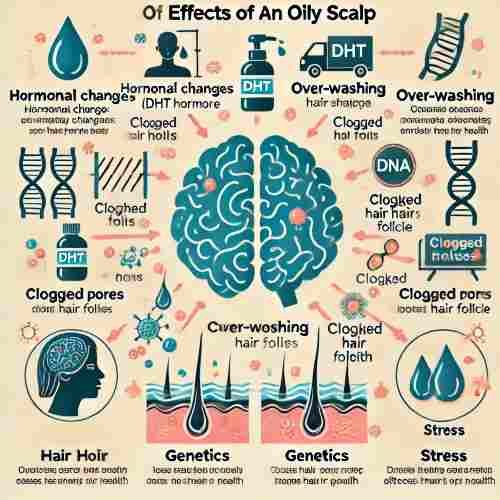
- Hormonal Changes: Increased levels of DHT hormone can boost oil production and shrink hair follicles, potentially leading to thinning hair.
- Over-Washing: Washing hair too frequently can strip the scalp of natural oils, causing it to produce more oil in response.
- Clogged Pores: Buildup of dirt, oil, and hair products can block pores, leading to inflamed hair follicles.
- Genetics: Family history can play a significant role in having an oily scalp.
- Stress: Increased stress levels can heighten oil production, worsening scalp oiliness.
Recommended Reading: 10 Best Curly Hair Products (Men+Women) [Frizzy Hair Products]
How It Affects Hair?
- Clogs Hair Follicles: Excess oil buildup can block hair follicles, making it harder for new hair to grow.
- Weakens Hair Roots: Congested follicles lead to weaker roots, increasing the risk of hair thinning and hair loss.
- Causes Inflammation: Trapped oil can trigger inflammation, further disrupting the hair growth cycle.
- Disrupts Hair Growth: Inflammation and clogged follicles interfere with normal hair growth, worsening the problem.
- Scalp Balance is Key: Keeping the scalp clean and balanced helps prevent these issues and supports healthy hair growth.
Recommended Reading: Vitamins For Hair Growth And Thickness (Male+Female)
Treatment Options
Best Treatment Options
Manage an oily scalp with apple cider vinegar for pH balance, aloe vera for soothing, and tea tree oil for oil control. Exfoliate with salicylic or lactic acid, use dry shampoo for quick fixes, and follow a routine with clarifying shampoo, conditioner on ends, gentle scalp massage, and pre-shampoo treatments.

Home Remedies for Oily Scalp
Here are some effective home remedies to help manage an oily scalp:
- Apple Cider Vinegar: Mix one part apple cider vinegar with two parts water and use it as a rinse after shampooing. It helps balance the scalp’s pH and can reduce excess oil.
- Aloe Vera: Applying pure aloe vera gel directly to the scalp can soothe irritation and control oil buildup, leaving the scalp feeling refreshed.
- Tea Tree Oil: With its natural antibacterial properties, tea tree oil is great for tackling both dandruff and excess oil. You can add a few drops to your shampoo or use it in scalp treatments.
- Exfoliation: Products that contain salicylic or lactic acid can gently exfoliate the scalp, helping to remove oil and clear clogged follicles.
- Dry Shampoo: For a quick fix between washes, dry shampoo can absorb excess oil and give your hair a fresh, voluminous look without water.
Effective Hair Care Routine
Recommended Reading: Hair Thinning Treatment: Causes, Vitamins, And More
Best Practices for Managing an Oily Scalp
- Use a Clarifying Shampoo: Apply once a week to remove excess oil and product buildup, but avoid overuse to prevent dryness.
- Apply Conditioner Correctly: Use a lightweight conditioner only on the ends of your hair, avoiding the roots to prevent excess oil.
- Gentle Scalp Massage: While washing, massage the scalp gently instead of scrubbing hard to avoid triggering more oil production.
- Pre-Shampoo Treatments: Use scalp exfoliants before washing to remove grease and buildup for a cleaner scalp.
How to Maintain a Healthy Scalp
- Wash Regularly: Wash your hair regularly, but avoid over-washing as it may strip away natural oils, causing your scalp to produce even more oil.
- Healthy Diet: Eating a balanced diet, especially one low in sugar and refined carbs, can help control oil production. Including more fruits, vegetables, and whole grains can also improve scalp health.
- Manage Stress: Stress can lead to excess oil production. Try activities like yoga, meditation, or regular exercise to manage stress and keep oil levels in check.
- Clean Your Tools: Make sure to clean your hairbrushes and combs often to remove dirt, oil, and product buildup that can transfer back to your scalp.
- Use Light Products: Stick to lightweight, water-based hair products, and avoid heavy or oil-based ones that can make your scalp feel greasy.
Products & Remedies
Products & Remedies
Use clarifying shampoos for oil and buildup, dry shampoos for quick refresh, exfoliating treatments for deep cleansing, and tea tree oil products to reduce oil and dandruff.
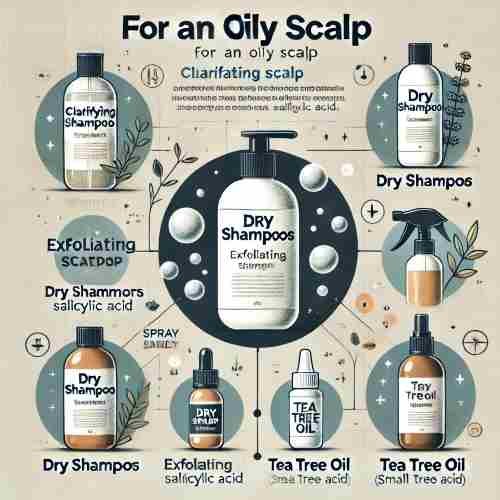
- Clarifying Shampoos: These shampoos are great for getting rid of excess oil and product buildup.
- Dry Shampoos: If you need a quick fix between washes, dry shampoos are perfect for soaking up excess oil and keeping your hair looking fresh.
- Exfoliating Scalp Treatments: Products with ingredients like salicylic acid can help remove dead skin cells and excess oil, keeping your scalp clean and balanced.
- Tea Tree Oil Products: Tea tree oil is known for its ability to reduce oil production and fight dandruff, making it a great choice for those with oily scalps.
Recommended Reading: Top 10 Beard Care Products (Beard Care Kit)
FAQs
What causes an oily scalp?
An oily scalp occurs when the sebaceous glands in your scalp produce excess sebum (natural oils). This can be caused by hormonal changes, genetics, stress, overwashing, or a poor diet.
How often should I wash my oily scalp?
It’s important not to over-wash your scalp, as this can strip away natural oils, leading to more oil production. Aim to wash your scalp 2-3 times a week, depending on your hair type.
Can diet affect my oily scalp?
Yes, your diet can impact the oil production in your scalp. Foods that are high in sugar or refined carbohydrates can trigger oil production.
Is it okay to use dry shampoo for an oily scalp?
Dry shampoo can be a helpful solution for absorbing excess oil between washes.
Can stress make my oily scalp worse?
Yes, stress can increase oil production. When you’re stressed, your body releases hormones like cortisol, which can trigger your sebaceous glands to produce more oil. Managing stress through activities like yoga, meditation, or exercise can help reduce excess oil.
Recommended Reading: 7 Best Shampoo Greasy Hair (Oily Hair+Dandruff Shampoos)
Conclusion
Dealing with an oily scalp can be tricky, but with the right products and care, it’s manageable. Using the appropriate treatments, whether at-home remedies or specialized hair care products, can help reduce excess oil and keep your scalp balanced. Maintaining a regular scalp care routine, exfoliating, and making small changes to your diet or lifestyle can also help control oil production.
Disclaimer
Commissions we earn from partner links on this page do not influence our content. Our editorial content is based on thorough research and insights from qualified medical professionals to ensure the highest standards of accuracy and reliability.
Information provided on Doseway is for educational purposes only. Your health and wellness are unique to you, and the products and services we review may not be suitable for your circumstances. We do not offer personal medical advice, diagnosis, or treatment plans. For specific advice, please consult with a healthcare professional. Doseway adheres to strict editorial integrity standards. To the best of our knowledge, all content is accurate as of the date posted, though offers and information may change. The opinions expressed are the author’s own and have not been influenced, approved, or endorsed by our partners.

Add a Comment