
Watching your feline companion struggle with a sore, swollen, or weeping eye is distressing for any pet owner in Pakistan. Cat eye infections, known medically as conjunctivitis or keratitis, are common but require precise treatment. This definitive guide lists the top 10 cat eye infection drops available in Pakistan, explaining their uses, active ingredients, and critical safety protocols. The most vital insight is that while these medications are effective, a veterinary diagnosis is the non-negotiable first step to protecting your cat’s vision.
In this article, you will learn:
- The definitive list of the 10 most effective and veterinarian-recommended eye drops for feline eye infections in Pakistan.
- How to identify the signs of common versus serious eye infections in cats.
- A detailed breakdown of key antibiotic, antiviral, and combination drops.
- Step-by-step guidance on how to safely administer eye drops to your cat.
- Crucial warnings about the dangers of self-medication and using human eye drops.
Read More:
- Top 10 Eye Drops For Red Eyes | Eye Allergy Drops
- List Of 10 Best Eye Infection Drops In Pakistan
- Eye Socket Pain Causes, Prevention, & Treatment (Eye Socket Pain & Headache)
Table Of Contents
Understanding Feline Eye Infections: Causes, Symptoms, and Dangers
Recognizing the signs and underlying causes of your cat’s eye problem is the foundation for seeking correct treatment. Eye issues are rarely simple, and symptoms can overlap between minor irritations and sight-threatening emergencies.
What Are the Common Signs of a Cat Eye Infection?
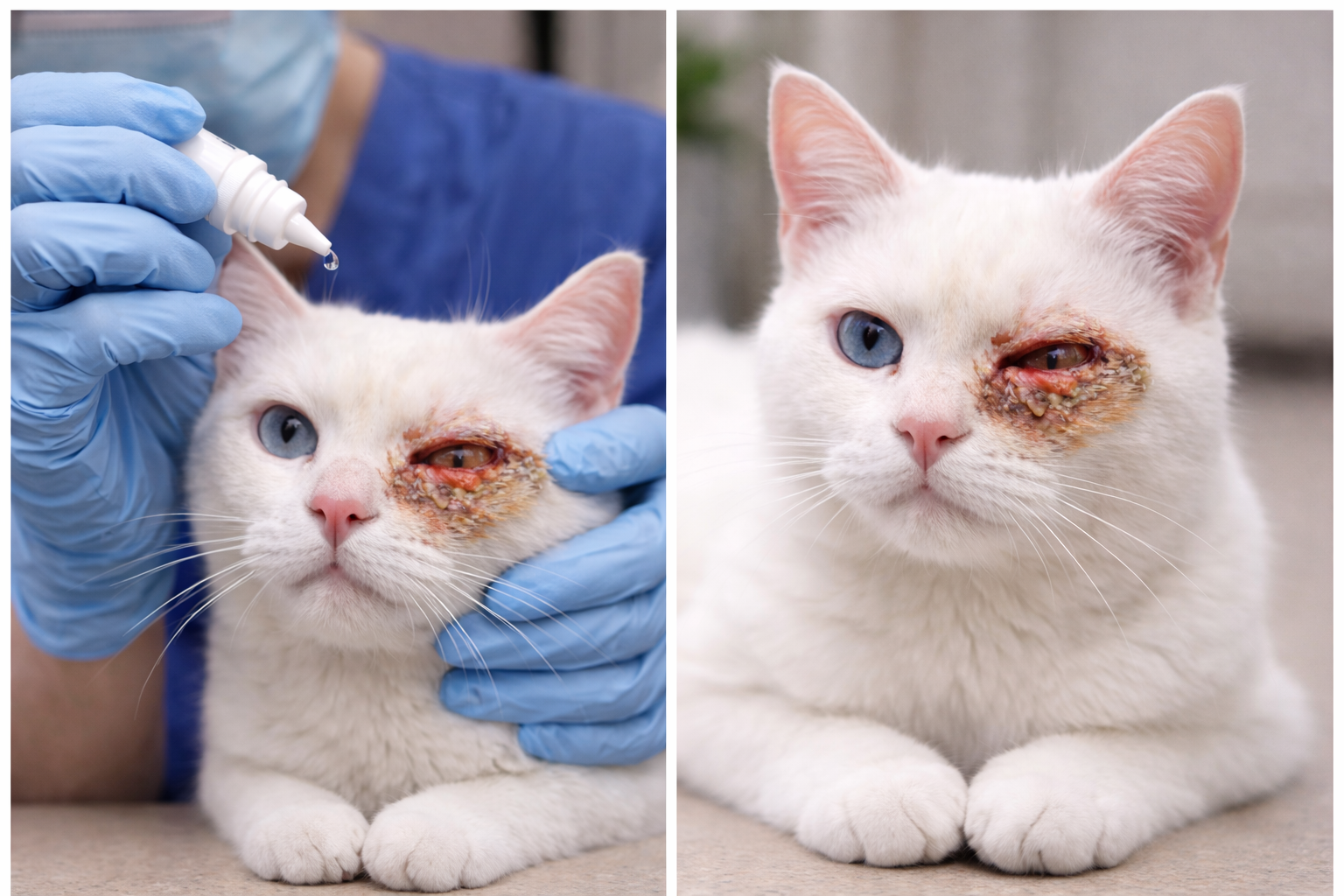
A cat eye infection manifests through clear behavioral and physical changes. The most frequent clinical signs owners observe include:
- Redness and Inflammation: The white of the eye (sclera) and the inner eyelids appear bloodshot and swollen, a condition called conjunctival hyperemia.
- Discharge: This can range from clear and watery (epiphora) to thick, yellow-green, or mucopurulent matter that crusts around the eye.
- Squinting or Blinking Excessively: Known as blepharospasm, this is a sign of significant pain or photophobia (sensitivity to light).
- Pawing at the Eye: Your cat may rub its face against furniture or scratch at the eye with its paw, which can worsen the injury.
- Cloudiness or Change in Eye Appearance: The cornea (clear front surface) may look hazy, blue, or opaque.
- Third Eyelid Protrusion: The nictitating membrane, a protective inner eyelid, may become visibly extended across the eye.
- Keeping the Eye Fully Closed: This indicates severe discomfort or pain.
What Causes Eye Infections in Cats?
The red, painful eye is a symptom with multiple potential causes, which dictates the choice of cat eye infection drops.
- Bacterial Conjunctivitis: Often secondary to other issues. Common pathogens include Chlamydophila felis (a primary agent of feline conjunctivitis), Mycoplasma, Staphylococcus, and Streptococcus.
- Viral Conjunctivitis: The Feline Herpesvirus-1 (FHV-1 or FHV) is the most prevalent cause. It is a lifelong, recurrent infection that flares up during stress, causing upper respiratory and ocular symptoms.
- Fungal Infections (Keratomycosis): Rare but serious, often following a corneal injury by plant material.
- Trauma & Secondary Infection: Scratches from fights, foreign bodies (like dust or seeds), or chemical irritants can damage the eye and allow bacteria to invade.
- Non-Infectious Inflammatory Conditions: Such as eosinophilic keratoconjunctivitis (an immune-mediated disorder) or allergic conjunctivitis.
- Corneal Ulcers: An open sore on the cornea, which is intensely painful and can become infected. It is diagnosed with a special fluorescein stain by a vet.
What is the Most Serious Eye Infection in Cats?
While any infection is concerning, certain conditions are ocular emergencies. The most serious include:
- Deep or Melting Corneal Ulcers: These can rapidly perforate (rupture), leading to loss of intraocular fluid and potential loss of the eye.
- Panophthalmitis: A severe, full-thickness infection and inflammation of all eye structures.
- Orbital Cellulitis: A painful infection behind the eye, often causing the eye to bulge (proptosis).
- Uveitis: Inflammation of the eye’s internal structures, which is painful and can lead to glaucoma or blindness.
These conditions require immediate, intensive veterinary—often specialist—care. They underscore why a quick, accurate diagnosis is paramount before applying any cat eye drops.
Why is a Veterinary Diagnosis Essential Before Using Any Drops?
Self-diagnosing and selecting cat eye infection drops without professional input is one of the most dangerous things an owner can do. The reason is specificity of treatment:
- Using antibiotic drops for a viral herpes infection may slightly help with secondary bacteria but does not address the primary viral cause, leading to a prolonged, recurrent illness.
- Using a steroid-containing drop on a corneal ulcer can stop healing, cause the ulcer to deepen, and lead to corneal rupture and blindness. Steroids suppress the immune response needed for repair and can promote infection.
- Missing a foreign body lodged under the eyelid means drops will provide no relief until the physical object is removed.
Only a veterinarian can perform a complete ophthalmic exam, often including a fluorescein stain test to rule out ulcers, and determine the true cause.
Key Medications: Antibiotics, Antivirals, and Combination Drops
Feline ophthalmology utilizes specific classes of medications. Understanding these categories helps you comprehend your vet’s prescription and the importance of following it exactly.
What Are the Most Common Antibiotics in Cat Eye Drops?
Veterinarians choose from several antibiotic classes based on the suspected bacteria:
- Tetracyclines: Tetracycline and Oxytetracycline are first-line choices for infections involving Chlamydophila felis and Mycoplasma. They are often found in ointments.
- Aminoglycosides: Gentamicin, Tobramycin, and Neomycin offer broad-spectrum coverage against many gram-negative and some gram-positive bacteria. Gentamicin is a common staple.
- Fluoroquinolones: Ciprofloxacin, Ofloxacin, and Moxifloxacin are potent, newer-generation antibiotics with excellent corneal penetration. They are used for more serious infections or corneal ulcers.
- Chloramphenicol: A broad-spectrum antibiotic. Its use has declined in some regions due to potential (though rare with topical use) concerns about idiosyncratic bone marrow suppression in cats and handling risks for humans.
What is the Best Antibiotic for a Cat Eye Infection?
There is no single “best” antibiotic for all cat eye infections. The optimal choice is pathogen-specific and determined by the vet’s clinical assessment. A general guide based on common presentations is:
- For suspected Chlamydia or Mycoplasma: Tetracycline or Oxytetracycline ointment (e.g., Terramycin) is typically the first choice.
- For general, uncomplicated bacterial conjunctivitis: Gentamicin sulfate drops or Triple Antibiotic ointment (Neomycin/Polymyxin B/Bacitracin) are frequently prescribed.
- For suspected or confirmed corneal ulcers, or resistant infections: Ciprofloxacin or Moxifloxacin drops are preferred due to their potency and deep tissue penetration.
Is Moxifloxacin Eye Drops Safe for Cats?
Yes, Moxifloxacin eye drops (e.g., Vigamox) are safe and effective for cats when prescribed by a veterinarian. It is a fourth-generation fluoroquinolone considered a strong weapon against a wide range of ocular bacteria. Its safety profile for topical ocular use in cats is good. The key is veterinary oversight to ensure it is necessary and that the dosage (typically one drop in the affected eye 2-3 times daily) is appropriate for your cat’s weight and condition.
What About Antiviral Medications for Feline Herpesvirus (FHV-1)?
Since FHV-1 is a leading cause, specific antiviral medications are crucial. These are not typical antibiotics and include:
- Idoxuridine (IDU) and Trifluridine: These are topical antiviral drops that inhibit viral replication. They can be irritating and are often compounded by special pharmacies.
- Cidofovir: A newer, less frequent dosing antiviral option.
It is important to note that L-Lysine is a supportive amino acid supplement given orally to help suppress viral replication and boost immune response. It is a helpful adjunct therapy but not a direct replacement for prescription antiviral eye drops in an active flare-up.
What Are Combination Drops (Antibiotic + Steroid)?
These medications, such as Neomycin-Polymyxin-Dexamethasone (e.g., Maxitrol) or Gentamicin-Dexamethasone, contain both an antibiotic and a corticosteroid (steroid).
- Purpose: To treat conditions with significant inflammation and a bacterial component, where a corneal ulcer has been definitively ruled out. Examples include severe allergic conjunctivitis or certain types of uveitis.
- MAJOR WARNING: These are the most dangerous drops to misuse. The steroid component can dramatically worsen a corneal ulcer or a viral/fungal infection. They should only be used under direct and specific veterinary instruction after a thorough examination confirms their safety.
The Definitive List: Top 10 Cat Eye Infection Drops in Pakistan
This curated list is based on common veterinary prescriptions, efficacy for feline-specific conditions, and relative availability through veterinary clinics and pharmacies in Pakistan. Prices are indicative and can vary widely by location, pharmacy, and brand.
1. Terramycin Ophthalmic Ointment (Oxytetracycline + Polymyxin B)
- Active Ingredients: Oxytetracycline Hydrochloride (Antibiotic) and Polymyxin B Sulfate (Antibiotic).
- Veterinary Use: The classic, first-line treatment for feline conjunctivitis, particularly when Chlamydophila or Mycoplasma is suspected. Effective for superficial bacterial infections.
- Key Insight: This is often the most common answer to “what to buy for cat eye infection?” It is widely available, relatively safe, and effective for simple cases. However, a vet check is still strongly advised to rule out ulcers or herpesvirus. It is an ointment, which stays in contact with the eye longer than drops.
- Approximate Price in Pakistan: PKR 400 – PKR 800 per tube.
2. Gentamicin Sulfate Eye Drops (e.g., Genticyn, Gentafair)
- Active Ingredient: Gentamicin Sulfate.
- Veterinary Use: A broad-spectrum aminoglycoside antibiotic used for bacterial conjunctivitis and keratitis (corneal infection). A workhorse in veterinary practice for common bacterial issues.
- Key Insight: These drops are commonly prescribed and readily available. They are effective against a wide range of bacteria. Treatment typically involves 1-2 drops per eye, 3-4 times daily.
- Approximate Price in Pakistan: PKR 200 – PKR 500 per bottle.
3. Ciprofloxacin Eye Drops (e.g., Ciplox)
- Active Ingredient: Ciprofloxacin Hydrochloride.
- Veterinary Use: A potent fluoroquinolone antibiotic used for more resistant bacterial infections and, importantly, for treating corneal ulcers. It has good penetration into ocular tissues.
- Key Insight: Is Ciplox eye drops safe? For cats, yes, when prescribed by a vet. This is a prime example of a human medication used in veterinary medicine. You must never use your own or someone else’s prescription; the vet will determine the correct feline dosage and regimen.
- Approximate Price in Pakistan: PKR 300 – PKR 600 per bottle.
4. Vigamox / Moxifloxacin Eye Drops
- Active Ingredient: Moxifloxacin Hydrochloride.
- Veterinary Use: An advanced-generation fluoroquinolone reserved for severe bacterial infections or stubborn corneal ulcers. Its potent, broad-spectrum action and convenient dosing (once or twice daily) make it valuable for serious cases.
- Key Insight: Represents a “stronger” tier of antibiotic therapy. Its use indicates a more significant infection or one that hasn’t responded to first-line treatments like Gentamicin.
- Approximate Price in Pakistan: PKR 800 – PKR 1500 per bottle (often more expensive as a newer drug).
5. Triple Antibiotic Ophthalmic Ointment (Neomycin + Polymyxin B + Bacitracin)
- Active Ingredients: Neomycin Sulfate, Polymyxin B Sulfate, Bacitracin Zinc.
- Veterinary Use: A broad-spectrum combination covering a wide array of common bacteria. Used for minor bacterial conjunctivitis and sometimes as a prophylactic after minor trauma or scratches.
- Key Insight: Functions similarly to Terramycin but with a different antibiotic mix. It is a good general-purpose ointment for uncomplicated bacterial issues.
- Approximate Price in Pakistan: PKR 300 – PKR 700 per tube.
6. Tobrex (Tobramycin) Eye Drops
- Active Ingredient: Tobramycin.
- Veterinary Use: An aminoglycoside antibiotic similar to Gentamicin, often used as an alternative. It is particularly effective against Pseudomonas aeruginosa, a bacterium that can cause severe, rapid corneal melting ulcers.
- Key Insight: Another example of a high-quality human ophthalmic drop used effectively in veterinary care. Its use may be guided by culture results or suspicion of specific bacteria.
- Approximate Price in Pakistan: PKR 500 – PKR 1000 per bottle.
7. Idoxuridine (IDU) or Trifluridine Antiviral Eye Drops
- Active Ingredient: Idoxuridine or Trifluridine.
- Veterinary Use: Specific antiviral treatment for active Feline Herpesvirus-1 (FHV-1) keratitis or conjunctivitis. These are not antibiotics.
- Key Insight: The prescription of these drops is a clear indicator of a viral diagnosis. They are often sourced from compounding pharmacies. Managing FHV-1 is about controlling flare-ups, and these drops are critical during active ocular episodes.
- Approximate Price in Pakistan: Variable; often compounded, costing PKR 1000 – PKR 2500+.
8. Neomycin + Dexamethasone Combination Drops (e.g., Maxitrol, Dexamycin)
- Active Ingredients: Neomycin (Antibiotic) + Dexamethasone (Steroid).
- Veterinary Use: For intensely inflamed eyes where a bacterial infection is present but a corneal ulcer has been definitively ruled out (e.g., severe allergic conjunctivitis).
- Key Insight: This is the most dangerous class of drops to use without veterinary guidance. The dexamethasone steroid can cause a corneal ulcer to perforate rapidly. It perfectly illustrates why “which eye drop is best?” can only be answered by a vet after an examination.
- Approximate Price in Pakistan: PKR 400 – PKR 800 per bottle.
9. Artificial Tears / Lubricating Ointment (e.g., Refresh PM, Lacri-Lube)
- Active Ingredient: Petroleum-based ointment or carbomer gel.
- Veterinary Use: To protect the cornea, provide comfort, and prevent dryness (especially in flat-faced breeds like Persians, or cats who cannot blink properly). It is a vital supportive therapy, not a primary treatment for infection.
- Key Insight: Used to keep the eye moist, protect a healing cornea, and provide comfort alongside medicated drops. A safe and useful product in the recovery toolkit.
- Approximate Price in Pakistan: PKR 300 – PKR 700 per tube.
10. Povidone-Iodine 5% Dilute Solution (Betadine)
- Active Ingredient: Povidone-Iodine.
- Veterinary Use: Not for direct instillation into the eye. It is used as a periocular antiseptic. A dilute solution (typically 1:50) is used to gently clean the fur, eyelids, and skin around the infected eye before applying medication, reducing surface contamination.
- Key Insight: “What kills eye infections?” As a preparatory antiseptic, it helps. It is a crucial part of the hygiene protocol but is not the therapeutic drop itself. Never use the full-strength solution near the eye.
- Approximate Price in Pakistan: PKR 200 – PKR 400 per bottle.
Critical Guidelines: How to Apply Drops, Safety, and Warnings
Knowledge of the medication is useless without knowing how to administer it safely and understanding the boundaries of home treatment.
How to Administer Eye Drops to Your Cat Safely and Effectively?
Applying cat eye infection drops can be challenging but is manageable with patience and technique.
- Prepare: Have the drops ready, washed hands, and a towel. Choose a calm, enclosed space like a bathroom.
- Restrain Gently: Wrap your cat snugly in a towel (a “purrito” method), exposing only the head. Have someone hold the cat if possible.
- Position: Tilt the cat’s head slightly upward. Use your non-dominant hand to gently pull down the lower eyelid to form a small pocket.
- Administer: With your dominant hand, hold the dropper close to the eye but DO NOT TOUCH the eye, eyelid, or lashes (to prevent contamination and injury). Squeeze the prescribed number of drops (usually one) into the pocket.
- Release: Gently release the eyelid and allow your cat to blink, distributing the medication. You can gently hold the eye closed for a second.
- Reward: Immediately offer a high-value treat or affection to create a positive association.
Pro Tip: If treating both eyes, use a separate gauze pad to wipe the dropper tip before applying to the second eye to prevent cross-contamination.
What is the Standard Dosage and Duration for Cat Eye Drops?
The regimen is set solely by your veterinarian. A typical course for bacterial infections might be:
- Dosage: 1 drop per affected eye.
- Frequency: 2 to 4 times daily, depending on the severity and drug type (e.g., Moxifloxacin may be once or twice daily, Gentamicin may be three times daily).
- Duration: Usually 5 to 14 days. It is critical to complete the entire course, even if the eye looks better in 2-3 days. Stopping early can lead to relapse and antibiotic resistance.
Can I Use Human Eye Drops for My Cat? (The Major Risk)
This directly addresses the “Human eye drops for cats” search query.
- DEFINITIVE ANSWER:Only if explicitly prescribed and dosed by your veterinarian. The risks of using over-the-counter human drops are severe:
- Steroid-Based Drops: Can cause corneal rupture if an ulcer is present.
- “Redness Relief” Drops (Vasoconstrictors like Tetrahydrozoline): Can be systemically absorbed and cause serious cardiovascular and neurological toxicity in cats.
- Incorrect Antibiotic: May be ineffective or inappropriate.
- Preservatives: Some preservatives in human drops (e.g., benzalkonium chloride) can be irritating to feline eyes.
A vet may prescribe a human medication like Ciplox (Ciprofloxacin) but will calculate the precise, safe feline application.
What Antibiotics Are Safe for Cats? (Systemic vs. Topical)
It’s important to distinguish between routes of administration:
- Topical Ocular Antibiotics (drops/ointments): Those listed (Gentamicin, Ciprofloxacin, Terramycin) are generally safe for the eyes when used as directed.
- Oral/Systemic Antibiotics: These are different drugs (e.g., Doxycycline for Chlamydia, Clavamox for systemic infections) also prescribed by vets for ocular disease that has spread or is severe. “How to get cat antibiotics without vet?” is a dangerous path leading to incorrect dosing, treatment of the wrong condition, and promotion of antibiotic-resistant superbugs.
What Are the Risks of Using the Wrong Eye Drops?
The consequences of incorrect treatment are not merely a lack of improvement; they are actively harmful:
- Corneal Perforation: From inappropriate steroid use on an ulcer.
- Disease Progression: Worsening of a viral or fungal infection delayed by wrong treatment.
- Chronic Pain and Scarring: Leading to permanent vision impairment or blindness.
- Systemic Toxicity: From absorption of medications not meant for cats.
- Loss of Trust: Stressful, painful experiences for your cat during misguided treatment attempts.
Supportive Care, Home Remedies, and Prevention
While medication is core, supportive care at home is vital for recovery and preventing future flare-ups.
How to Clean Your Cat’s Infected Eye at Home?
Proper cleaning is a key part of managing cat eye infection drops treatment.
- Use a sterile gauze pad or cotton ball (not cotton wool, which can shed fibers).
- Soak it in lukewarm saline solution or boiled (then cooled) water.
- Gently wipe from the inner corner of the eye outward, using a single motion.
- Use a fresh pad for each wipe and for each eye to prevent spreading infection.
- Softly remove any crusts or dried discharge. Never force or pick at them.
What is the Strongest Natural Antibiotic for Cats Without a Vet?
This query requires a serious reality check: There is no natural remedy that can reliably replace prescribed antibiotics for an active bacterial infection. Delaying proper veterinary care with home remedies like saline flushes, herbal teas, or coconut oil can allow a simple infection to become a complex, vision-threatening one. Some purported “natural antibiotics” like garlic or essential oils are TOXIC to cats. Supportive care like warm compresses (applying a clean, warm cloth to the closed eye for 5 minutes) can soothe and improve circulation, but it is not a cure.
How to Prevent Recurrent Eye Infections in Cats (Especially FHV-1)?
For cats prone to infections, particularly those with Feline Herpesvirus, proactive management is key:
- Minimize Stress: FHV-1 flares with stress. Use pheromone diffusers (Feliway), maintain routines, and provide safe hiding spaces.
- Routine L-Lysine Supplementation: Daily L-Lysine (as a paste, powder, or treat) can help suppress viral replication. It is a lifelong management tool for herpes-positive cats.
- Vaccination: While vaccines don’t prevent initial infection, they can reduce the severity of clinical signs from FHV-1.
- Regular Wellness Checks: Early detection of minor issues prevents major ones.
- Environmental Enrichment and Cleanliness: Reduce dust, avoid strong chemical cleaners near your cat, and ensure good ventilation.
When is it an Emergency? Signs to Rush to the Vet.
Do not wait for a scheduled appointment if you observe:
- The eyeball itself appears to be protruding from the socket.
- Sudden, apparent blindness or significant vision loss.
- A visible, deep puncture or laceration on the eye.
- Profuse bleeding from the eye or surrounding area.
- Extreme pain unresponsive to gentle touch.
- No improvement within 24-48 hours of starting a prescribed medication.
In these cases, seek emergency veterinary care immediately.
Frequently Asked Questions (FAQs) –
Which eye drop is best for cat eye infection?
The best eye drop is the one your veterinarian prescribes after diagnosing the specific cause (bacterial, viral, ulcer). Common effective options include Terramycin ointment for simple bacterial cases and Gentamicin or Ciprofloxacin drops for more involved infections.
What to buy for cat eye infection over the counter in Pakistan?
The most commonly available and generally safe OTC option is Terramycin Ophthalmic Ointment. However, using it without a vet confirming a simple bacterial infection and ruling out an ulcer or virus is risky. A veterinary consultation is always the safest first step.
How to heal a cat’s eye infection at home?
You cannot reliably “heal” an infection at home without a diagnosis and prescription. Home care involves supporting veterinary treatment: administering prescribed cat eye infection drops exactly as directed, keeping the eye area gently clean with warm water, and reducing stress.
Is Ciplox eye drops safe for cats?
Yes, Ciprofloxacin (Ciplox) eye drops are safe and effective for cats when prescribed by a veterinarian for a bacterial infection or corneal ulcer. Never use a human-prescribed bottle without veterinary guidance on feline dosage and frequency.
Can I use Terramycin ointment for my cat’s eye?
Yes, Terramycin ophthalmic ointment is commonly used and often effective for feline bacterial conjunctivitis, especially when caused by Chlamydia or Mycoplasma. It is widely considered a first-line OTC option, but an initial vet check is still highly recommended.
What is the fastest way to cure a cat’s eye infection?
The fastest way is prompt veterinary diagnosis followed by immediate and correct treatment with prescription cat eye drops. Delaying care or using incorrect drops will prolong the illness and risk complications.
Are human antibiotic eye drops safe for cats?
They can be, but only if prescribed by a veterinarian who has determined that particular medication and dose is appropriate for your cat’s specific condition. Self-administering human eye drops is dangerous.
My cat’s eye is swollen and closed, what should I do?
A swollen, closed eye indicates significant pain or pressure (from infection or glaucoma). This is an urgent situation. See a veterinarian immediately. Do not attempt to force the eye open or apply any medication first
Can cat eye infections heal on their own?
Very mild viral flare-ups might resolve as the immune system rallies, but bacterial infections typically worsen without treatment. Since it’s impossible to know the type without a vet, assuming it will self-resolve risks permanent damage to your cat’s eyesight.

Add a Comment