Cart is empty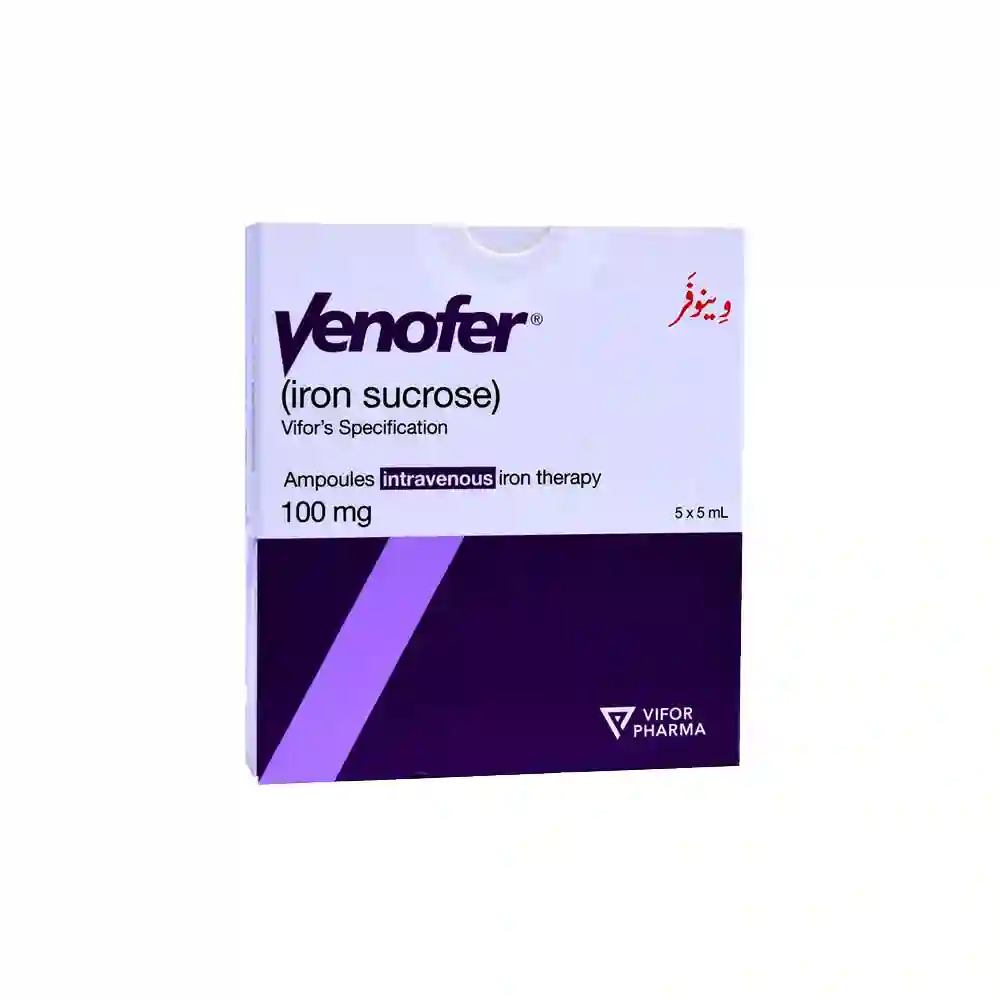
Description
Venofer Injection 100mg
Venofer Injection 100mg is a prescription intravenous iron replacement therapy formulated with iron sucrose. It is primarily prescribed for the effective treatment of iron deficiency anemia in adults and, in specific cases, pediatric patients. This therapy is particularly crucial for individuals with chronic kidney disease (CKD), including those on dialysis, where oral iron supplements are often ineffective or poorly tolerated. Administered by a healthcare professional in a clinical setting, it delivers bioavailable iron directly into the bloodstream to rapidly replenish depleted iron stores and support the production of healthy red blood cells.
This advanced IV iron supplement offers a targeted solution for restoring iron levels and improving hematological parameters. Below is a summary of its core attributes:
✅ Effective Iron Repletion: Directly addresses iron deficiency at its source, bypassing gastrointestinal absorption issues.
✅ Chronic Kidney Disease Support: A standard of care for managing anemia in CKD patients on and off dialysis.
✅ Well-Tolerated Formula: Iron sucrose is known for its favorable safety profile compared to older IV iron formulations.
✅ Structured Dosage Protocol: Provides a predictable and efficient dosing schedule, often with 100mg administrations.
✅ Manufactured to High Standards: Produced under strict Good Manufacturing Practice (GMP) guidelines ensuring purity and consistency.
✅ Hemoglobin Boost: Helps increase hemoglobin and hematocrit levels, improving oxygen delivery throughout the body.
What are the Primary Uses and Key Features of Venofer?
Venofer (iron sucrose) serves as a critical therapeutic agent for specific patient populations. Its design and clinical profile offer distinct advantages for both patients and healthcare providers.
Primary Therapeutic Uses of Venofer Injection
Treatment of Iron Deficiency Anemia in Chronic Kidney Disease: This is the foremost indication. It corrects anemia in CKD patients stages 3-5, including those receiving supplemental erythropoietin therapy and those on maintenance hemodialysis.
Management of Anemia in Non-Dialysis Dependent CKD: For patients not yet on dialysis who cannot use or fail to respond to oral iron therapy.
Iron Repletion for Other Causes of IDA: May be used for iron deficiency anemia due to other causes (e.g., gastrointestinal malabsorption, heavy menstrual bleeding, post-surgical blood loss) when oral iron is ineffective or cannot be used.
Pre-Operative Optimization: Used to quickly increase iron stores and hemoglobin prior to major surgery in anemic patients, potentially reducing the need for blood transfusions.
Key Features and Benefits of Iron Sucrose Formulation
Proven Efficacy and Safety: Decades of clinical use and studies support its effectiveness in raising hemoglobin, ferritin, and transferrin saturation levels with a low incidence of serious adverse events.
Favorable Molecular Structure: The iron sucrose complex is designed to release bioavailable iron in a controlled manner to transferrin, minimizing the risk of free iron toxicity.
Convenient Administration: The 100mg in 5ml single-dose ampule allows for straightforward, precise dosing. It can be administered via slow IV push or as a brief infusion, offering flexibility in clinical settings.
Reduced Hypersensitivity Risk: Compared to some older-generation IV irons (e.g., iron dextran), iron sucrose carries a significantly lower risk of severe allergic reactions.
Rapid Hematological Response: Patients often see measurable improvements in iron parameters and hemoglobin levels within weeks of initiating therapy.
Improved Quality of Life: By alleviating anemia symptoms like fatigue, weakness, and shortness of breath, it can significantly enhance patient energy levels and functional capacity.
What is the Active Ingredient in Venofer?
The therapeutic effect of Venofer is delivered by a single, carefully formulated active ingredient.
Iron Sucrose: Each 5ml single-dose ampule contains 100mg of elemental iron in the form of an iron sucrose complex. This complex consists of a polynuclear iron(III)-hydroxide core surrounded by sucrose molecules. This shell stabilizes the core, allowing for the safe transport and controlled physiological release of iron to iron-binding proteins in the plasma, primarily transferrin.
How Does the Iron Sucrose Complex Work?
The sucrose coating is crucial for safety and efficacy. Upon intravenous administration, the iron-sucrose complex is taken up by the reticuloendothelial system (primarily in the liver and spleen). Here, iron is cleaved from the sucrose and released into the bloodstream, where it binds to transferrin. Transferrin then transports the iron to the bone marrow, where it is incorporated into heme, the essential component of hemoglobin in new red blood cells. This process efficiently directs iron to where it is most needed for erythropoiesis.
How is Venofer Administered? Important Directions for Use
CRITICAL: Venofer must only be administered by or under the supervision of trained healthcare personnel in a setting equipped to manage potential serious hypersensitivity reactions. Self-administration is not possible or safe.
Standard Administration Protocols
Medical Supervision: Administration occurs in a hospital, dialysis center, or infusion clinic under medical supervision.
Route: Administered intravenously either by:
Slow Intravenous Injection: 100mg of Venofer (5ml) can be injected undiluted directly into the vein over 2 to 5 minutes.
Intravenous Infusion: It is more commonly diluted in a maximum of 100ml of sterile 0.9% sodium chloride (saline). This diluted solution is infused over at least 15 minutes.
Test Dose: While not universally required for iron sucrose as per some modern guidelines, a physician may elect to administer a test dose. Always follow the specific protocol of the prescribing physician and institution.
Patient Monitoring: Vital signs (blood pressure, pulse) are monitored during and immediately after infusion for any signs of a reaction.
Dosage Calculation: The total cumulative dose is individually calculated based on the patient’s body weight and hemoglobin deficit using the Ganzoni formula or similar clinical assessment.
Step-by-Step Clinical Procedure Overview
Step 1: Verify patient identity, prescription, and dosage.
Step 2: Inspect the ampule for particulate matter or discoloration before use.
Step 3: Using aseptic technique, withdraw the required volume (5ml for 100mg dose).
Step 4: For IV push, inject slowly. For infusion, dilute in saline.
Step 5: Administer while monitoring the patient closely.
Step 6: Dispose of the used ampule and any unused portion appropriately.
What is the Recommended Dosage for Venofer 100mg?
Dosage is highly individualized and must be determined by a qualified physician based on diagnostic laboratory tests and the patient’s clinical condition.
General Dosage Guidelines for Iron Deficiency Anemia
Adult Patients (CKD on Dialysis): The typical dose is 100mg administered one to three times per week during dialysis sessions to a cumulative total dose. The 100mg in 5ml presentation is ideal for this regimen.
Adult Patients (CKD Not on Dialysis): May receive 200mg on 5 different occasions within a 14-day period, or a total cumulative dose of 1000mg administered in divided doses.
Adult Patients with Other IDA: The total cumulative dose is calculated using a formula: Total iron deficit (mg) = body weight (kg) x (target Hb – actual Hb) (g/L) x 0.24 + iron stores (usually 500mg). This total is then administered in divided weekly doses, often starting at 200mg.
Pediatric Patients: Dosing for children is based on body weight and is carefully managed by a pediatric specialist.
Important Note: The provided 5ml ampule contains 100mg of elemental iron. The volume to be administered is based on this concentration. Never exceed the prescribed dose or frequency.
What Precautions and Warnings Are Associated with Venofer?
While effective, Venofer therapy requires careful consideration of patient safety and contraindications.
Essential Precautions and Contraindications
Hypersensitivity: Contraindicated in patients with known hypersensitivity to iron sucrose, any of its inactive ingredients, or other intravenous iron products.
Iron Overload: Should not be administered to patients with conditions characterized by excess iron, such as hemochromatosis or hemosiderosis.
Anemia Not Caused by Iron Deficiency: Venofer is ineffective for treating anemias where iron deficiency is not the primary cause (e.g., vitamin B12 or folate deficiency anemia, hemolytic anemia).
Serious Allergic Reactions: Although rare, potentially fatal anaphylactic-type reactions can occur. Resuscitation equipment and medications (e.g., epinephrine) must be immediately available.
Hypotension: IV iron can sometimes cause clinically significant hypotension. Patients should be monitored, especially during infusion.
Pregnancy and Lactation: Use only if clearly needed and the potential benefit justifies the potential risk to the fetus or infant. Iron sucrose crosses the placenta and enters breast milk in small amounts.
Concurrent Illness: Use with caution in patients with significant liver disease, asthma, eczema, or other inflammatory conditions, as they may be at higher risk for reactions.
What are the Possible Side Effects of Iron Sucrose Injection?
Most adverse reactions are mild to moderate and transient.
Common Side Effects (May affect up to 1 in 10 people)
Gastrointestinal: Nausea, vomiting, abdominal pain, diarrhea, taste disturbance.
Musculoskeletal: Muscle cramps, pain in extremities, joint pain.
General: Headache, dizziness, fatigue, chest pain, peripheral edema.
Infusion Site Reactions: Pain, swelling, burning, or phlebitis at the injection site.
Skin: Pruritus (itching), rash.
Cardiovascular: Flushing, hypertension, or hypotension during infusion.
Less Common but Serious Side Effects (Seek immediate medical attention)
Signs of Severe Allergy/Anaphylaxis: Difficulty breathing, wheezing, swelling of the face/lips/tongue/throat, severe dizziness, rapid heart rate, feeling faint, loss of consciousness.
Chest Pain or Tightness: Severe or worsening pain.
Signs of Infection: High fever, chills, severe malaise (can be associated with rare bacteremia).
Severe Skin Reactions: Hives, blistering, or peeling skin.
Management: Common side effects often resolve without treatment. Slowing or temporarily stopping the infusion usually manages minor reactions. Serious reactions require immediate cessation of therapy and emergency medical intervention.
How Should I Store Venofer 100mg/5ml Ampules?
Proper storage ensures the stability and sterility of the product.
Temperature: Store in the original carton at a controlled room temperature between 20°C to 25°C (68°F to 77°F). Excursions are permitted between 15°C and 30°C (59°F to 86°F).
Protection: Keep the ampules in the outer carton to protect from light.
Do Not Freeze: Freezing can damage the product.
Keep Out of Reach: Always keep out of the reach and sight of children.
Post-Dilution: If diluted in saline for infusion, the solution should be used immediately. Chemical and physical in-use stability has been demonstrated for specific timeframes; however, from a microbiological perspective, the product should be used right after preparation unless dilution was performed under controlled aseptic conditions.
Disposal: Do not use if the solution is discolored or contains visible particles. Dispose of used ampules and any unused product as per local biomedical waste regulations. Do not dispose of via household waste.
Who Manufactures Venofer Injection?
Venofer is a product of American Regent, Inc., a part of the Vifor Pharma Group, which is now a part of CSL Behring. The manufacturer is a globally recognized leader in nephrology and iron deficiency therapeutics.
Manufacturing Standards: The product is manufactured in facilities that comply with current Good Manufacturing Practices (cGMP) as enforced by the U.S. Food and Drug Administration (FDA) and other international regulatory bodies.
Quality Assurance: Each batch undergoes rigorous quality control testing for potency, purity, sterility, and apyrogenicity (free from fever-causing substances) to ensure patient safety and product consistency.
Corporate Commitment: The manufacturer invests in ongoing clinical research to support the safety and efficacy profile of its iron products and provides extensive educational resources for healthcare professionals.
What are the Key Health Benefits of Using Venofer for Anemia?
The benefits of Venofer therapy extend beyond simply raising iron levels, impacting overall patient health and well-being.
Rapid Correction of Iron Deficiency: Direct IV administration bypasses gut absorption barriers, leading to a faster and more predictable replenishment of iron stores compared to oral supplements.
Significant Increase in Hemoglobin Levels: Effectively boosts Hb concentration, improving the blood’s oxygen-carrying capacity.
Improved Erythropoiesis: Supports the bone marrow’s ability to produce a healthy number of red blood cells, especially when used with erythropoiesis-stimulating agents (ESAs) in CKD.
Reduction of Anemia Symptoms: Alleviates debilitating symptoms such as chronic fatigue, weakness, dizziness, palpitations, and shortness of breath, leading to enhanced physical endurance.
Enhanced Cognitive Function: Iron is essential for brain function. Correcting deficiency can improve concentration, memory, and overall cognitive performance affected by anemia.
Better Exercise Tolerance: Increased oxygen delivery to muscles improves stamina and reduces exertional dyspnea.
Potential Reduction in Blood Transfusions: Effective anemia management can lower or eliminate the need for risky and costly blood transfusions, particularly in surgical or CKD populations.
Improved Quality of Life: By addressing core symptoms, it allows patients to engage more fully in daily activities, work, and social life, reducing the overall burden of chronic disease.
Optimized Response to ESA Therapy: In CKD patients, adequate iron stores are necessary for ESAs to work effectively. Venofer ensures this, potentially allowing for lower ESA doses and reducing associated risks.
How Does Venofer Compare to Other IV Iron Alternatives?
Here is a comparison based on common parameters considered by healthcare providers.
| Feature | Venofer (Iron Sucrose) | Ferric Carboxymaltose (e.g., Injectafer) | Iron Dextran (e.g., INFeD) | Ferumoxytol (Feraheme) |
|---|---|---|---|---|
| Core Compound | Iron Sucrose | Ferric Carboxymaltose | Low/High Molecular Weight Dextran | Superparamagnetic Iron Oxide |
| Max Single Dose | Typically 100-200mg | Up to 1000mg (weight-based) | Up to full total dose (Test dose req.) | 510mg |
| Infusion Time | 15-30 min (for 100-200mg) | 15+ min (for 1000mg) | 1-4+ hours for total dose | Over 15+ min |
| Dosing Frequency | Often requires multiple sessions | Can replete total dose in 1-2 infusions | Can replete total dose in 1-2 infusions | Two doses 3-8 days apart |
| Hypersensitivity Risk | Low | Low | Higher (esp. with HMW) | Low (carries Boxed Warning) |
| Test Dose Required | Not routinely required | Not required | Required | Not required |
| Common Use Cases | CKD (Dialysis & Non-Dialysis) | Heavy Uterine Bleeding, IBD, CHF, CKD-ND | Where high single dose needed | CKD, Intolerance to others |
| Key Advantage | Long safety history, flexible dosing | High-dose, rapid repletion | Full dose in one infusion | Rapid administration, high dose |
| Consideration | Multiple visits may be needed | Higher cost, risk of hypophosphatemia | Anaphylaxis risk, longer infusion | Requires MRI scheduling consideration |
Frequently Asked Questions (FAQs) About Venofer 100mg Injection
How quickly does Venofer start working?
Patients may begin to feel symptom improvement, such as reduced fatigue, within a few weeks as hemoglobin levels start to rise. Laboratory markers like reticulocyte count increase within days, while ferritin and hemoglobin improvements are typically seen over several weeks of treatment.
Can Venofer be given to patients with kidney disease not on dialysis?
Yes, Venofer is explicitly approved for the treatment of iron deficiency anemia in patients with chronic kidney disease, including both non-dialysis dependent (NDD-CKD) and dialysis-dependent populations. It is a standard therapeutic option when oral iron is insufficient.
What is the difference between Venofer and oral iron supplements?
The key difference is the route of administration and efficacy. Oral iron must be absorbed through the gut, which can be inefficient, cause gastrointestinal side effects (constipation, nausea), and is often ineffective in patients with inflammation or malabsorption. Venofer delivers iron directly into the bloodstream, ensuring 100% bioavailability, faster correction, and is not limited by gut-related issues.
Are there any dietary restrictions while receiving Venofer injections?
There are no specific dietary restrictions. However, maintaining a generally healthy diet is always advised. It’s important to continue any other medications as prescribed by your doctor unless instructed otherwise. Avoid taking oral iron supplements simultaneously unless specifically directed by your physician.
How long do the effects of a Venofer injection last?
The effects are sustained as the iron is incorporated into the body’s stores (ferritin) and red blood cells, which have a lifespan of about 120 days. The duration of effect varies per individual based on the underlying cause of iron loss. Patients with ongoing blood loss (e.g., from dialysis, heavy menstruation) will require maintenance dosing, while others may remain replete for months to years.
Is pain at the injection site normal?
Some mild pain, burning, or discoloration at the IV site can occur but is usually temporary. Severe pain, swelling, or redness could indicate phlebitis or extravasation and should be reported to the healthcare provider immediately.
Can Venofer cause an increase in blood pressure?
Fluctuations in blood pressure, both increases and decreases, have been reported during infusion. This is why vital signs are closely monitored during administration. Significant hypertension is less common but possible.
For further inquiries or assistance, please contact us at support@doseway.com or call our helpline at +92 318 6144 650.