Cart is empty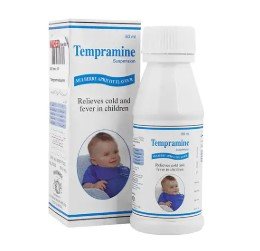
Description
Tempramine Suspension is a trusted, dual-action pediatric medication formulated to provide effective and temporary relief from multiple symptoms associated with fever, mild to moderate pain, allergies, and the common cold. This carefully calibrated oral suspension combines the proven power of paracetamol (acetaminophen) as an analgesic and antipyretic with the reliable action of chlorpheniramine maleate, a first-generation antihistamine, making it a versatile remedy for your child’s discomfort. Its pleasant flavor and easy-to-administer liquid form ensure compliance even for younger children.
This children’s medicine is manufactured under strict pharmaceutical standards, offering parents a reliable option for symptom management. Below is a summary of its core features and parental benefits:
✔️ Dual-Ingredient Formula: Addresses both pain/fever and allergic/cold symptoms simultaneously.
✔️ Child-Friendly Suspension: Easy-to-swallow liquid with a palatable taste, ideal for kids who struggle with tablets.
✔️ Precise Dosing: Includes a graduated medicinal syringe or measuring cup for accurate 5ml dosage every time.
✔️ Sugar-Free Formulation: Minimizes risk of dental caries, suitable for broader dietary needs.
✔️ Non-Narcotic & Non-Sedating (at recommended doses): Provides relief without the concerns associated with opioid pain relievers.
✔️ Fast-Acting Relief: Designed to quickly reduce fever, alleviate aches, and ease nasal and allergy symptoms.
✔️ GMP-Certified Production: Guarantees high-quality, consistent, and safe manufacturing practices.
What Are the Primary Uses and Key Features of Tempramine Suspension?
Tempramine Suspension is a multi-symptom relief medicine specifically designed for pediatric and adult use where a liquid formulation is preferred. Its key uses and features address common parental concerns and search queries like “medicine for child fever and runny nose” or “cold and allergy syrup for kids.”
Common Uses and Therapeutic Applications
This pediatric syrup is commonly used for the temporary relief of:
-
Fever Reduction: Effectively manages elevated body temperature (pyrexia) from infections or immunizations.
-
Pain Management: Alleviates various aches including headache, earache (otalgia), toothache (dental pain), sore throat, and general body pains or muscle aches.
-
Allergy Control: Mitigates symptoms of allergic rhinitis (hay fever), such as sneezing, itchy and watery eyes (allergic conjunctivitis), itchy nose or throat, and allergic skin rashes (urticaria).
-
Cold Symptom Relief: Addresses upper respiratory tract infection symptoms like runny nose (rhinorrhea), nasal congestion, postnasal drip, sneezing, and cough associated with colds and flu.
What Makes Tempramine Suspension a Preferred Choice?
-
Synergistic Action: The combination provides broader symptom coverage than single-ingredient products.
-
Accurate Pediatric Dosage: Dosage is based on weight and age, detailed on the pack, ensuring safety and efficacy.
-
Convenience: One medication can manage multiple disruptive symptoms, simplifying care.
-
Trusted Active Ingredients: Uses globally recognized compounds with extensive safety profiles when used as directed.
-
Quality Assurance: Produced in facilities adhering to WHO-GMP (Good Manufacturing Practice) guidelines, ensuring purity and potency.
How Do the Active Ingredients in Tempramine Work?
Understanding the mechanism of action of each active pharmaceutical ingredient (API) helps clarify how Tempramine Suspension provides comprehensive symptom relief.
Detailed Ingredient Breakdown
| Active Ingredient | Concentration per 5ml | Pharmacological Class | Primary Function |
|---|---|---|---|
| Paracetamol (Acetaminophen) | 120 mg | Analgesic & Antipyretic | Central pain relief and fever reduction |
| Chlorpheniramine Maleate | 1 mg | First-Generation Alkylamine Antihistamine | Blocks histamine to relieve allergy symptoms |
What is the Role of Paracetamol in Symptom Relief?
Paracetamol, a widely used analgesic, works primarily in the central nervous system. It inhibits the enzyme cyclooxygenase (COX), albeit centrally more than peripherally, leading to a reduction in the production of prostaglandins, which are chemical messengers that promote pain, inflammation, and fever. Its key benefits include:
-
Effective Antipyresis: Directly acts on the hypothalamic heat-regulating center to lower elevated body temperature.
-
Reliable Analgesia: Elevates the pain threshold, providing relief from mild to moderate nociceptive pain.
-
Favorable Safety Profile: Generally well-tolerated in the stomach and non-salicylate, making it suitable for children.
How Does Chlorpheniramine Maleate Combat Allergy and Cold Symptoms?
Chlorpheniramine is a potent H1-receptor antagonist. It competitively blocks histamine from binding to its receptors in the body, preventing the classic symptoms of an allergic reaction. Its benefits are:
-
Rapid Symptom Control: Reduces sneezing, rhinorrhea, and ocular itching quickly after administration.
-
Anticholinergic Properties: Helps dry up nasal and respiratory secretions, easing runny nose and postnasal drip.
-
Proven Efficacy: As a classical antihistamine, it has decades of clinical use supporting its effectiveness for allergic conditions and as part of cold remedies.
What Are the Correct Directions for Using This Medication?
For optimal therapeutic outcomes and safety, it is crucial to administer this oral suspension correctly.
Administration Instructions:
-
Shake Well: Shake the bottle vigorously for 10-15 seconds before each use to ensure uniform dispersion of the active ingredients.
-
Measure Precisely: Use only the provided medicinal dosing syringe or graduated measuring cup. Do not use household teaspoons, as they are inaccurate.
-
Administer Orally: Place the syringe tip in the child’s mouth, towards the inner cheek, and slowly depress the plunger.
-
Follow with Liquid: You may offer a drink of water or milk after administration to ensure the full dose is swallowed.
-
Clean Device: Rinse the measuring device with clean water after each use.
What is the Recommended Dosage Information for My Child?
Dosage is primarily based on the child’s weight, with age as a secondary guide. Always consult a doctor or pharmacist for personalized advice, especially for children under 2 years. The following table provides a standard dosing guide. Never exceed the maximum daily dose.
Dosage Guideline:
-
Standard Single Dose: 15 mg of paracetamol per kilogram of body weight.
-
Dosing Frequency: Every 4 to 6 hours as needed for symptom relief.
-
Maximum Daily Doses: Do not administer more than 4 doses in a 24-hour period.
Pediatric Dosage Chart (Approximate Guide):
| Child’s Weight | Child’s Age (Approx.) | Single Dose (Paracetamol 120mg/5ml) | Max. Daily Doses (24 hrs) |
|---|---|---|---|
| 8 – 10 kg | 1 – 2 years | 2.5 ml (60 mg paracetamol) | 4 |
| 11 – 16 kg | 3 – 4 years | 5 ml (120 mg paracetamol) | 4 |
| 17 – 21 kg | 5 – 7 years | 7.5 ml (180 mg paracetamol) | 4 |
| 22 – 32 kg | 8 – 10 years | 10 ml (240 mg paracetamol) | 4 |
| 33 kg and above | 11 – 12 years | 15 ml (360 mg paracetamol) | 4 |
Important Note: For adolescents and adults, a typical dose is 10-20 ml (240-480 mg paracetamol) every 4-6 hours, not to exceed 80 ml (1920 mg paracetamol) in 24 hours. Always refer to the product pack leaflet for the most accurate and updated information.
What Precautions Should I Take Before Using Tempramine Suspension?
While this is an over-the-counter (OTC) medicine, certain precautions and contraindications must be observed to ensure safe use.
Warnings and Contraindications:
-
Hypersensitivity: Do not use if the patient has a known allergy to paracetamol, chlorpheniramine, or any other component of the suspension.
-
Liver Impairment: Contraindicated in patients with severe hepatic disease or active liver conditions due to the paracetamol component.
-
Concurrent Medications: Avoid with other products containing paracetamol (acetaminophen) to prevent accidental overdose and hepatotoxicity. Inform your doctor if taking sedatives, tranquilizers, or monoamine oxidase inhibitors (MAOIs).
-
Medical Conditions: Use with caution and under medical supervision in cases of asthma, glaucoma, chronic bronchitis, emphysema, shortness of breath, difficulty in urination due to enlarged prostate, kidney disease, or phenylketonuria (if the formulation contains aspartame).
Special Population Precautions:
-
Pregnancy and Lactation: Consult a physician before use if you are pregnant, planning a pregnancy, or breastfeeding.
-
Elderly: May be more sensitive to the sedative effects of chlorpheniramine; lower doses may be advisable.
-
Driving and Operating Machinery: Chlorpheniramine may cause drowsiness. Caution is advised against driving or engaging in hazardous activities until the individual’s response is known.
Are There Any Potential Side Effects I Should Be Aware Of?
Most patients tolerate this medicine well when used at recommended doses for short periods. However, like all medicines, it can cause side effects, though not everybody gets them.
Common Side Effects (May affect up to 1 in 10 people):
-
Drowsiness or Sedation: This is the most frequent effect of chlorpheniramine.
-
Dry Mouth, Nose, or Throat
-
Mild Gastrointestinal Upset: Such as nausea or constipation.
-
Dizziness or Headache
Less Common or Rare Side Effects:
-
Excitement or Nervousness: Paradoxical reactions, especially in children.
-
Blurred Vision
-
Skin Rashes or Itching
Serious Side Effects (Seek immediate medical attention if these occur):
-
Signs of Allergic Reaction: Swelling of the face, lips, tongue, or throat; difficulty breathing; severe skin rash.
-
Signs of Liver Problems: Yellowing of the skin/eyes (jaundice), dark urine, severe upper stomach pain, persistent nausea.
-
Unusual Bleeding or Bruising
If you notice any side effects not listed here, discontinue use and consult your healthcare provider.
How Should I Store This Medicine to Ensure Its Potency?
Proper storage is essential to maintain the stability, safety, and efficacy of the suspension throughout its shelf life.
Optimal Storage Conditions:
-
Temperature: Store below 25°C (77°F). Do not freeze.
-
Environment: Keep the bottle tightly closed in a cool, dry place. Protect from direct sunlight and moisture.
-
Location: Store in the original container, out of sight and reach of children. Use a locked cabinet for safety.
-
Post-Reconstitution: The suspension is typically ready-to-use. Once opened, use within the timeframe specified on the label (e.g., 1 month). Do not use after the expiry date printed on the bottle or carton.
Who Manufactures Tempramine Suspension, and What Are Their Credentials?
Tempramine Suspension is manufactured by Pharmacare Limited, a reputable pharmaceutical company committed to producing high-quality, affordable medicines. The company operates state-of-the-art manufacturing plants that are compliant with:
-
Good Manufacturing Practices (GMP) as per international standards.
-
Stringent Quality Control protocols at every stage, from raw material sourcing to final packaging.
-
Regulatory approvals from relevant national drug authorities.
This ensures that every 60ml bottle of Tempramine Suspension meets consistent standards of purity, accurate concentration, and safety, providing reliable relief for your family. For specific batch details or corporate inquiries, the manufacturer’s address and contact details are provided on the product packaging.
What Are the Comprehensive Health Benefits of This Medication?
Choosing Tempramine Suspension offers a range of practical and therapeutic benefits for managing acute symptoms in children and adults.
Key Health and Care Benefits:
-
Multi-Symptom Management: A single medication addresses pain, fever, and histamine-mediated symptoms, reducing the need for multiple syrups.
-
Improved Comfort and Rest: By reducing fever, easing pain, and relieving nasal congestion, it allows for better sleep and recovery, which is crucial during illness.
-
Enhanced Compliance in Pediatrics: The liquid format and pleasant flavor significantly improve acceptance in young children and elderly patients who have difficulty swallowing solid dosage forms.
-
Precise and Flexible Dosing: Weight-based dosing allows for individualized treatment, and the included syringe minimizes dosing errors.
-
Rapid Onset of Action: Liquid formulations are generally absorbed faster than tablets, leading to quicker relief from distressing symptoms.
-
Non-Invasive Relief: Offers an effective alternative to suppositories for patients who cannot or will not take oral tablets.
How Does Tempramine Compare to Other Common Children’s Medicines?
This comparison table helps contextualize Tempramine against other typical OTC pediatric remedies, aiding in informed decision-making.
| Feature / Ingredient | Tempramine Suspension | Paracetamol-Only Syrup | Ibuprofen Suspension | Herbal Cold Syrups |
|---|---|---|---|---|
| Primary Actives | Paracetamol + Chlorpheniramine | Paracetamol only | Ibuprofen (NSAID) | Various Herbal Extracts |
| Fever & Pain Relief | Yes (via Paracetamol) | Yes | Yes (often stronger) | Variable / Unproven |
| Allergy/Cold Symptoms | Yes (Antihistamine) | No | No | Sometimes Claimed |
| Anti-inflammatory Action | No | No | Yes | Variable |
| Typical Dosing Frequency | Every 4-6 hours | Every 4-6 hours | Every 6-8 hours | As per product |
| Common Side Effect | Drowsiness | Rare (if dosed correctly) | Stomach upset | Allergic reaction risk |
| Best Suited For | Fever/Pain + Runny Nose/Sneezing | Fever/Pain only | Fever/Pain + Inflammation | Mild, complementary support |
Frequently Asked Questions (FAQs) About Tempramine Suspension
Can I give Tempramine Suspension to my infant under 1 year old?
Administration to infants under 2 years of age should only be done under the direct advice and supervision of a qualified pediatrician. Dosage for this age group is critical and must be calculated precisely based on weight.
How long does it take for this medicine to start working?
Paracetamol typically starts reducing fever and pain within 30-60 minutes after administration. The antihistamine effect of chlorpheniramine on sneezing and runny nose also begins within this timeframe.
Is it safe to use this syrup for a persistent cough?
Tempramine can help with a cough caused by postnasal drip from allergies or a cold due to its drying effect. However, it is not a specific cough suppressant. For a persistent, dry, or severe cough, consult a doctor for appropriate treatment.
My child feels drowsy after taking the dose. Should I stop the medicine?
Mild drowsiness is a common and expected effect of the chlorpheniramine component. Ensure your child is in a safe environment and avoid activities requiring alertness. If drowsiness is severe or persistent, consult your healthcare provider, as they may recommend adjusting the timing (e.g., before bedtime) or the dose.
Can this medicine be taken with antibiotics like amoxicillin?
There is typically no known direct interaction. However, you should always inform your doctor about all medications your child is taking. Administer them at separate times if possible, as directed by your physician.
What should I do if I accidentally miss a dose?
If it is almost time for the next dose, skip the missed dose and continue with the regular schedule. Do not double the dose to make up for a missed one.
Where can I find the expiry date on the packaging?
The expiry date is printed on both the sealed carton box and the label of the medicine bottle. Do not use the suspension after this date.