 Cart is empty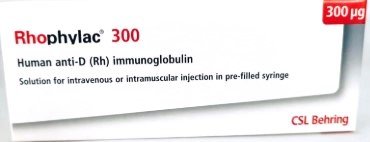
Description
Rhophylac 300 Injection is a critical biological therapy designed to prevent Rh isoimmunization, a serious immune response that can threaten pregnancies and transfusion safety. This sterile solution contains human anti-D immunoglobulin, a specialized antibody that protects Rh-negative individuals from developing harmful antibodies against Rh-positive red blood cells. By administering this prophylactic treatment, healthcare providers can effectively safeguard fetal health and prevent hemolytic disease of the newborn (HDN), ensuring safer outcomes for current and future pregnancies.
Rhophylac 300 INJ offers a reliable, ready-to-use solution for Rh disease prevention with several standout features:
✔️ Contains 300 mcg (1500 IU) of purified human anti-D IgG.
✔️ Presented in a convenient, sterile pre-filled syringe for accurate dosing.
✔️ Can be administered via intramuscular (IM) or intravenous (IV) routes as needed.
✔️ Manufactured under strict pharmacovigilance and GMP standards from human plasma.
✔️ Undergoes advanced viral inactivation processes for enhanced safety.
✔️ Crucial for routine antenatal prophylaxis and post-delivery care.
What is Rhophylac 300 Inj and How Does it Work?
Rhophylac 300 Inj is a human plasma-derived medicine classified as an immunoprophylactic agent. Its active component is anti-D (Rh) immunoglobulin, an antibody that targets the RhD antigen present on the surface of Rh-positive red blood cells. The primary mechanism of action involves immune system modulation. When an Rh-negative individual is exposed to Rh-positive blood—whether through fetomaternal hemorrhage during pregnancy or an accidental transfusion—their immune system may recognize the RhD antigen as foreign and begin producing its own anti-D antibodies, a process known as sensitization.
Rhophylac 300 works by passive immunization. The administered anti-D antibodies quickly bind to any Rh-positive red blood cells in the recipient’s circulation. This binding marks the foreign cells for rapid destruction by the body’s spleen, thereby clearing them before the recipient’s own immune system can recognize them and mount a primary, long-lasting immune response. This prevents the formation of endogenous anti-D antibodies, protecting against Rhesus disease in future pregnancies and complications from incompatible blood exposure.
Primary Uses and Key Features of Anti-D Immunoglobulin
Rhophylac 300 serves vital roles in maternal-fetal medicine and transfusion safety. Its applications are specific and clinically well-defined.
What are the main clinical uses for Rhophylac 300?
Routine Antenatal Rh Prophylaxis: Administered to non-sensitized Rh-negative pregnant women at approximately 28 weeks of gestation to protect against silent fetomaternal hemorrhage in the third trimester.
Postnatal Prophylaxis: Given within 72 hours after delivery if the newborn is Rh-positive, preventing sensitization from the significant blood mixing that occurs during childbirth.
Post-Event Prophylaxis: Used following potential sensitizing events during pregnancy, such as miscarriage, abortion (spontaneous or induced), ectopic pregnancy, amniocentesis, chorionic villus sampling (CVS), cordocentesis, or abdominal trauma.
Incompatible Transfusion Management: Critical for Rh-negative individuals (adults and children) who accidentally receive Rh-positive blood or blood components (e.g., platelets, granulocytes).
Chronic ITP Management: Used as an intravenous immunomodulatory therapy to raise platelet counts in Rh-positive patients with chronic immune thrombocytopenic purpura.
What are the standout features of Rhophylac anti-D product?
Dual Route of Administration: Offers flexibility with both IM and IV administration, which is particularly beneficial for patients with high BMI where IM injection may be less effective, or for ITP treatment requiring IV delivery.
Ready-to-Use Formulation: Supplied in a single-dose, pre-filled syringe, eliminating reconstitution errors, saving preparation time, and ensuring dosage accuracy.
High Purity and Safety Profile: Derived from carefully screened human plasma and subjected to multiple viral reduction steps, including solvent/detergent treatment and nanofiltration.
Standardized Potency: Each syringe delivers a precise 300 microgram dose, equivalent to 1500 International Units (IU), ensuring consistent therapeutic effect.
Rapid Immune Response: The antibodies begin working immediately upon administration to clear Rh-positive red blood cells and block sensitization.
Key Ingredient: Human Anti-D Immunoglobulin
The sole active pharmaceutical ingredient in Rhophylac 300 is Human Anti-D (Rh) Immunoglobulin. This is a highly purified, specific immunoglobulin G (IgG) fraction obtained from the plasma of carefully selected human donors who have high titers of anti-D antibodies.
How is the anti-D immunoglobulin sourced and processed?
The manufacturing begins with source plasma collected from qualified donors under stringent health surveillance programs. The plasma units are tested for viral markers and pooled. The critical purification process involves Cohn-Oncley fractionation, followed by specific chromatography steps to isolate the IgG fraction containing the anti-D antibody. Two dedicated viral inactivation/removal steps are employed: a solvent/detergent treatment to enveloped viruses and nanofiltration, providing a robust safety margin against known blood-borne pathogens.
What are the excipients and their roles?
The formulation contains several stabilizing agents to ensure the antibody remains active and the solution is safe for injection:
Human Albumin: Acts as a stabilizer to protect the immunoglobulin protein from denaturation.
Sodium Chloride: Maintains osmotic balance (tonicity) similar to blood plasma.
Polysorbate 80: A surfactant that prevents protein aggregation.
Water for Injections: The sterile solvent base.
How Should Rhophylac 300 Be Administered?
Administration must be performed by a qualified healthcare professional in a clinical setting. Proper technique is crucial for efficacy and safety.
What is the standard method for administering this injection?
For most Rh prophylaxis cases (pregnancy and postnatal), the intramuscular (IM) route is standard. The injection is typically given into the deltoid muscle of the upper arm or the anterolateral aspect of the upper thigh. The healthcare provider will clean the injection site, use the pre-filled syringe, and inject the solution deeply into the muscle mass.
When is the intravenous (IV) route used?
The IV route is reserved for specific situations:
For the treatment of chronic ITP in Rh-positive patients.
In cases where a large fetomaternal hemorrhage (FMH) is suspected or quantified, requiring multiple doses.
When an IM injection is contraindicated (e.g., significant bleeding disorders).
For IV use, the solution can be administered as a slow bolus injection or infused with a compatible diluent, as per the prescribing guidelines.
What post-administration protocols are followed?
Patients should be observed for at least 20 minutes after receiving the injection for any signs of an adverse or hypersensitivity reaction. Documentation of the product batch number and administration details in the patient’s permanent medical record and, crucially, in their anti-D prophylaxis card is mandatory for lifelong reproductive health tracking.
Dosage Information for Different Indications
The dosage of Rhophylac 300 is not weight-based for standard prophylaxis but is indication-specific.
What is the standard dosage for pregnancy-related Rh prevention?
Routine Antenatal Prophylaxis: A single dose of 300 micrograms (1500 IU) at around 28 weeks of gestation.
Postnatal Prophylaxis: A single dose of 300 micrograms within 72 hours of delivery if the baby is confirmed or suspected to be Rh-positive.
Post-Event Prophylaxis (e.g., after amniocentesis): A single 300 microgram dose is usually sufficient, administered promptly after the event.
How is dosing managed for larger fetomaternal hemorrhages?
If a significant FMH is suspected (e.g., after major abdominal trauma), a Kleihauer-Betke test or flow cytometry is performed to quantify the volume of fetal blood in the maternal circulation. The dose is then adjusted accordingly, as one 300 microgram dose protects against up to 15 mL of fetal Rh-positive red blood cells (or about 30 mL of fetal whole blood). Multiple vial doses may be required for larger hemorrhages and are typically given via the IV route.
What is the dosage for incompatible transfusion events?
The dosage is calculated based on the volume of Rh-positive blood or red cells transfused. A general guideline is that 300 micrograms of anti-D immunoglobulin neutralizes approximately 15 mL of Rh-positive red blood cells. A full transfusion unit would require multiple doses, often administered intravenously.
Important Precautions and Contraindications
While Rhophylac 300 is life-saving, certain precautions are essential for safe use.
Who should not receive Rhophylac 300?
Rh-Positive Individuals: It is contraindicated for use in individuals who are Rh-positive, except for the specific treatment of ITP.
Patients Allergic to Human Globulin: Contraindicated in persons with known anaphylactic or severe systemic hypersensitivity reactions to human immunoglobulin products.
Patients with Selective IgA Deficiency: Should be given with extreme caution due to the potential presence of trace IgA and risk of anti-IgA antibodies causing severe reactions.
What special warnings should be considered?
Transmissible Agents: Despite advanced manufacturing processes, the risk of transmitting infectious agents cannot be totally eliminated.
Intravascular Hemolysis: For ITP patients receiving IV treatment, monitor for signs of intravascular hemolysis.
Thrombotic Events: High doses in ITP treatment have been associated rarely with thrombotic events.
Interference with Live Virus Vaccines: Antibodies in Rhophylac may interfere with the immune response to live attenuated virus vaccines (e.g., MMR, varicella). Vaccination should be deferred for at least 3 months after administration.
Potential Side Effects and Adverse Reactions
Most patients tolerate Rhophylac 300 well, but like all biological medicines, side effects can occur.
What are the common, less serious side effects?
Injection site reactions: Pain, tenderness, redness, or mild swelling.
Systemic effects: Mild temperature increase, headache, chills, or general malaise.
These effects are usually transient and resolve without intervention.
What are the rare but serious adverse reactions?
Hypersensitivity/Anaphylaxis: Signs include hives, generalized urticaria, wheezing, hypotension, and tachycardia. This requires immediate emergency treatment.
Hemolysis: In ITP patients, a drop in hemoglobin can occur due to the intended destruction of antibody-coated red cells.
Transfusion-Related Acute Lung Injury (TRALI): A rare but serious pulmonary complication characterized by acute respiratory distress.
Patients should be advised to seek immediate medical attention if they experience symptoms like chest tightness, difficulty breathing, severe dizziness, or rash after receiving the injection.
Proper Storage and Handling Instructions
Correct storage is vital to maintain the stability and sterility of this biological product.
What are the recommended storage conditions?
Store refrigerated at 2°C to 8°C (36°F to 46°F) in its original outer carton to protect from light.
Do not freeze. Freezing can denature the protein and damage the pre-filled syringe.
The product can be taken out of refrigeration and kept at room temperature (up to 25°C/77°F) for a single period of up to 7 days. If not used within this time, it must be discarded.
Once removed from the carton, protect the pre-filled syringe from direct sunlight.
How should healthcare professionals handle the product?
Inspect the solution visually for particulate matter and discoloration before administration. The solution should be clear or slightly opalescent and colorless to pale yellow.
Do not use if the solution is cloudy or contains particles.
Do not shake the pre-filled syringe vigorously.
Use aseptic technique during administration.
Manufacturer Information and Quality Assurance
Rhophylac 300 is manufactured by CSL Behring AG, a global leader in biotherapeutics. CSL Behring is part of CSL Limited, a company renowned for its commitment to research, development, and manufacturing of plasma-derived and recombinant therapies.
What quality standards govern the production?
The manufacturing facilities operate under current Good Manufacturing Practices (cGMP) as mandated by regulatory authorities like the U.S. FDA, European EMA, and others. The plasma sourcing follows strict international standards, including:
Donor screening and plasma testing for HIV, Hepatitis B and C, and other viruses.
Plasma unit quarantine until donor re-testing confirms negative status.
State-of-the-art viral inactivation and removal technologies integrated into the production process.
Extensive in-process and final product testing for potency, purity, and safety.
Comprehensive Benefits of Using Rhophylac 300
The benefits of this targeted immunoprophylaxis extend across clinical, emotional, and economic dimensions.
How does Rhophylac 300 benefit maternal and fetal health?
Prevents Hemolytic Disease of the Newborn (HDN): The primary benefit is the effective prevention of erythroblastosis fetalis, a condition that can cause severe anemia, jaundice, brain damage (kernicterus), heart failure, or even fetal demise.
Enables Safe Future Pregnancies: By preventing sensitization, it ensures that future Rh-positive pregnancies are not at risk, providing reproductive peace of mind.
Reduces Need for Invasive Procedures: Effective prophylaxis minimizes the need for intrauterine transfusions, early inductions, or neonatal exchange transfusions.
Supports Management of Pregnancy Events: Allows for safe conduct of necessary prenatal diagnostic tests (like amniocentesis) without fear of causing sensitization.
What are the broader healthcare benefits?
Manages Transfusion Errors: Serves as a critical antidote in cases of Rh-incompatible blood transfusions, preventing delayed hemolytic transfusion reactions and long-term sensitization.
Offers a Treatment for ITP: Provides an effective immunomodulatory option for raising platelet counts in a specific patient subgroup.
Standardized Care: The pre-filled syringe format promotes dosing accuracy, reduces medication errors, and streamlines clinical workflow.
Rhophylac 300 vs. Other Anti-D Immunoglobulin Products
| Feature | Rhophylac 300 | Other Traditional Anti-D Products (e.g., RhoGAM) |
|---|---|---|
| Administration Routes | Approved for both Intramuscular (IM) and Intravenous (IV) use. | Typically approved for Intramuscular (IM) use only. |
| Presentation | Ready-to-use liquid solution in a pre-filled syringe. | Often a lyophilized powder requiring reconstitution before use. |
| Dosage Form | Single-dose, pre-filled syringe. | Vial format requiring a separate syringe for drawing up. |
| Key Clinical Advantage | Flexibility for IV use in large FMH/transfusion events & ITP; no preparation time. | Long-established history of efficacy for standard IM prophylaxis. |
| Core Indications | Rh prophylaxis, Incompatible transfusion, Chronic ITP (IV). | Primarily Rh prophylaxis. May not be licensed for ITP or IV use. |
| Typical Use Case | Preferred when IV route is needed or where ready-to-use format improves efficiency. | Standard choice for routine IM antenatal/postnatal prophylaxis. |
Frequently Asked Questions About Anti-D Immunoglobulin
Is Rhophylac 300 safe to receive during pregnancy and breastfeeding?
Yes, Rhophylac 300 is classified as Category C in pregnancy and is considered essential therapy for preventing Rh disease. The benefits far outweigh any potential risks. The antibodies do not cross into breast milk in significant amounts to affect the nursing infant, and it is considered safe during lactation.
How long does the protection from a single dose last?
The passive immunity provided by a standard 300 microgram dose lasts approximately 12 weeks. This is why routine antenatal prophylaxis is timed for ~28 weeks to provide coverage through the final trimester when the risk of silent FMH increases.
What happens if the 72-hour postnatal window is missed?
While administration within 72 hours postpartum is most effective, guidelines suggest that a dose should still be given if up to 10-14 days have passed, as some protective effect may still be gained. Efficacy decreases with time, so prompt administration is always emphasized.
Can Rhophylac cause Rh sensitization by itself?
No. The anti-D immunoglobulin in Rhophylac is a passive antibody. It is designed to prevent sensitization, not cause it. It does not stimulate the recipient’s immune system to make its own antibodies; it provides temporary, “borrowed” immunity.
Why might an Rh-negative woman need anti-D even if the baby’s father is also Rh-negative?
If paternity is certain and the father is conclusively Rh-negative (dd genotype), the baby will also be Rh-negative and anti-D is not required. However, if paternity is uncertain, the father’s status is unknown, or if he is heterozygous (Dd genotype, giving a 50% chance of an Rh-positive baby), prophylaxis is still recommended to err on the side of caution.
How is a large fetomaternal hemorrhage (FMH) diagnosed and managed?
A large FMH is suspected after events like major trauma, placental abruption, or stillbirth. Diagnosis is via a Kleihauer-Betke test or flow cytometry on a maternal blood sample. These tests quantify the volume of fetal blood present. The dose of Rhophylac is then calculated (300 mcg per 15 mL of fetal red cells) and is often administered intravenously for immediate effect.