
 Cart is empty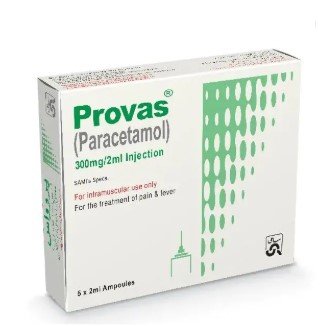
Description
Provas Inj 300mg is a sterile, injectable formulation of paracetamol (acetaminophen), designed for rapid therapeutic action when oral administration is not feasible or effective. This intravenous or intramuscular solution provides critical support for managing acute pain and pyrexia in clinical and post-operative settings, offering a reliable alternative for patients with swallowing difficulties, nausea, or impaired gastrointestinal absorption. Manufactured under strict pharmacopoeial standards by SAMI, it represents a cornerstone of modern analgesic and antipyretic therapy.
This injectable paracetamol product is engineered for precision, safety, and fast onset. Here is a brief summary of its core attributes:
✔ Rapid-Acting Formula: Designed for quick systemic absorption and faster pain relief and fever reduction compared to some oral routes.
✔ Critical Care & Surgical Support: An essential tool for postoperative pain management and fever control in hospital formularies.
✔ Alternative Administration Route: A vital solution for patients who are nil-by-mouth, vomiting, or unconscious.
✔ High-Quality Sterile Injection: Produced by SAMI in compliance with Good Manufacturing Practice (GMP) ensuring purity and potency.
✔ Potent Analgesic & Antipyretic: Effectively alleviates diverse pain types and reduces high body temperature.
What Are the Primary Uses and Key Features of Provas Injection?
Provas Inj 300mg serves as a versatile therapeutic agent in medical practice. Its applications and distinguishing characteristics make it a first-line choice in various clinical scenarios.
Clinical Indications and Therapeutic Uses
Management of Acute Pain States: Provides effective relief for mild to moderate pain, including tension headaches, dental pain, musculoskeletal discomfort, and earaches.
Post-Surgical and Procedural Pain Control: Widely used in postoperative care protocols as part of multimodal analgesia to reduce opioid requirements and enhance patient comfort.
Treatment of Febrile Conditions: Acts as a potent antipyretic to lower elevated body temperature in infections, inflammatory states, and other febrile illnesses.
Pediatric and Geriatric Care: Offers a dependable dosing option for fever and pain in children and elderly patients where oral routes are problematic.
Oncology and Palliative Support: Utilized in managing cancer-related pain and fever, especially when oral intake is compromised.
Distinguishing Features and Benefits
Bioavailability Guarantee: 100% bioavailability via intravenous administration, ensuring the entire dose reaches systemic circulation for predictable pharmacological effect.
Flexible Administration: Can be administered via slow intravenous infusion (IV) or deep intramuscular (IM) injection, offering adaptability based on clinical setting and patient condition.
Favorable Safety Profile: When used at recommended doses, it is generally well-tolerated with a lower incidence of gastric irritation compared to NSAIDs.
Complements Multimodal Therapy: Effectively combines with other analgesics like NSAIDs or opioids for synergistic pain relief, often allowing for lower doses of stronger drugs.
Ready-to-Use Solution: Supplied as a clear, aqueous solution in a single-dose ampoule, facilitating quick preparation and administration by healthcare professionals.
What is the Active Ingredient in Provas 300mg Injection?
The sole active pharmaceutical ingredient in Provas Inj 300mg is Paracetamol, also universally known as Acetaminophen. This well-established compound is the foundation of the injection’s therapeutic effects.
Pharmacological Profile of Paracetamol
Paracetamol is a centrally-acting analgesic and antipyretic with a unique mechanism. Unlike non-steroidal anti-inflammatory drugs (NSAIDs), it exhibits weak anti-inflammatory activity. Its primary mode of action is believed to involve the inhibition of cyclooxygenase (COX) enzymes, particularly a variant called COX-3, within the central nervous system. This action reduces the synthesis of prostaglandins, which are chemical messengers that promote pain, fever, and inflammation.
Central Nervous System Action: Exerts its analgesic effect predominantly in the brain and spinal cord, modulating the perception of pain.
Hypothalamic Activity: Targets the hypothalamus in the brain to reset the body’s thermostat, effectively reducing fever.
Well-Established Metabolism: Primarily metabolized in the liver through conjugation pathways and eliminated via the kidneys.
Therapeutic Purity: In injectable form like Provas, it offers a pure, uncontaminated delivery of the molecule directly into the bloodstream.
How Should Provas Paracetamol Injection Be Administered?
Correct administration is paramount for safety and efficacy. This injectable formulation is strictly for use by qualified medical personnel in a clinical environment.
Route of Administration Protocols
Intravenous (IV) Infusion: This is the most common and preferred method. The contents of the 2ml ampoule (300mg) must be diluted in a suitable volume of compatible IV fluid (e.g., 0.9% Sodium Chloride or 5% Dextrose). The infusion is then administered slowly over a period of 15 minutes to minimize the risk of adverse reactions.
Intramuscular (IM) Injection: If IV access is not available, a deep intramuscular injection can be administered. A suitable muscle mass, such as the gluteal or vastus lateralis, should be used. Aspiration is necessary prior to injection to avoid intravascular administration.
Step-by-Step Guide for Healthcare Providers
Aseptic Preparation: Perform hand hygiene and gather equipment (ampoule, syringe, needle, diluent if for IV).
Inspection: Check the ampoule for cracks, leaks, or particulate matter in the solution. Do not use if discolored or cloudy.
Ampoule Opening: Snap the neck of the ampoule carefully using a sterile gauze pad.
Withdrawal: Draw the entire 2ml solution into an appropriate sterile syringe.
For IV Use: Dilute the drawn solution into a 100ml bag of compatible IV fluid. Mix gently. Administer via infusion pump or controlled drip over 15 minutes.
For IM Use: Attach a suitable needle for deep IM injection. Select the site, clean with antiseptic, and administer deeply into the muscle mass.
Post-Administration Monitoring: Observe the patient for any immediate adverse effects, especially during the first IV infusion.
What is the Recommended Dosage for Provas 300mg Injection?
Dosage must be individualized based on patient weight, age, hepatic function, and the severity of pain or fever. The following are general guidelines.
Adult and Adolescent Dosage (13 years and above, weighing 50 kg or more)
Single Dose: 300mg to 1 gram per administration.
Maximum Daily Dose: The total dose should not exceed 4 grams (4000mg) in 24 hours. In patients with risk factors for hepatotoxicity (e.g., chronic malnutrition, low body weight, chronic alcoholism), the maximum daily dose should be reduced, often to 3 grams or less.
Dosing Interval: A minimum of 4 to 6 hours should be maintained between consecutive doses.
Pediatric Dosage (Based on Body Weight)
Dosing for children under 13 is weight-based, typically 15mg per kilogram of body weight per dose.
| Patient Body Weight | Recommended Single Dose (15mg/kg) | Maximum Single Dose | Dosing Interval |
|---|---|---|---|
| Up to 10 kg | Up to 150 mg | 150 mg | Every 4-6 hours |
| 11 – 20 kg | 165 mg – 300 mg | 300 mg | Every 4-6 hours |
| 21 – 30 kg | 315 mg – 450 mg | 450 mg | Every 4-6 hours |
| 31 – 40 kg | 465 mg – 600 mg | 600 mg | Every 4-6 hours |
| 41 – 50 kg | 615 mg – 750 mg | 750 mg | Every 4-6 hours |
*Note: The maximum daily dose for children should not exceed 75 mg/kg, up to a total of 4 grams.*
Special Population Considerations
Renal Impairment: Dose adjustment may not be necessary for mild to moderate impairment, but dosing interval should be increased (e.g., not more than 3 doses in 24 hours) in severe renal failure.
Hepatic Impairment: Contraindicated in severe hepatic impairment. Use with extreme caution and at reduced doses in mild to moderate impairment. Often contraindicated in active liver disease.
Elderly Patients: May have reduced clearance. Use the lowest effective dose for the shortest duration, monitoring for side effects.
What Precautions Should Be Taken When Using This Injection?
Vigilance and adherence to precautions prevent serious adverse outcomes. Paramount among these is the avoidance of paracetamol overdose.
Critical Warnings and Contraindications
Hepatotoxicity Risk: Acetaminophen overdose is a leading cause of acute liver failure worldwide. This risk is heightened with concurrent alcohol use, pre-existing liver disease (e.g., hepatitis, cirrhosis), fasting, or malnutrition.
Allergic Reactions: Contraindicated in patients with known hypersensitivity to paracetamol or any excipient in the formulation.
Severe Hepatic Disease: Absolute contraindication in patients with severe active liver disease or severe hepatic impairment.
Concurrent Use with Other Paracetamol Products: Patients must be counseled to avoid all other medications containing acetaminophen (many cold, flu, and combination pain relievers) to prevent unintentional cumulative overdose.
G6PD Deficiency: Use with caution, as there is rare potential for hemolytic anemia.
Important Drug Interactions
Warfarin and Other Coumarins: Chronic, high-dose paracetamol use may potentiate the anticoagulant effect, increasing INR and bleeding risk. Monitoring is advised.
Enzyme Inducers: Drugs like carbamazepine, phenobarbital, phenytoin, and rifampicin can increase the formation of the toxic metabolite (NAPQI), elevating liver damage risk. Dose reduction is mandatory.
Probenecid: May decrease paracetamol clearance, potentially increasing its effects and toxicity.
Metoclopramide/Domperidone: May increase the absorption rate of oral paracetamol, but this is less relevant for injectable forms.
Cholestyramine: Reduces absorption of oral paracetamol if taken within one hour.
What Are the Potential Side Effects of Provas Injection?
While generally safe at therapeutic doses, adverse reactions can occur. These are typically rare with proper intravenous administration.
Common and Less Serious Adverse Reactions
Injection Site Reactions: Pain, tenderness, or redness at the site of intramuscular injection. For IV, local irritation or phlebitis may occur if infusion is too rapid.
Gastrointestinal Effects: Nausea, vomiting, or abdominal pain, though less frequent than with NSAIDs.
Hematological Effects: Rare cases of thrombocytopenia (low platelets), leukopenia (low white cells), or neutropenia.
Hypersensitivity: Skin rashes, itching (pruritus), or urticaria (hives).
Serious but Rare Adverse Events
Acute Liver Failure: Presents with nausea, vomiting, malaise, and right upper quadrant pain 24-72 hours after a massive overdose. This can progress to jaundice, coagulopathy, and encephalopathy.
Severe Cutaneous Adverse Reactions (SCARs): Extremely rare but life-threatening conditions like Stevens-Johnson Syndrome (SJS) or Toxic Epidermal Necrolysis (TEN). Discontinue immediately at first sign of severe rash.
Acute Generalized Exanthematous Pustulosis (AGEP): Another rare severe skin reaction.
Anaphylaxis and Angioedema: Full-blown anaphylactic reactions, including difficulty breathing and swelling of the face/tongue, are very rare but require immediate emergency treatment.
Renal Effects: Rare instances of renal tubular necrosis or interstitial nephritis, often associated with overdose.
How Should I Store Provas 300mg Ampoules?
Proper storage is essential to maintain the sterility, stability, and potency of the parenteral solution.
Temperature Control: Store in a cool, dry place. The recommended storage temperature is below 30°C (86°F). Do not freeze.
Light Sensitivity: Protect from direct sunlight. The ampoules should be kept in their original carton until use.
Out of Reach: Always keep all medications out of the sight and reach of children and pets.
Post-Opening: The solution in the opened ampoule is for single-use only. Any unused portion must be discarded immediately. Do not store or reuse.
Shelf Life: Do not use the product after the expiration date printed on the ampoule and carton.
Who Manufactures Provas 300mg Injection?
Provas Inj 300mg is manufactured by SAMI Pharmaceuticals, a reputable name in the pharmaceutical industry known for its commitment to quality and affordability.
Manufacturer Credentials and Quality Assurance
Regulatory Compliance: SAMI operates manufacturing facilities that comply with WHO-GMP (Good Manufacturing Practice) guidelines, ensuring international standards of quality control at every production stage.
Research and Development: The company invests in pharmaceutical R&D, focusing on essential medicines and sterile injectables.
Portfolio: SAMI produces a wide range of therapeutic products, with injectable formulations being a key segment, demonstrating expertise in sterile manufacturing.
Global Reach: While serving the domestic market robustly, SAMI products are also distributed in various international markets, reflecting adherence to global regulatory expectations.
Commitment to Accessibility: SAMI’s philosophy often centers on making critical medicines like paracetamol injections accessible to healthcare systems and patients who need them.
What Are the Overall Benefits of Using This Injectable Paracetamol?
Choosing Provas Inj 300mg offers a multitude of clinical and practical advantages in patient management.
Rapid Onset of Therapeutic Action: Intravenous administration provides faster pain relief and fever reduction compared to oral tablets, which must first undergo gastrointestinal absorption.
100% Drug Bioavailability: The entire administered dose is delivered into the systemic circulation, eliminating variables like erratic gastrointestinal absorption, which is crucial in critically ill or post-surgical patients.
Ideal for NPO (“Nil Per Os”) Patients: It is the standard of care for patients who cannot take anything by mouth due to surgery, severe nausea/vomiting, reduced consciousness, or gastrointestinal obstruction.
Reduces Opioid Reliance: As part of a multimodal analgesic regimen, it provides significant “opioid-sparing” effects, lowering the total dose of stronger narcotics needed and thereby reducing associated side effects like respiratory depression, sedation, and constipation.
Predictable Pharmacokinetics: The IV route offers precise control over plasma drug levels, allowing for more accurate and predictable dosing in a hospital setting.
Favorable Tolerability Profile: It lacks the antiplatelet effects and gastrointestinal ulcer risks associated with NSAIDs like ibuprofen or diclofenac, making it safer for a broader patient population.
Established Pediatric and Geriatric Utility: Has a long history of safe and effective use in both young children and the elderly when dosed appropriately.
How Does Injectable Paracetamol Compare to Other Pain Relievers?
Understanding its position within the analgesic arsenal helps in making informed therapeutic decisions.
Provas Injection vs. Common Analgesic Alternatives
| Feature/Aspect | Provas (IV/IM Paracetamol) | Oral Paracetamol Tablets | IV/IM NSAIDs (e.g., Diclofenac) | Opioids (e.g., Morphine IV) |
|---|---|---|---|---|
| Primary Use | Mild-Moderate pain, Fever | Mild-Moderate pain, Fever | Moderate pain, Inflammation | Moderate-Severe pain |
| Onset of Action | Very Fast (IV) | Slow (30-60 mins) | Fast | Very Fast |
| Route Flexibility | IV & IM | Oral only | IV, IM, Oral | IV, IM, Oral |
| Anti-inflammatory | Very Weak/None | Very Weak/None | Strong | None |
| GI Side Effects | Low | Low | High Risk | Moderate (Constipation) |
| Renal Risk | Low (except overdose) | Low | High Risk | Low |
| Addiction Potential | None | None | None | High |
| Best For | NPO patients, Fast relief, Fever | Home use, Stable patients | Inflammatory pain (arthritis) | Severe, acute pain |
Frequently Asked Questions (FAQs) About Provas 300mg Injection
Is Provas injection stronger than a paracetamol tablet?
No, the strength per milligram is identical. The key difference lies in the speed of action and reliability of delivery. The injectable form bypasses the digestive system, achieving effective blood levels much faster and with 100% certainty, which is critical in acute medical situations.
How quickly does the IV injection work for reducing fever?
Patients often experience a noticeable reduction in body temperature within 30 to 60 minutes after the completion of a 15-minute intravenous infusion. The antipyretic effect peaks around 1-2 hours post-administration. This rapid action is vital in managing high fevers in emergency or pediatric settings.
Can this injection be used for severe pain like a migraine or kidney stones?
While effective for mild to moderate pain, severe pain conditions like migraines or renal colic often require a multi-drug approach. Provas injection serves as an excellent foundational or adjunctive analgesic in these cases, frequently combined with a more potent NSAID (if not contraindicated) or an opioid to achieve comprehensive pain control.
What should I do if a dose is missed?
If you miss a scheduled dose in a clinical setting, administer it as soon as you remember. However, if it is almost time for the next scheduled dose, skip the missed dose and resume the regular dosing schedule. Do not administer a double dose to make up for a missed one, as this increases the risk of overdose and hepatotoxicity.
Are there any dietary restrictions while on this medication?
There are no specific dietary restrictions. However, patients must be strongly advised to completely avoid alcohol consumption during treatment. Alcohol induces liver enzymes and depletes glutathione, dramatically increasing the risk of paracetamol-induced liver injury, even at therapeutic doses.
Can it be used during pregnancy or breastfeeding?
Paracetamol is generally considered the analgesic and antipyretic of choice during all trimesters of pregnancy when medication is necessary, as per most obstetric guidelines. It is also compatible with breastfeeding, as the amount excreted in breast milk is negligible and unlikely to affect a nursing infant. However, always consult a physician before use.
How is an overdose of this injection treated?
Paracetamol overdose is a medical emergency requiring immediate hospitalization. The specific antidote is N-acetylcysteine (NAC), which works by replenishing glutathione stores in the liver to neutralize the toxic metabolite. Treatment is most effective if started within 8 hours of ingestion, but should be given regardless of time elapsed. Plasma paracetamol levels are measured to guide therapy.


