
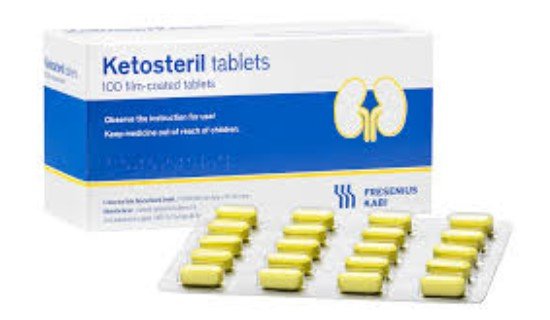
Description
Ketosteril tablets represent a cornerstone of specialized medical nutrition for individuals managing chronic kidney disease (CKD). This prescription-based supplement is meticulously formulated to support renal function by providing a unique blend of essential amino acids in their keto-analogue and hydroxy-analogue forms. When combined with a prescribed low-protein diet, Ketosteril helps the body utilize protein more efficiently, thereby reducing the accumulation of nitrogenous waste products like urea and creatinine in the bloodstream. This targeted action is crucial for alleviating the burden on compromised kidneys, managing symptoms of renal insufficiency, and supporting overall metabolic balance in CKD patients.
By integrating Ketosteril into a comprehensive renal care plan, patients and nephrologists aim to conservatively manage kidney disease progression. This article provides a detailed exploration of Ketosteril, from its mechanism of action and key benefits to essential usage guidelines and safety information. Below is a summary of the core features and benefits you will learn about:
✔️ A unique formula of keto-analogues and essential amino acids for efficient protein metabolism.
✔️ Clinically shown to help slow the progression of chronic renal failure.
✔️ Aids in reducing urea and other nitrogenous waste buildup in the blood.
✔️ Supports the management of serum electrolytes like calcium and phosphate.
✔️ Plays a role in delaying the need for initiation of dialysis or kidney transplantation.
✔️ Must be used under strict medical supervision as part of a tailored low-protein diet.
What Are the Primary Uses and Key Features of Ketosteril?
Ketosteril is not a general wellness supplement; it is a specific medical nutrition product designed for a defined therapeutic purpose within nephrology.
Primary Therapeutic Uses of Ketosteril Tablets
Management of Chronic Kidney Disease (CKD): It is indicated for patients in later stages of CKD (typically Stage 4 and Stage 5, or with a severe decline in glomerular filtration rate – GFR) who are following a protein-restricted dietary regimen.
Uremia Symptom Control: Helps manage the symptoms associated with uremia or azotemia, such as nausea, fatigue, loss of appetite, and itching, by lowering blood urea nitrogen (BUN) levels.
Conservative Therapy for Renal Failure: Serves as a key component of conservative, non-dialytic management of chronic renal insufficiency, aiming to preserve residual renal function for as long as possible.
Nutritional Support on a Low-Protein Diet: Prevents protein malnutrition and essential amino acid deficiencies that can occur when patients adhere to a strict low-protein or very low-protein diet, which is often necessary to slow CKD progression.
Distinguishing Key Features and Benefits
Unique Keto-Analogue Technology: Unlike standard amino acid supplements, Ketosteril provides nitrogen-free keto-analogues. The body can convert these into the corresponding essential amino acids by using excess dietary nitrogen (like urea), thus “recycling” waste into useful protein building blocks.
Reduces Nitrogen Load: This is its core mechanism. By providing nitrogen-free precursors, it decreases the amount of nitrogenous waste the kidneys must filter, directly lowering serum urea and creatinine levels.
Supports Metabolic Balance: The formula includes calcium salts, which can help correct metabolic acidosis (a common issue in CKD) and contribute to binding dietary phosphate in the gut, aiding in the management of hyperphosphatemia.
Prescription-Only & Clinically Validated: Its status as a prescription medicine underscores its potency and the necessity for medical oversight, backed by clinical studies in the field of renal nutrition.
What Ingredients Are in Ketosteril and How Do They Work?
The efficacy of Ketosteril stems from its precise combination of ingredients, each playing a synergistic role in supporting renal patients.
Detailed Ingredient List and Key Benefits
The active components in each Ketosteril tablet are a carefully calibrated mix of calcium salts of keto-analogues and essential amino acids. A typical formulation includes:
Calcium Keto-Isoleucinate & Calcium Keto-Leucinate: Keto-analogues of branched-chain amino acids. They are absorbed and transaminated in the body to form L-Isoleucine and L-Leucine, utilizing waste nitrogen, thus reducing the urea synthesis burden.
Calcium Keto-Phenylalaninate: The keto-analogue of phenylalanine. It converts to L-Phenylalanine, another essential amino acid, through the same nitrogen-scavenging process.
Calcium Keto-Valinate: The keto-analogue of valine, completing the trio of essential branched-chain amino acids critical for protein synthesis without adding nitrogen load.
Calcium Hydroxy-Methioninate: The hydroxy-analogue of methionine. It is converted to L-Methionine, supporting metabolism and methylation processes.
L-Lysine Acetate, L-Threonine, L-Tryptophan, L-Histidine, L-Tyrosine: These are provided in their pure, essential amino acid forms to ensure complete nutritional support and prevent deficiencies, complementing the keto-analogues.
Calcium Content: Each tablet provides a significant amount of calcium (approximately 50 mg), which serves dual purposes: as a counterion for the analogues and to help correct calcium deficits and bind phosphate.
Key Ingredient Benefits Summary:
Nitrogen Recycling: Keto-analogues convert waste urea into usable amino acids.
Urea Reduction: Directly lowers Blood Urea Nitrogen (BUN) levels.
Protein Sparing: Helps maintain positive nitrogen balance and lean body mass despite low dietary protein intake.
Metabolic Support: Calcium aids in acid-base balance and phosphate control.
How Should Ketosteril Tablets Be Used Correctly?
Correct administration is vital for Ketosteril’s efficacy and safety. It is not a standalone treatment but part of an integrated therapeutic plan.
Essential Directions for Use
Medical Prescription is Mandatory: Ketosteril must only be taken under the direction and ongoing supervision of a qualified nephrologist or healthcare provider specializing in kidney disease.
Integral to a Low-Protein Diet: It is designed to be used exclusively in conjunction with a prescribed low-protein diet (usually providing 0.6 to 0.8 grams of protein per kilogram of body weight per day, or even lower). Taking it with a normal or high-protein diet negates its benefits and can be harmful.
Oral Administration: The tablets are to be taken by mouth.
Timing with Meals: To ensure optimal absorption and integration with dietary nitrogen, Ketosteril tablets should be taken during meals. They are typically divided into three doses, taken with breakfast, lunch, and dinner.
Swallow Whole: Tablets should be swallowed whole with a sufficient amount of water. They should not be crushed, chewed, or broken.
What is the Recommended Dosage Information for Ketosteril?
Dosage is highly individualized and strictly determined by the treating physician based on the patient’s stage of CKD, nutritional status, and dietary protein intake.
Standard Dosage Guidelines
Typical Daily Dose: The common dosage ranges from 4 to 8 tablets per day, taken three times daily with meals. For example, a regimen might be 2 tablets with breakfast, 2 with lunch, and 2-4 with dinner.
Based on Body Weight: Dosage is often calculated as 1 tablet per 5 kilograms of body weight per day, but this is a general rule and requires professional adjustment.
Individualized Regimen: The nephrologist will prescribe the exact number of tablets based on periodic blood tests (urea, creatinine, electrolytes, albumin) and nutritional assessments.
Adherence is Crucial: Patients must follow the prescribed dosage exactly. Do not self-adjust the dose even if a dose is missed. If a dose is forgotten, it should not be compensated for by doubling the next dose.
What Precautions and Warnings Are Associated with Ketosteril?
Due to its potent metabolic effects, several critical precautions must be observed.
Important Precautions and Contraindications
Not for Use in Hypercalcemia: Contraindicated in patients with high blood calcium levels (hypercalcemia). Regular monitoring of serum calcium is required.
Caution in Hypercalciuria: Use with caution in patients with a history of kidney stones or elevated calcium in urine.
Requires Functional GI Tract: The supplement requires a normally functioning gastrointestinal tract for absorption. Its use in patients with severe digestive disorders may be ineffective.
Not a Substitute for Dialysis: It is a therapy to delay dialysis, not a replacement for it. When kidney function declines to a critical point, dialysis becomes necessary regardless of Ketosteril use.
Pregnancy and Lactation: Use during pregnancy or breastfeeding should only be considered if clearly needed and under direct specialist supervision, as data is limited.
Regular Monitoring Mandatory: Patients must commit to regular blood tests to monitor kidney function (creatinine, eGFR), urea, electrolytes (calcium, phosphate, potassium), and nutritional markers (albumin).
Drug Interactions: Inform your doctor of all medications. Particular attention is needed with other calcium supplements, vitamin D analogs, phosphate binders, and certain antibiotics like tetracyclines and fluoroquinolones, which may interact with the calcium in Ketosteril.
Are There Any Potential Side Effects of Ketosteril?
While generally well-tolerated when used correctly under medical guidance, some side effects may occur.
Possible Adverse Reactions
Gastrointestinal Disturbances: Mild issues such as abdominal discomfort, gastric fullness, or nausea may occur, especially at the start of therapy. Taking the tablets precisely during meals can mitigate this.
Hypercalcemia: Elevated blood calcium levels are a potential risk, especially if dietary intake of calcium and vitamin D is not adjusted or if kidney function deteriorates further. Symptoms can include constipation, bone pain, confusion, and excessive thirst.
Allergic Reactions: As with any compound, rare cases of hypersensitivity or skin rash may occur.
Important Note: Any concerning symptoms, especially signs of hypercalcemia, should be reported to the prescribing physician immediately. The benefit of slowing CKD progression is carefully weighed against these potential risks.
How Should Ketosteril Be Stored for Optimal Stability?
Proper storage ensures the product’s integrity and safety throughout its shelf life.
Storage Instructions
Store below 25°C (77°F): Keep the bottle in a cool, dry place.
Protect from Moisture and Light: Keep the container tightly closed in its original packaging to protect the tablets from humidity and light.
Keep Out of Reach of Children: Store in a secure location inaccessible to children and pets.
Do Not Use After Expiry: Check the expiration date on the packaging and do not use the tablets beyond this date.
Who Manufactures Ketosteril Tablets?
Ketosteril is a product of Fresenius Kabi, a global leader in clinical nutrition and infusion therapy. The company is renowned for its expertise in life-saving medicines and technologies for infusion, transfusion, and clinical nutrition.
Manufacturer Reputation: Fresenius Kabi operates under stringent Good Manufacturing Practices (GMP) and international quality standards, ensuring high purity, consistent formulation, and reliable sourcing of pharmaceutical-grade ingredients.
Focus on Nephrology: The manufacturer has a deep specialization in products for kidney disease management, adding a layer of authority and trust to this specific supplement.
Global Availability: As a globally recognized healthcare company, Fresenius Kabi ensures the product meets rigorous regulatory standards in multiple countries.
What Are the Detailed Health Benefits of Using Ketosteril?
The benefits of Ketosteril extend beyond simple nutritional supplementation, offering multifaceted support for the CKD patient.
Comprehensive List of Health Benefits
Slows CKD Progression: By reducing hyperfiltration and the toxic burden on nephrons, it can help decelerate the decline of glomerular filtration rate (GFR), a key marker of kidney function.
Delays Renal Replacement Therapy: A primary clinical goal. Effective use can postpone the need for initiating dialysis or planning for kidney transplantation, preserving quality of life and independence.
Reduces Uremic Toxins: Significantly lowers levels of Blood Urea Nitrogen (BUN), creatinine, and other protein-bound uremic toxins that contribute to systemic symptoms.
Improves Metabolic Parameters: Helps in the management of metabolic acidosis and hyperphosphatemia due to its calcium content, supporting better bone and mineral health.
Prevents Protein Malnutrition: Safeguards against muscle wasting and protein-energy wasting (PEW), a common and serious complication in advanced CKD, by ensuring the body receives essential amino acids.
Alleviates Uremic Symptoms: Patients often experience a reduction in debilitating symptoms like nausea, vomiting, loss of appetite, pruritus (itching), and fatigue as nitrogenous waste levels decrease.
Supports Dietary Adherence: Enables patients to follow the necessary strict low-protein diet without fear of nutritional deficiency, making the diet more sustainable and effective.
How Does Ketosteril Compare to Other Kidney Health Supplements?
Understanding Ketosteril’s unique position helps highlight its specific role. The table below contrasts it with common alternatives.
Comparison Table: Ketosteril vs. Key Alternatives
| Feature/Aspect | Ketosteril Tablets | Standard Amino Acid Supplements | General Renal/Vitamin Supplements (e.g., Nephro-Vite) | Over-the-Counter Kidney Cleanse Herbs |
|---|---|---|---|---|
| Primary Purpose | Medical nutrition to slow CKD progression & reduce urea. | General muscle support or protein deficiency. | Correct vitamin deficiencies common in CKD. | Purported detox or kidney “flushing.” |
| Core Mechanism | Nitrogen scavenging via keto-analogues. | Direct provision of nitrogen-containing amino acids. | Vitamin and mineral repletion. | Often diuretic or unproven herbal action. |
| Effect on Nitrogen Load | Reduces blood urea nitrogen (BUN). | Increases nitrogen load. | Neutral. | Unpredictable; may stress kidneys. |
| Dietary Context | Must be used with a strict low-protein diet. | Often used with normal or high-protein diets. | Compatible with standard renal diet. | No specific dietary protocol. |
| Regulatory Status | Prescription-only medicine. | Often available over-the-counter. | Over-the-counter or prescription. | Dietary supplement (minimal regulation). |
| Clinical Evidence | Strong evidence in nephrology for delaying dialysis. | Evidence for muscle health, not for CKD progression. | Evidence for correcting specific deficiencies. | Lacking robust clinical evidence for CKD. |
| Target User | Late-stage CKD patients under nephrologist care. | Athletes, elderly with sarcopenia, general public. | CKD patients with diagnosed vitamin shortages. | General consumers seeking wellness. |
Frequently Asked Questions (FAQs) About Ketosteril
This section addresses common semantic queries from patients, caregivers, and those researching CKD management options.
Is Ketosteril a Cure for Kidney Disease?
No, Ketosteril is not a cure for chronic kidney disease. It is a conservative management tool designed to slow down the progression of renal failure, manage its symptoms, and delay the need for more intensive interventions like dialysis.
Can I Take Ketosteril Without Following a Low-Protein Diet?
Absolutely not. Taking Ketosteril without adhering to the concomitant low-protein diet prescribed by your doctor is ineffective and can be harmful. Its mechanism relies on the body having a limited intake of dietary protein to force the utilization of nitrogen waste.
How Long Does It Take to See Results with Ketosteril?
The primary results are observed in blood tests. A reduction in Blood Urea Nitrogen (BUN) levels can often be seen within weeks of starting therapy with proper diet adherence. The long-term benefit of slowing GFR decline is monitored over months and years through regular nephrology check-ups.
Does Ketosteril Interact with Phosphate Binders?
Yes, potential interactions exist. Since Ketosteril contains calcium, it can itself act as a mild phosphate binder. Your nephrologist will coordinate its timing and dosage with your other phosphate-binding medications (like calcium carbonate, sevelamer, or lanthanum) to avoid over-binding or excessive calcium intake.
Can Ketosteril Cause Weight Gain or Muscle Building?
Ketosteril is designed to prevent muscle loss (wasting), not to promote bodybuilding-style muscle gain. Its goal is to maintain a healthy nitrogen balance and lean body mass within the constraints of a renal diet. Significant weight gain is not typical and should be discussed with your doctor.
What Happens If I Miss a Dose?
If you miss a dose, take it as soon as you remember with a small snack if it’s close to your meal time. However, if it is almost time for your next scheduled dose, skip the missed dose and continue with your regular dosing schedule. Do not take a double dose to make up for the missed one.
Is This Product Suitable for Patients on Dialysis?
Ketosteril is primarily indicated for the pre-dialysis (conservative management) phase of CKD. Once a patient starts regular dialysis, their protein restrictions are usually liberalized, and the rationale for using keto-analogues changes. Dialysis patients should never start or continue Ketosteril without explicit instruction from their nephrology team.
Where Can I Buy Ketosteril Tablets Legally?
Ketosteril is a prescription medication. It can only be obtained with a valid prescription from a licensed physician, typically a nephrologist. It is dispensed by pharmacies (hospital or retail) and should not be purchased from unverified online marketplaces without a prescription, as this poses serious health risks.


