Cart is empty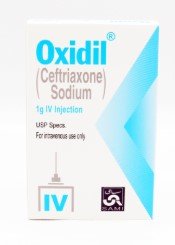
Description
OXIDIL INJECTION IV 1 GM is a potent cephalosporin antibiotic formulated to combat a wide spectrum of serious bacterial infections. Its primary use involves treating conditions where intravenous administration is necessary for effective and rapid therapeutic action. This medication is a trusted choice in clinical settings for its reliability and broad-spectrum efficacy against numerous pathogenic bacteria.
OXIDIL INJECTION IV 1 GM is designed for healthcare professionals to administer in controlled medical environments, ensuring optimal patient outcomes. Here is a brief summary of its core attributes:
Broad-Spectrum Bacterial Eradication: Effective against a wide range of gram-positive and gram-negative bacteria.
Potent Ceftriaxone Sodium Formula: Contains 1 gm of the active ingredient, ensuring high therapeutic potency.
Intravenous Administration for Rapid Action: Allows for quick absorption and fast onset of action in the bloodstream.
Trusted Hospital-Grade Medication: Manufactured under strict Good Manufacturing Practices (GMP) guidelines.
Critical Infection Management: Essential for treating severe conditions like sepsis, meningitis, and pneumonia.
What is OXIDIL INJECTION IV 1 GM and What Are Its Primary Uses?
OXIDIL INJECTION IV 1 GM is a sterile, parenteral formulation of Ceftriaxone Sodium, a third-generation cephalosporin antibiotic. It is specifically designed for intravenous use in hospital and clinical settings to treat severe bacterial infections that are unresponsive to oral medications.
What Bacterial Infections Does Oxidil Injection Treat?
Oxidil Injection is prescribed for a variety of serious bacterial invasions. Its uses are extensive, targeting different systems within the body.
Lower Respiratory Tract Infections: Such as bacterial pneumonia and bronchitis caused by susceptible organisms.
Skin and Skin Structure Infections: Including complicated cellulitis, wound infections, and abscesses.
Urinary Tract Infections (UTI): Particularly complicated UTIs caused by multi-drug resistant bacteria.
Pelvic Inflammatory Disease (PID): Used as part of a combination therapy regimen.
Bacterial Septicemia: A critical treatment for bloodstream infections.
Bone and Joint Infections: Such as osteomyelitis and septic arthritis.
Intra-abdominal Infections: Including peritonitis and infections of the biliary tract.
Meningitis: Bacterial meningitis, especially in pediatric populations.
Prophylactic Use: Administered before certain surgeries to prevent post-operative infections.
Key Features and Clinical Advantages of Ceftriaxone Therapy
The efficacy of Oxidil Injection is rooted in its advanced formulation and pharmacological profile. It offers distinct benefits that make it a first-line defense in many clinical scenarios.
Extended Half-Life: Ceftriaxone has a long plasma half-life, allowing for once or twice-daily dosing instead of the more frequent dosing required by other antibiotics, which improves patient compliance and nursing efficiency.
High Bactericidal Activity: It works by inhibiting bacterial cell wall synthesis, leading to the rapid destruction of a wide array of bacteria.
Stability Against Beta-Lactamases: It is resistant to degradation by many beta-lactamase enzymes, making it effective against many penicillin-resistant strains.
Proven Clinical Success Rate: Decades of clinical use have established ceftriaxone as a gold-standard treatment for numerous severe infections.
Active Ingredient: Ceftriaxone Sodium Explained
The sole active ingredient in Oxidil Injection is Ceftriaxone Sodium. This powerful compound is the cornerstone of the medication’s therapeutic action.
How Does Ceftriaxone Sodium Work in the Body?
Ceftriaxone Sodium belongs to the third-generation cephalosporin class of antibiotics. Its mechanism of action is both potent and precise.
Mode of Action: It exerts its bactericidal effect by binding to specific penicillin-binding proteins (PBPs) located inside the bacterial cell wall. This binding disrupts the final stage of peptidoglycan synthesis, a critical component of the bacterial cell wall. This disruption leads to the formation of a defective, weakened cell wall, causing osmotic instability and ultimately, bacterial cell lysis and death.
Pharmacokinetics: After IV administration, Ceftriaxone achieves high concentrations in the blood, tissues, and bodily fluids, including cerebrospinal fluid, which is crucial for treating meningitis. It is primarily excreted unchanged in the bile and urine.
How is Oxidil Injection Administered Correctly?
Oxidil Injection is strictly for intravenous use and must be administered by a qualified healthcare professional. Self-administration is dangerous and must be avoided.
Step-by-Step Guide to Preparation and Administration
The preparation and administration process is critical for both efficacy and safety.
Reconstitution: The powder must be reconstituted with an appropriate diluent, such as Water for Injection, Sodium Chloride Injection (0.9%), or Dextrose Injection (5%). The vial should be shaken thoroughly until the solution is clear and free of particles.
Dosage Calculation: The exact dosage and volume to be administered are determined by the physician based on the type and severity of the infection, the patient’s weight, and renal function.
Intravenous Infusion: The reconstituted solution is typically administered as a slow IV infusion over 30 minutes. It can be injected directly into a vein or infused through an IV line.
Aseptic Technique: Throughout the process, strict aseptic techniques must be followed to prevent contamination.
What is the Standard Dosage for Oxidil Injection?
Dosage is highly individualized. The following are general guidelines for adults, as determined by a healthcare provider.
| Infection Type | Standard Adult Dosage | Frequency | Special Notes |
|---|---|---|---|
| Most Infections | 1 gm to 2 gm | Once every 24 hours | The standard starting dose for moderate to severe infections. |
| Severe Infections | Up to 4 gm | Once every 24 hours or divided every 12 hours | For life-threatening conditions like septicemia. |
| Meningitis | 2 gm | Every 12 hours | High doses are necessary to achieve sufficient CNS penetration. |
| Surgical Prophylaxis | 1 gm | Single dose, 30-120 minutes before surgery | Prevents post-surgical infections. |
| Gonorrhea | 250 mg | Single intramuscular dose | (Note: While primarily IV, a specific IM dose exists for this indication). |
Pediatric Dosing: For children, the dose is typically 50 to 75 mg per kg of body weight per day, not to exceed 2 grams daily. For meningitis, a higher dose of 100 mg/kg is used.
What Precautions Should Be Taken Before Using This Injection?
Patient safety is paramount. Several critical precautions must be observed to minimize risks.
Critical Warnings and Contraindications
Hypersensitivity: This product is contraindicated in patients with a known allergy to ceftriaxone, any other cephalosporin, or any component of the formulation. Cross-hypersensitivity with penicillins can occur.
Hyperbilirubinemia Neonates: Ceftriaxone should not be administered to hyperbilirubinemic newborns, especially prematures, as it can displace bilirubin from albumin binding sites.
Calcium-Containing Products: Intravenous ceftriaxone must not be mixed or administered simultaneously with calcium-containing IV solutions, as it can lead to the formation of particulate precipitates in the lungs and kidneys, which can be fatal.
Important Considerations for Specific Patient Groups
Pregnancy and Lactation: Use during pregnancy only if clearly needed. Ceftriaxone is excreted in human milk, so caution should be exercised when administering to a nursing mother.
Hepatic or Renal Impairment: Dosage adjustment may be necessary in patients with severe renal impairment coupled with hepatic disease.
Gastrointestinal Conditions: Antibiotics, including ceftriaxone, may cause antibiotic-associated colitis.
What Are the Potential Side Effects of Ceftriaxone Therapy?
Like all potent medications, Oxidil Injection can cause side effects, though not everyone gets them. It is essential to be aware of these potential reactions.
Common and Less Serious Adverse Reactions
These are often mild and may resolve as the body adjusts to the medication.
Local Reactions: Pain, induration, or tenderness at the injection site.
Gastrointestinal Effects: Diarrhea, loose stools, nausea, vomiting, or dysgeusia (taste disturbance).
Hematologic Effects: Eosinophilia, leukopenia, thrombocytosis.
Hepatic Effects: Transient elevations in liver enzymes.
Serious Side Effects Requiring Immediate Medical Attention
While rare, the following side effects require immediate discontinuation of the drug and urgent medical intervention.
Severe Allergic Reactions: Anaphylaxis, characterized by hives, difficulty breathing, and swelling of the face, lips, tongue, or throat.
Severe Skin Reactions: Stevens-Johnson syndrome or toxic epidermal necrolysis.
Blood Disorders: Severe neutropenia, agranulocytosis, or hemolytic anemia.
Renal Toxicity: Acute kidney injury.
Clostridium Difficile-Associated Diarrhea (CDAD): Severe, persistent diarrhea, which may indicate a serious intestinal condition.
How Should I Store This Medicinal Product?
Proper storage is vital to maintain the sterility, potency, and shelf-life of the product.
Unreconstituted Vials: Store below 25°C (77°F). Protect from light. Keep the vial in the outer carton.
Reconstituted Solution: The chemical and physical stability of the reconstituted solution has been demonstrated for a specific period (e.g., 24 hours at room temperature or 3-10 days when refrigerated, depending on the diluent). However, from a microbiological perspective, the product should be used immediately. If not used immediately, in-use storage times and conditions are the responsibility of the user.
Shelf Life: Do not use the product after the expiration date printed on the label and carton.
Who is the Manufacturer of Oxidil Injection?
Oxidil Injection is manufactured by leading pharmaceutical companies with a commitment to quality and global healthcare standards. The specific manufacturer may vary by region, but they operate under stringent regulatory oversight.
Manufacturing Standards: All production facilities adhere to World Health Organization (WHO) Good Manufacturing Practices (GMP) guidelines.
Quality Assurance: Every batch undergoes rigorous quality control testing for purity, potency, sterility, and apyrogenicity to ensure it meets pharmacopoeial standards (such as IP, BP, or USP).
Global Reach: The manufacturer supplies high-quality, affordable generic medicines to hospitals and healthcare systems worldwide.
What Are the Overall Therapeutic Benefits of This Antibiotic?
The benefits of Oxidil Injection make it an indispensable tool in modern medicine for managing complex bacterial diseases.
Rapid Onset of Action: IV administration ensures the drug reaches the site of infection quickly, which is crucial in septicemia and other acute conditions.
Broad-Spectrum Coverage: It is effective against a wider range of bacteria compared to older-generation antibiotics, reducing the need for combination therapy.
Favorable Dosing Schedule: Its long half-life allows for less frequent dosing, which reduces nursing workload, lowers overall healthcare costs, and can facilitate outpatient antibiotic therapy.
High Efficacy in Critical Infections: It has a proven track record of success in treating life-threatening infections like meningitis and hospital-acquired pneumonia.
Well-Established Safety Profile: Decades of post-marketing surveillance have provided a comprehensive understanding of its safety, allowing for informed risk-benefit decisions.
How Does Oxidil (Ceftriaxone) Compare to Other Antibiotics?
Understanding how ceftriaxone stands against alternatives helps in making informed therapeutic choices.
| Feature | Oxidil (Ceftriaxone) | Penicillin G | Ciprofloxacin (IV) |
|---|---|---|---|
| Drug Class | Third-Gen Cephalosporin | Natural Penicillin | Fluoroquinolone |
| Spectrum | Broad (Gram+ & Gram-) | Narrow (Mainly Gram+) | Broad (Gram-, some Gram+) |
| Dosing Frequency | Once or twice daily | Multiple times daily | Twice daily |
| CNS Penetration | Excellent | Good | Moderate |
| Beta-Lactamase Stable | Yes | No | N/A (Different MoA) |
| Primary Use Cases | Meningitis, Severe UTI, PID | Syphilis, Streptococcal infections | UTI, GI infections, Anthrax |
Frequently Asked Questions About Oxidil 1gm Injection
Can Oxidil Injection be used for a throat infection?
Oxidil Injection is not a first-line treatment for common throat infections. It is reserved for severe, systemic bacterial infections. Most throat infections are viral or, if bacterial (like strep throat), are treated with oral antibiotics like penicillin or amoxicillin.
How quickly does Oxidil start working?
After intravenous infusion, therapeutic levels of ceftriaxone in the blood are achieved rapidly, often within minutes. Patients may start feeling symptomatic relief within 24 to 48 hours, but it is crucial to complete the full course of therapy as prescribed.
What should I do if I miss a dose?
In a clinical setting, the medical staff manages the dosing schedule. If you are on outpatient IV therapy and miss a dose, contact your healthcare provider immediately for instructions. Do not double the next dose to make up for the missed one.
Is it safe to drive after receiving this injection?
Ceftriaxone itself is unlikely to affect your ability to drive. However, the underlying infection or the occurrence of side effects like dizziness could impair your reactions. It is advisable to avoid driving or operating machinery until you are sure you are not experiencing any adverse effects.
Can this injection be given during pregnancy?
Ceftriaxone is a Pregnancy Category B drug, meaning animal studies have not shown a risk to the fetus, but there are no adequate and well-controlled studies in pregnant women. It should be used during pregnancy only if the potential benefit justifies the potential risk to the fetus. A physician must make this decision.
Why is IV administration preferred for this drug in severe cases?
Intravenous administration bypasses the digestive system, ensuring 100% bioavailability and delivering the drug directly into the bloodstream. This results in immediate high concentrations at the site of infection, which is critical for overcoming severe, life-threatening bacterial invasions.