Cart is empty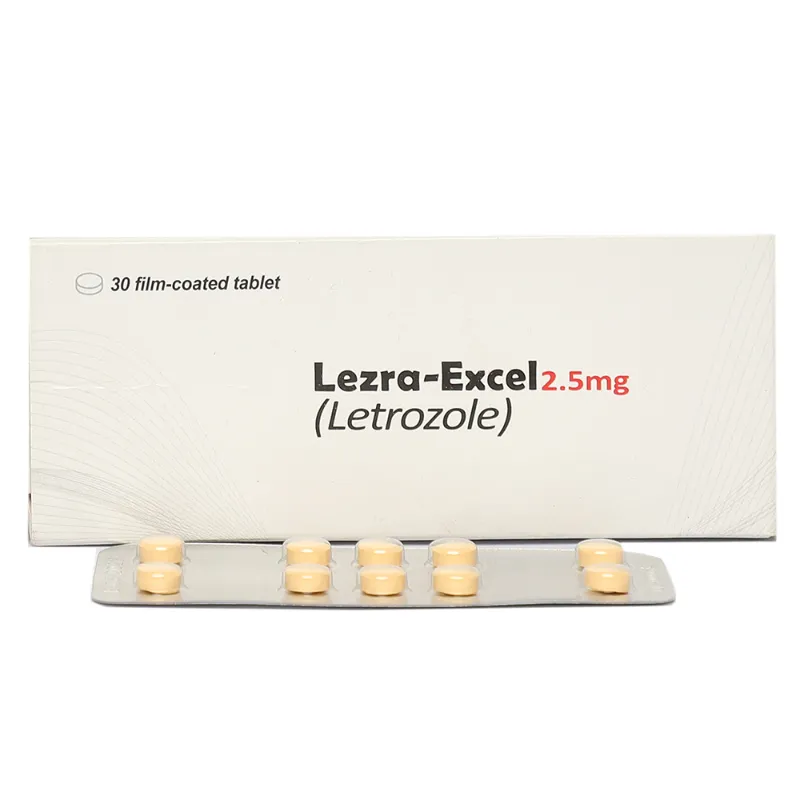
Description
Lezra 2.5mg Tablets contain the active pharmaceutical ingredient Letrozole and represent a critical advancement in hormonal therapy for postmenopausal breast cancer patients. This prescription medication is specifically formulated to combat estrogen receptor-positive breast cancer by significantly reducing estrogen production within the body. It is a cornerstone treatment following the progression or completion of prior anti-estrogen therapies, offering a targeted approach to managing and inhibiting cancer cell growth. Lezra is a potent, well-tolerated option that has become a standard of care in oncological practice globally.
✅ Potent Aromatase Inhibition: Effectively lowers estrogen levels, the fuel for certain breast cancers.
✅ Proven Second-Line Therapy: Specifically indicated after Tamoxifen or other anti-estrogen treatment.
✅ Dual-Stage Application: Used for both advanced metastatic cancer and early-stage adjuvant treatment.
✅ Convenient Oral Dosage: Simple once-daily tablet regimen for patient adherence.
✅ High-Quality Manufacturing: Produced under strict GMP standards ensuring purity and potency.
What is Lezra 2.5mg and what are its primary uses?
Lezra 2.5mg is a hormonal therapy medication classified as a non-steroidal aromatase inhibitor. Its primary mechanism of action involves blocking the aromatase enzyme, which is responsible for the synthesis of estrogen in postmenopausal women. By suppressing estrogen production, Lezra starves hormone-receptor-positive breast cancer cells of the hormone they need to grow and multiply.
The main clinical indications and uses for Lezra Tablets include:
Treatment of Advanced Breast Cancer: For postmenopausal women diagnosed with hormone receptor-positive advanced or metastatic breast cancer, particularly after treatment failure with Tamoxifen citrate or other selective estrogen receptor modulators (SERMs).
Adjuvant Treatment of Early Breast Cancer: For postmenopausal women who have completed prior adjuvant treatment with Tamoxifen, typically for a standard duration of five years, to further reduce the risk of cancer recurrence.
Neoadjuvant Therapy: In some clinical settings, it may be used pre-surgery to shrink large hormone-sensitive tumors, making them operable.
First-Line Hormonal Therapy: For postmenopausal women with locally advanced or metastatic breast cancer that is hormone receptor positive or of unknown receptor status.
What are the key features and benefits of Lezra (Letrozole)?
Lezra offers a multitude of features and benefits that make it a preferred choice for oncologists and patients managing hormone-dependent breast malignancies.
Key Features of Lezra 2.5mg Tablets:
High Selectivity: Specifically targets and inhibits the aromatase enzyme with high affinity, leading to profound estrogen suppression.
Oral Bioavailability: Administered orally as a tablet, allowing for convenient at-home treatment without the need for injections or infusions.
Once-Daily Dosing: The standard 2.5mg dose is taken once per day, promoting excellent treatment compliance.
Non-Steroidal Structure: As a non-steroidal inhibitor, it offers a distinct mechanism with a specific side effect profile compared to steroidal inhibitors.
Extensive Clinical Data: Backed by years of robust clinical trials and real-world evidence demonstrating efficacy and safety.
Primary Benefits for Patients:
Delays Disease Progression: In advanced settings, it can significantly slow the growth and spread of cancer cells.
Improves Disease-Free Survival: In early-stage cancer, it lowers the probability of the cancer returning after initial treatment.
Effective After Tamoxifen: Provides a powerful subsequent line of defense when initial hormonal therapy is no longer effective.
Generally Well-Tolerated: While side effects exist, many patients manage therapy effectively with supportive care.
Preserves Quality of Life: Oral administration allows patients to maintain daily routines more easily compared to intravenous chemotherapies.
What is the active ingredient in Lezra Tablets?
The sole active pharmaceutical ingredient in Lezra 2.5mg Tablets is Letrozole. Each film-coated tablet delivers a precise 2.5mg dose of this potent compound.
Understanding Letrozole and its Benefits:
Letrozole is a member of the third-generation aromatase inhibitors. It works by competitively binding to the heme group of the aromatase enzyme, a part of the cytochrome P450 family. This binding irreversibly inhibits the enzyme’s function.
Key Benefits of the Letrozole Compound:
Superior Estrogen Suppression: Clinical studies have shown Letrozole can reduce circulating estrogen levels by over 95-99%, achieving near-complete estrogen blockade.
Lack of Hormonal Activity: Unlike Tamoxifen, which is a partial estrogen agonist, Letrozole has no estrogen-like effects, which may contribute to its efficacy in certain resistant cases.
Specificity: It exhibits high specificity for aromatase, minimizing interference with other steroid synthesis pathways (like those for cortisol or aldosterone) at therapeutic doses, which helps manage its side effect profile.
How should you use Lezra Tablets correctly?
Proper administration is crucial for achieving the desired therapeutic outcome and maintaining safety.
Step-by-Step Directions for Use:
Medical Prescription: Lezra is a prescription-only medicine. Use it exactly as prescribed by your oncologist or treating physician. Do not self-prescribe or alter the dose.
Dosage Regimen: The standard adult dose is one 2.5mg tablet taken orally once daily.
Timing: It can be taken at any time of day. However, choosing a consistent time (e.g., every morning with breakfast) helps establish a routine and minimizes forgotten doses.
Administration: Swallow the tablet whole with a glass of water. Do not crush, chew, or break the tablet.
With or Without Food: Letrozole can be taken with or without meals, as food does not significantly affect its absorption.
Duration: Continue taking Lezra for as long as your doctor recommends. For adjuvant therapy, this is often for an extended period of up to five years or more, based on individual risk assessment. For advanced cancer, treatment continues until disease progression or unacceptable toxicity.
Missed Dose: If you miss a dose, take it as soon as you remember. If it is almost time for your next dose, skip the missed dose and continue with your regular schedule. Do not take a double dose to make up for a missed one.
What is the recommended dosage information for Lezra?
Dosage is strictly individualized based on the patient’s condition, treatment phase, and overall health profile. The following information is general; always follow your physician’s specific instructions.
Standard Dosage for Breast Cancer Treatment:
Recommended Adult Dose: 2.5 mg orally once daily.
Dosage Form: Available as a 2.5mg film-coated tablet. The tablet is not scored and should not be divided.
Dosage in Special Populations:
Renal Impairment: No dosage adjustment is typically necessary for patients with renal impairment, including those on dialysis.
Hepatic Impairment: Dose adjustment may be necessary for patients with severe liver cirrhosis or other severe hepatic dysfunction. Your doctor will determine the appropriate dose.
Elderly Patients: No specific dosage adjustment is required based on age alone.
Treatment Duration Guidelines:
Advanced Breast Cancer: Treatment continues until tumor progression is evident.
Early Breast Cancer (Adjuvant): The recommended duration is typically 5 years. Recent studies explore extended therapy, which your oncologist will discuss if applicable.
Pre-Surgical (Neoadjuvant) Use: Usually administered for 4-6 months prior to planned surgery.
What precautions and warnings are associated with Lezra?
While Lezra is effective, it requires careful management and awareness of potential risks.
Critical Precautions and Contraindications:
Pregnancy and Lactation: Lezra is contraindicated in premenopausal women, during pregnancy, and while breastfeeding. It can cause fetal harm. Pregnancy must be excluded before initiation.
Bone Mineral Density: Letrozole accelerates bone loss. Bone mineral density should be monitored, and treatment for osteoporosis (e.g., bisphosphonates) should be considered.
Cholesterol Levels: May increase serum cholesterol. Lipid profile monitoring is recommended during therapy.
Liver Function: Use with caution in patients with severe hepatic impairment. Periodic liver function tests may be advised.
Drug Interactions: Inform your doctor about all medications, including over-the-counter drugs and herbal supplements (like St. John’s Wort). Caution is advised with Tamoxifen, as concomitant use can reduce Letrozole’s plasma concentration.
Driving and Operating Machinery: Lezra can cause dizziness, fatigue, and somnolence. Patients should exercise caution until they know how the medication affects them.
What are the possible side effects of Lezra (Letrozole)?
Most side effects are a consequence of estrogen deprivation and are generally manageable.
Commonly Reported Side Effects (Affecting more than 10% of patients):
Musculoskeletal: Arthralgia (joint pain), arthritis, myalgia (muscle pain), bone pain.
General Disorders: Fatigue, asthenia (weakness), hot flashes, edema (swelling).
Gastrointestinal: Nausea, diarrhea, constipation.
Nervous System: Headache, dizziness.
Metabolic: Increased cholesterol levels.
Psychiatric: Insomnia.
Less Common but Serious Side Effects (Require immediate medical attention):
Cardiovascular Events: Increased risk of myocardial infarction, angina, stroke, and thromboembolic events.
Bone Fractures: Increased incidence of osteoporosis and fractures due to decreased bone density.
Severe Skin Reactions: Rare cases of Stevens-Johnson syndrome, erythema multiforme.
Hepatobiliary Disorders: Hepatitis, elevations in liver enzymes.
Allergic Reactions: Angioedema, urticaria, pruritus.
Managing Common Side Effects:
Joint/Muscle Pain: Regular low-impact exercise, physiotherapy, over-the-counter analgesics (as approved by your doctor), and adequate hydration can help.
Hot Flashes: Dress in layers, avoid triggers (spicy food, caffeine), and practice paced respiration. Discuss symptom severity with your doctor.
Fatigue: Prioritize rest, maintain a balanced diet, and engage in gentle, regular physical activity like walking.
How should you store Lezra Tablets?
Proper storage ensures the stability, efficacy, and safety of the medication throughout its shelf life.
Optimal Storage Instructions:
Temperature: Store below 30°C (86°F). Protect from light and moisture.
Container: Keep the tablets in their original blister pack or bottle until use. Do not transfer them to unlabeled containers.
Location: Store in a cool, dry place, away from direct sunlight and heat sources (like above the stove or near a window).
Safety: Keep out of reach and sight of children and pets.
Disposal: Do not dispose of medication in wastewater or household trash. Consult your pharmacist on proper disposal methods for unused or expired tablets.
Who manufactures Lezra Tablets?
Manufacturer Information:
Lezra Tablets are manufactured by Cipla Limited, a leading global pharmaceutical company with a reputation for quality and affordability.
Corporate Address: Cipla House, Peninsula Business Park, Ganpatrao Kadam Marg, Lower Parel, Mumbai 400013, India.
Manufacturing Standards: All Cipla manufacturing facilities comply with current Good Manufacturing Practices (cGMP) as stipulated by stringent regulatory authorities worldwide, including the US FDA, UK MHRA, and WHO.
Quality Assurance: The company employs rigorous quality control protocols at every stage of production, from active pharmaceutical ingredient (API) sourcing to final packaging, ensuring each tablet meets predefined specifications for identity, strength, purity, and quality.
Global Presence: Cipla’s commitment to ‘Caring for Life’ has made its products, including oncology medications like Letrozole, accessible across numerous countries, supporting cancer care globally.
What are the comprehensive health benefits of using Lezra?
The benefits of Lezra extend beyond simple tumor suppression, impacting overall disease management and patient prognosis.
Detailed List of Therapeutic Benefits:
Superior Hormonal Blockade: Provides a more complete estrogen suppression than earlier therapies like Tamoxifen in the postmenopausal setting, leading to more effective cancer cell growth inhibition.
Improved Survival Outcomes: In advanced disease, it significantly prolongs the time to disease progression and can improve overall survival rates compared to other agents.
Reduction in Cancer Recurrence: As adjuvant therapy, it substantially decreases the risk of local and distant recurrence of early-stage breast cancer, offering long-term protection.
Favorable Toxicity Profile Compared to Chemotherapy: As a targeted hormonal treatment, it generally has a more manageable side effect profile than cytotoxic chemotherapy, preserving quality of life.
Oral Convenience: Enables effective treatment outside of clinical settings, reducing hospital visits and associated stress.
Well-Established in Treatment Guidelines: Is a recommended and preferred agent in numerous international clinical guidelines for hormone-receptor-positive breast cancer, underscoring its proven efficacy.
Cost-Effective Therapy: As a generic medication manufactured by companies like Cipla, it provides high-efficacy treatment at a more accessible cost, reducing the financial burden of cancer care.
How does Lezra (Letrozole) compare to other breast cancer treatments?
Understanding where Lezra fits within the treatment landscape helps clarify its role. Below is a comparison with key alternatives.
Lezra (Letrozole) vs. Key Treatment Alternatives
| Feature/Aspect | Lezra (Letrozole) | Tamoxifen (A SERM) | Anastrozole (Another AI) | Chemotherapy Agents |
|---|---|---|---|---|
| Drug Class | Non-Steroidal Aromatase Inhibitor (AI) | Selective Estrogen Receptor Modulator (SERM) | Non-Steroidal Aromatase Inhibitor (AI) | Cytotoxic Agents (e.g., Anthracyclines, Taxanes) |
| Primary Mechanism | Suppresses estrogen production. | Blocks estrogen receptors on cancer cells. | Suppresses estrogen production. | Kills rapidly dividing cells (non-targeted). |
| Main Use Context | Postmenopausal women, after Tamoxifen or as first-line. | Pre- & postmenopausal women, often first-line. | Postmenopausal women, similar to Letrozole. | All subtypes, based on stage and aggressiveness. |
| Key Benefit | Potent estrogen suppression; effective after Tamoxifen. | Can be used in premenopausal women; protects bones. | Similar efficacy to Letrozole; slightly different side-effect profile. | Works on hormone-receptor-negative cancers. |
| Common Side Effects | Joint pain, bone loss, hot flashes, cholesterol increase. | Hot flashes, blood clot risk, endometrial cancer risk. | Similar to Letrozole, with minor frequency variations. | Nausea, hair loss, fatigue, low blood counts. |
| Administration | Oral tablet, once daily. | Oral tablet, once daily. | Oral tablet, once daily. | Usually intravenous infusions in cycles. |
Frequently Asked Questions (FAQs) about Lezra 2.5mg
Is Lezra a form of chemotherapy?
No, Lezra (Letrozole) is not a chemotherapy drug. It is classified as targeted hormonal therapy or endocrine therapy. It works specifically by lowering estrogen levels that fuel certain breast cancers, unlike chemotherapy which attacks all rapidly dividing cells in the body.
How long does it take for Lezra to start working?
In the context of advanced breast cancer, clinical response can be observed within a few months. For adjuvant treatment in early-stage cancer, its benefit is measured in reducing the risk of recurrence over years. Your oncologist will monitor your progress through regular check-ups and scans.
Can I take Lezra if I am still having periods?
No. Lezra is only for use in postmenopausal women. In premenopausal women, the ovaries produce too much estrogen for Letrozole to effectively suppress, and it may not work. Your menopausal status will be confirmed by your doctor before prescription.
What should I do if I experience severe joint pain on Lezra?
Joint and muscle pain is a common side effect. Inform your doctor. They may recommend strategies like gentle exercise, physiotherapy, or pain relievers. Do not stop taking the medication without consulting your doctor, as the benefits often outweigh manageable side effects.
Are there any specific foods or drinks I should avoid while on this medication?
There are no universally prohibited foods. However, since Letrozole can affect cholesterol, maintaining a heart-healthy diet is prudent. Grapefruit juice should be consumed with caution as it can interfere with many medications; discuss this with your doctor or pharmacist.
Can Lezra be used alongside other cancer treatments like radiation?
Yes, it can be used in combination with other treatments like radiation therapy or certain targeted therapies, as determined by your multidisciplinary oncology team. The sequence and combination are tailored to your individual treatment plan.
How is Lezra different from Arimidex (Anastrozole)?
Both are non-steroidal aromatase inhibitors with very similar efficacy and safety profiles. Some studies show slight differences in the magnitude of estrogen suppression or incidence of certain side effects (e.g., arthralgia), but they are often considered interchangeable. The choice may depend on individual patient response, tolerance, and cost.