Description
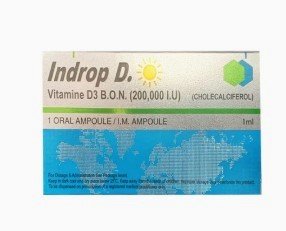
INDROP-D 1ML Injection is a high-potency, prescription-based Vitamin D3 supplement designed to rapidly correct severe and clinically significant deficiencies. This intramuscular formulation delivers a concentrated dose of Cholecalciferol directly into the system, ensuring optimal bioavailability for patients who cannot rely on oral supplements due to malabsorption issues, compliance problems, or the need for swift therapeutic intervention. It is a cornerstone treatment in managing conditions linked to profound hypovitaminosis D.
This single-use, 1ML injectable solution offers a reliable and efficient method to restore healthy Vitamin D levels, supporting foundational aspects of human health.
Here is a brief summary of what makes INDROP-D Injection a preferred clinical choice:
Rapid Correction of Deficiency: Direct intramuscular administration ensures complete absorption, quickly elevating serum 25-hydroxyvitamin D levels.
Enhanced Patient Compliance: A single injection under medical supervision eliminates the need for daily pill intake, ideal for long-term treatment plans.
Superior Bioavailability: Bypasses the gastrointestinal tract, making it perfect for patients with gut-related absorption disorders.
Comprehensive Skeletal Support: Directly contributes to bone mineralization, reducing the risk of osteoporosis and osteomalacia.
GMP-Certified Manufacturing: Produced in facilities adhering to strict Good Manufacturing Practices, guaranteeing purity, potency, and safety.
What are the Primary Uses and Key Features of INDROP-D Injection?
INDROP-D Injection is specifically formulated for therapeutic use under medical guidance. Its primary function is to address significant health challenges stemming from a lack of Vitamin D.
Primary Therapeutic Uses of Vitamin D3 Injection
This injectable solution is clinically indicated for a range of conditions associated with Vitamin D deficiency.
Treatment of Severe Vitamin D Deficiency: This is the core use, aimed at patients with dangerously low serum Vitamin D levels, often presenting with symptoms like persistent bone pain and muscle weakness.
Management of Osteoporosis: Used as an adjunct therapy to strengthen bones, increase bone density, and reduce fracture risk, especially in postmenopausal women and the elderly.
Prevention and Treatment of Osteomalacia: Effectively treats this condition of bone softening in adults, which is a direct consequence of prolonged, severe Vitamin D deficiency.
Nutritional Support for Malabsorption Syndromes: Essential for patients with conditions like Crohn’s disease, celiac disease, or those who have undergone bariatric surgery, where oral Vitamin D absorption is impaired.
Hypoparathyroidism Management: Helps maintain calcium balance in patients with underactive parathyroid glands.
Support for Muscle Function: Correcting deficiency has been shown to improve muscle strength and reduce the incidence of falls in older adults.
What Key Features and Benefits Does INDROP-D Offer?
The design and formulation of INDROP-D provide distinct advantages over other supplementation methods.
Guaranteed Potency and Purity: Each 1ML ampoule contains a precise, pre-measured dose of Cholecalciferol, ensuring you receive the exact amount prescribed without contamination.
Bypasses Gastrointestinal Issues: For individuals with fat malabsorption, liver disease, or other GI disorders, this injection ensures the Vitamin D enters the bloodstream effectively.
Convenient Dosage Regimen: Depending on the deficiency severity, a single injection can provide therapeutic coverage for an extended period, simplifying treatment protocols.
Stable and Long-Lasting Storage: The solution is stable under recommended storage conditions, maintaining its efficacy from manufacturing until use.
What is the Active Ingredient in INDROP-D 1ML Injection?
The therapeutic power of INDROP-D Injection comes from its single, highly active ingredient.
Cholecalciferol: The Bioactive Form of Vitamin D3
The sole active component in this formulation is Cholecalciferol, also known as Vitamin D3. This is the identical form of Vitamin D that the human body synthesizes naturally when the skin is exposed to sunlight. Using Cholecalciferol makes this injection a highly bioavailable and physiologically compatible treatment.
How Does Cholecalciferol Work in the Body?
Cholecalciferol itself is a prohormone. Once administered intramuscularly, it undergoes a two-step activation process:
Hydroxylation in the Liver: It is converted to 25-hydroxyvitamin D [25(OH)D], also known as Calcifediol. This is the major circulating form and the primary marker measured in blood tests to determine Vitamin D status.
Activation in the Kidneys: The 25-hydroxyvitamin D is then further hydroxylated in the kidneys to become the biologically active form, Calcitriol (1,25-dihydroxyvitamin D).
This active Calcitriol functions as a hormone that regulates calcium and phosphate metabolism throughout the body. It is indispensable for:
Intestinal Absorption of Calcium: It promotes the absorption of dietary calcium from the intestines, making it available for bone building.
Bone Mineralization: It ensures adequate calcium and phosphate are available for incorporation into the bone matrix, maintaining skeletal strength and integrity.
Muscle and Nerve Function: By regulating calcium levels, it supports proper muscle contraction and nerve signal transmission.
How Should I Use the INDROP-D Injection Correctly?
INDROP-D 1ML Injection is strictly for parenteral use and must be administered by a qualified healthcare professional in a clinical setting.
Step-by-Step Administration Guide for Healthcare Providers
The following procedure outlines the correct method for administering this intramuscular injection.
Step 1: Patient Verification and Preparation: Confirm patient identity and check for any known allergies. Explain the procedure to the patient.
Step 2: Aseptic Technique and Ampoule Opening: Perform hand hygiene. Snap open the glass ampoule carefully using a sterile gauze pad to prevent injury. Draw the entire 1ML solution into a sterile syringe.
Step 3: Intramuscular Injection Site Selection: The preferred sites are the ventrogluteal or dorsogluteal muscles in adults, or the vastus lateralis muscle. These sites are chosen for their large muscle mass and reduced risk of nerve injury.
Step 4: Administration: Cleanse the injection site with an alcohol swab. Hold the skin taut and insert the needle at a 90-degree angle using a quick, dart-like motion. Aspirate briefly to ensure no blood vessel has been entered. If no blood appears, inject the solution slowly and steadily.
Step 5: Post-Injection Care: Withdraw the needle and apply gentle pressure to the site with a dry sterile gauze pad. A small adhesive bandage may be applied.
Important Directions for the Patient
Do not attempt to self-administer this injection.
Report any signs of infection at the injection site, such as redness, swelling, or persistent pain, to your doctor immediately.
Keep all follow-up appointments for blood tests to monitor your Vitamin D, calcium, and phosphate levels.
What is the Recommended Dosage for INDROP-D Injection?
The dosage of INDROP-D Injection is highly individualized and must be determined by a physician based on the severity of the deficiency, the patient’s clinical condition, and their serum 25-hydroxyvitamin D levels.
Individualized Dosage Regimen for Vitamin D3 Therapy
There is no universal dosage. The following table provides a general guideline based on common clinical scenarios, but your doctor’s prescription is final.
| Clinical Condition | General Dosage Guideline | Frequency & Duration |
|---|---|---|
| Severe Vitamin D Deficiency | A single dose of 300,000 to 600,000 IU. | Often administered as a single dose or divided over a few weeks (e.g., 100,000 IU weekly for 6 weeks). |
| Maintenance Therapy | Lower doses, typically 60,000 to 120,000 IU. | Administered monthly or quarterly after the initial deficiency is corrected. |
| Osteoporosis Management | Used as an adjunct, often 60,000 IU monthly. | Long-term, as part of a comprehensive bone health plan. |
| Malabsorption Syndromes | Dosage is often higher and more frequent. | Tailored precisely based on periodic blood test results. |
How Do Doctors Determine the Right Dose?
A physician will calculate the exact dosage by considering several factors:
Baseline Serum 25(OH)D Level: The starting point of the deficiency.
Patient’s Body Weight and BMI: Heavier individuals may require a larger loading dose.
Concurrent Medical Conditions: Such as kidney or liver disease.
Age of the Patient: Elderly patients may have different requirements.
Concurrent Medications: That might interact with Vitamin D metabolism.
What Precautions Should I Take Before Using INDROP-D?
While INDROP-D is a highly effective treatment, certain precautions are necessary to ensure its safe use.
Essential Warnings and Contraindications
Hypervitaminosis D: This injection is contraindicated in patients with known hypercalcemia (high blood calcium) or evidence of Vitamin D toxicity.
Hypercalcemia and Hypercalciuria: It should not be used in conditions that predispose to high calcium levels, such as sarcoidosis, lymphoma, or primary hyperparathyroidism.
Severe Renal Impairment: Use with extreme caution in patients with severe kidney disease, as they cannot properly activate Vitamin D and are at high risk for hypercalcemia.
Pregnancy and Breastfeeding: Use during pregnancy or lactation should only be under strict medical supervision, as the effects of high-dose injections on the fetus or infant are not fully established.
Allergies: Inform your doctor of any known allergies to Vitamin D or any other component.
Important Drug Interactions to Discuss with Your Doctor
Inform your physician if you are taking any of the following, as they may interact with INDROP-D Injection:
Cardiac Glycosides (e.g., Digoxin): Hypercalcemia can potentiate the toxic effects of these drugs, leading to cardiac arrhythmias.
Thiazide Diuretics: These can decrease urinary calcium excretion, increasing the risk of hypercalcemia.
Anticonvulsants (e.g., Phenobarbital, Phenytoin): These can increase the metabolism of Vitamin D, potentially requiring a higher dosage.
Corticosteroids: Can antagonize the effects of Vitamin D on calcium absorption.
What are the Potential Side Effects of INDROP-D 1ML Injection?
Like all medicines, INDROP-D Injection can cause side effects, although not everybody gets them. The risk of side effects increases with excessive dosage.
Common and Less Serious Adverse Reactions
These side effects are typically mild and transient.
Pain, swelling, or redness at the injection site.
Mild, transient headache or dizziness.
Nausea or a general feeling of being unwell.
Mild skin rash or itching.
Serious Side Effects Indicating Vitamin D Toxicity
These effects are associated with hypercalcemia (excessively high blood calcium levels) and require immediate medical attention.
Early Symptoms of Hypercalcemia:
Persistent nausea, vomiting, constipation, or loss of appetite.
Unusual tiredness, weakness, or muscle pain.
Excessive thirst and increased urination.
Dry mouth and a metallic taste.
Late and Severe Symptoms of Hypercalcemia:
Bone pain and mental confusion.
Irregular heartbeat (palpitations or arrhythmias).
Kidney problems, including kidney stones and impaired function.
Calcium deposits in soft tissues.
If you experience any symptoms suggestive of hypercalcemia, you must contact your doctor without delay.
How Should I Store the INDROP-D Injection?
Proper storage is critical to maintaining the stability and efficacy of this pharmaceutical product.
Optimal Storage Conditions for Stability and Potency
Temperature: Store in a cool, dry place. Protect from light. The ideal storage temperature is between 2°C and 8°C (36°F – 46°F). Do not freeze.
Container: Keep the ampoules in the outer carton to protect from light.
Keep Out of Reach of Children: Store in a locked cabinet or a place inaccessible to children and pets.
Shelf Life: Do not use the product after the expiration date printed on the carton and ampoule.
Post-Opening: The solution in a single-use ampoule must be used immediately after opening. Discard any unused portion.
Who is the Manufacturer of INDROP-D Injection?
Building trust requires transparency about the product’s origin.
Manufacturer Profile and Quality Assurance
INDROP-D 1ML Injection is manufactured by Indoco Remedies Limited, a reputable, research-oriented pharmaceutical company based in India. Indoco has a significant presence in the domestic and international markets, with a portfolio focused on branded formulations and active pharmaceutical ingredients (APIs).
Manufacturing Standards: Their state-of-the-art manufacturing facilities are compliant with WHO-GMP (World Health Organization – Good Manufacturing Practice) standards. This certification ensures that every batch of INDROP-D Injection is produced under stringent quality control protocols, guaranteeing its identity, strength, purity, and quality.
Corporate Commitment: The company invests in robust research and development, emphasizing product efficacy and patient safety.
What are the Comprehensive Health Benefits of Correcting Vitamin D Deficiency?
Restoring Vitamin D to optimal levels through INDROP-D Injection provides a cascade of systemic health benefits beyond just treating deficiency.
The Multisystem Benefits of Optimal Vitamin D Levels
Robust Bone Health and Density: The primary benefit. It ensures adequate calcium absorption, which is crucial for building and maintaining strong bones, preventing rickets in children, and osteomalacia or osteoporosis in adults.
Enhanced Immune System Function: Vitamin D acts as a potent immunomodulator. It strengthens the innate immune response against infections while regulating the adaptive immune system, potentially reducing the risk of autoimmune diseases.
Improved Muscle Strength and Physical Performance: Adequate Vitamin D levels are directly linked to improved muscle function, increased strength, and a significantly reduced risk of falls and fractures in the elderly.
Positive Impact on Cardiovascular Health: Research suggests that Vitamin D plays a role in heart health by helping to regulate blood pressure and supporting vascular function.
Mood Regulation and Cognitive Support: Vitamin D receptors are present in the brain. Sufficient levels are associated with a positive mood and may support cognitive function.
Systemic Anti-Inflammatory Effects: It helps modulate the body’s inflammatory response, which is a foundational factor in many chronic diseases.
How Does INDROP-D Injection Compare to Other Vitamin D Supplements?
Choosing the right form of Vitamin D supplementation depends on individual patient needs. The following comparison highlights where INDROP-D Injection stands out.
INDROP-D Injection vs. Oral Vitamin D Supplements
| Feature | INDROP-D 1ML Injection | Oral Vitamin D Tablets/Capsules |
|---|---|---|
| Bioavailability | 100% (bypasses GI tract) | Variable (affected by diet, gut health, fat intake) |
| Speed of Action | Rapid elevation of serum levels | Slower, depends on consistent daily intake |
| Patient Compliance | Excellent (single supervised dose) | Can be poor due to forgetfulness or pill burden |
| Ideal For | Severe deficiency, malabsorption, post-surgical patients, non-compliant individuals. | Mild to moderate deficiency, general wellness, maintenance therapy. |
| Risk of Hypercalcemia | Requires careful dosing by a doctor. | Lower risk with standard over-the-counter doses. |
| Convenience | Requires a clinic visit for administration. | High, can be taken at home. |
Frequently Asked Questions About INDROP-D 1ML Injection
Common Patient Queries on Vitamin D3 Injections
How long does it take for a Vitamin D injection to work?
You will typically feel an improvement in symptoms like fatigue and bone pain within a few weeks. However, it takes about 3 months for the body’s Vitamin D stores to reach a stable, new level, which is why follow-up blood tests are usually done 3-4 months after a loading dose.
What is the cost of an INDROP-D Injection?
The price of INDROP-D Injection can vary based on pharmacy markup and geographic location. It is best to check with your local pharmacy or hospital for the most accurate and current pricing.
Can I take other Vitamin D supplements with this injection?
No, you should not take any other Vitamin D supplements while on a prescribed injection regimen unless explicitly instructed by your doctor. Doing so significantly increases the risk of toxicity and hypercalcemia.
What is the difference between Vitamin D2 and D3?
Vitamin D2 (Ergocalciferol) is derived from plants, while Vitamin D3 (Cholecalciferol) is the form produced by the human body and found in animal sources. Extensive research indicates that Cholecalciferol (D3) is more effective at raising and maintaining serum 25-hydroxyvitamin D levels over time, making it the preferred choice for clinical treatment.
Is it normal to feel tired after a Vitamin D shot?
Some patients may experience mild, transient fatigue or a headache after the injection. This is usually not a cause for concern. However, if you experience severe or persistent tiredness, especially accompanied by other symptoms like nausea or confusion, you should contact your doctor, as it could be an early sign of hypercalcemia.
How often can I get a Vitamin D3 shot?
The frequency is determined solely by your physician based on your follow-up blood test results. After an initial loading dose, maintenance therapy could be a single injection every 3, 6, or even 12 months.