Cart is empty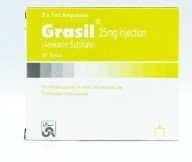
Description
Grasil Inj 25Mg is a potent prescription antibiotic medication specifically formulated to combat severe and potentially life-threatening bacterial infections in hospitalized patients or under strict medical supervision. Its active component, amikacin sulfate, belongs to the critical aminoglycoside class of antibiotics, renowned for their efficacy against resilient gram-negative bacteria. This injectable solution is a frontline defense when other antibiotics fail, administered via intramuscular or intravenous routes by healthcare professionals to ensure precise dosing and monitor for response.
This injectable antibiotic medication offers a targeted therapeutic approach for complex infections. Key attributes of this amikacin sulfate solution include:
✓ Potent activity against multidrug-resistant gram-negative pathogens, including Pseudomonas aeruginosa.
✓ Used for short-term treatment of serious hospital-acquired infections and septicemia.
✓ Formulated as a sterile, single-dose ampoule for precise administration and reduced contamination risk.
✓ Manufactured under stringent Good Manufacturing Practice (GMP) guidelines ensuring pharmaceutical grade purity and potency.
✓ Requires therapeutic drug monitoring (TDM) to optimize efficacy and minimize risks of adverse effects like nephrotoxicity.
What Are the Primary Uses and Key Features of Grasil Inj 25Mg?
Grasil Inj 25Mg is indicated for the short-term management of serious infections proven or strongly suspected to be caused by susceptible strains of bacteria. Its use is typically reserved for situations where less toxic antibiotics are contraindicated or have proven ineffective.
What Bacterial Infections Does Grasil Inj 25Mg Treat?
The therapeutic applications of this broad-spectrum antibiotic are centered on severe gram-negative bacterial infections. Primary clinical uses include:
Severe Respiratory Tract Infections: Including hospital-acquired pneumonia, ventilator-associated pneumonia (VAP), and bronchopneumonia caused by Klebsiella, Enterobacter, and Pseudomonas species.
Complicated Urinary Tract Infections (UTIs): Such as pyelonephritis or urosepsis, particularly those resistant to first-line oral agents.
Bloodstream Infections and Sepsis: Empiric and definitive therapy for gram-negative bacteremia and septic shock, a critical life-saving intervention.
Intra-abdominal Infections: Complicated peritonitis arising from gastrointestinal perforation or post-surgical complications.
Skin, Soft Tissue, and Surgical Site Infections: Severe cellulitis, infected burns, and post-operative wound infections with suspected resistant organisms.
Bone and Joint Infections (Osteomyelitis/Septic Arthritis): As part of a combination regimen for difficult-to-treat orthopaedic infections.
What Are the Defining Features of This Aminoglycoside Antibiotic?
Mechanism of Action: It acts as a bactericidal agent by irreversibly binding to the bacterial 30S ribosomal subunit. This action inhibits protein synthesis, halting bacterial growth and leading to microbial cell death.
Spectrum of Activity: Exhibits high efficacy against aerobic gram-negative bacilli, including members of the Enterobacteriaceae family (E. coli, Proteus, Klebsiella) and non-fermenters like Pseudomonas aeruginosa. It is often active against strains resistant to other aminoglycosides like gentamicin and tobramycin.
Pharmaceutical Form: Supplied as a clear, sterile solution in single-use glass ampoules, ensuring dosage accuracy and sterility for parenteral administration.
Resistance Profile: While potent, bacterial resistance can occur via aminoglycoside-modifying enzymes (AMEs). Amikacin is less susceptible to many common AMEs, making it a valuable agent in settings with high resistance rates.
Active Ingredient: Amikacin Sulfate Explained
The sole active pharmaceutical ingredient (API) in Grasil Injection is amikacin, presented as amikacin sulfate to enhance its solubility and stability in the aqueous solution.
How Does Amikacin Sulfate Work as an Antibacterial Agent?
Amikacin sulfate is a semi-synthetic derivative of kanamycin A. Its molecular structure is engineered to resist inactivation by many bacterial enzymes that degrade other aminoglycosides. Upon administration, it rapidly distributes and exerts its effect by:
Cellular Uptake: It is actively transported across the bacterial cell membrane via an oxygen-dependent process, making it primarily effective against aerobic bacteria.
Ribosome Binding: It binds with high affinity to a specific site on the 16S rRNA of the 30S ribosomal subunit.
Protein Synthesis Inhibition: This binding causes misreading of the genetic code (mRNA) and blocks the translocation process, leading to the production of defective, non-functional proteins and ultimately bacterial cell death.
The concentration-dependent killing action means higher peak drug levels result in more efficient bacterial eradication, a principle guiding its once-daily or multiple-daily dosing strategies.
How is Grasil 25mg Injection Administered Correctly?
This medication must be administered strictly under the supervision of a qualified healthcare professional in a clinical setting. Self-administration is dangerous and strictly prohibited.
What is the Standard Administration Protocol?
Route: Deep intramuscular (IM) injection into a large muscle mass (e.g., gluteal muscle) or slow intravenous (IV) infusion over 30 to 60 minutes. IV route is preferred for patients with septic shock, compromised perfusion, or those requiring frequent dosing.
Reconstitution/Dilution: The solution from the ampoule is typically diluted in an appropriate IV fluid (like 0.9% Sodium Chloride or 5% Dextrose) as per the physician’s or pharmacist’s instruction before IV infusion.
Aseptic Technique: Administration must follow strict aseptic techniques to prevent introduction of contaminants.
Monitoring: Healthcare professionals will monitor vital signs during and after infusion. Serum concentration monitoring (peak and trough levels) is standard practice to guide dosing, especially in patients with changing kidney function.
What is the Recommended Dosage Information for Grasil Inj 25Mg Therapy?
Dosage is highly individualized and must be calculated by a physician based on multiple factors. The following are general guidelines.
How is the Amikacin Dose Calculated for Patients?
Based on Body Weight: The typical dose ranges from 15 mg/kg/day to 20 mg/kg/day, divided into 2 or 3 equal doses. For once-daily dosing (a common modern approach to optimize efficacy and reduce toxicity), a dose of 15-20 mg/kg as a single daily infusion may be used.
Based on Renal Function: Dosage adjustment is CRITICAL in patients with impaired kidney function (renal impairment). The dosing interval is extended (e.g., every 24, 36, or 48 hours) based on the patient’s creatinine clearance (CrCl) rate, calculated using standardized formulas.
Therapeutic Drug Monitoring (TDM): Essential for safety. Target peak serum concentrations (drawn 30 minutes after IM/IV dose) are usually 20-30 µg/mL for serious infections. Trough levels (drawn just before the next dose) should be maintained below 5-10 µg/mL to minimize ototoxicity and nephrotoxicity.
Duration of Therapy: Usually limited to 7 to 14 days to minimize cumulative toxicity. Treatment duration depends on infection severity, causative organism, and clinical response.
What Precautions and Warnings Are Associated with This Injection?
Aminoglycosides require careful patient assessment and monitoring due to their potential for serious adverse reactions.
Who Should Avoid or Use Grasil Injection with Extreme Caution?
Contraindications: Patients with a documented history of serious hypersensitivity (e.g., anaphylaxis) to amikacin or any other aminoglycoside antibiotic.
Renal Impairment (Nephrotoxicity Risk): Use with extreme caution. Requires dose modification and frequent monitoring of serum creatinine and blood urea nitrogen (BUN). Dehydration should be corrected prior to and during therapy.
Pre-existing Hearing or Balance Issues (Ototoxicity Risk): Caution in patients with hearing loss, tinnitus, vertigo, or those receiving other ototoxic drugs (e.g., loop diuretics like furosemide). Baseline and periodic audiometric testing are recommended.
Neuromuscular Disorders: Use cautiously in patients with myasthenia gravis, Parkinsonism, or those receiving neuromuscular blocking agents, as aminoglycosides can potentiate neuromuscular blockade leading to respiratory depression.
Pregnancy and Lactation: Category D. Amikacin can cause fetal harm (eighth cranial nerve toxicity) if administered to a pregnant woman. Use only if the potential benefit justifies the potential risk to the fetus. Excreted in breast milk; nursing is not recommended during therapy.
Elderly Patients: Increased risk of toxicity due to age-related decline in renal function. Require close monitoring and likely dosage adjustment.
Concurrent Use of Other Nephrotoxic/Ototoxic Drugs: Avoid concomitant use with other aminoglycosides, platinum chemotherapy, vancomycin, or potent diuretics unless absolutely necessary.
What Are the Possible Side Effects of Amikacin Treatment?
Patients should be informed of potential adverse drug reactions, which can range from mild to severe.
Common and Serious Adverse Reactions to Monitor
Nephrotoxicity (Kidney Damage): The most clinically significant risk. Manifested by rising serum creatinine, oliguria (low urine output), and acute kidney injury. Usually reversible if detected early and the drug is discontinued.
Ototoxicity (Ear Damage): Can affect both auditory (hearing loss, tinnitus) and vestibular (dizziness, vertigo, loss of balance) functions. May be irreversible. Risk increases with prolonged therapy, high trough levels, and concurrent use of other ototoxins.
Neurotoxicity: May include headache, tremor, numbness, skin tingling (paresthesia), muscle twitching, and seizures (especially in patients with renal failure).
Neuromuscular Blockade: Rare but serious, leading to muscle weakness and respiratory paralysis, particularly with rapid IV infusion or in predisposed patients.
Allergic Reactions: Skin rash, itching, drug fever, and rarely, anaphylactoid reactions.
Local Reactions: Pain, irritation, or hematoma at the injection site.
Other Effects: Nausea, vomiting, hypotension (with rapid IV infusion).
How Should This Medication Be Stored Safely?
Proper storage is vital for maintaining drug stability and sterility.
Store the sealed ampoules in a cool, dry place, protected from light.
The recommended storage temperature is typically between 2°C and 25°C (36°F to 77°F). Do not freeze.
Keep out of reach and sight of children and pets.
Do not use the solution if it is discolored, cloudy, or contains particulate matter.
Once an ampoule is opened, the solution should be used immediately. Do not store partially used ampoules.
Who Manufactures Grasil 25mg Injection?
Building trust requires transparent manufacturer information.
Grasil 25mg Injection is manufactured by Samarth Life Sciences Pvt. Ltd., a reputable Indian pharmaceutical company.
The company operates state-of-the-art manufacturing facilities that are compliant with WHO-GMP (World Health Organization – Good Manufacturing Practice) standards.
Production follows stringent quality control (QC) and quality assurance (QA) protocols at every stage, from sourcing of raw materials (Active Pharmaceutical Ingredient – API) to final packaging.
The sterile injectable facility adheres to aseptic processing guidelines to ensure the final product is free from microbial and particulate contamination, guaranteeing patient safety.
What Are the Clinical Benefits of Using Grasil Injection?
This antibiotic provides distinct advantages in managing tough infections.
Effective Against Resistant Pathogens: Serves as a powerful option for infections caused by multidrug-resistant (MDR) gram-negative bacteria, including ESBL (Extended-Spectrum Beta-Lactamase) producers and carbapenem-resistant strains, when susceptibility is confirmed.
Rapid Bactericidal Action: Its concentration-dependent killing leads to swift reduction in bacterial load, crucial in sepsis and other life-threatening conditions.
Synergistic Activity: Often used in combination with beta-lactam antibiotics (like penicillins or cephalosporins) or vancomycin for synergistic effect against serious infections like endocarditis or infections in neutropenic patients.
Predictable Pharmacokinetics: Well-understood absorption and distribution, allowing for precise dosing calculations based on weight and renal function.
Cost-Effective Therapy: Compared to some newer, broad-spectrum antibiotics, amikacin remains a cost-effective option for treating severe resistant infections, especially in resource-limited settings.
How Does Amikacin Compare to Other Antibiotics?
The following table positions Grasil (amikacin) against other common antimicrobial agents.
| Feature | Grasil (Amikacin) | Gentamicin (Another Aminoglycoside) | Meropenem (A Carbapenem) | Ceftriaxone (A 3rd Gen Cephalosporin) |
|---|---|---|---|---|
| Drug Class | Aminoglycoside | Aminoglycoside | Beta-lactam / Carbapenem | Beta-lactam / Cephalosporin |
| Spectrum | Broad vs. Gram-negatives; Poor vs. Gram-positives | Broad vs. Gram-negatives; Some vs. Gram-positives | Extremely Broad (Gram +ve, Gram -ve, Anaerobes) | Broad, but mainly Gram-negatives & some Gram-positives |
| Resistance Profile | Less susceptible to common inactivating enzymes | High resistance in many regions due to widespread use | Low resistance, but CRE (Carbapenem-Resistant Enterobacteriaceae) rising | High resistance due to ESBL producers |
| Key Use | Resistant Gram-negative infections, Sepsis | Similar, but local resistance patterns guide choice | Empiric therapy for severe/hospital infections | Community-acquired pneumonia, meningitis, UTIs |
| Administration | IM/IV | IM/IV | IV | IM/IV |
| Toxicity Concern | High (Nephro & Oto-toxicity) | High (Nephro & Oto-toxicity) | Low (Seizure risk in high doses) | Low (Generally well-tolerated) |
| Cost | Moderate | Low | High | Moderate |
Frequently Asked Questions About Grasil 25mg Injection
Can Grasil Injection treat a common cold or flu?
No. Grasil contains an antibiotic that targets only bacterial infections. Common colds, influenza, and most sore throats are caused by viruses, against which antibiotics are completely ineffective. Misuse for viral illnesses contributes to antibiotic resistance.
How long does it take for amikacin to start working in the body?
Patients may begin to show clinical improvement, such as reduced fever, within 24 to 72 hours of initiating therapy if the infecting bacterium is susceptible. However, the full course prescribed by the doctor must be completed even if symptoms improve earlier to prevent relapse and resistance.
Is hearing loss from amikacin permanent?
Ototoxicity (hearing loss or balance disorders) caused by aminoglycosides can be irreversible in many cases. The risk is heightened with prolonged therapy, high cumulative doses, and insufficient monitoring of drug levels in the blood. Early detection through patient reporting of tinnitus or dizziness and routine audiometric tests can help mitigate severe damage.
Can I drink alcohol while undergoing treatment with this injection?
It is strongly advised to avoid alcohol during and for a short period after completing the course of amikacin therapy. Alcohol does not directly interact with amikacin but can exacerbate side effects like dizziness and nausea. More importantly, serious infections require the body’s full immune response, which alcohol can compromise.
What should I do if I miss a scheduled dose of this injection?
As this is administered in a hospital or clinic setting by professionals, the question of a missed dose typically does not arise for the patient. The medical team manages the dosing schedule. If an outpatient is on a regimen, they should contact their healthcare provider immediately for guidance. Do not double the next dose.
Why is kidney function testing necessary before and during amikacin treatment?
Amikacin is primarily eliminated from the body through the kidneys. Impaired kidney function leads to drug accumulation, sharply increasing the risk of nephrotoxicity (further kidney damage) and ototoxicity. Baseline serum creatinine establishes a reference point, and periodic monitoring allows for timely dose adjustments to maintain safe and effective drug levels.
Is Grasil 25mg Injection safe for use in pediatric patients?
Yes, it can be used in children for serious infections, but with extreme caution and precise weight-based dosing. Neonates, infants, and young children are particularly susceptible to the toxic effects of aminoglycosides. Therapeutic drug monitoring is mandatory in this patient population to ensure safety.