 Cart is empty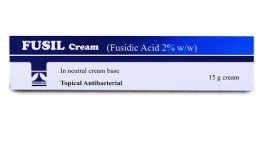
Description
Fusil Cream 2% 15gm is a potent topical antibiotic formulation specifically designed to combat a wide range of common and troublesome bacterial skin infections. This prescription medication, containing the trusted active ingredient fusidic acid, works effectively to eliminate infection-causing bacteria, reduce inflammation, and promote skin healing. It is a first-line dermatological treatment recommended by healthcare professionals for its targeted action and high efficacy against staphylococcal strains.
This dermatologist-recommended cream offers a focused approach to managing skin health. Here is a summary of its core features and benefits:
✔ Contains 2% fusidic acid, a powerful antibiotic for bacterial skin conditions.
✔ Effectively treats impetigo, infected eczema, boils, and folliculitis.
✔ Manufactured under strict GMP standards by Tabros Pharma.
✔ Presented in a convenient 15gm tube for easy application.
✔ Minimizes bacterial protein synthesis to halt infection spread.
What is Fusil Cream Used For? Understanding Its Therapeutic Applications
Fusil Cream 2% w/w is indicated for the treatment of primary and secondary bacterial skin infections where the causative organisms are susceptible to fusidic acid. Its primary mechanism involves inhibiting bacterial protein synthesis, thereby stopping the growth and proliferation of harmful bacteria on the skin’s surface and within infected tissues.
Which Skin Conditions Can Fusil Cream Treat?
This topical antibiotic is clinically effective against several dermatological infections. Common uses and indications include:
Primary Skin Infections: Direct bacterial invasions of previously healthy skin.
Impetigo: A highly contagious infection presenting as red sores or blisters that rupture, forming a characteristic honey-colored crust.
Folliculitis: Inflammation and infection of hair follicles, often appearing as small, pus-filled bumps or red bumps centered on follicles.
Boils (Furuncles) and Carbuncles: Deep, painful infections of hair follicles and surrounding skin, often filled with pus.
Erythrasma: A superficial skin infection causing brown, scaly patches, commonly found in skin folds like the armpits or groin, caused by Corynebacterium minutissimum.
Secondary Skin Infections: Bacterial infections that complicate pre-existing skin diseases or injuries.
Infected Eczema/Dermatitis: When atopic eczema or other forms of dermatitis become secondarily infected with bacteria like Staphylococcus aureus, leading to increased weeping, crusting, and pain.
Infected Wounds, Cuts, and Abrasions: Prevention and treatment of bacterial colonization in minor skin trauma, aiding in the wound healing process.
Infected Burns: For minor burns that have developed a bacterial infection.
What Are the Key Ingredients in Fusil Cream?
The efficacy of Fusil Cream hinges on its carefully selected active pharmaceutical ingredient and supportive base. The formulation is designed for maximum therapeutic effect with good skin tolerance.
Active Ingredient: Fusidic Acid (2% w/w): This is the core antibacterial agent. Fusidic acid is a steroid-antibiotic derived from the fungus Fusidium coccineum. It works by specifically inhibiting bacterial protein synthesis. It binds to elongation factor G (EF-G), a crucial component in the bacterial ribosome, effectively halting the production of proteins essential for bacterial survival, growth, and reproduction. It is particularly potent against Staphylococcus aureus, including some penicillin-resistant strains.
Base/Vehicle Ingredients (Excipients): The cream base is a blend of inactive ingredients that ensure stability, delivery, and patient comfort. While the exact formula may vary, typical components include:
Emollients and Moisturizers: Such as liquid paraffin or cetostearyl alcohol, which help soften the skin and prevent dryness.
Emulsifiers: Like cetomacrogol, which help blend oil and water components to form a stable cream.
Preservatives: To maintain the sterility and shelf-life of the product.
Purified Water: Serves as the aqueous base.
How Should I Use Fusil Cream Correctly?
Proper application is critical for the success of the treatment and to prevent antibiotic resistance. Always follow your doctor’s or pharmacist’s specific instructions.
What is the Step-by-Step Guide for Applying This Topical Antibiotic?
For optimal results in managing your skin infection, adhere to this user guide:
Hand Hygiene: Begin by thoroughly washing your hands with soap and water to prevent introducing new contaminants to the affected area.
Clean the Area: Gently cleanse the infected skin with mild soap or a prescribed antiseptic solution. Pat the area completely dry with a clean towel. Avoid harsh rubbing.
Application: Squeeze a small amount of Fusil Cream onto a clean fingertip. Apply a thin layer sufficient to just cover the affected area and a small margin of surrounding healthy skin.
Gently Massage: Using a light touch, massage the cream into the skin until it is absorbed. A little goes a long way.
Post-Application: Wash your hands again after application, unless you are treating a hand infection.
Covering: Usually, the area does not need to be covered with a bandage unless directed by your doctor or to protect clothing. If covered, ensure the dressing is clean and breathable.
What is the Recommended Dosage for Fusil Cream?
As a topical medication, “dosage” refers to the frequency and duration of application rather than a measured quantity.
Standard Frequency: The typical recommended application is two to three times daily (approximately every 8 to 12 hours).
Duration of Treatment: A complete course usually lasts for about 7 to 14 days. It is imperative to use the cream for the full prescribed period, even if symptoms improve quickly, to ensure the infection is completely eradicated and to minimize relapse.
Critical Note: Do not use this antibiotic cream for longer than 14 days without explicit medical supervision. Prolonged or inappropriate use can increase the risk of developing antibiotic-resistant bacteria, making future infections harder to treat.
What Precautions Should I Take Before Using This Medicated Cream?
While Fusil Cream is generally well-tolerated, certain precautions ensure safe and effective use.
Are There Any Contraindications or Warnings for This Skin Treatment?
Hypersensitivity: Do not use if you have a known allergy to fusidic acid or any other ingredient in the cream.
For External Use Only: This product is for application on the skin only. It must not be used in the eyes, inside the nose, mouth, vagina, or on other mucous membranes.
Consult a Doctor: If the infection shows no sign of improvement after 3-4 days of treatment, or if it worsens (increased redness, swelling, pain, or pus), consult your physician immediately.
Medical History: Inform your doctor if you have a history of liver problems, as systemic absorption, though minimal, can occur, especially if applied to large areas, broken skin, or under occlusive dressings.
Pregnancy and Breastfeeding: Consult your healthcare provider before using if you are pregnant, planning to become pregnant, or are breastfeeding to assess potential risks and benefits.
Drug Interactions: While topical interactions are rare, inform your doctor about all other medicines and topical products you are using.
Can Fusil Cream Cause Any Side Effects?
Most users do not experience significant side effects. However, as with any medication, some adverse reactions are possible.
What Are the Common and Serious Adverse Reactions?
Common Local Reactions: These are usually mild and confined to the application site.
Mild itching, stinging, or burning sensation upon application.
Skin irritation, redness (erythema), or dryness.
Contact dermatitis in rare cases.
Less Common/Serious Reactions: Discontinue use and seek medical advice if you experience:
Severe skin reactions like rash, intense itching, swelling, or blistering, which may indicate an allergic reaction.
Symptoms suggesting a new or worsening infection (e.g., increased pus, fever).
Yellowing of the skin or eyes (jaundice), though extremely rare with topical use, could indicate liver effects.
How Should I Store This Antibiotic Cream to Maintain Its Potency?
Correct storage is essential for maintaining the stability and sterility of the medication.
Temperature: Store at room temperature, ideally below 25°C (77°F). Do not freeze.
Location: Keep the tube in its original packaging, away from direct sunlight, heat sources (like radiators), and moisture (e.g., bathrooms).
Safety: Keep out of reach and sight of children and pets.
Expiry: Do not use the cream after the expiry date printed on the tube or carton. Discard any leftover cream after the course of treatment is complete.
Who Manufactures Fusil Cream? Understanding the Source
Fusil Cream 2% 15gm is manufactured by Tabros Pharma, a pharmaceutical company based in Pakistan. The company is expected to adhere to Good Manufacturing Practices (GMP), which are stringent quality assurance guidelines ensuring that products are consistently produced and controlled according to established quality standards. This involves rigorous testing of raw materials, controlled production environments, and finished product analysis to guarantee purity, potency, and safety. When purchasing, always ensure you are buying from a licensed pharmacy or reputable supplier to avoid counterfeit products.
What Are the Primary Benefits of Choosing Fusil Cream for Skin Infections?
Choosing this targeted antibiotic cream offers several distinct advantages for managing bacterial dermatological conditions.
High Bactericidal Activity: Specifically effective against Staphylococcus aureus, a common culprit in skin infections, including some resistant strains.
Targeted Topical Action: Delivers the antibiotic directly to the site of infection, maximizing local effect while minimizing systemic exposure and potential side effects associated with oral antibiotics.
Supports Skin Healing: By rapidly controlling the bacterial load, it reduces inflammation, pus, and irritation, creating an optimal environment for the skin’s natural repair processes.
Convenient Application: The cream formulation is easy to apply, non-greasy (depending on the base), and is well-suited for use on various parts of the body.
Reduced Systemic Side Effects: Unlike oral antibiotics, it avoids common gastrointestinal side effects like diarrhea, nausea, or the risk of disrupting gut flora.
Trusted Formulation: Produced by a GMP-certified manufacturer, ensuring consistent quality and reliability.
How Does Fusil Cream Compare to Other Topical Antibiotics?
When considering treatment options, it helps to understand how fusidic acid stands against other common topical antimicrobials.
| Feature | Fusil Cream (Fusidic Acid 2%) | Mupirocin Ointment (e.g., Bactroban) | Clindamycin Gel | Neomycin + Bacitracin Ointments |
|---|---|---|---|---|
| Primary Antibiotic Class | Steroid-antibiotic | Pseudomonic acid | Lincosamide | Aminoglycoside + Polypeptide |
| Best For | Staphylococcal infections, impetigo, infected eczema | Impetigo, eradication of nasal MRSA | Inflammatory acne, anaerobic infections | Minor cuts, burns, prevention of infection |
| Resistance Profile | Some resistance reported; prudent use required | Increasing resistance is a concern, esp. with overuse | Resistance possible; used for acne | Neomycin has higher allergy risk; not for widespread use |
| Key Advantage | Excellent penetration into skin layers; good for weepy eczema | Potent for specific superficial infections | Anti-inflammatory properties for acne | Broad-spectrum combination |
| Common Form | Cream/Ointment | Ointment | Gel, Lotion, Solution | Ointment |
Frequently Asked Questions (FAQs) About Fusil Cream
Is Fusil Cream effective for acne?
Fusil Cream is not a first-line treatment for common acne vulgaris. It is designed for bacterial skin infections like impetigo or infected eczema. While it may help with acne lesions secondarily infected with Staph, specific topical antibiotics like clindamycin or combinations with benzoyl peroxide are typically preferred for acne to prevent resistance.
Can I use Fusil Cream on open wounds?
Yes, it can be applied to minor infected cuts, abrasions, and open wounds as directed by a doctor. It helps prevent or treat bacterial colonization. However, for deep, serious, or heavily contaminated wounds, immediate medical attention is required, and this cream may not be sufficient.
How quickly does Fusil Cream start working?
Many patients notice an improvement in symptoms like redness, swelling, and weeping within a few days of starting treatment. However, it is crucial to complete the full prescribed course (usually 7-14 days) to ensure the infection is fully cleared.
Does fusidic acid cream cause skin thinning?
No. Despite being chemically classified as a steroid-antibiotic, fusidic acid does not possess the corticosteroid-like activity that leads to skin thinning (atrophy), telangiectasia, or other steroid-related side effects. Its action is purely antibacterial.
Can I buy Fusil Cream over the counter?
In most countries, including Pakistan where it is manufactured, Fusil Cream is a prescription-only medication (POM). A consultation with a doctor is necessary to correctly diagnose the infection, confirm it is bacterial, and determine if fusidic acid is the appropriate treatment.
What happens if I use too much Fusil Cream?
Applying more than the recommended thin layer will not increase efficacy and may raise the risk of local skin irritation and potential systemic absorption. If you suspect overuse or accidental ingestion, contact a healthcare professional or poison control center.
Is this cream safe for children and babies?
Fusidic acid cream can be prescribed for children and infants for appropriate conditions like impetigo. However, the diagnosis and prescription must always come from a pediatrician or doctor who will determine the correct dosage and supervise the treatment.