Description
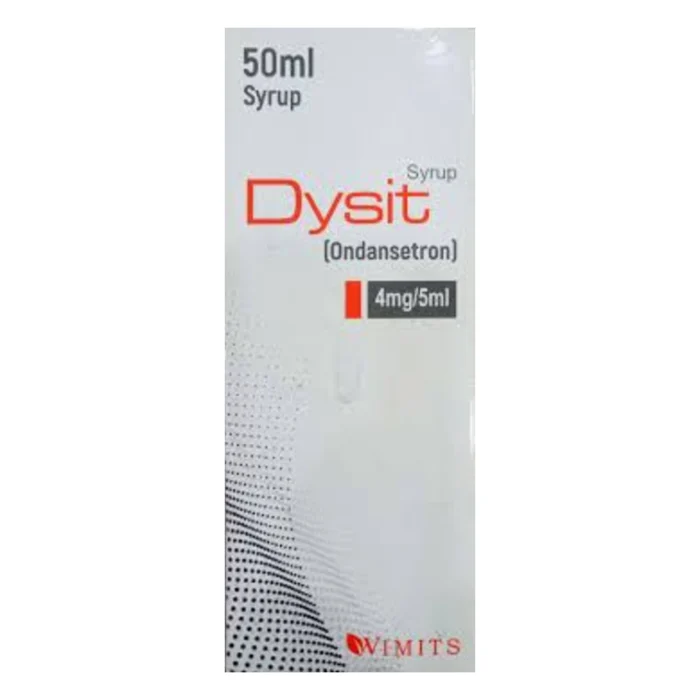
Dysit 50ml Syrup 4mg/5ml (1 Box = 1 Bottle of 50ml)
Product Overview
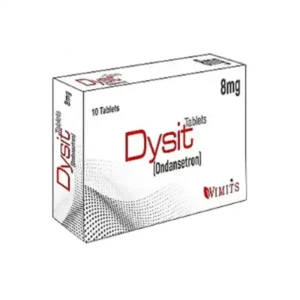
Dysit 50ml Syrup is a prescription oral medication containing the active ingredient Ondansetron. Manufactured by Wimits Pharmaceuticals (Pvt.) Ltd. in Pakistan, this advanced, selective 5-HT3 receptor antagonist is specifically designed for the prevention and management of nausea and vomiting in patients undergoing cancer chemotherapy, radiation therapy, or surgical procedures. Dysit Syrup works by blocking serotonin receptors in the gut and brain, effectively controlling the vomiting reflex. Administered as a convenient oral syrup, Dysit offers a palatable and easy-to-administer treatment option, particularly suitable for patients who have difficulty swallowing tablets, including children and the elderly. Each box contains 1 bottle of 50ml oral solution (4mg/5ml) .
This advanced antiemetic therapy delivers effective nausea and vomiting control across multiple clinical settings:
Effective Chemotherapy-Induced Relief: Specifically indicated for the prevention of nausea and vomiting associated with highly and moderately emetogenic cancer chemotherapy.
Radiation Therapy Support: Helps manage nausea and vomiting in patients receiving radiotherapy, including total body irradiation or abdominal radiation.
Post-Operative Care: Effectively prevents post-operative nausea and vomiting (PONV) following surgical procedures.
Palatable Liquid Form: The syrup formulation is easy to swallow and palatable, making it ideal for children, elderly patients, and those with difficulty taking tablets.
Rapid Onset of Action: Provides prompt relief from nausea symptoms.
Prescription Medication: Requires a prescription from a qualified healthcare professional.
What are the Primary Uses and Key Features of Dysit Syrup?
Dysit Syrup serves as a specialized therapeutic solution for managing nausea and vomiting across various patient populations and clinical scenarios. It is designed to effectively prevent and control these distressing symptoms when they are triggered by medical treatments or surgical interventions.
Core Uses of This Medication
Chemotherapy-Induced Nausea and Vomiting (CINV): The primary indication is the prevention of nausea and vomiting associated with highly emetogenic and moderately emetogenic cancer chemotherapy, including regimens containing cisplatin.
Radiation-Induced Nausea and Vomiting (RINV): Indicated for the prevention of nausea and vomiting in patients receiving radiotherapy, particularly those undergoing total body irradiation or single high-dose fraction radiation to the abdomen.
Post-Operative Nausea and Vomiting (PONV): Used for the prevention and treatment of nausea and vomiting following surgical procedures in adults and children.
Pediatric Use: Suitable for use in children, providing a palatable liquid formulation that is easier to administer than tablets.
Oncology Support: Helps improve quality of life by reducing treatment-related nausea, allowing patients to better tolerate cancer therapies.
Standout Product Features
| Feature | Description |
|---|---|
| Active Ingredient: Ondansetron | A selective 5-HT3 receptor antagonist that blocks serotonin from triggering the vomiting reflex. |
| Strength: 4mg/5ml | Each 5ml of syrup contains 4mg of ondansetron. |
| Manufacturer: Wimits Pharmaceuticals | Manufactured by a reputable Pakistani pharmaceutical company. |
| Oral Syrup Formulation | Palatable liquid that is easy to swallow, ideal for children and elderly patients. |
| Broad Spectrum Use | Effective for chemotherapy-induced, radiation-induced, and post-operative nausea. |
| Prescription Required | Available only with a prescription from a qualified healthcare professional. |
| Single Bottle Packaging | Each box contains 1 bottle of 50ml solution. |
What Key Ingredients are in Dysit Syrup and How Does It Work?
Composition
| Component | Description |
|---|---|
| Ondansetron | Each 5ml of syrup contains 4mg of ondansetron (as ondansetron hydrochloride dihydrate). |
| Other Ingredients | Contains pharmaceutical excipients including sorbitol, propylene glycol, sodium citrate, citric acid, and flavoring agents. |
Mechanism of Action
Ondansetron is a highly selective serotonin 5-HT3 receptor antagonist. Serotonin (5-HT) is released by enterochromaffin cells in the gastrointestinal tract in response to chemotherapy, radiation, or surgical stimuli. This serotonin then binds to 5-HT3 receptors located on vagal afferent nerve terminals in the gut and on chemoreceptor trigger zone (CTZ) neurons in the area postrema of the brain. By competitively blocking these 5-HT3 receptors, ondansetron prevents the transmission of nausea and vomiting signals to the vomiting center in the brainstem. Unlike other antiemetics, ondansetron does not cause significant extrapyramidal side effects or sedation.
Key Benefits
Prevents and controls nausea and vomiting effectively.
Suitable for both adults and children.
Palatable liquid formulation improves patient compliance.
Rapidly absorbed and provides quick relief.
Minimal side effect profile compared to older antiemetic drugs.
How Should I Use Dysit Syrup Correctly?
Dysit Syrup must be taken orally as prescribed by a healthcare professional. Do not self-adjust the dose. Always use the measuring cup or dosing device provided to ensure accurate dosage.
Dosage and Administration
| Parameter | Chemotherapy/Radiation Induced Nausea | Post-Operative Nausea |
|---|---|---|
| Adults (Typical Dose) | 8mg (10ml) twice daily, OR 8mg (10ml) 1-2 hours before treatment followed by 8mg (10ml) 12 hours later. | 16mg (20ml) given 1 hour before anesthesia induction. |
| Children (6 months-17 years) | Based on body surface area or body weight: 0.15mg/kg/dose up to 8mg, given before chemotherapy and 4-8 hours later. | 0.1mg/kg/dose up to 4mg, given 1 hour before anesthesia induction. |
| Hepatic Impairment (Moderate-Severe) | Maximum daily dose should not exceed 8mg (10ml). | Maximum daily dose should not exceed 8mg (10ml). |
| Method of Administration | Take orally using the provided measuring device. | Take orally 1 hour before surgery. |
| Duration | For chemotherapy: Continue for up to 2 days after treatment. For radiotherapy: Continue as prescribed. | Single dose before surgery; may repeat post-operatively if needed. |
Method of Administration
Oral: Take the syrup orally using the measuring cup or oral syringe provided.
Shake Well: Shake the bottle well before each use.
Consistency: For chemotherapy-induced nausea, take the first dose 1-2 hours before the start of chemotherapy.
Missed Dose: If you miss a dose, take it as soon as you remember. If it is close to the time for your next dose, skip the missed dose. Do not double the dose.
Important Considerations
Prescription Only: This medication is available only with a prescription.
Hepatic Impairment: Use with caution and at reduced doses in patients with moderate to severe hepatic impairment.
Phenylketonuria: The product contains aspartame; patients with phenylketonuria should be advised accordingly.
Hypersensitivity: Use with caution in patients with known hypersensitivity to ondansetron or other 5-HT3 antagonists.
Pregnancy and Lactation: Use only if clearly needed and prescribed by a doctor.
Monitoring: Patients receiving multiple doses should be monitored for signs of serotonin syndrome, especially when used with other serotonergic drugs.
What Precautions Should I Be Aware of Before Taking This Medication?
While generally safe and well-tolerated, specific conditions and interactions require awareness and caution.
Key Warnings and Contraindications
Hypersensitivity: Contraindicated in patients with known hypersensitivity to ondansetron or any excipients.
QT Prolongation: Use with caution in patients with congenital long QT syndrome or electrolyte abnormalities, as ondansetron can cause dose-related QT interval prolongation.
Serotonin Syndrome: Risk is increased when ondansetron is used concomitantly with other serotonergic drugs (e.g., SSRIs, SNRIs).
Hepatic Impairment: Patients with moderate to severe hepatic impairment require a maximum total daily dose of 8mg.
Apomorphine Use: Concomitant use with apomorphine can cause profound hypotension and loss of consciousness.
Drug Interactions
| Interaction | Recommendation |
|---|---|
| Serotonergic Drugs (SSRIs, SNRIs) | Increased risk of serotonin syndrome; monitor for symptoms. |
| Apomorphine | Concomitant use can cause hypotension; avoid concurrent administration. |
| QT Prolonging Drugs | Use with caution; monitor ECG if used with other drugs that prolong QT interval. |
| Phenytoin/Carbamazepine/Rifampicin | May decrease ondansetron levels; monitor clinical response. |
When to Seek Immediate Medical Attention
Severe Allergic Reaction: Difficulty breathing, swelling of the face/lips/tongue/throat, severe rash.
Signs of Serotonin Syndrome: Agitation, confusion, rapid heart rate, fever, sweating, muscle twitching.
Signs of QT Prolongation: Fainting, palpitations, severe dizziness.
Constipation with Abdominal Pain: Severe constipation accompanied by abdominal pain or bloating.
Are There Any Potential Side Effects of Dysit Syrup?
As with all medications, Dysit Syrup may cause side effects, although not everyone experiences them.
Side Effects by Frequency
| Frequency | Side Effects |
|---|---|
| Common (≥1% to <10%) | Headache, constipation, feeling of warmth/flushing, dizziness, diarrhea, fatigue. |
| Uncommon (≥0.1% to <1%) | Seizures, abnormal involuntary movements, angina, hypotension, bradycardia, arrhythmias, hiccups. |
| Rare (<0.1%) | Transient visual disturbances, allergic reactions (anaphylaxis, angioedema), elevated liver enzymes, QT prolongation. |
| Not Known | Serotonin syndrome (especially with SSRIs/SNRIs), extrapyramidal symptoms, sudden onset of bronchospasm. |
When to Seek Immediate Medical Attention
Severe Allergic Reaction: Difficulty breathing, swelling of the face/lips/tongue/throat.
Signs of Serotonin Syndrome: Agitation, confusion, rapid heart rate, fever, sweating, muscle twitching.
Signs of QT Prolongation: Fainting, palpitations, severe dizziness.
Sudden Onset of Vision Changes: Blurred vision or transient visual disturbances.
How Should I Store This Medication?
Proper storage is essential for maintaining the stability, efficacy, and safety of Dysit Syrup.
Optimal Storage Conditions
Temperature Control: Store at room temperature (15°C to 30°C), away from direct light and heat.
Keep Out of Reach: Keep the medication out of reach of children and pets.
Protect from Light: Store in the original container to protect from light.
Check Solution: Do not use the medication if the solution is discolored or contains particles.
Expiry: Do not use after the expiry date printed on the bottle.
Who Manufactures Dysit Syrup?
Dysit Syrup is manufactured by Wimits Pharmaceuticals (Pvt.) Ltd. in Pakistan, a reputable and well-established pharmaceutical company known for producing high-quality medications for various medical conditions.
Commitment to Quality and Safety
DRAP Approval: Registered with the Drug Regulatory Authority of Pakistan (DRAP).
GMP Compliance: Manufactured in facilities that follow strict Good Manufacturing Practices.
Quality Assurance: Each batch undergoes rigorous quality testing to ensure purity, potency, and consistency.
Patient Safety: A commitment to providing safe, effective, and high-quality medications.
Frequently Asked Questions (FAQs)
1. What is Dysit Syrup used for?
Dysit Syrup is used for the prevention and management of nausea and vomiting caused by cancer chemotherapy, radiation therapy, and surgical procedures.
2. How does Dysit Syrup work?
It contains ondansetron, which blocks serotonin (5-HT3) receptors in the gut and brain, preventing the transmission of nausea and vomiting signals to the vomiting center.
3. How should I take Dysit Syrup?
Take the syrup orally using the measuring device provided. Shake the bottle well before use. Follow your doctor’s instructions regarding dosage and timing.
4. Can Dysit Syrup be given to children?
Yes, Dysit Syrup is suitable for use in children aged 6 months and older, with dosage based on body weight or body surface area.
5. What should I do if I miss a dose?
Take the missed dose as soon as you remember. If it is almost time for your next dose, skip the missed dose and resume your regular schedule. Do not double the dose.
6. What are the common side effects?
Common side effects include headache, constipation, dizziness, diarrhea, and fatigue. These are generally mild and resolve on their own.
7. Is Dysit Syrup safe during pregnancy?
Inform your doctor if you are pregnant, planning to become pregnant, or breastfeeding. Use only if clearly needed and prescribed by your doctor.
8. Do I need a prescription for Dysit Syrup?
Yes, Dysit Syrup is a prescription medication and is available only with a prescription from a qualified healthcare professional.
9. How should I store Dysit Syrup?
Store at room temperature, away from direct light and heat. Keep out of reach of children. Do not use after the expiry date.
10. What should I do if I experience side effects?
If you experience mild side effects, inform your doctor at your next appointment. If you experience severe allergic reactions, signs of serotonin syndrome, or severe dizziness, seek immediate medical attention.