 Cart is empty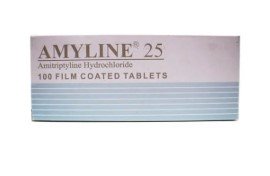
Description
Amyline 25mg Tablets are a prescription medication formulated with amitriptyline hydrochloride, a well-established tricyclic antidepressant (TCA). Primarily used in the management of major depressive disorder and various chronic pain syndromes, this medication works by modulating key neurotransmitter levels in the central nervous system. This authoritative guide provides a detailed, semantically optimized overview of Amyline 25mg, covering its therapeutic applications, mechanism of action, correct dosage protocols, essential safety precautions, and comprehensive manufacturer information to support informed decisions.
In this detailed guide, you will learn about:
The primary and off-label uses of Amitriptyline 25mg.
The neurochemical mechanism behind its action for mood and pain.
Detailed, condition-specific dosage guidelines.
Critical safety warnings and potential adverse effects.
How it compares to other antidepressant and analgesic medications.
Trusted information on storage, manufacturer credentials, and more.
What Are the Primary Uses and Key Features of Amyline 25mg?
Amyline 25mg Tablets, containing the active pharmaceutical ingredient amitriptyline HCl, are a versatile prescription drug with several key therapeutic applications. Its primary mechanism involves inhibiting the reuptake of serotonin and norepinephrine, two crucial neurotransmitters that regulate mood, pain perception, and sleep cycles.
What Conditions Can Amyline 25mg Treat?
The prescription medication Amyline is indicated for the treatment of multiple conditions:
Major Depressive Disorder (MDD): As a tricyclic antidepressant, it is effective in alleviating symptoms of clinical depression, including persistent low mood, loss of interest, and anxiety.
Neuropathic Pain Management: It is a first-line therapy for various chronic nerve pain conditions, such as diabetic peripheral neuropathy, post-herpetic neuralgia (shingles pain), and fibromyalgia widespread pain.
Migraine Prophylaxis: Used as a preventive treatment to reduce the frequency and severity of chronic migraine attacks and tension-type headaches.
Nocturnal Enuresis in Children: For children aged 6 and above, it can be prescribed to manage bedwetting when behavioral interventions have not been successful.
Off-label Use for Insomnia: Due to its sedative effect, low doses are sometimes used under medical supervision to address sleep initiation difficulties.
What Are the Main Features of This Tricyclic Antidepressant?
Amyline 25mg offers distinct pharmacological features:
Dual Neurotransmitter Action: Enhances synaptic levels of both serotonin and norepinephrine for combined mood and pain modulation.
Sedative Properties: Its calming effect can be beneficial for patients with depression-associated anxiety or sleep disturbances.
Established Efficacy: Decades of clinical use and research support its effectiveness in multiple conditions.
Flexible Dosing: Available in a 25mg strength, allowing for precise titration based on patient response and tolerability.
What is the Active Ingredient in Amyline Tablets?
The sole active ingredient responsible for the therapeutic effects of Amyline Tablets is Amitriptyline Hydrochloride. Each film-coated tablet contains 25mg of this compound.
How Does Amitriptyline Hydrochloride Work in the Body?
Amitriptyline HCl is a classic tricyclic antidepressant agent. Its primary pharmacodynamic action is the potent inhibition of presynaptic reuptake pumps for the monoamine neurotransmitters serotonin (5-HT) and norepinephrine (NE). By blocking these transporters, amitriptyline increases the concentration and activity of these neurotransmitters in the synaptic cleft, enhancing neurotransmission.
For Depression: Elevated serotonin and norepinephrine levels help correct the chemical imbalance hypothesized in depressive disorders, leading to improved mood, reduced anxiety, and restored energy.
For Chronic Pain: In neuropathic pain states, it modulates descending pain inhibitory pathways in the brain and spinal cord. It also affects sodium channels and other receptors involved in pain signal amplification, thereby reducing central sensitization and perceived pain intensity.
For Migraine Prevention: Its effect is likely related to its influence on serotonin pathways, which are intimately involved in the migraine pathogenesis, and its tricyclic antidepressant properties that reduce central pain facilitation.
How Should You Take Amyline 25mg Tablets Correctly?
Proper administration is crucial for safety and efficacy. Always follow your healthcare provider’s personalized instructions precisely.
What Are the General Directions for Use?
Oral Administration: Swallow the tablet whole with a full glass of water. Do not crush, chew, or break it.
Timing of Dose: Due to its potential to cause drowsiness, it is typically recommended to take a single daily dose at bedtime. This schedule helps improve sleep and minimizes daytime sedation side effects.
Consistency: Take the medication at the same time each day to maintain a steady level in your bloodstream.
With or Without Food: It can be taken with or without food. Taking it with a light snack may help reduce potential stomach upset.
Never Stop Abruptly: Discontinuation must be gradual, under medical supervision, to avoid withdrawal symptoms like nausea, headache, and malaise.
What is the Recommended Dosage Information for Amyline?
Dosage is highly individualized based on the condition being treated, patient age, medical history, and response. The following are general guidelines. Your doctor will determine the optimal regimen.
Standard Dosage Guidelines for Different Indications
| Condition | Typical Starting Dose | Usual Maintenance Dose Range | Important Notes |
|---|---|---|---|
| Major Depression | 25mg to 50mg per day at bedtime. | 75mg to 150mg per day. | Dose may be gradually increased over 1-2 weeks. Maximum dose rarely exceeds 300mg/day. |
| Neuropathic Pain / Migraine Prevention | 10mg to 25mg at bedtime. | 25mg to 75mg per day. | Often effective at lower doses than those for depression. Slow titration is key. |
| Nocturnal Enuresis (Children 6+) | 10mg to 20mg at bedtime. | Up to 50mg per day. | Treatment is typically short-term and combined with behavioral therapy. |
| Insomnia (Off-label) | 10mg to 25mg at bedtime. | Lowest effective dose. | Used when sleep disturbances are severe and other treatments fail. |
Key Dosage Principles:
Titration: Doctors usually start with a low dose and increase it slowly to minimize side effects.
Elderly Patients: Lower doses are often recommended due to slower metabolism and increased sensitivity.
Monitoring: Regular follow-ups are essential to assess response and adjust dosage.
What Precautions and Warnings Are Associated with Amyline?
Amitriptyline carries significant precautions that must be strictly heeded to ensure patient safety.
FDA Black Box Warning: Suicidality Risk
Antidepressant medications, including TCAs like Amyline, have a Black Box Warning—the FDA’s strongest safety alert. They may increase the risk of suicidal thinking and behavior (suicidality) in children, adolescents, and young adults (under age 25) during the initial treatment months. All patients must be closely monitored for worsening depression or unusual changes in behavior.
Essential Safety Precautions and Contraindications
Cardiovascular Conditions: Use with extreme caution in patients with a history of arrhythmias, heart block, recent myocardial infarction, or congestive heart failure. It can affect cardiac conduction.
Monoamine Oxidase Inhibitors (MAOIs): Absolute contraindication. Do not use Amyline during or within 14 days of stopping an MAOI due to risk of serotonin syndrome, a potentially fatal reaction.
Glaucoma: Contraindicated in patients with narrow-angle glaucoma as it can increase intraocular pressure.
Urinary Retention: Use cautiously in men with prostatic hypertrophy or others with urinary retention issues.
Seizure Disorders: May lower seizure threshold.
Pregnancy and Breastfeeding: Category C. Use only if potential benefit justifies potential fetal risk. Amitriptyline is excreted in breast milk.
Alcohol and CNS Depressants: Potentiated sedation and impairment can occur. Avoid alcohol completely.
Elderly Patients: Increased risk of falls, confusion, and anticholinergic side effects.
What Are the Possible Side Effects of Amitriptyline 25mg?
Patients should be aware of potential adverse reactions, which are often dose-dependent and may subside with continued use.
Common Side Effects (Anticholinergic and Sedative)
These are frequent but often temporary:
Drowsiness, sedation, fatigue
Dry mouth (xerostomia)
Constipation
Blurred vision
Dizziness, lightheadedness
Weight gain
Increased appetite
Less Common but Serious Side Effects
Seek immediate medical attention if you experience:
Symptoms of serotonin syndrome: agitation, hallucinations, fever, fast heart rate, muscle stiffness.
Signs of an allergic reaction: hives, difficulty breathing, swelling.
Chest pain, irregular or fast heartbeat, palpitations.
Difficulty urinating.
Severe dizziness or fainting.
Worsening depression, suicidal thoughts, unusual behavior.
Numbness, tingling, or pain in the hands or feet.
Jaundice (yellowing of skin/eyes).
How Should Amyline Tablets Be Stored?
Proper storage ensures medication stability and safety.
Temperature: Store at room temperature, between 20°C to 25°C (68°F to 77°F). Avoid freezing and excessive heat.
Environment: Keep in a dry place. Protect from light and moisture. Do not store in bathrooms or near sinks.
Container: Keep the tablets in their original blister pack or bottle until use.
Safety: Keep out of reach and sight of children and pets to prevent accidental ingestion.
Disposal: Do not flush. Dispose of unused or expired medication through a pharmacy take-back program or as per local regulations.
Who Manufactures Amyline 25mg Tablets?
Amyline 25mg Tablets are manufactured under strict pharmaceutical standards to ensure quality, purity, and consistency.
Manufacturer: The product is produced by a certified pharmaceutical company specializing in neuropsychiatric and analgesic medications.
Quality Assurance: Production occurs in facilities that are compliant with current Good Manufacturing Practices (cGMP), as set by stringent regulatory authorities like the FDA and EMA.
Sourcing: Active Pharmaceutical Ingredients (APIs) are sourced from reliable, audited suppliers.
Batch Control: Every batch undergoes rigorous analytical testing for identity, potency, purity, and dissolution profile before release.
What Are the Key Benefits of Using Amyline 25mg?
The therapeutic benefits of Amyline extend across multiple domains of neurological and psychiatric health.
Comprehensive Health Benefits
Effective Mood Regulation: Provides significant relief from symptoms of major depression, including sadness, anhedonia, and psychic anxiety.
Powerful Neuropathic Pain Relief: Offers a non-opioid pharmacological strategy for managing debilitating chronic nerve pain, improving quality of life.
Prophylactic Migraine Management: Reduces the frequency, duration, and severity of migraine headaches, serving as a preventive treatment option.
Sleep Cycle Improvement: Its sedative effect can help restore sleep architecture in patients with depression-related insomnia, promoting restorative sleep.
Treatment for Refractory Nocturnal Enuresis: Provides a pharmacological solution for childhood bedwetting when other methods are ineffective.
Dual-Action Pharmacology: Addresses both mood and pain through a single mechanism, which is beneficial for patients with comorbid conditions like depression and chronic pain.
How Does Amyline (Amitriptyline) Compare to Other Treatments?
Understanding its position relative to alternatives helps contextualize its use.
Amyline vs. Other Antidepressants and Pain Medications
| Feature | Amyline (Amitriptyline – TCA) | SSRIs (e.g., Sertraline) | SNRIs (e.g., Duloxetine) | Gabapentinoids (e.g., Pregabalin) |
|---|---|---|---|---|
| Primary Use | Depression, Neuropathic Pain, Migraine. | Depression, Anxiety Disorders. | Depression, Neuropathic Pain, Anxiety. | Neuropathic Pain, Anxiety. |
| Key Mechanism | Inhibits SERT & NET; anticholinergic. | Selectively inhibits SERT. | Inhibits SERT & NET. | Binds to α2δ subunit of VGCC. |
| Onset of Action | Several weeks for depression. | Several weeks. | Several weeks. | Can be faster for pain relief. |
| Sedation Profile | High (often beneficial for sleep/pain). | Low to Moderate. | Low to Moderate. | Moderate to High. |
| Side Effect Profile | More anticholinergic effects (dry mouth, constipation, urinary hesitancy). | GI upset, sexual dysfunction. | Nausea, dizziness, hypertension. | Dizziness, somnolence, weight gain. |
| Overdose Risk | High (cardiotoxic). | Low. | Moderate. | Low. |
| Cost | Typically very low (generic). | Low to Moderate. | Moderate to High. | Moderate to High. |
Frequently Asked Questions (FAQs) About Amyline 25mg
Is amitriptyline used for anxiety?
Yes, while primarily an antidepressant, amitriptyline’s anxiolytic properties are well-recognized. It is often prescribed for depression with associated anxiety and can be used for generalized anxiety disorder, though it is not typically a first-line choice compared to SSRIs or dedicated anxiolytics.
How long does it take for amitriptyline to work for nerve pain relief?
Patients may notice some improvement in neuropathic pain symptoms within 1 to 2 weeks, especially regarding sleep due to its sedative effect. However, the full analgesic benefit for conditions like diabetic neuropathy or fibromyalgia may take 4 to 6 weeks of consistent use at an optimal dose.
Can I take amitriptyline and ibuprofen together?
Generally, they can be taken together occasionally, but you should consult your doctor. There is a potential increased risk of bleeding (as with many antidepressants) and a small risk of additive effects on kidney function with long-term combined use. Never self-prescribe this combination regularly.
What is the difference between amitriptyline and nortriptyline?
Nortriptyline is a metabolic derivative (metabolite) of amitriptyline. It is often described as having a “cleaner” side effect profile, with less sedation and fewer anticholinergic effects. Therefore, nortriptyline may be preferred for elderly patients or those who cannot tolerate amitriptyline’s side effects, though individual response varies.
Does amitriptyline cause weight gain?
Yes, weight gain is a common and well-documented side effect of amitriptyline therapy. It is caused by a combination of increased appetite, metabolic changes, and potential fluid retention. Monitoring diet and incorporating physical activity from the start of therapy can help manage this effect.
Can you overdose on amitriptyline 25mg tablets?
Yes, amitriptyline overdose is extremely dangerous and can be fatal. It is particularly cardiotoxic, potentially leading to life-threatening arrhythmias, seizures, and severe central nervous system depression. The therapeutic window is narrow. It is imperative to store the medication securely and take only as prescribed.